What to See in Rio de Janeiro, Brazil: Free Audio Guide
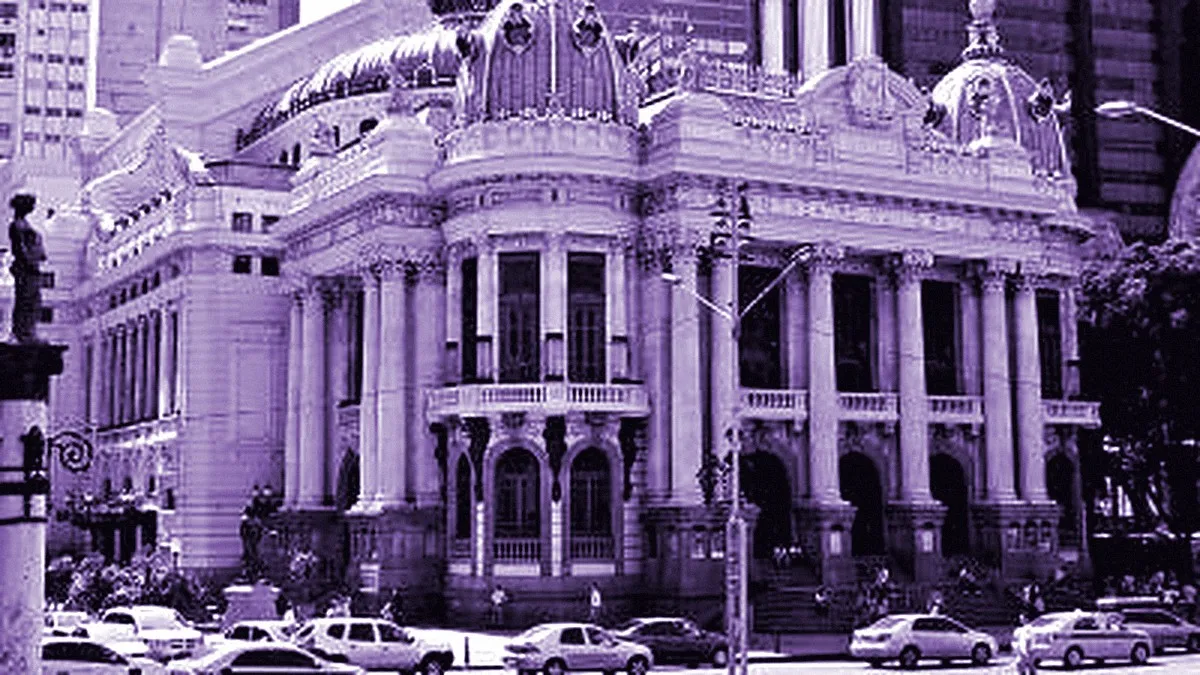
Discover Rio de Janeiro: Things to Do in the Marvelous City
Rio de Janeiro is a city where dramatic granite peaks rise above tropical forests, urban neighborhoods hug curving bays, and wide beaches are woven directly into daily life. This extraordinary setting explains the city’s title as the Cidade Maravilhosa, making it one of South America’s most captivating destinations. For travelers looking for a free audio guide for Rio de Janeiro, Neywo features 315 narrated places across the city.
What to See in Rio de Janeiro
From world-famous mountain viewpoints to historic downtown squares, Rio offers an incredible range of landmarks that reflect its layered history and natural beauty.
Sugarloaf Mountain and Christ the Redeemer
Rising dramatically from the waters at the mouth of Guanabara Bay, Sugarloaf Mountain is famous for its panoramic views and its historic cable car system. Opened in 1912, the Bondinho do Pão de Açúcar was the first cable car in Brazil and forms part of a UNESCO World Heritage Site. High above the city inside Tijuca National Park, Christ the Redeemer stands 709 metres above sea level. This monumental Art Deco statue of Jesus features outstretched arms spanning twenty-eight metres and offers sweeping views over the entire region.
Historic Downtown and Architectural Landmarks
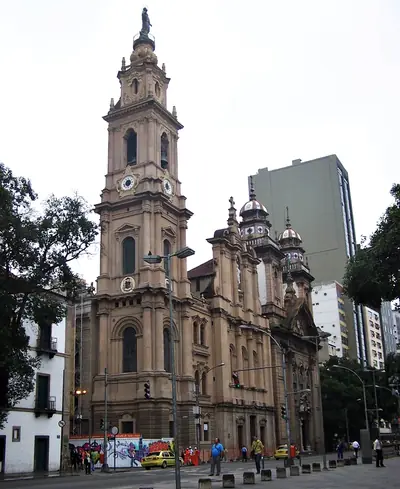
Rio’s Centro holds centuries of history, having served as the capital of colonial Brazil, the Portuguese Empire, and independent Brazil. The Old Cathedral of Rio de Janeiro, known as the Antiga Sé, served as the city’s cathedral from 1808 to 1976 and functioned as the Royal and Imperial Chapel during the nineteenth century. Nearby, the Candelária Church displays an elongated construction period spanning from 1775 through the late nineteenth century, blending a Portuguese colonial Baroque façade with Neoclassical and Neo-Renaissance interiors.
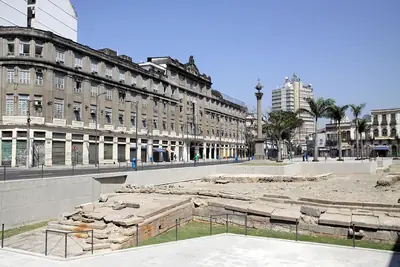
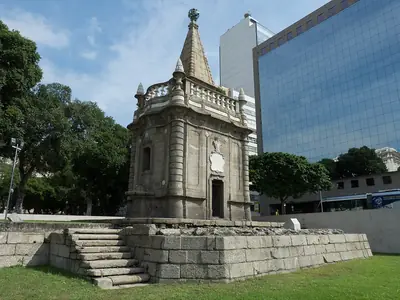
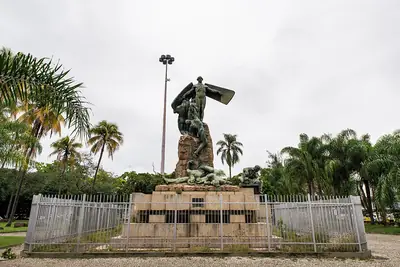
Also in the city center, the Edifício A Noite on Praça Mauá rose in the late 1920s as Latin America’s tallest skyscraper and the world’s tallest reinforced concrete building at the time. Close by stands Valongo Wharf, built in 1811 as the landing port for hundreds of thousands of enslaved Africans, marking one of the most significant sites of the African diaspora. Later renamed Cais da Imperatriz for the arrival of Princess Teresa Cristina, the site preserves a profound historical legacy. Other notable downtown monuments include the Monument to Marshal Deodoro da Fonseca, inaugurated in 1937, and the Chafariz do Mestre Valentim fountain.
Churches, Forts, and Artistic Stairs
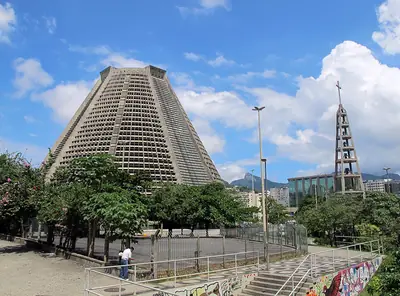
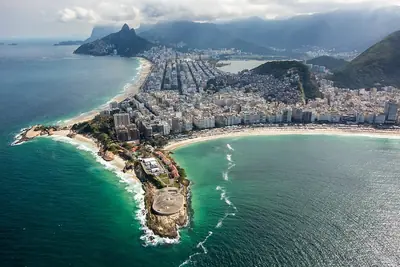
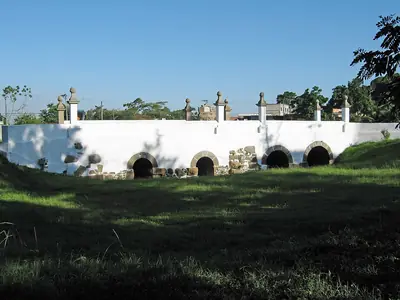
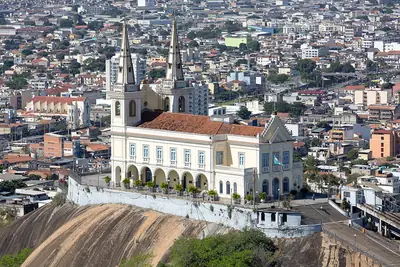
Perched on a rock in the Penha neighborhood, the Igreja de Nossa Senhora da Penha is famous for its monumental 382-step staircase, alongside three free funicular railways known as bondinhos. In the Glória neighborhood, the Igreja de Nossa Senhora da Glória do Outeiro stands as a jewel of colonial Baroque architecture. In Santa Cruz, the Jesuits’ Bridge completed in 1752 serves as an unusual bridge-dam with regulated water arches and decorative granite pinecones. Down toward the coast, Fort Copacabana combines a 1908 coastal defense fort with the Army Historical Museum at the southern end of Copacabana Beach. Connecting Santa Teresa and Lapa, the Escadaria Selarón is a 125-metre staircase covered in 215 steps of vibrant ceramic tiles created by the artist Jorge Selarón. Finally, the modern Metropolitan Cathedral of Rio de Janeiro, dedicated to Saint Sebastian, was built between 1964 and 1979.
Explore Rio de Janeiro with Neywo
If you want to experience the city at your own pace without schedules or large tour groups, Neywo provides a complete digital companion for your journey. The app includes 7 walking tour routes, 1 bus route, and 1 bike route, covering distances ranging from 1.15 km to 8.6 km and durations between 37 and 101 minutes across 315 narrated stops. As you reach each location, the audio guide automatically plays the story of the place in one of 11 available languages.
When you are ready to continue your journey through the region, explore nearby destinations in Brazil, including São Paulo, Paraty, Ouro Preto, Salvador, Recife, Olinda, São Luís, and Tibau do Sul.
Places with an audio guide in Rio de Janeiro
8 places in Rio de Janeiro with a Neywo audio guide. Each one starts telling its story as you reach it.
Self-guided tours in Rio de Janeiro
9 tours in Rio de Janeiro, free in the Neywo app. Each stop tells its story as you reach it.
- Bike ride
Flamengo Park and the Bay Cycle Path
Follow the dedicated bike lane along Guanabara Bay through Flamengo Park, past the Museum of Modern Art and the war memorial, to the Carmen Miranda museum and Botafogo's cheeky Manequinho, then on to Lido, where Copacabana begins, with Sugarloaf on the horizon.
Museum of Modern Art, Rio de Janeiro · Monument to the dead of World War II · À Estácio de Sá · Carmen Miranda Museum · Manequinho · Lido (Rio de Janeiro)
Open this tour: Flamengo Park and the Bay Cycle Path - Bus ride
Bus 118: From Corcovado's Doorstep to the Port
Ride from Cosme Velho, where the Christ the Redeemer train departs, through Catete and the city centre to the port. On the way: the old presidential palace, Paris Square, the colonial churches of the centre, Candelária and the A Noite skyscraper. A cheap, scenic cross-section of Rio.
Museu Internacional de Arte Naïf do Brasil · Catete Palace · Paris Square · Monument to Marshall Deodoro da Fonseca · Church of Saint Lucy · Old Cathedral of Rio de Janeiro …
Open this tour: Bus 118: From Corcovado's Doorstep to the Port - Walk
Praça XV: Where Brazil's Kings Lived
Start on the square where the Portuguese court landed in 1808. Walk past the fountain that once supplied the town, the palace of emperors and viceroys, and the twin Carmelite churches where royalty prayed. Slip down Rua do Ouvidor to the merchants' church and the Holy Cross of the Military, then finish at the Banco do Brasil cultural centre and Candelária, the church at the head of Avenida Presidente Vargas.
Marco à Primeira foto na América do Sul - Daguerreótipo · Praça XV de Novembro · Chafariz do Mestre Valentim · Paço Imperial · Tiradentes Palace · Convent of Mount Carmel …
Open this tour: Praça XV: Where Brazil's Kings Lived - Walk
Cinelândia: Stage, Stacks and Sacred Hill
Rio's Belle Époque showpieces and its modernist landmark in one downtown walk: a Neo-Moorish former cinema, the Academy of Letters and the Capanema Palace, then the opera-house theatre, the national fine-arts museum and the largest library in Latin America. Climb the Franciscan hill to finish, and drop to the ornate Neo-Manueline reading room of the Portuguese Cabinet.
Teatro Riachuelo · Statue of Mahatma Gandhi · Brazilian Academy of Letters · Gustavo Capanema Palace · Centro Cultural Justiça Federal (Brazil) · National Library of Brazil …
Open this tour: Cinelândia: Stage, Stacks and Sacred Hill - Walk
Arches, Tiles and Saint Teresa's Hill
From the modern cathedral shaped like a Mayan pyramid to the Carioca Aqueduct, where the yellow tram still rattles across the arches. Then up to the bohemian hill of Santa Teresa: the 215 mosaic steps of Selarón's staircase, the convent, a hillside art museum in its garden and the nineteenth-century house of Benjamin Constant.
Rio de Janeiro Cathedral · Carioca Aqueduct · Brazilian Historic and Geographic Institute · Igreja Nossa Senhora do Carmo da Lapa do Desterro · Escadaria Selarón · Church and Convent of Saint Teresa …
Open this tour: Arches, Tiles and Saint Teresa's Hill - Walk
From Skyscraper to Slave Wharf: Rio's Port
Walk the revitalised waterfront from the old Benedictine monastery through Praça Mauá to the Museum of Tomorrow, then follow the trail into Little Africa: the Prainha church, the Rock of Salt where samba was born, and Valongo Wharf, the UNESCO site where hundreds of thousands of enslaved Africans landed. It ends at the stevedores' square.
Mosteiro de São Bento · Edificio do Jornal A Noite · Praça Mauá · Museum of Tomorrow · Rio Art Museum · Church of Saint Francis of Prainha …
Open this tour: From Skyscraper to Slave Wharf: Rio's Port - Walk
Glória to Catete: Where the Republic Was Run
From a Parisian-style square in Glória to the baroque church on its hill, past the archbishop's palace and the Positivist temple. Then on to the Catete Palace, the seat of Brazil's presidents until 1960, the folklore museum next door and the leafy squares of Catete and Flamengo.
Paris Square · Igreja de Nossa Senhora da Glória do Outeiro · Palácio São Joaquim · Templo da Humanidade · Catete Palace · Museu de Folclore Edison Carneiro …
Open this tour: Glória to Catete: Where the Republic Was Run - Walk
Emperors' Park and the Temple of Football
Cross São Cristóvão from a fashion museum and the old military house to the Quinta da Boa Vista, the imperial family's country estate and its palace, now the National Museum. Finish where Rio's football lives: the zoo, an indigenous village beside the stadium, the Maracanã and its sister gymnasium.
Museu da Moda Brasileira · Museu Militar Conde de Linhares · Quinta da Boa Vista · Museu Nacional · Rio de Janeiro Zoological Garden · Marak'anà Village …
Open this tour: Emperors' Park and the Temple of Football - Walk
Botafogo: Lions, Writers and Villa-Lobos
A quiet residential walk through Humaitá and Botafogo: the little square where a football club was born, a Portuguese palace full of tiles, the house museum of the jurist Rui Barbosa and two museums to Brazil's Indigenous peoples and its greatest composer.
Largo dos Leões · Palácio de São Clemente · Museu Nacional dos Povos Indígenas · Museu Villa-Lobos · Museu Casa de Rui Barbosa
Open this tour: Botafogo: Lions, Writers and Villa-Lobos
Walk Rio de Janeiro with Neywo
Neywo turns Rio de Janeiro into a self-guided audio tour. Stories arrive as you reach the place they belong to, and the route reshapes when you wander off it.

