What to See in Abu Simbel, Egypt: Free Audio Guide
Things to Do in Abu Simbel: Temples, Nubian Heritage and Ancient Monuments
The most important things to do in Abu Simbel are visiting the two rock-cut temples built during the reign of Ramses II: the Great Temple of Ramses II and the Small Temple dedicated to Queen Nefertari and the goddess Hathor. Set within the historic Nubian landscape, the complex is also a remarkable story of modern preservation. Neywo offers a free Abu Simbel audio guide with 4 narrated places, available in 11 languages.
What to See in Abu Simbel
The Nubian Monuments from Abu Simbel to Philae
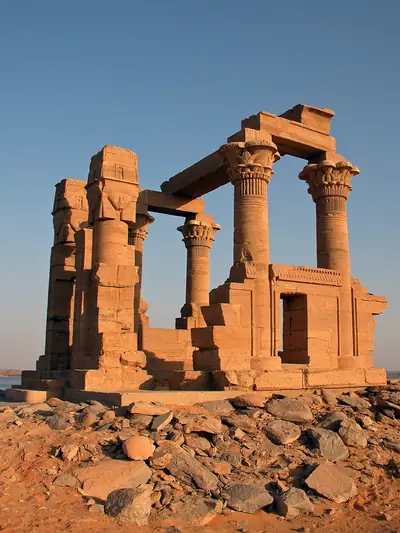
The monuments of Abu Simbel belong to a wider chain of ancient Egyptian sites extending along the Nile from Abu Simbel and Aswan toward the Sudanese border. Together, they preserve the history of Nubia across a vast riverside landscape.
Their survival is also part of a major twentieth-century rescue effort. After the decision to build the Aswan Dam in 1954, rising water levels threatened numerous ancient structures in the Nile Valley. An international UNESCO campaign began in 1960 and continued until 1980. Many monuments were moved to protect them from the water.
This heritage site therefore tells two stories at once: the history of ancient Egypt and the international effort to preserve it.
The Great Temple of Ramses II
The Great Temple of Abu Simbel, also known as the Temple of Ramses II, is the monument that dominates the site. Its façade is carved into the rock and features four colossal seated statues of Ramses II, accompanied by additional statues, reliefs and friezes.
The temple was built during the reign of Ramses II, the third pharaoh of Egypt’s Nineteenth Dynasty. It was dedicated to Amun, Re, Ptah and the deified Ramses II. Most of the structure is cut directly into the hillside, creating the distinctive character of a rock-cut temple.
The temple originally stood in the hill of Meha in Nubia. During the 1960s, it was moved together with the smaller temple to protect it from the rising waters of Lake Nasser, created by the construction of the Aswan High Dam. A hollow artificial hill now covers the temple, helping to recreate the appearance of its original setting.
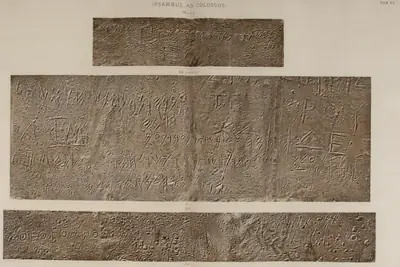
The façade also preserves traces left by later visitors. Phoenician inscriptions, known as CIS I 111 to 113, appear among the graffiti on the legs of the colossal statues.
The Small Temple of Abu Simbel
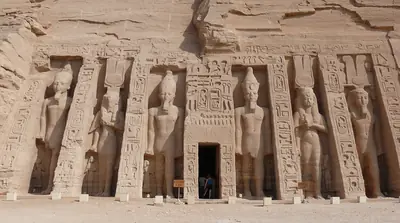
The Small Temple of Abu Simbel forms part of the same complex. It is a rock-cut sanctuary dedicated to Queen Nefertari and the goddess Hathor, and was built during the reign of Ramses II as a tribute to his great royal wife.
Large temples dedicated to a woman were rare in ancient Egypt, making this monument especially distinctive. The temple was carved directly into the rocky hill of Ibchek. Its dedication to Hathor of Ibchek reflects the connection between the goddess and the site, while the monument also honors Nefertari.
The two temples create a powerful contrast within the Abu Simbel complex: one celebrates the authority and religious identity of Ramses II, while the other brings together the queen and the goddess Hathor.
Aboccis
Aboccis was an ancient town in Egypt associated with Abu Simbel and mentioned by Ptolemy and Pliny the Elder. It became known for two remarkable grotto temples carved into the rock.
The temples were discovered by Giovanni Battista Belzoni, drawing attention to their remains and decoration. The larger temple contained paintings depicting the victories of Ramses the Third over different nations of Africa and Asia. These scenes gave the monument both architectural importance and the character of a record of royal military achievements.
Abu Simbel and the Story of Preservation
A visit to Abu Simbel is not only an encounter with monumental ancient architecture. The site also demonstrates how archaeological heritage can be protected from large-scale environmental change.
The relocation of the temples in the 1960s saved them from the rising waters of Lake Nasser. Their new setting, including the artificial hill over the Great Temple, preserves the visual impact of the original rock-cut monuments while reflecting the immense effort required to move them.
For travellers exploring Egypt, Abu Simbel offers a particularly strong connection between ancient history and modern conservation. It can also be considered alongside a visit to Aswan, another important city within the wider story of the Nubian monuments.
Explore Abu Simbel with Neywo
Download Neywo’s free Abu Simbel audio guide and explore the site at your own pace. It includes 4 narrated places, with narration available in 11 languages.
The app tells the story of each place as you reach it. You can listen without joining a group or following a schedule, making it a self-guided way to discover Abu Simbel’s temples and monuments.
Places with an audio guide in Abu Simbel
3 places in Abu Simbel with a Neywo audio guide. Each one starts telling its story as you reach it.
Walk Abu Simbel with Neywo
Neywo turns Abu Simbel into a self-guided audio tour. Stories arrive as you reach the place they belong to, and the route reshapes when you wander off it.

