Esztergom, Hungary: Self-Guided Walking Tour
Things to Do in Esztergom: Hungary’s Historic Danube City
Esztergom is a historic city on the Danube, known for its monumental basilica, castle hill, museums and connections with Hungary’s early statehood. It is a rewarding place to explore on foot, especially for travellers interested in religious art, medieval history and the changing cultural influences of the Danube region. Neywo offers a free audio guide for Esztergom with 28 narrated places.
The city makes a natural addition to a journey through Hungary, and its location makes it an appealing stop for travellers planning time in Budapest or exploring the Danube Bend.
What to see in Esztergom
Esztergom Basilica
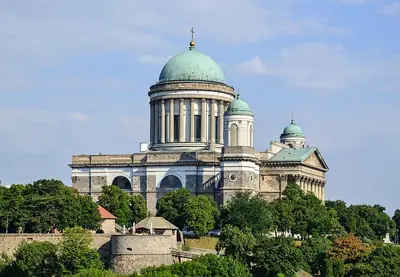
The city’s defining landmark is Esztergom Basilica, the largest church in Hungary and the mother church of the Archdiocese of Esztergom-Budapest. Its full name is the Primatial Basilica of the Assumption of the Blessed Virgin Mary and Saint Adalbert.
The classical building is 118 metres long and 49 metres wide, with an interior area of about 5,600 square metres. From the crypt to the sphere above the dome, it rises 100 metres. Inside, the dome reaches 71.5 metres and spans 33.5 metres. Twelve windows illuminate it, while the vast interior has a reverberation time of more than nine seconds.
The basilica also preserves part of Esztergom’s earlier cathedral. The Bakócz Chapel, incorporated into the later building, is the only surviving work of Hungarian Renaissance ecclesiastical architecture and the only intact part of the medieval Saint Adalbert Cathedral.
Esztergom Castle and the Castle Museum
Esztergom Castle rises on a dramatic point above the right bank of the Danube, more than fifty metres above the surrounding area. Its steep sides created a natural defensive position, and the site remains one of the most important places in Hungary’s medieval history.
Although much of the castle is now ruined, the complex includes the Castle Theatre, a panopticon and the Castle Museum of Esztergom, a branch of the Hungarian National Museum. The museum occupies surviving spaces connected with the royal palace and presents the history of the castle and its surroundings. The southern part of Castle Hill contains remains from the palaces of the Árpád dynasty and the later palace of the archbishops of Esztergom.
The castle complex received the title of European Heritage Site in 2008 and is included on Hungary’s tentative list for UNESCO World Heritage status.
Medieval Saint Adalbertus Cathedral
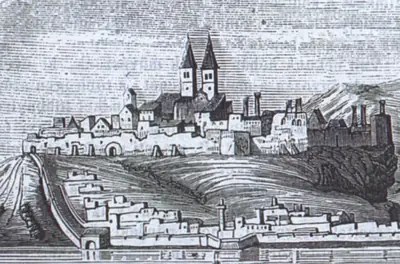
Before the present basilica, the castle hill was home to the medieval Saint Adalbert Cathedral. Saint Stephen built the original cathedral, which was rebuilt under Béla the Third after a fire in the twelfth century. From the fourteenth to the sixteenth century, it was expanded with additional side chapels.
The cathedral was severely damaged after the Turks captured Esztergom in 1543 and during the sieges that followed. Its ruins were later removed before the present basilica was constructed. The Bakócz Chapel, surviving engravings and stone carvings still preserve traces of the former cathedral.
Cathedral Treasury
The Treasury of the Basilica is housed on the upper floor of Esztergom’s Cathedral of Our Lady and Saint Adalbert. Its collection contains almost four hundred liturgical treasures and is regarded as Hungary’s richest ecclesiastical treasury.
Among its most important objects are the coronation cross, the Suki Chalice and the Corvin Calvary, also known as the Calvary of King Matthias. The collection includes gold and silver chalices, monstrances, baptismal vessels, reliquaries and croziers, as well as embroidered vestments, altar cloths, sacred sculptures and other church artworks.
Christian Museum
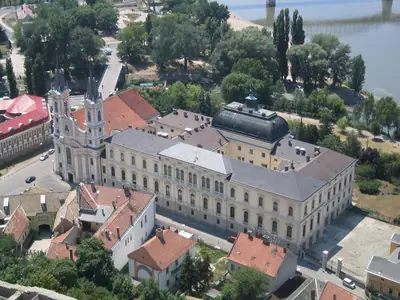
The Christian Museum occupies the second floor of the Primate’s Palace in Esztergom-Víziváros, beside the Danube. It holds Hungary’s largest ecclesiastical art collection, with more than ten thousand objects dating from the thirteenth to the nineteenth centuries.
The collection brings together Hungarian and European works, including paintings from Hungary, Italy, the Netherlands, Germany and Austria. Highlights include the Calvary Altarpiece by Thomas of Coloswar, the Lord’s Coffin from Garamszentbenedek and Passion scenes by Master MS.
The Neo-Renaissance Primate’s Palace is itself an important building. Constructed as the residence of the Archbishop of Esztergom, it remains part of the Archdiocese of Esztergom-Budapest and hosts official events of the Hungarian Catholic Church.
Öziceli Hacı İbrahim Mosque and Dzsámi Museum
The restored Öziceli Hacı İbrahim Mosque, also known as the former Archbishop’s Granary, is a distinctive reminder of Esztergom’s Ottoman past. Standing on Berényi Zsigmond Street, the mosque is about four hundred years old and is described as the farthest surviving and restored mosque of the former Ottoman Empire toward the northwest.
Beside it, the Dzsámi Museum is connected with the mosque and the nearby Malom-bástya, or Water Mill Bastion. The bastion is an industrial heritage monument, also known as the Prímási gépgyár or Petz-gyár, whose ruins preserve part of the city’s industrial history.
Chapel of Saint Thomas Becket
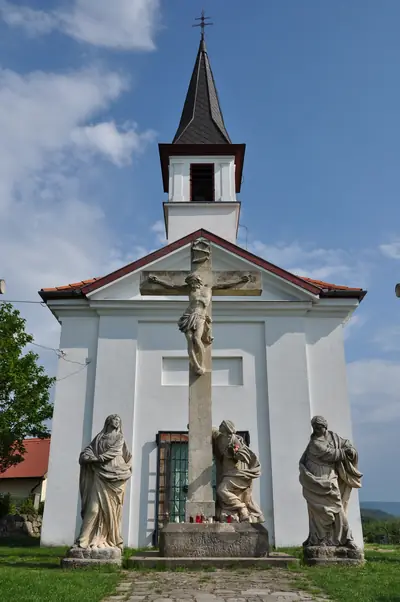
The Chapel of Saint Thomas Becket stands on the summit of Szent Tamás Hill. The approach follows a Baroque Way of the Cross, making the climb part of the visit. The small Roman Catholic chapel adds a quieter religious landmark to Esztergom’s hilltop landscape.
Esztergom Synagogue
Built in 1859, the Esztergom Synagogue served the town’s Jewish community until the upheavals of the twentieth century. It was renovated in 1888 and later severely damaged by bombing during the Second World War.
Almost all of Esztergom’s Jewish people were deported during the Holocaust, and the synagogue has not been used for religious purposes since the 1940s. After the war, the building was rebuilt and used as the House of Technology, or Technika Háza. The restoration simplified the exterior and transformed the interior, but the building remains an important historic monument.
Bálint Balassa Museum and the Museum of the Danube
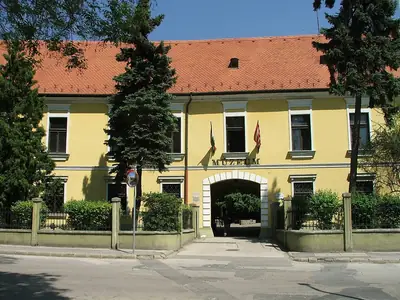
The Bálint Balassa Museum, known in Hungarian as the Balassa Bálint Múzeum, is a territorial museum institution of the National Museum. It offers another way to encounter Esztergom through its museum heritage.
The Museum of the Danube, or Duna múzeum, focuses on Hungary’s relationship with water. Housed in a former chapter building, it presents objects, documents and audiovisual material connected with water management and traces the history of Hungarian water affairs.
Coronation of Stephen I
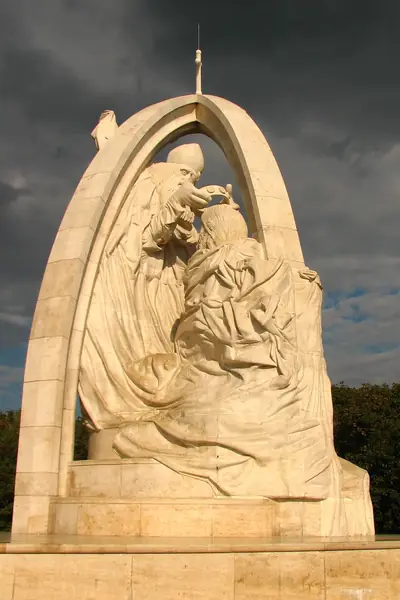
The monument known as the Coronation of Stephen I, or Coronation of Saint Stephen, depicts the coronation of Stephen I. Its Hungarian name is István megkoronázása, and it reflects Esztergom’s close connection with Hungary’s early royal history.
Pauline Monastery in Pilisszentlélek
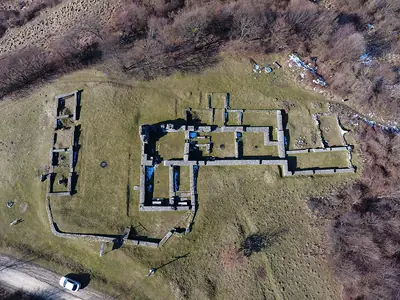
A short distance from Esztergom, the ruins of the Pauline Monastery in Pilisszentlélek stand in one of the Pilis region’s most beautiful settings. The freely accessible site is an important memorial place connected with the only monastic order founded in Hungary.
The monastery and church began taking shape in 1287. During a visit in 1323, King Charles Robert signed the monastery’s founding charter here. The complex was destroyed in the middle of the sixteenth century after Esztergom and Buda came under Ottoman rule. Excavations and preservation work brought the ruins back into view between 1985 and 1992.
Wonkwangsa International Zen Temple
In Búbánatvölgy, part of Esztergom, Wonkwangsa International Zen Temple offers a distinctive glimpse of Korean Buddhist tradition in Hungary. It is a traditional Korean Zen Buddhist temple on a site of more than eight hectares.
Seven buildings stand on the site, including a Dharma Hall designed by Hungarian architects in a traditional Korean style. The temple’s interior was arranged with help from visitors and volunteers from different countries. The community was maintained by the Jogye Order of Korean Buddhism and has belonged to the Taego Order since 2020.
Explore Esztergom with Neywo
Neywo has two walking tours in Esztergom. The first follows the route from the Danube Bridge to the Basilica: it covers 2.38 km, lasts 97 minutes and includes 12 narrated stops. The second explores Baroque Esztergom, including the squares, Round Church and Old Synagogue; it also covers 2.38 km, lasts 77 minutes and includes 8 stops.
With the Neywo app, each story plays as you reach the place it describes. Explore at your own pace, with no group and no schedule. Download the free Esztergom audio guide and let the city’s basilica, castle, museums and historic streets tell their stories as you walk.
Places with an audio guide in Esztergom
8 places in Esztergom with a Neywo audio guide. Each one starts telling its story as you reach it.
Self-guided tours in Esztergom
2 tours in Esztergom, free in the Neywo app. Each stop tells its story as you reach it.
- Walk
Hungary's First Capital: From the Danube Bridge to the Basilica
Esztergom was the birthplace of Saint Stephen and the seat of Hungary's primates. Start at the bridge to Slovakia, pass an Ottoman mosque and the Baroque Water Town, then climb Castle Hill through the ruins of the royal palace to the largest church in Hungary, with its dome and Renaissance chapel.
Mária Valéria Bridge · Öziceli Hacı İbrahim Mosque · Mindszenty Square, Esztergom · Saint Ignatius of Loyola Church, Esztergom-Víziváros · Christian Museum · Esztergom Castle …
Open this tour: Hungary's First Capital: From the Danube Bridge to the Basilica - Walk
Baroque Esztergom: Squares, Round Church and Old Synagogue
Leave the hill for the old town below, rebuilt by merchants after the Turks left. Walk from Szent Tamas Hill past the former synagogue and the Museum of the Danube to the main square, then through Baroque and Greek Catholic churches to the round church of Saint Anne.
Chapel of Saint Thomas Becket in Szenttamás · Esztergom Synagogue · Duna múzeum · Széchenyi square, Esztergom · Inner City Franciscan Church · Saints Peter and Paul church in Esztergom …
Open this tour: Baroque Esztergom: Squares, Round Church and Old Synagogue
Walk Esztergom with Neywo
Neywo turns Esztergom into a self-guided audio tour. Stories arrive as you reach the place they belong to, and the route reshapes when you wander off it.

