Things to Do in Pécs, Hungary: Walking Guide
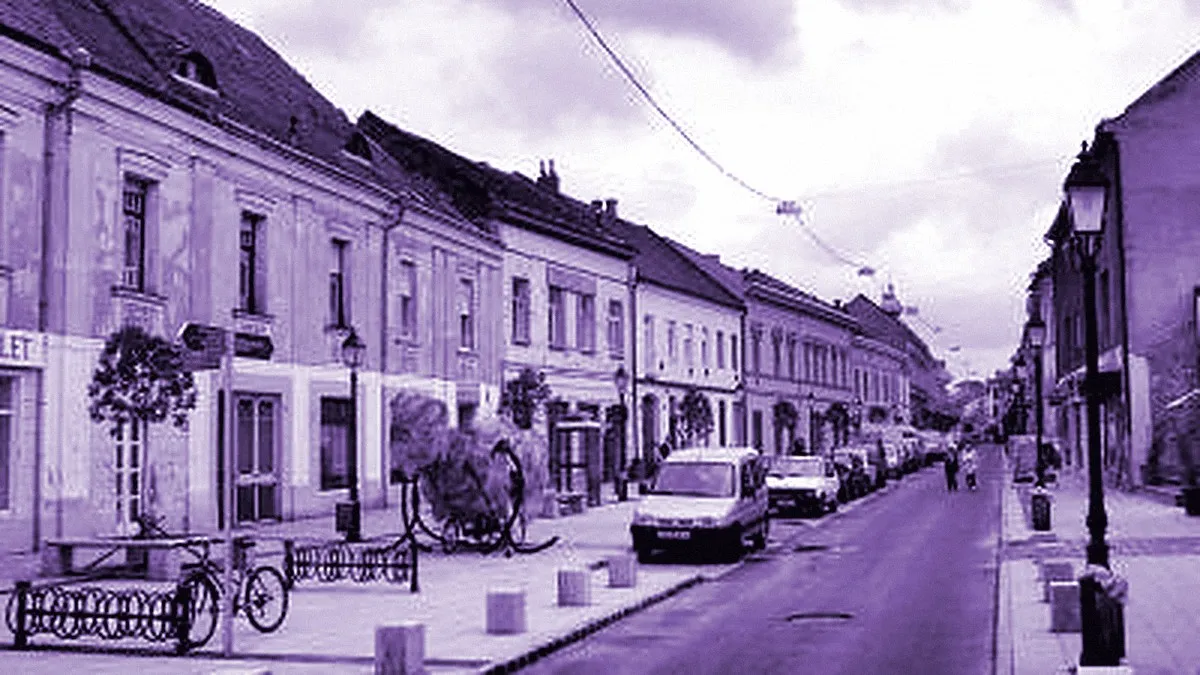
Things to Do in Pécs: What to See in Hungary’s Historic City
Looking for things to do in Pécs? This southern Hungarian city brings together Roman archaeology, medieval religious heritage, Ottoman monuments, historic museums, and a lively contemporary art scene. Its compact centre makes it especially rewarding to explore on foot, with major sights often close enough to connect in a single walk.
Neywo offers a free audio guide for Pécs with 77 narrated places, so you can discover the city while its stories play as you reach each location.
What to See in Pécs
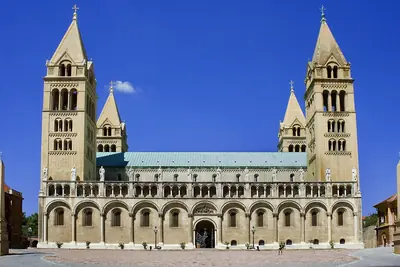
Pécs Cathedral
Pécs Cathedral, also known as the Cathedral Basilica of Saints Peter and Paul, stands on foundations dating from the Roman period, around the fourth century. An early Christian basilica was later expanded, and the building developed through the medieval period before suffering damage during the Ottoman occupation from 1543 to 1686.
The cathedral was restored as a church in 1686. Its present neo-Romanesque appearance largely comes from a major reconstruction carried out between 1882 and 1891, following plans by the Viennese architect Friedrich von Schmidt. The building is 70 metres long and 22 metres wide, with towers rising to about 60 metres.
Beside the cathedral, the Episcopal Palace forms part of the same protected ecclesiastical ensemble. Although later rebuilding concealed much of its medieval appearance, the building’s plan and walls preserve traces of its earlier form. The complex also includes an inner garden and an underground passage connecting the palace with the Bishop’s Cellar.
Early Christian Necropolis of Pécs
The Early Christian Necropolis of Pécs, also known as Sopianae, is a fourth-century Roman cemetery and one of the city’s most important archaeological sites. Sopianae was founded in the first century, and the cemetery was established to the north of the settlement as Christianity spread across the Roman Empire.
The necropolis was built on two levels: underground crypts and catacombs below, with chapels and mausoleums above. Brick tombs and sarcophagi held the dead, while the structures above marked the burial places and provided space for ceremonies.
Its burial chambers are particularly notable for their murals. Christian scenes include Jonah and the Apostles, alongside portraits of the deceased and floral and geometric decoration. The cemetery first came to light in 1782, when the demolition of a Renaissance palace revealed hidden burial chambers.
The Cella Septichora Visitor Centre is one of the places connected with this archaeological heritage and provides a starting point for understanding the necropolis.
Mosque of Pasha Qasim
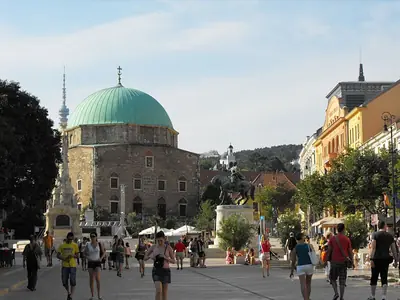
In Széchenyi Square, the Mosque of Pasha Qasim is one of Pécs’s defining landmarks. It is also known as the Downtown Candlemas Church of the Blessed Virgin Mary and now functions as a Roman Catholic church, while retaining the character of a former Ottoman mosque.
Pasha Qasim the Victorious built the mosque between 1543 and 1546, replacing an earlier Christian church on the site. After Pécs was reconquered by Habsburg and Hungarian forces, it was converted into a church in 1702.
The large dome and octagonal base reflect Ottoman design. Inside, two rows of arched windows create a greenish-yellow light, while sections of original plaster preserve Ottoman decoration and Qur’anic inscriptions. The building’s former minaret was demolished by the Jesuits in 1766.
Yakovalı Hasan Paşa Mosque
The Yakovalı Hasan Paşa Mosque, also known as Jakováli Hasszán dzsámija, is one of Hungary’s best-preserved Ottoman monuments. It is also one of the rare places where an Ottoman mosque and its slender minaret have survived together in almost unchanged form.
Built in the early seventeenth century, the mosque has a square base, a large dome, and ogee windows. Its interior is aligned towards Mecca, reflecting its original religious purpose. Beside the mosque, the minaret rises about 22.5 metres.
The building remains an active Muslim place of worship and houses an exhibition of Turkish handicrafts and historical objects connected with Hungary’s Ottoman past. The minaret is no longer open to visitors because of structural concerns. Restoration in the 1960s removed later Baroque additions, with further work carried out in the 2000s.
Csontváry Museum
The Csontváry Museum is dedicated to Tivadar Kosztka Csontváry, a Hungarian painter whose vivid, visionary works explore landscapes, spirituality, humanity, and nature. The museum has been open since 1973.
Csontváry was largely unrecognized during his lifetime. After his death in 1919, his paintings were put up for auction, but architect and art collector Gedeon Gerlóczy helped ensure that the works reached Pécs.
The collection includes expressive landscapes, scriptural subjects, portraits, and sketches. Among its best-known works are East Station at Night from 1902, Storm on the Great Hortobágy from 1903, Solitary Cedar from 1907, and Baalbeck from 1906.
Pécs Gallery and the Modern Hungarian Gallery
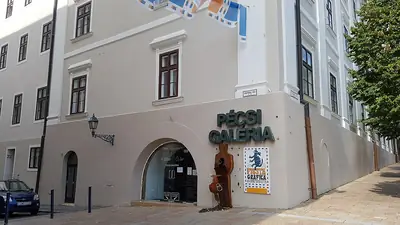
Pécs Gallery, known locally as Pécsi Galéria, has presented contemporary art in the city since 1977. It was Pécs’s first exhibition venue devoted to contemporary art.
The JPM Modern Magyar Képtár also connects the city’s modern cultural life with its artistic history. Works by Amerigo Tot are now included in its permanent exhibition. The former Amerigo Tot Museum on Káptalan Street is no longer a separate exhibition venue.
Tímár House
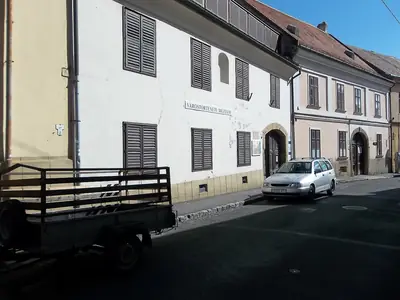
Tímár House is home to the Pécs City History Museum, or Várostörténeti Múzeum. Built in 1786 in the late Baroque style, it is a two-storey former tannery manufactory with a drying loft.
Leather processing had been important to Pécs since the Middle Ages, and the building preserves a link with the city’s eighteenth- and nineteenth-century industries. The permanent exhibition follows Pécs from the end of 143 years of Ottoman rule in 1686 through the Second World War and into the coalition period ending in 1948.
Documents, photographs, maps, models, reconstructed rooms, period clothing, postcards, and objects connected with local guilds and industries make the city’s changing identity easier to understand.
Zsolnay Cultural Quarter and the Gyugyi Collection
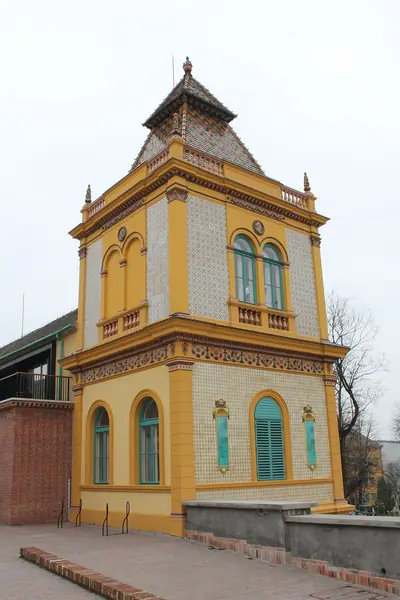
The Zsolnay Cultural Quarter occupies much of the former Zsolnay porcelain factory site. Developed as the largest investment of the Pécs 2010 European Capital of Culture project, the five-hectare complex revived the industrial grounds as a centre for exhibitions, cultural institutions, education, festivals, and contemporary creativity.
One of its most memorable stops is the Gyugyi Collection, housed in the Sikorski House. Known as The Golden Age of Zsolnay, the collection contains around 700 rare porcelain pieces assembled by László Gyugyi. It has been on display in Pécs since September 2010.
University History Exhibition and Klimo Library
The University History Exhibition presents documents and objects connected with the University of Pécs. It is housed in the Klimo Library, also known as the Episcopal Library or Klimo Collection.
Bishop György Klimó founded the library in Pécs in 1774. It was the country’s first public library, and Klimó opened it to the public even though he was unable to establish a university in Pécs. The collection continued under the episcopal see until the First World War, before Bishop Gyula Zichy gave the building and collection to the university for permanent use.
Pauline Monastery on Jakab Hill
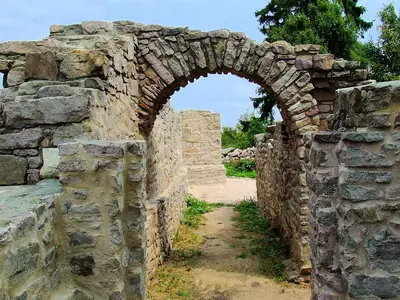
The ruins of the Pauline Monastery on Jakab Hill offer a quieter historical experience outside the central streets. The monastery near Kővágószőlős was abandoned during the Hungarian and Turkish wars, restored in 1736, and deserted again by 1828.
Most of the surviving masonry now rises only to shoulder or waist height. Preservation work in the late 1970s and again in 2006 and 2007 helped arrange the ruins and surrounding area for visitors.
Pasha Ferhad’s Mosque
At 4 Kazinczy Street, the remains of Pasha Ferhad’s Mosque lie beneath what may appear to be an unremarkable site. Archaeological excavations uncovered not only the mosque but also a twin bath, a residential building, a dervish monastery, and traces of the Muslim cemetery that surrounded it.
Only a large excavation pit is visible today, and the site is not open to the general public.
Explore Pécs with a Self-Guided Audio Tour
A Pécs self-guided walking tour is a practical way to connect the city’s historic centre, museums, churches, and Ottoman monuments without joining a group. Neywo’s Pécs audio guide includes three walking tours and one bus route, with narration available in 11 languages.
The walks are:
- Pécs Under the Crescent and the Cross: 1.74 km, 87 minutes, and 12 narrated stops.
- Széchenyi Square: Zsolnay, Pashas and Stage Lights: 1.98 km, 88 minutes, and 12 narrated stops.
- Above the Old Town: Hilltop Churches and the Zsolnay Quarter: 4.05 km, 99 minutes, and 9 narrated stops.
There is also a bus route:
- Bus 35: From the Old Town to Misina Peak: 9.7 km, 42 minutes, and 7 narrated stops.
The app tells the story of each place as you reach it, at your own pace, with no group and no schedule. Download Neywo’s free Pécs audio guide and explore the city through its Roman cemetery, cathedral, Ottoman heritage, museums, and Zsolnay traditions.
For more destinations in the country, continue exploring Hungary, or compare Pécs with Budapest, Szeged, and Keszthely.
Places with an audio guide in Pécs
8 places in Pécs with a Neywo audio guide. Each one starts telling its story as you reach it.
Self-guided tours in Pécs
4 tours in Pécs, free in the Neywo app. Each stop tells its story as you reach it.
- Bus ride
Bus 35: From the Old Town to Misina Peak
Ride the city's regular line 35 from the museum district past the Ottoman mosque and the medieval Barbican, then climb the Mecsek hills to a pilgrim church, the zoo and the 197 m TV tower, with a 360-degree view over Pécs.
Néprajzi múzeum · Yakovalı Hasan Paşa Mosque · Barbakán · Középkori egyetem · Pálos templom · Pécs Zoo …
Open this tour: Bus 35: From the Old Town to Misina Peak - Walk
Pécs Under the Crescent and the Cross
Start at the best-preserved Ottoman mosque in Hungary and follow the layers of Pécs: a church that was a mosque, a Turkish bath, a Gothic barbican and a Roman-rooted cathedral. Pass the site of the country's first university, then climb Káptalan Street, the museum row: the paintings of the lonely genius Csontváry, Vasarely's optical art, the Zsolnay ceramics and the oldest public library in Hungary.
Yakovalı Hasan Paşa Mosque · Franciscan church (Pécs) · Ruins of Pasha Memi's bath · St. Stephen's Square · Barbakán · Episcopal Palace (Pécs) …
Open this tour: Pécs Under the Crescent and the Cross - Walk
Széchenyi Square: Zsolnay, Pashas and Stage Lights
Pécs's living room is a square where a mosque wears a cross, a ceramic fountain glitters with Zsolnay glaze and a bronze Hunyadi rides high. Start at a post office dressed in Zsolnay tiles, then continue to a peach-coloured synagogue, a grand 1895 theatre, a Baroque lyceum built with mosque stones and a tannery turned city museum.
Postal Palace · Jókai Square in Pécs · Szerecsen Pharmacy Museum · Baranya County Hall · Mosque of Pasha Qasim · Hunyadi Statue …
Open this tour: Széchenyi Square: Zsolnay, Pashas and Stage Lights - Walk
Above the Old Town: Hilltop Churches and the Zsolnay Quarter
Leave the squares for the slopes of Mecsek. Visit a ruined Renaissance palace that became a dervish monastery, a pilgrimage church on Havi Hill and a church whose mosque windows survived. Finish in the Zsolnay Cultural Quarter, where a puppet theatre, a porcelain collection and a lion-guarded mausoleum tell the story of Pécs's ceramic dynasty.
Ruins in Tettye · St. Mary of the Snow Church, Pécs · All Saints Church · Saint Augustinus Church · University of Pécs · Kodály Centre …
Open this tour: Above the Old Town: Hilltop Churches and the Zsolnay Quarter
Walk Pécs with Neywo
Neywo turns Pécs into a self-guided audio tour. Stories arrive as you reach the place they belong to, and the route reshapes when you wander off it.

