Things to Do in Szeged, Hungary: Walking Guide
Things to Do in Szeged: What to See in Hungary’s Sunny City
Szeged is a lively city in southern Hungary, known for its historic architecture, museums, churches and position on the Tisza River. The city combines a rich past with a youthful atmosphere shaped by the University of Szeged, making it a rewarding alternative to more familiar destinations such as Budapest. Neywo offers a free audio guide for Szeged with 34 narrated places.
What to See in Szeged
The best things to do in Szeged range from medieval religious buildings and Art Nouveau masterpieces to museums, riverside landmarks and reminders of the city’s industrial history. Many of the main sights are close to the centre, making Szeged particularly well suited to exploring on foot.
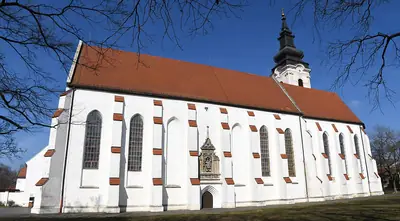
Franciscan Church in Szeged-Alsóváros
The Franciscan Church and monastery in the Alsóváros district has been part of Szeged for around five centuries. It is one of the oldest Franciscan complexes in Hungary, surpassed in age only by the buildings of Pannonhalma Abbey. The site still has the quiet character of a working monastery.
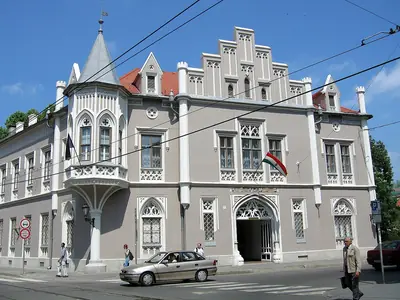
Black House
The Black House, or Fekete ház, stands at Somogyi Street 13 in the heart of Szeged. The historic building now functions as a museum exhibition space, giving visitors the chance to explore its displays while seeing one of the city’s notable urban landmarks.
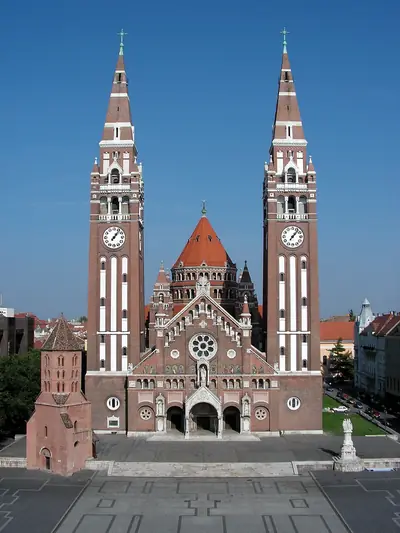
Votive Church of Szeged
The Votive Church is Szeged’s most recognisable landmark. Its twin towers rise 81 metres above Dóm Square, making it the fifth-tallest church in Hungary and the seat of the Roman Catholic Diocese of Szeged–Csanád.
The cathedral was built after the devastating flood of 1879 destroyed most of Szeged. Survivors vowed to construct a grand church, and the project eventually replaced the former Church of Saint Demeter. Construction began in 1913, was interrupted between 1914 and 1923 by the First World War and the Allied occupation, and was completed in time for the consecration of the church and Dóm Square in October 1930.
Dömötör Tower
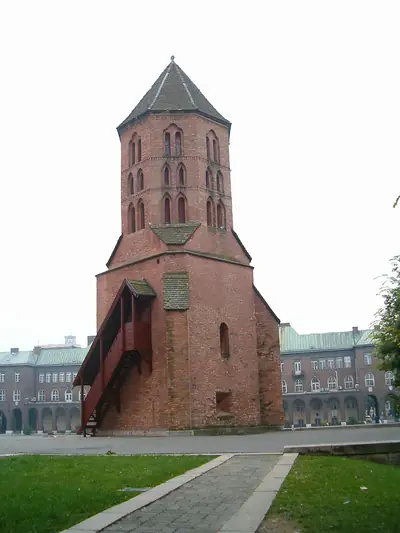
Standing in front of the Votive Church, Dömötör Tower is the oldest building in Szeged. Its foundations probably date from the 11th century, while its lower section was built in Romanesque style during the 12th century and its upper section added in Gothic style in the 13th century.
The tower originally belonged to the medieval Church of Saint Demetrius. When that church was demolished, Dömötör Tower was preserved. Its upper part was reconstructed from the original stones in 1926, retaining the character of this rare medieval survivor.
Saint Nicholas Serbian Orthodox Church
Also on Dóm Square, behind the Votive Church, Saint Nicholas Serbian Orthodox Church is one of Szeged’s oldest surviving Baroque buildings. Most of the church was built between 1773 and 1781, and it was consecrated in connection with the transfer of the relics of Saint Nicholas of Myra.
Its exterior combines Baroque design with early Neoclassical elements. The western façade is especially distinctive, with concave Baroque lines that give the church an elegant and unusual silhouette.
Szeged Synagogue
The Szeged Synagogue, also called the New Synagogue, is one of the city’s architectural highlights. Built between 1900 and 1902 and designed by the Jewish architect Lipót Baumhorn, it is the second-largest synagogue in Hungary and the fourth-largest in Europe.
The building brings together Art Nouveau, Moorish, Mediterranean, Baroque, Gothic and Romanesque influences. Inside, the Art Nouveau interior rises 48.5 metres without a dome. The dome is supported by 24 columns symbolising the hours of the day, while its paintings and stained-glass windows were created by Miksa Róth.
Reök Palace
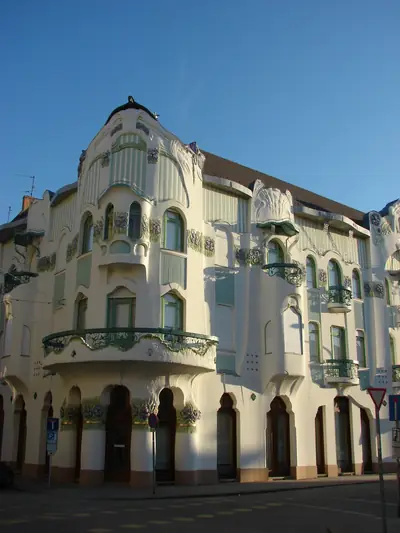
Reök Palace is one of Szeged’s most striking Art Nouveau buildings. Completed in 1907 by architect Ede Magyar for Iván Reök, a hydrologist, civil engineer, landowner and member of parliament, it reflects the Belgian and French branches of Art Nouveau—an unusual combination in Hungary.
Look for the curved roofline, purple and sea-green water lilies on the façade and ornate wrought-iron balconies. Inside, the staircase railing continues the floral design. After falling into disrepair during the second half of the 20th century, the palace was renovated and reopened in 2007.
Kass Galéria
Kass Galéria is a museum exhibition space in the centre of Szeged, at Vár utca 7. It has welcomed visitors since July 26, 1985, and forms part of the city’s network of cultural venues.
Castle Museum and Stone Collection
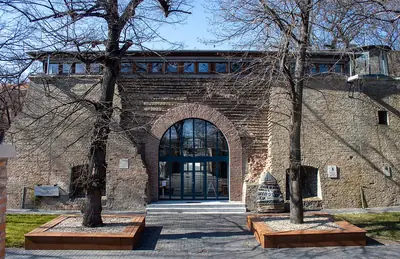
The Szegedi Vármúzeum and Kőtár occupies the Maria Theresa Gate, a Baroque structure built between 1762 and 1764. It is the last surviving remnant of Szeged Castle and stands where the Tisza riverbank meets the Belvárosi Bridge.
The building is one of the exhibition venues of the Móra Ferenc Museum. Following renovation work in 2019 and 2020, it became home to a permanent exhibition titled Travel to the Past, presenting the history of Szeged.
Móra Ferenc Museum
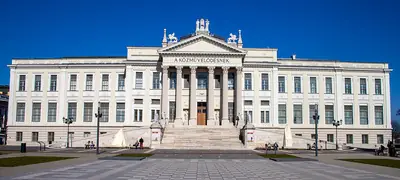
The Móra Ferenc Museum stands where the Tisza River meets the Downtown Bridge. Its neoclassical façade is an important part of Szeged’s cityscape, and the museum has occupied the building since 1896.
Founded in 1883, it was renamed in 1950 after its former director, Móra Ferenc. Its work covers archaeology, ethnography, history, natural sciences and numismatics, alongside permanent collections and changing exhibitions. The museum has also presented works by artists including Victor Vasarely and Tivadar Csontváry Kosztka.
National Theatre of Szeged
The National Theatre of Szeged was designed by the Viennese architectural firm Ferdinand Fellner and Hermann Helmer and completed in 1883. Its façade combines Eclectic and Neo-baroque elements.
The theatre opened on October 14, 1883, but burned down completely only two years later. It was restored by 1886, with only minor changes to the original design. It received the name National Theatre in 1945, becoming the third theatre in Hungary to receive that title.
MÁV 375.551 steam locomotive
The MÁV 375.551 is a preserved steam locomotive that once served Hungary’s branch lines. It belongs to the MÁV TV class, later known as the 375 series, which was built by the Royal Hungarian State Ironworks in several sub-series from around the turn of the century until 1959.
The type was regarded as one of the most successful steam locomotive classes in its category and remained in service until the end of the steam era.
Water tower
The water tower on Szent István Square was completed in 1904. It holds an important place in Hungarian engineering history as only the second water tower in the country built from reinforced concrete, a pioneering technique at the time.
Old Town Bridge and the rivers
The Belvárosi Bridge, or Old Town Bridge, crosses the Tisza and connects central Szeged with the Újszeged district. For decades, it was the only bridge crossing the Tisza in the county. The Bertalan Bridge provided a second crossing in 1979.
The bridge links Roosevelt Square, where the Móra Ferenc Museum stands, with Torontál Square and Erzsébet Park. Every May, it hosts the Hídivásár, or Bridgemarket, held for Szeged Day.
Nearby, the Mureș River—known in Hungarian as the Maros—flows into the Tisza. It rises in Romania’s Eastern Carpathians, travels roughly 750 kilometres and reaches Szeged after crossing the Transylvanian plateau.
Explore Szeged with Neywo
A Szeged self-guided walking tour is an easy way to explore the city without joining a group. Neywo has three walking tours and one bus route in Szeged:
- The Flood, the Vow and the Votive Church: 1.4 km, 89 minutes and 11 narrated stops.
- Art Nouveau Jewels and the Last Gate of the Castle: 1.92 km, 83 minutes and 10 stops.
- Steam, Springs and Saints: Szeged’s Northern Quarter: 3.44 km, 84 minutes and 7 stops.
- Bus 20: Station, Modernist Church, Art Nouveau Palace and a Steam Locomotive: 2.9 km, 12 minutes and 4 stops.
The app tells the story of each place as you reach it, at your own pace, with no group and no schedule. Download Neywo and explore Szeged with its free audio guide, available in 11 languages.
Places with an audio guide in Szeged
8 places in Szeged with a Neywo audio guide. Each one starts telling its story as you reach it.
Self-guided tours in Szeged
4 tours in Szeged, free in the Neywo app. Each stop tells its story as you reach it.
- Bus ride
Bus 20: Station, Modernist Church, Art Nouveau Palace and a Steam Locomotive
A local Volanbusz ride from Szeged's main railway station into the old centre. It passes the Honved Square Reformed church, the Reok Palace and a preserved MAV steam locomotive, so a rail traveller can step off the train and ride straight to the sights.
Indóház tér · Honvéd téri templom · Reök Palace · MÁV 375.551 gőzmozdony
Open this tour: Bus 20: Station, Modernist Church, Art Nouveau Palace and a Steam Locomotive - Walk
The Flood, the Vow and the Votive Church
In 1879 the Tisza drowned most of Szeged, and the survivors vowed to build a church. Walk through the cathedral square that grew from that promise, past a medieval tower hidden inside the old church, a Serbian Orthodox baroque gem and the grand twin spires, then on to the Black House, an Art Nouveau palace, the university quarter and a modernist Reformed church built to answer the Dom.
Porta Heroum · Szeged Aradi vértanúk tere · Dóm tér · Szeged cathedral visitor centre · Votive Church of Szeged · Saint Nicholas Serbian Orthodox Church, Szeged …
Open this tour: The Flood, the Vow and the Votive Church - Walk
Art Nouveau Jewels and the Last Gate of the Castle
Szeged rebuilt itself after the flood in glorious style. See one of Europe's largest synagogues under its star-lit dome, the water-lily facade of the Reök Palace, the squares of the new downtown and the theatre that burned and rose again, the Kass Gallery and the oldest cinema in town, then finish at the one gate left of the old castle beside the Tisza bridge.
Szeged Synagogue · Reök Palace · Klauzál Square · Széchenyi Square · Kass Galéria · Belvárosi Mozi …
Open this tour: Art Nouveau Jewels and the Last Gate of the Castle - Walk
Steam, Springs and Saints: Szeged's Northern Quarter
North of the boulevard, Szeged keeps its industrial and sacred past. See a neo-Gothic church, the chapel that was dismantled and rebuilt stone by stone, a preserved steam locomotive, the thermal Anna Spring, the 1904 concrete water tower, a late Baroque parish church and the Bertalan Bridge over the Tisza.
Saint Roch Church in Szeged · Szent Rozália kápolna · MÁV 375.551 gőzmozdony · Anna-kút · Water tower in Szeged · Saint Nicholas parish in Szeged …
Open this tour: Steam, Springs and Saints: Szeged's Northern Quarter
Walk Szeged with Neywo
Neywo turns Szeged into a self-guided audio tour. Stories arrive as you reach the place they belong to, and the route reshapes when you wander off it.

