Guadalajara, Mexico: Self-Guided Walking Tour
Things to Do in Guadalajara: Historic Squares, Museums and Jalisco Culture
Looking for things to do in Guadalajara? Mexico’s second-oldest university city is a place of historic churches, grand civic buildings, museums and living Jalisco traditions, from mariachi to regional craftsmanship. Its historic center is especially rewarding to explore on foot, with important sights gathered around plazas, courtyards and lively streets. Neywo offers a free audio guide for Guadalajara with 49 narrated places.
Guadalajara is the capital of Jalisco, a state closely associated with mariachi and tequila. The city combines colonial and neoclassical architecture with museums covering local history, art, journalism, natural history and traditional crafts. Here are the places that best explain its character.
What to See in Guadalajara
Guadalajara Cathedral
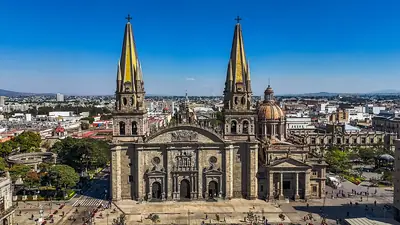
Guadalajara Cathedral is one of Mexico’s principal Catholic temples and the permanent seat of the city’s archbishop. The first cathedral was built in 1541, but fire damage led King Philip II to commission a replacement. Construction began in 1561, the building was completed in 1618 and it was consecrated in 1716.
The cathedral has been damaged by earthquakes several times. After damage in 1818 and 1849, architect Manuel Gómez Ibarra designed the Neo-Gothic towers completed in 1854. Inside, eleven altars gifted by King Fernando VII of Spain are dedicated to figures including Our Lady of Guadalupe, Our Lady of the Assumption and Our Lady of Zapopan.
Palacio de Gobierno de Jalisco
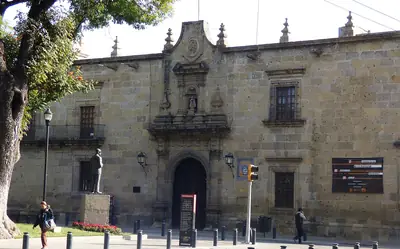
The Palacio de Gobierno de Jalisco stands in the heart of the city. Its original government palace was built in 1650, but an earthquake destroyed the adobe building in 1750. The replacement was financed through taxes on local tequila producers and officially inaugurated in 1790.
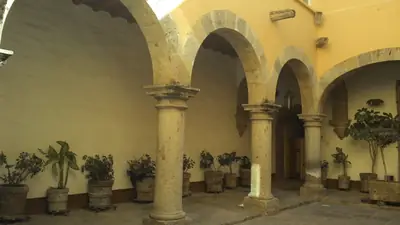
Its Baroque façade features balconies, large windows and a Doric entrance. Inside, the main courtyard has colonial-style columns and arches, while the stairwell contains three murals painted by José Clemente Orozco in 1937. The palace was also the place where the Decree for the Abolition of Slavery was signed in 1810.
Museo Regional de Guadalajara
The Museo Regional de Guadalajara traces the region’s story from prehistoric times to the present. The building has served as a prison, a barracks and the Liceo de Varones before becoming a museum in 1918. Its Baroque façade, central courtyard and staircase are part of the experience.
The natural history collection includes a woolly mammoth skeleton dating to 10,000 BC, pre-colonial ceramics and a 1,715-pound meteorite discovered in 1792. Multimedia displays explore Indigenous culture, while another highlight is a replica of a tomb commonly found in western Mexico.
Hospicio Cabañas
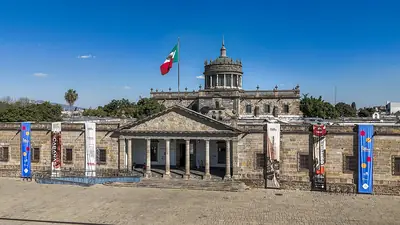
Hospicio Cabañas, also known as the Instituto Cultural Cabañas, is one of Guadalajara’s most important heritage buildings. The current complex was designed by Manuel Tolsá and opened in 1810 as the Casa de la Caridad y la Misericordia, an orphanage founded by the Bishop of Guadalajara. It later became the Instituto Cultural Cabañas in 1980.
The single-level layout was designed to make movement easier for children, patients and older people. The building is arranged around 23 courtyards, with hallways surrounding each one. Its chapel dome rises to 32.5 meters, well above the rest of the complex.
The museum is also known for 57 frescoes painted by José Clemente Orozco between 1938 and 1939. The combination of monumental architecture and Mexican mural art makes Hospicio Cabañas one of the essential things to do in Guadalajara.
Museo del Periodismo y las Artes Gráficas
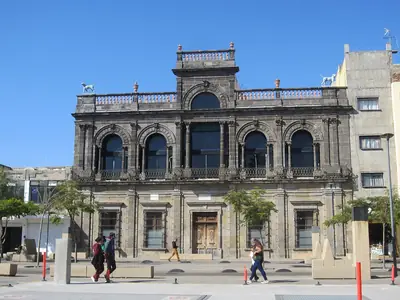
The Museo del Periodismo y las Artes Gráficas, or MUPAG, explores journalism, visual communication and graphic arts. It occupies the restored House of the Dogs, a 19th-century neoclassical residence named for the dog sculptures on its rooftop.
The site has a special place in Guadalajara’s publishing history: the city’s first printing press was established here in 1792. It was also the birthplace of The American Awakener, Mexico’s first independent newspaper, first published in December 1810 with support from Miguel Hidalgo and Francisco Severo Maldonado. The museum connects this history with questions of freedom of expression, memory, diversity and social justice.
Guadalajara City Museum
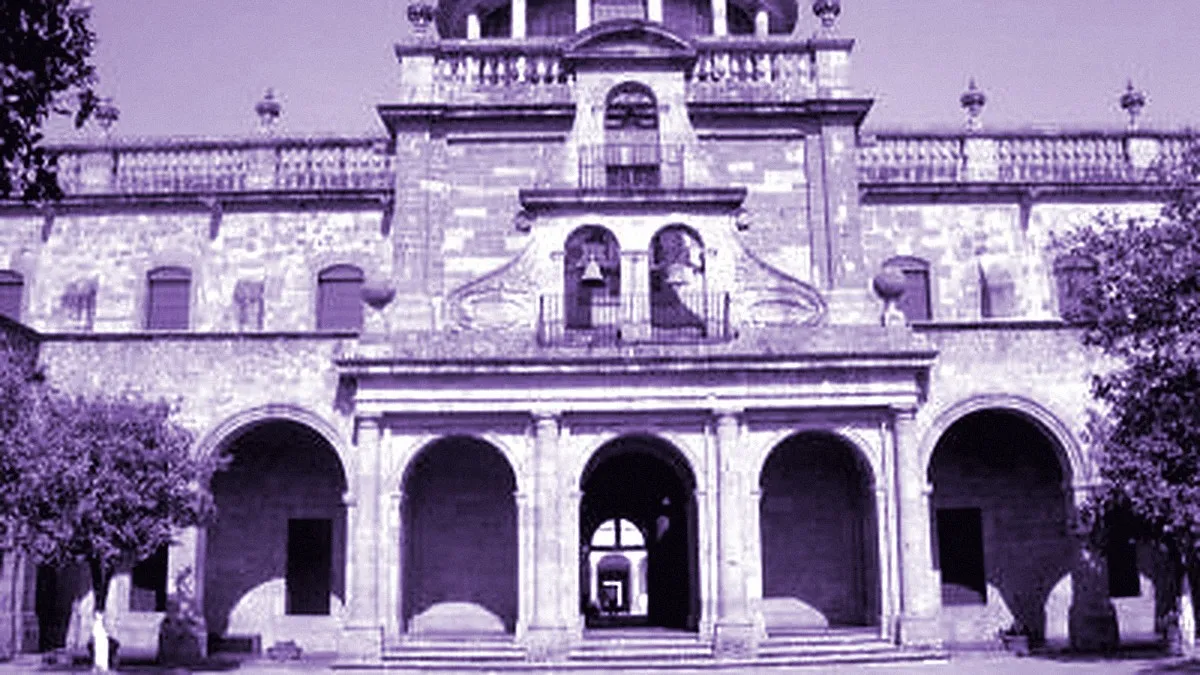
Guadalajara City Museum occupies an elegant former convent dating from the 18th century. Originally connected to the orchards of the Capuchinas convent, the building now presents the city’s history and cultural development.
Six permanent exhibition rooms on the ground floor cover the colonial era, demographic changes, economic growth, the independence movement, the Revolution and contemporary life. Photographs, maps, religious objects, household items and documents help tell the story. The Arrayán and Capulín courtyards are also used for events.
Casa Museo López Portillo
Casa Museo López Portillo is one of Guadalajara’s historic house museums. The residence was built in the late 18th century and later remodeled in a French Neoclassical style. The city acquired it in 1979, and it opened as a museum in 1982.
Nine preserved rooms display European furniture, decorative arts and artwork from the 18th century to the early 20th century. Look for Rococo pieces, fine porcelain and oil paintings that reflect the lifestyle of elite families during colonial and early modern Mexico. The Gabriel Flores Gallery presents rotating exhibitions.
Plaza de los Mariachis
Plaza de los Mariachis, also known as Plaza Pepe Guízar, is one of Guadalajara’s clearest expressions of local music culture. The square is associated with the birthplace of mariachi music and with the International Mariachi Festival.
During the day, the atmosphere is relatively quiet, with individual musicians busking or posing for photographs. In the evening, mariachi bands gather and the square becomes much livelier. The Templo de San Juan de Dios stands beside the shops and boutiques, and a large fountain near the church provides a useful landmark.
Templo de San Francisco de Asís
The Templo de San Francisco de Asís traces its origins to 1530, when Fray Antonio de Segovia established the first foundation. The present Baroque church was built between around 1668 and 1692 by the Franciscans.
Its façade has three levels of spiraling Solomonic columns, decorative niches and an ornate choir window. Inside, the single nave has soaring arches, elegant pillars, gilded altarpieces and paintings. A quiet garden occupies what was once a fruit orchard and cloistered courtyard. The interior was rebuilt in the 20th century after a fire in 1936.
Santuario de Nuestra Señora de Guadalupe
The Santuario de Nuestra Señora de Guadalupe is a major Catholic shrine on the Paseo Alcalde. Its first stone was laid on January 7, 1777, and the church was inaugurated in 1781.
The exterior combines Churrigueresque and neoclassical elements in golden cantera stone from nearby Huentitán. Inside, five naves are separated by 36 granite columns. The main altar, created by José de Alcíbar in 1779, centers on a crowned painting of the Virgin of Guadalupe and is surrounded by 28 oil paintings and gilded altars.
Other places to explore
Guadalajara’s cultural range continues at the University of Guadalajara, whose Museum of the Arts occupies a neoclassical building constructed in 1914 as part of the university’s rectory. The museum is particularly known for José Clemente Orozco’s fresco murals in the Enrique Díaz de León Auditorium suite.
For a different kind of visit, the Museo de Cera has 12 rooms and more than 130 wax figures, along with mirror mazes, a spinning tunnel, 4D projections and a monster hall. The Museo Panteón de Belén offers a quieter experience in a cemetery founded in 1848, with colonnaded walls, arched corridors, a central chapel and legends connected to its graves.
The Instituto de la Artesanía Jalisciense presents more than 2,000 heirloom pieces collected by painter Roberto Montenegro, including pottery, blown glass, jewelry, textiles, woodwork, leather items and traditional masks. The Museo de Paleontología de Guadalajara adds fossils from western Mexico, including a notably complete gonfoterio skeleton from Lake Chapala, as well as mammoths, saber-toothed cats, horses, pumas and ancient canids.
Explore Guadalajara with a Self-Guided Audio Guide
A Guadalajara self-guided walking tour lets you discover the historic center while the story plays at each place. Neywo’s free Guadalajara audio guide includes 49 narrated places and narration in 11 languages.
The app offers:
- 2 walking tours, including a 1.53-kilometer route lasting 78 minutes with 12 stops, and a 2.73-kilometer route lasting 118 minutes with 15 stops.
- 1 bus route, covering 2.8 kilometers in 12 minutes with 4 stops.
- 1 bike route, covering 1.5 kilometers in 8 minutes with 5 stops.
The routes include landmarks such as Guadalajara Cathedral, the Palacio de Gobierno de Jalisco, Plaza de los Mariachis, the Museo Regional de Guadalajara, the Templo de San Francisco de Asís and Guadalajara City Museum. Neywo tells the story of each place as you reach it, at your own pace, with no group and no schedule. Download the app and explore Guadalajara as a free walking tour with the flexibility of a self-guided visit.
After Guadalajara, continue exploring the state with Tlaquepaque, Puerto Vallarta or San Sebastián del Oeste.
Places with an audio guide in Guadalajara
8 places in Guadalajara with a Neywo audio guide. Each one starts telling its story as you reach it.
Self-guided tours in Guadalajara
3 tours in Guadalajara, free in the Neywo app. Each stop tells its story as you reach it.
- Bike ride
Historic Centre by Bike: Independence Monument to the City Museum
A short ride along the city's cycle lane from the Independence Monument past the Templo de San Francisco and the Ibero-American Library in a former Jesuit church to the cathedral, finishing at the City Museum in an old convent. Easy pace through the colonial heart of Guadalajara.
Monumento a la Independencia · Templo de San Francisco de Asís · Biblioteca Iberoamericana Octavio Paz · Guadalajara Cathedral · Guadalajara city museum
Open this tour: Historic Centre by Bike: Independence Monument to the City Museum - Bus ride
Macrobús Line 1: Calzada Independencia to Plaza Tapatía
Guadalajara's bus rapid transit line runs down the broad Calzada Independencia from Plaza Juárez to the Independence Monument, then on to Plaza de los Mariachis and Plaza Tapatía beside the historic centre. Ride it to reach the Hospicio Cabañas area quickly and cheaply.
Plaza Juárez · Monumento a la Independencia · Plaza de los Mariachis · Plaza Tapatía
Open this tour: Macrobús Line 1: Calzada Independencia to Plaza Tapatía - Walk
The four plazas and the cathedral
Guadalajara's centre is a cross of squares around the twin-spired cathedral. Orozco's murals are in the Palacio de Gobierno, the regional museum is in an eighteenth-century seminary, and the Degollado theatre closes the east end.
Casa Museo López Portillo · Museo Regional de Guadalajara · Municipal Hall of Guadalajara · Templo de Nuestra Señora de la Merced · Plaza Guadalajara · Guadalajara Cathedral …
Open this tour: The four plazas and the cathedral
Walk Guadalajara with Neywo
Neywo turns Guadalajara into a self-guided audio tour. Stories arrive as you reach the place they belong to, and the route reshapes when you wander off it.

