What to See in Tlaquepaque, Mexico: Free Audio Guide
Things to do in Tlaquepaque: what to see in the Jalisco artisan city
Looking for things to do in Tlaquepaque? Officially known as San Pedro Tlaquepaque, this city in Jalisco is a distinctive destination near Guadalajara, combining Indigenous heritage, colonial history and a strong tradition of Mexican craftsmanship. Ceramics, churches and cultural museums make it worth exploring at a relaxed pace. Neywo also offers a free audio guide for Tlaquepaque, with 4 narrated places in 11 languages.
Tlaquepaque lies about 10.6 kilometres from Guadalajara, making it a natural extension of the metropolitan area while retaining its own character. It is the municipal seat of the surrounding municipality and is known for artisan workshops, galleries, public spaces and streets shaped by local craft traditions.
What to see in Tlaquepaque
Museo Regional de la Cerámica
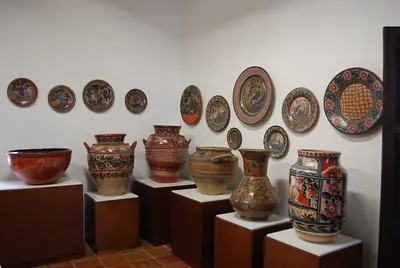
The Museo Regional de la Cerámica, or Regional Ceramic Museum, stands on Independencia Street in the heart of Tlaquepaque. It is one of the city’s two main ceramics museums and has played an important role in Tlaquepaque’s cultural identity since 1954.
The museum was founded to preserve and promote the Indigenous handcrafts of Jalisco, with particular attention to the state’s ceramic tradition. Ceramics form the centre of the collection, but the museum also includes a room devoted to Huichol art. Events celebrating different forms of Indigenous crafts and culture are also held there.
For anyone interested in the city’s artistic heritage, this is one of the clearest places to understand why Tlaquepaque is associated so strongly with pottery and traditional Mexican art.
Parroquia de San Pedro Apóstol
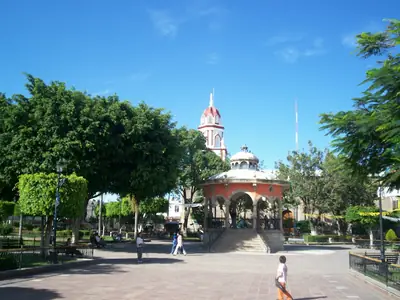
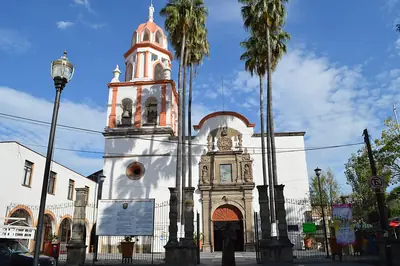
The Parroquia de San Pedro Apóstol is a church in the heart of Tlaquepaque. Its central location makes it one of the notable religious landmarks to include while exploring the city.
Santuario de Nuestra Señora de la Soledad
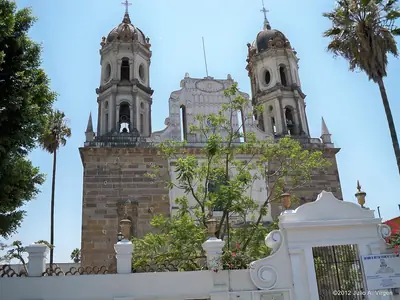
Also located in the heart of Tlaquepaque, the Santuario de Nuestra Señora de la Soledad adds another important religious site to the city’s historic centre. Together with the Parroquia de San Pedro Apóstol, it helps give the central area its distinctive architectural and cultural character.
Tlaquepaque’s streets and artisan tradition
Tlaquepaque is best explored through the combination of its streets, galleries, workshops and public spaces. The city’s creative identity is especially visible in its ceramics, handblown glass, painted crafts and woodwork.
Pottery remains central to the local tradition. The name Tlaquepaque comes from Nahuatl and is commonly interpreted as “place above clay land”, a meaning that reflects the importance of ceramics in the city’s cultural identity. Rather than presenting craft as something confined to a museum, Tlaquepaque continues to connect it with everyday streets and local creative life.
Indigenous and colonial heritage
Tlaquepaque’s history reaches back to the pre-Hispanic period. Before Spanish colonisation, the area formed part of the Tonalteca realm, whose political centre was Tonalá. Historical accounts associate its leadership with Cihualpilli Tzapotzinco, an Indigenous ruler.
Spanish forces arrived in the 16th century, adding a colonial layer to the area’s history. The city’s present-day character reflects these different influences: Indigenous heritage, colonial history and traditions that continue through its crafts and cultural institutions.
This mixture is one of the reasons Tlaquepaque feels different from a simple shopping district or day-trip stop. Its museums, churches and artisan culture belong to a broader local history that is still visible in the city.
Tlaquepaque as an extension of Guadalajara
Tlaquepaque sits close to Guadalajara, around 10.6 kilometres away, and forms a natural continuation of the metropolitan area. Visiting both places makes it possible to experience Guadalajara’s urban setting alongside Tlaquepaque’s more concentrated craft and cultural identity.
Tlaquepaque is also part of the wider state of Jalisco, where destinations such as Puerto Vallarta and San Sebastián del Oeste offer different perspectives on the region. At national level, it belongs to Mexico, but its ceramics and Indigenous handcraft traditions give it a particularly strong local identity.
Explore Tlaquepaque with Neywo
Neywo’s free Tlaquepaque audio guide includes 4 narrated places, available in 11 languages. The app tells the story of each place as you reach it, at your own pace, with no group and no schedule.
Download Neywo and explore Tlaquepaque independently, moving between its churches, ceramic museum and artisan streets while the guide provides the context along the way.
Places with an audio guide in Tlaquepaque
4 places in Tlaquepaque with a Neywo audio guide. Each one starts telling its story as you reach it.
Walk Tlaquepaque with Neywo
Neywo turns Tlaquepaque into a self-guided audio tour. Stories arrive as you reach the place they belong to, and the route reshapes when you wander off it.

