Ensenada, Mexico: Self-Guided Walking Tour
Things to Do in Ensenada: What to See in Mexico’s Pacific Port
Looking for things to do in Ensenada? This coastal city brings together a historic harbor, seafood traditions, churches, cantinas, public squares, and landmarks shaped by Mexico’s past. Its waterfront and compact central sights make Ensenada a rewarding place to explore on foot. Neywo offers a free audio guide for Ensenada with 8 narrated places, available in 11 languages.
What to See in Ensenada
Bandera Monumental and the Window to the Sea
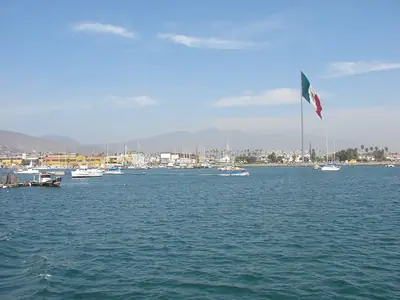
Bandera Monumental is one of Ensenada’s most prominent waterfront landmarks: a massive Mexican flag rising above the coast. The public space has broad views across the harbor and the Pacific Ocean, making it a natural place to pause and take in the city’s maritime setting.
Next to the park, the Window to the Sea is a boardwalk along the bay. It runs from near Mercado Negro to the park and is especially scenic around sunrise and sunset. Marine wildlife can sometimes be spotted from the waterfront, and boat rides offer the possibility of seeing whales up close.
Mercado Negro
Mercado Negro, or the Black Market, sits beside the malecón across from the city center. It is the heart of Ensenada’s seafood scene, with rows of vendors selling the day’s catch and a wide selection of fish and shellfish.
The market’s history began with a few carts selling fresh seafood. After moving five times, it settled at its current location. By 1957, it had acquired the nickname Black Market because it sold prized seafood such as lobster, shrimp, and abalone that was technically reserved for fishing cooperatives. Today, the name is associated with variety and quality.
Inside, the stalls offer octopus, squid, oysters, mussels, shark, and many kinds of fish. Fish-packing plants nearby provide a reminder that the market is closely connected to Ensenada’s working fishing industry.
Plaza Cívica, the Plaza of the Three Heads
Officially called Plaza Cívica, this square is better known as the Plaza of the Three Heads. Three towering golden busts stand above the plaza, representing important moments and figures in Mexican history.
Venustiano Carranza stands on the right. Known as the First Chief, he played a major role in the Mexican Revolution and became president after the adoption of the Constitution of 1917. In the center is Miguel Hidalgo, the priest whose Grito de Dolores helped spark Mexico’s War of Independence. Benito Juárez stands on the left; he is remembered as a reformer, Mexico’s first Indigenous president, and a champion of democracy and Indigenous rights.
Sea breezes, music, and nearby food stands give the square an everyday atmosphere alongside its historical symbolism.
Hotel Riviera del Pacífico
Hotel Riviera del Pacífico is one of Ensenada’s best-known historic landmarks. Built in 1928 and opened in 1930 as the Playa Ensenada Hotel and Casino, it became associated with the glamour of the Prohibition era and attracted Hollywood stars including Bing Crosby and Rita Hayworth.
After alcohol became legal again in the United States, the casino lost much of its appeal. The hotel changed owners several times before closing in the 1960s. Today, the Riviera functions as a cultural and convention center, while its interior preserves details from its earlier era, including hand-painted tiles, wood-beamed ceilings, murals, vintage photographs, and a mural by Mexican artist Alfredo Ramos Martínez.
The courtyard is home to Bar Andaluz, a cantina connected to the story that the margarita was born there. The property also hosts art classes, festivals, and community events.
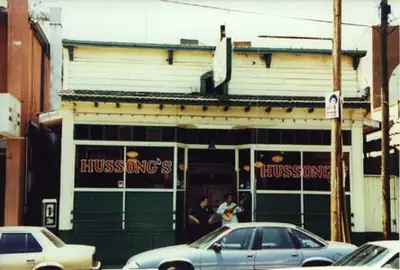
Hussong’s
Hussong’s is a historic cantina known for its rustic character, sawdust floors, music, and informal atmosphere. German immigrant Johan Hussong founded it in 1892, when it was known as John Hussong’s Agency and Diligence.
In its early years, stagecoach travelers could stop for nickel beer and dime whiskey, while horses were shod at the back. The name became Hussong’s Cantina in 1974. Over time, the cantina became associated with poker games, political deals, revolutions, and lively nights, attracting locals, travelers, Hollywood stars, and Baja 1000 participants.
Cathedral of Our Lady of Guadalupe
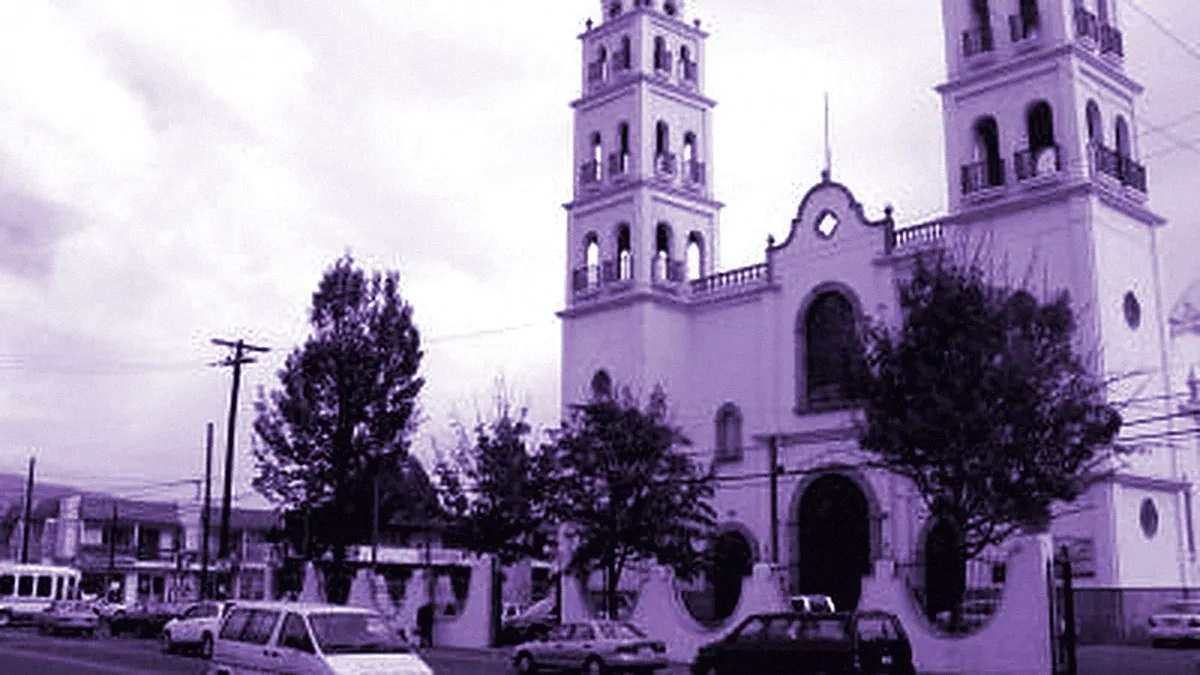
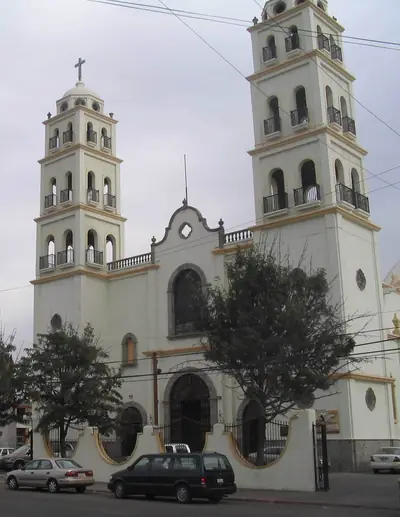
The Cathedral of Our Lady of Guadalupe is a Spanish Colonial-style church and the seat of the Diocese of Ensenada since 2007. Its history began in 1947, when Franciscan missionaries arrived in the city and envisioned a sanctuary dedicated to Our Lady of Guadalupe.
Construction began in 1951 and continued in stages until 1984. Limited funds made the project a long one, but community support kept it moving. Once one side of the nave was completed, it was used for worship while the other side temporarily became a movie theater. A later film hall helped raise additional money for the cathedral.
The interior reflects this gradual development, with stained-glass windows, black marble details, and a carved altar and altarpiece.
Temple of the Most Pure Heart of Mary
The Temple of the Most Pure Heart of Mary is a spiritual and architectural landmark with roots in the 1920s. Claretian Missionaries arrived to serve Ensenada’s growing community, and a provisional chapel was blessed in 1923. The chapel closed during the Cristero War from 1926 to 1929, then became one of the few chapels legally permitted to celebrate Mass.
It was formally established as the Parish of the Immaculate Heart of Mary in 1931. Work on the larger temple began in 1938 on land donated by Colonel Agustín Sanguines. Engineers and architects directed the project through several phases, including the sanctuary foundation, crypt, dome, and central structure. Construction continued until 1953, and the completed temple was solemnly blessed on December 5, 1954, by the Archbishop of Guadalajara.
Villa Marina Hotel
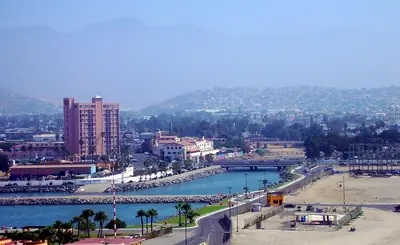
Villa Marina Hotel is another stop in Ensenada’s urban landscape. It forms part of the city’s collection of buildings encountered while exploring its central streets and waterfront surroundings.
Explore Ensenada with Neywo
Neywo’s Ensenada audio guide includes 8 narrated places. The guide is free, with narration available in 11 languages.
There are no scheduled departures, groups, or fixed pace to follow. The app tells the story of each place as you reach it, so you can explore independently and spend as much time as you like at each stop. For a broader trip through Mexico, you can also discover Neywo’s guides to other Mexican cities.
Places with an audio guide in Ensenada
4 places in Ensenada with a Neywo audio guide. Each one starts telling its story as you reach it.
Walk Ensenada with Neywo
Neywo turns Ensenada into a self-guided audio tour. Stories arrive as you reach the place they belong to, and the route reshapes when you wander off it.

