Visiting Zürich, Switzerland: Top Sights on Foot
Things to Do in Zürich: Historic Churches, Museums and Cultural Walks
Zürich is Switzerland’s largest city and a rewarding destination for history, art, architecture and city walks. From medieval churches and Reformation landmarks to international museums, concert halls and distinctive neighbourhood sights, there are plenty of things to do in Zürich at your own pace. Neywo has a free audio guide for Zürich with 312 narrated places.
What to See in Zürich
Kirche Enge
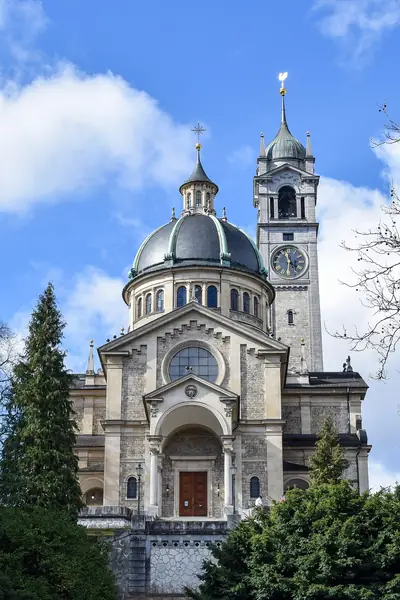
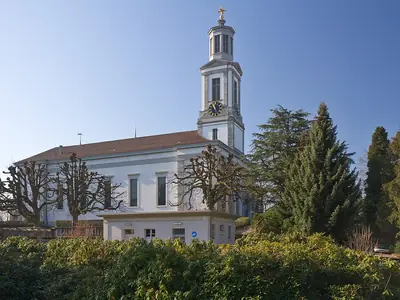
Set high on Bürgliterrasse, Kirche Enge is one of Zürich’s most distinctive church buildings. The Protestant Reformed church was designed by Alfred Friedrich Bluntschli, an architect and professor at the Swiss Federal Institute of Technology in Zurich. Its Neo-Renaissance design is defined by a cross-domed form and a campanile-like tower, creating a silhouette that stands clearly above the surrounding area. Its prominent shape has earned it the playful local nickname “the Sacré-Cœur of Zurich”.
Fraumünster
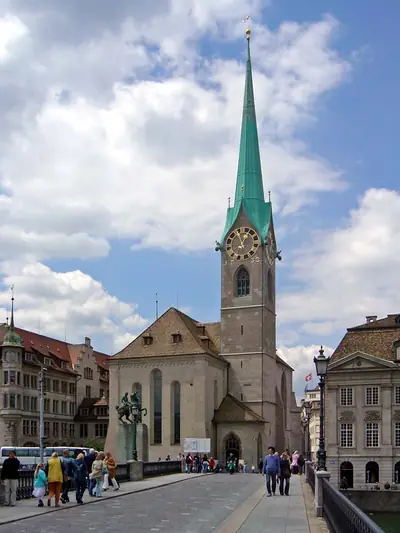
Fraumünster stands on the site of a former abbey for aristocratic women, founded in 853 by Louis the German for his daughter, Hildegard. The present sandstone church is predominantly Gothic and is one of Zürich’s four main historic churches, alongside Grossmünster, Predigerkirche and St. Peter’s.
The church is particularly famous for its stained-glass windows by Marc Chagall and Augusto Giacometti. The former cloister and abbey buildings were destroyed at the end of the nineteenth century, leaving Fraumünster as the principal surviving expression of the old complex.
Kunsthaus Zürich
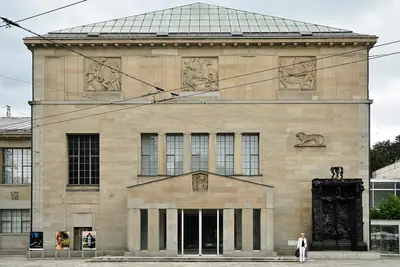
At Heimplatz, Kunsthaus Zürich is Switzerland’s largest art museum by exhibition area. Its collection covers art from the Middle Ages to the present, with a particular emphasis on Swiss art. European works from the late Middle Ages through contemporary art are shown across a four-part complex.
The older buildings include the Moserbau, Bührlesaal and Müllerbau. The newest section is the extension designed by Chipperfield Architects Berlin, which opened in 2021. The buildings line Heimplatz alongside Schauspielhaus Zürich, making the area an important cultural centre.
National Museum Zurich
Beside Zürich’s main railway station and Platzspitz park, the National Museum Zurich—also known as the Landesmuseum—is the main site of the Swiss National Museum. Opened in 1898, it is Switzerland’s most visited historical museum.
Its exhibitions trace Swiss cultural history from prehistory to the twenty-first century. Rather than concentrating on a single period, the museum brings together objects and stories that show the long development of Switzerland’s culture.
Martin Luther Church
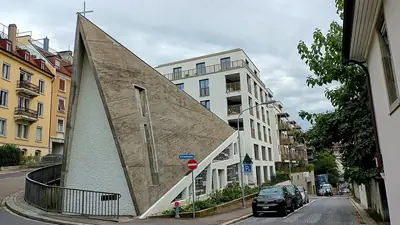
Martin Luther Church, known in German as the Evangelisch-Lutherische Kirche Zürich, serves the Evangelical Lutheran congregation of Zurich, North-Eastern and Central Switzerland. It is located in Zürich’s District 6.
Museum Rietberg
Museum Rietberg is Switzerland’s largest museum devoted to non-European art and design. Its collections focus on Asia, Africa, the Americas and Oceania, as well as Islamic art.
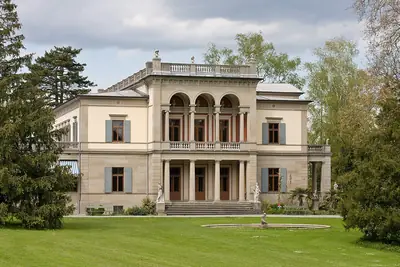
The museum occupies several historic buildings, including Villa Wesendonck, the Remise, Park-Villa Rieter and Villa Schönberg. A largely underground addition known as Smaragd more than doubled the exhibition space in 2007. Villa Wesendonck, built between 1853 and 1857 for Otto and Mathilde Wesendonck, is part of the Rieterpark ensemble in Zürich’s Enge district.
Neumünsterkirche
Neumünsterkirche, also known as Kirche Neumünster, is an Evangelical Reformed church in Zürich’s Riesbach district. The name Neumünster once referred both to the church and to the parish serving Seefeld, Riesbach and parts of Hirslanden. Since 2019, that parish has formed part of a newly created Zürich parish.
Zurich Tram Museum
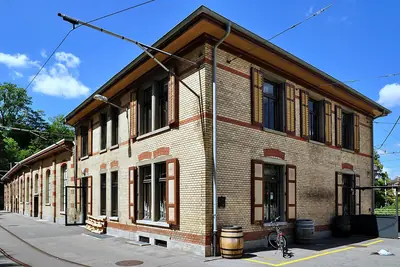
The Zurich Tram Museum occupies the former Burgwies tram depot and explores the history of Zürich’s tram system. Its collection traces the city’s tram history from 1989 onward. Until the opening of the Bern Tram Museum in 2007, it was the only tram museum in Switzerland.
FIFA Museum
The FIFA Museum is dedicated to the history and development of international football. Operated by FIFA, it opened on 28 February 2016 under the name FIFA World Football Museum. The museum is located in Zürich, across town from FIFA headquarters.
Letzigrund
Letzigrund is home to FC Zürich, Grasshopper Club Zürich and the athletics club LC Zürich. It also hosts major athletics competitions and open-air concerts.
The original stadium was built in 1925 by members of FC Zürich and demolished in 2006. The current building opened on 30 August 2007 and hosted three group matches during the 2008 European Football Championship. Designed for both football and athletics, it retains a running track and has a shell-like form, an unusual access ramp, wooden elements beneath the stands and solar panels on the roof.
Letzigrund is closely associated with Weltklasse Zürich, the annual athletics meeting held there since 1928 and now part of the Diamond League. On 21 June 1960, Armin Hary became the first person to run 100 metres in 10.0 seconds on this track.
Grossmünster
The twin towers of Grossmünster are among Zürich’s defining landmarks. The Romanesque church stands in the Old Town near the Limmat and was built between about 1100 and 1220 on the site of an earlier Carolingian church. Its distinctive Neo-Gothic tower tops were added in 1787.
Grossmünster played a central role in the Swiss Reformation. Its parish became the starting point of the Reformation in Zürich under Huldrych Zwingli between 1522 and 1525, and the church later remained associated with Heinrich Bullinger.
Zürich Opera House
Zürich Opera House stands at Sechseläutenplatz and has been home to the Zürich Opera since 1891. The building can accommodate around 1,100 people and hosts opera and ballet. It is also home to Ballett Zürich and houses the Bernhard-Theater Zürich.
Heimatschutzzentrum in der Villa Patumbah
Villa Patumbah, in Zürich’s District 8, is one of the city’s important examples of Historicism and is protected as a heritage monument. Built between 1883 and 1885 for Karl Fürchtegott Grob, the neo-Renaissance villa reflects the wealth of its patron, who made his fortune through a tobacco plantation on Sumatra.
The Heimatschutzzentrum in Villa Patumbah is a heritage-conservation centre located within the villa, connecting the visitor experience with the building’s architectural and historical importance.
Botanical Garden of the University of Zurich
The Botanical Garden of the University of Zurich offers a quieter experience among living plant collections in the Weinegg quarter. It opened in 1977 on Zollikerstrasse and is distinct from Zürich’s Old Botanical Garden in the city centre.
Museum of Design
The Museum of Design explores industrial design, visual communication, architecture and craft. Its collections include product and industrial design, graphic design, typography, photography, posters, film, furniture, fashion, jewellery, applied arts, architecture and scenography.
At its historic home on Ausstellungsstrasse, selected objects are shown alongside exhibitions on changing themes. The listed building dates from 1933 and is regarded as an outstanding example of modern Swiss architecture; after renovation, it reopened in 2018. The museum’s four collections—Design, Graphic Design, Applied Arts and Posters—contain more than 500,000 objects.
Explore Zürich with a Self-Guided Walking Tour
A Zürich self-guided walking tour is a practical way to connect the city’s landmarks without joining a group. Neywo offers four walking tours:
- Zurich’s Roman Hill to the Reformation: 1.13 km, 72 minutes and 10 narrated stops
- Dada, Friars and Thomas Mann: 2.01 km, 82 minutes and 10 narrated stops
- Bahnhofstrasse: Trains, Clocks and Monasteries: 3.04 km, 106 minutes and 12 narrated stops
- Zürichhorn: Tinguely’s Machine, a Chinese Garden and Le Corbusier: 3.41 km, 102 minutes and 10 narrated stops
The walks include places such as Lindenhof, Fraumünster, Grossmünster, Kunsthaus Zürich, the National Museum Zurich, Villa Patumbah, Neumünsterkirche and the Botanical Garden of the University of Zurich. If you are planning a wider trip through Switzerland, Zürich also makes a useful cultural contrast with destinations such as Lucerne, Stein am Rhein and Interlaken.
Download Neywo and Explore Zürich at Your Own Pace
Neywo’s free Zürich audio guide includes 312 narrated places and four walking tours. Narration is available in 11 languages. Each story plays as you reach the place, at your own pace, with no group and no schedule.
Download Neywo and let the app tell the story of Zürich’s churches, museums, neighbourhoods and landmarks as you discover them on foot.
Places with an audio guide in Zürich
8 places in Zürich with a Neywo audio guide. Each one starts telling its story as you reach it.
Self-guided tours in Zürich
4 tours in Zürich, free in the Neywo app. Each stop tells its story as you reach it.
- Walk
Zurich's Roman Hill to the Reformation
Start on Lindenhof, where Romans, Carolingian kings and Zurich's citizens all made their stand, then drop through the old town past the city's biggest church clock, the wine square on the Limmat and the abbey courtyard of Münsterhof. Cross to the Wasserkirche and Helmhaus and finish under the twin towers of the Grossmünster, where Zwingli's Reformation began.
Lindenhof · St. Peter · Weinplatz · Münsterhof · Fraumünster · Monument to Hans Waldmann …
Open this tour: Zurich's Roman Hill to the Reformation - Walk
Dada, Friars and Thomas Mann
Follow the trail of Zurich's thinkers and rebels. It runs from the cabaret where Dada was born in 1916 to medieval friary remains, a daring little theatre, the Dominican monastery that now holds the city library, and the study of Thomas Mann. It passes the university's museums and ends at the Kunsthaus, home to Giacometti and Dada works.
Cabaret Voltaire · Cloister of the former Barfüsser monastery · Theater am Neumarkt Zürich · Preachers church · Zentralbibliothek Zürich · Thomas Mann Archives …
Open this tour: Dada, Friars and Thomas Mann - Walk
Bahnhofstrasse: Trains, Clocks and Monasteries
Start in Platzspitz park and the Swiss National Museum, cross the biggest railway station in the country and walk down the famous Bahnhofstrasse. On the way you pass a Gothic monastery church, a literary museum in a baroque townhouse, a collection of antique clocks and Paradeplatz. The walk ends at the lake, at Bürkliplatz and the Quaibrücke.
Wilhelm-Baumgartner-Denkmal · National Museum Zurich · Zürich Hauptbahnhof · Augustinerkloster Zürich · Museum Strauhof · Uhrenmuseum Beyer …
Open this tour: Bahnhofstrasse: Trains, Clocks and Monasteries - Walk
Zürichhorn: Tinguely's Machine, a Chinese Garden and Le Corbusier
A relaxed lakeside walk along the Zürichhorn shore. See a kinetic sculpture that never stops moving, a Chinese temple garden, Le Corbusier's last building and a villa funded by Sumatran tobacco. It also takes in a historic grain mill and ends in the botanical garden and the Neumünster church.
Johann Jacobs Museum · Museum Bellerive · Pavillon Le Corbusier · Chinese Garden · Heureka · Mühle Tiefenbrunnen …
Open this tour: Zürichhorn: Tinguely's Machine, a Chinese Garden and Le Corbusier
Walk Zürich with Neywo
Neywo turns Zürich into a self-guided audio tour. Stories arrive as you reach the place they belong to, and the route reshapes when you wander off it.

