Things to Do in Swansea, United Kingdom: Walking Guide
Things to Do in Swansea: Castles, Poetry and the Waterfront
Swansea is a coastal city in Wales where Norman castles, industrial heritage, Welsh culture and literary history meet the sea. The city centre, Maritime Quarter, surrounding parks and Gower Peninsula offer plenty to see, from Dylan Thomas’s legacy to medieval ruins and ancient monuments. Neywo has a free audio guide for Swansea with 140 narrated places, available in 11 languages.
Swansea is a destination within Wales, on the southwest coast of the United Kingdom. It is also a useful base for discovering other Welsh destinations, including Tenby and St Davids.
What to see in Swansea
Swansea’s historic centre
The city centre brings together several of Swansea’s central landmarks. Swansea Market is a place to discover Welsh specialities such as laverbread and Welsh cakes, while Swansea Castle preserves part of the city’s medieval story. Nearby, St Mary’s Church, St David’s Priory R.C. Church and St Thomas’s parish church add further historic and architectural interest.
The Glynn Vivian Art Gallery, near Swansea railway station and opposite the old Swansea Central Library, is the public art gallery of the City and County of Swansea. Its collection includes European art, local work and Swansea porcelain. The gallery began with Glynn Vivian’s 1905 gift of paintings, drawings and china, together with a ten-thousand-pound endowment. Its collection now includes works by Richard Wilson, Claude Monet, Gwen John and Paul Nash, as well as prints by Albrecht Dürer and William Blake.
Dylan Thomas and the Maritime Quarter
Dylan Thomas is one of Swansea’s defining cultural figures. The Dylan Thomas Centre occupies a building constructed in 1825 as Swansea’s Guildhall. Reopened in 1995, it contains the permanent Man and Myth exhibition, which explores the poet’s life and work through letters, books, worksheets, photographs and interactive media.
The Maritime Quarter also includes Mission Gallery, a contemporary visual and applied arts space in the former Saint Nicholas Church. Built in 1886, the church became an art gallery in 1977. Its programme includes painting, installation, photography and craft.
The nearby Dylan Thomas Theatre has a direct connection with the poet’s early years and has been home to Swansea Little Theatre since 1979. Together, these places make the waterfront an important part of Swansea’s literary identity.
Museums on the waterfront
The National Waterfront Museum explains Wales’s technological and industrial development. It offers context for Swansea’s transformation from an industrial centre—once known as “Copperopolis” because of its copper industry—into a modern waterfront city.
Swansea Museum is another stop in the Maritime Quarter, while the surrounding docklands connect the city’s industrial past with its contemporary waterfront. This area is particularly well suited to exploring on foot, with several cultural landmarks close together.
St Joseph’s Cathedral
St Joseph’s Cathedral, also known as Swansea Cathedral or Menevia Cathedral, is a Catholic landmark in Swansea’s Greenhill area. It began as a church designed by Peter Paul Pugin for Father Wulstan Richards. Construction started in 1875, and the building officially opened on 25 November 1888.
In 1987, it became the seat of the Bishop of Menevia and the mother church of the Diocese of Menevia. Its Gothic Revival design includes an apsidal chancel, side chapels, a seven-bay aisled nave and a polygonal tower with a spire.
Clyne Gardens and its bridges
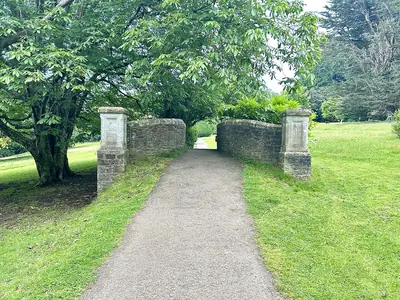
Clyne Gardens contains two notable listed features: the Italian Bridge and the Japanese Bridge. The Italian Bridge stands on the east side of Clyne Castle, while the Japanese Bridge crosses the Brock Hole stream southwest of the castle, beside a pond.
These bridges add architectural detail to the gardens and connect the paths with the stream and surrounding landscape.
Swansea’s sporting and cultural landmarks
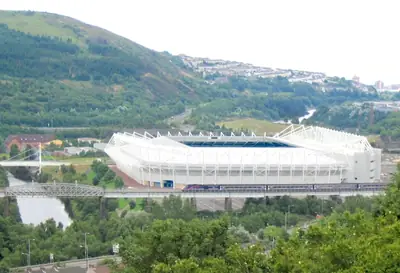
The Swansea.com Stadium, formerly known as the Liberty Stadium, opened in 2005. It is an all-seated venue used for football, rugby union and conferences. It originally opened with space for 20,750 people, and later layout changes increased its capacity to more than 21,000.
At Swansea University’s Singleton Campus, the Egypt Centre displays around 2,000 Egyptian antiquities in two galleries, the House of Death and the House of Life. The museum holds more than 6,000 Egyptian antiquities in total and opened in 1998. The same campus is also home to the Taliesin Arts Centre.
Oystermouth Castle and Mumbles
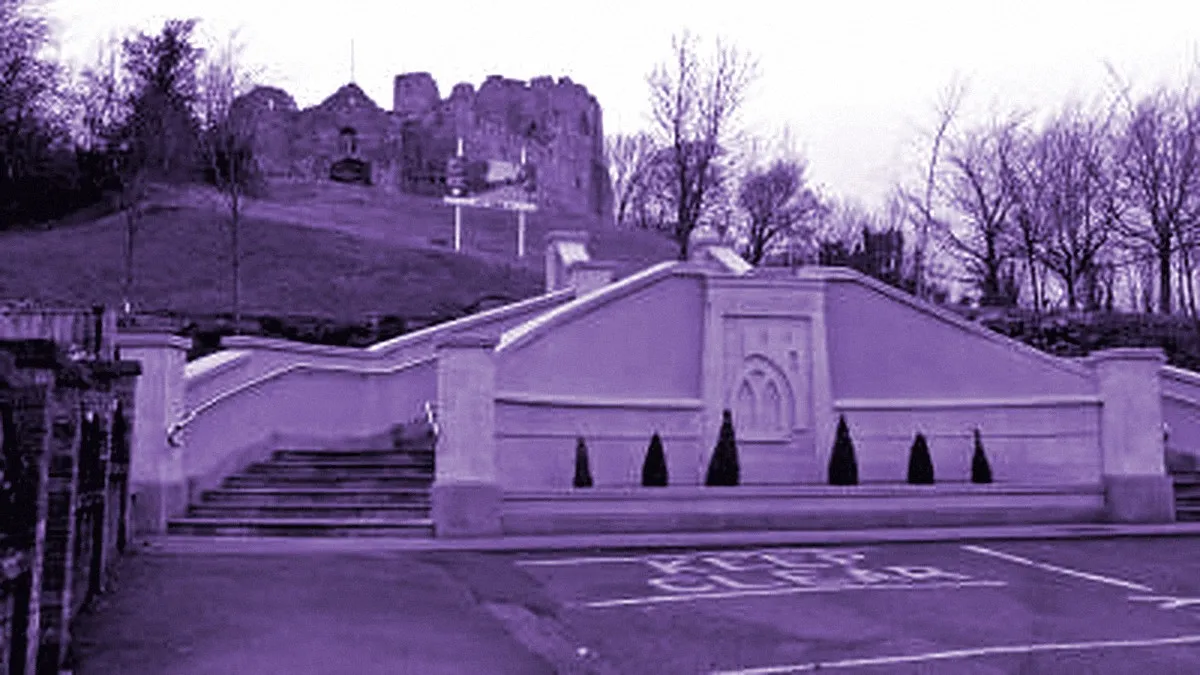
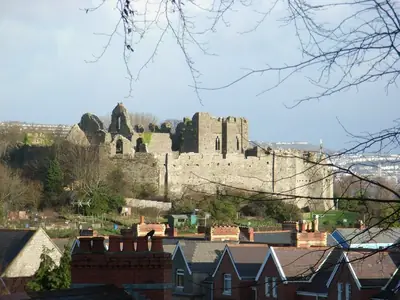
Oystermouth Castle is a Norman stone stronghold overlooking Swansea Bay, near Mumbles on the eastern side of the Gower Peninsula. Founded by William de Londres in 1106 or shortly afterwards, it became an important military centre for Norman Gower.
The castle was destroyed and rebuilt several times during conflicts between Norman and Welsh forces. Around 1220, the de Braose family transformed the earlier fortification into a substantial stone castle, adding a high curtain wall, internal buildings and a chapel. Its location makes it a rewarding place to combine history with views across the bay.
Other castles on the Gower
Several historic sites around Swansea reveal the strategic importance of the Gower Peninsula.
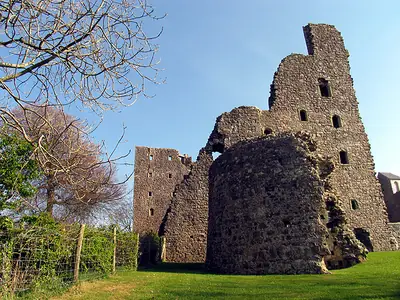
Oxwich Castle is a Tudor fortified manor house on a wooded headland above Oxwich Bay. Although called a castle, it was built around a courtyard and reflects wealth and status as much as defence. Sir Rice Mansel commissioned the earliest surviving work in the sixteenth century; his son, Sir Edward Mansel, later added a great hall and long gallery. The surviving six-storey tower is one of its most striking features.
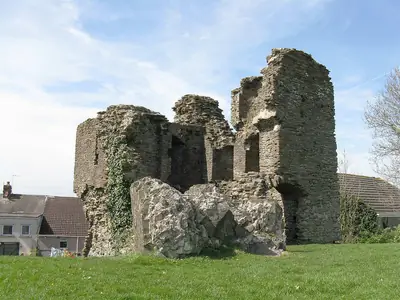
Loughor Castle stands above the River Loughor and occupies the site of the earlier Roman fort of Leucarum. Built around 1106 by the Anglo-Norman lord Henry de Beaumont, it controlled a strategic road and ford across the Gower Peninsula. Today, a ruined tower, fragments of wall and the raised earthwork mound remain.
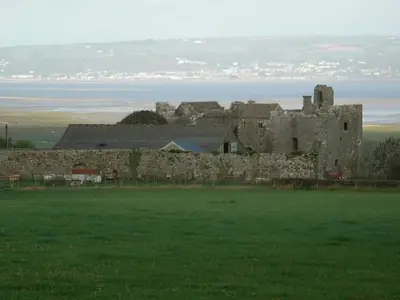
Weobley Castle is a fourteenth-century fortified manor house overlooking the Llanrhidian saltmarshes and the Loughor estuary. Its position above the marshes and estuary is central to its character, offering broad views across the coastal landscape. The castle is now in the care of Cadw.
Arthur’s Stone on Cefn Bryn
Arthur’s Stone, also known as Maen Ceti or Carreg Arthur, is a Neolithic cromlech, or megalithic tomb, on the ridge of Cefn Bryn. The two-chamber monument stands among the remains of a round cairn, about 150 metres above sea level.
The name Maen Ceti first appears in the sixteenth century, when the stone was described as one of the three great feats of Britain. Its setting and long history give the monument a strong sense of mystery within the Gower landscape.
St Cenydd’s Church
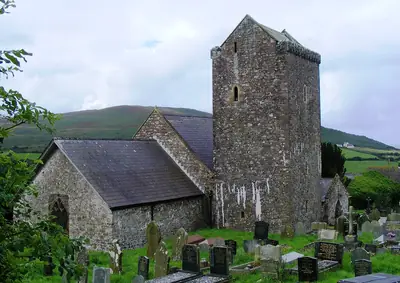
The Church of St Cenydd, also known as St Cennydd’s, stands in Llangennith. Its quiet village setting offers a different perspective on the Gower, away from the larger castles and waterfront landmarks.
Explore Swansea with Neywo
Neywo offers five walking tours, one bus route and one bike route in Swansea:
- From Castle Ruins to Minster: Swansea’s Old Centre — 2.43 km, 80 minutes and 10 narrated stops.
- Dylan’s Waterfront: Maritime Quarter and Docklands — 2.38 km, 71 minutes and 8 narrated stops.
- Mumbles: Norman Castle to the Lighthouse — 3.3 km, 82 minutes and 7 narrated stops.
- Bay, Park and Promenade: Swansea’s Seafront Walk — 3.49 km, 87 minutes and 8 narrated stops.
- Uplands and Sketty: Poets, Parks and a Campus by the Bay — 4.11 km, 93 minutes and 7 narrated stops.
- The bus route Swansea Bay from Mumbles to the City Centre covers 13.1 km, takes 56 minutes and has 9 narrated stops.
- The bike route Swansea Bay Promenade: Maritime Quarter to Mumbles covers 9.2 km, takes 46 minutes and has 8 narrated stops.
Download Neywo and explore Swansea at your own pace. The app tells the story of each place as you reach it, with no group and no schedule.
Places with an audio guide in Swansea
8 places in Swansea with a Neywo audio guide. Each one starts telling its story as you reach it.

Self-guided tours in Swansea
7 tours in Swansea, free in the Neywo app. Each stop tells its story as you reach it.
- Bike ride
Swansea Bay Promenade: Maritime Quarter to Mumbles
Ride Swansea's seafront cycle path west from the Dylan Thomas Centre and the oldest museum in Wales, past the Garrison Church, Brangwyn Hall and Victoria Park's Patti Pavilion, to the war memorial on the promenade and on towards Mumbles and All Saints' Church.
Dylan Thomas Centre · Swansea Museum · Swansea Central Library · Christ Church (Garrison Church of Swansea) · Brangwyn Hall · Patti Pavilion …
Open this tour: Swansea Bay Promenade: Maritime Quarter to Mumbles - Bus ride
Bus 3A: Swansea Bay from Mumbles to the City Centre
First Cymru's route 3A runs from Bracelet Bay and Mumbles along the curve of Swansea Bay into the city. It passes the Big Apple kiosk, Oystermouth, Singleton Park and the university, the war memorial on the promenade, Brangwyn Hall and the Grand Theatre, for one local fare.
The Big Apple · All Saints' Church · Grey Dog Gallery · Swansea University · Swansea War Memorial · Patti Pavilion …
Open this tour: Bus 3A: Swansea Bay from Mumbles to the City Centre - Walk
From Castle Ruins to Minster: Swansea's Old Centre
Swansea began as a Norman castle by the River Tawe, and the old centre still shows it. Browse Wales' largest indoor market, visit the Minster with its curious devil story and the oldest Catholic church in town, and end at the castle ruins that served as prison and town hall.
Palace Theatre, Swansea · Glynn Vivian Art Gallery · Old Swansea Central Library · Mount Pleasant English Baptist Chapel · Swansea Market · St Mary's Church, Swansea …
Open this tour: From Castle Ruins to Minster: Swansea's Old Centre - Walk
Dylan's Waterfront: Maritime Quarter and Docklands
Follow the marina where Swansea's copper and coal once shipped out. See Wales' oldest museum and its ships, a museum of industry in slate and glass, a seamen's church turned gallery, the poet Dylan Thomas's old guildhall, and a Norwegian church moved twice.
Plantasia · Norwegian Church, Swansea · Morgans Hotel, Swansea · Dylan Thomas Centre · Mission Gallery · Swansea Museum …
Open this tour: Dylan's Waterfront: Maritime Quarter and Docklands - Walk
Mumbles: Norman Castle to the Lighthouse
Take the seafront village of Mumbles on foot, from the Norman castle above the bay past village chapels and galleries to the old pier station and out to the lighthouse on its islet. Bring an ice cream for the Big Apple kiosk on the way.
Oystermouth Castle · Castleton Chapel · Grey Dog Gallery · All Saints' Church · Mumbles Pier railway station · The Big Apple …
Open this tour: Mumbles: Norman Castle to the Lighthouse - Walk
Bay, Park and Promenade: Swansea's Seafront Walk
Start at the Grand Theatre and drop down to the seafront past the Garrison Church and the library with its sea views. Follow the promenade to the Brangwyn Hall and its famous murals, then stroll through Victoria Park past the Patti Pavilion, St Helen's ground and the war memorial.
Grand Theatre, Swansea · St Andrew's English Calvinistic Methodist Chapel · Christ Church (Garrison Church of Swansea) · Swansea Central Library · Brangwyn Hall · Patti Pavilion …
Open this tour: Bay, Park and Promenade: Swansea's Seafront Walk - Walk
Uplands and Sketty: Poets, Parks and a Campus by the Bay
Climb to the Uplands, the quarter of Swansea's most famous poet, and wander through Cwmdonkin Park. Then follow the road west to the villages of Sketty and the abbey on the Singleton Park campus, where Swansea University looks out over the bay.
Mansion House · St. James' Church · Cwmdonkin Park · Capel y Trinity · St Paul's Church · Singleton Abbey …
Open this tour: Uplands and Sketty: Poets, Parks and a Campus by the Bay
Walk Swansea with Neywo
Neywo turns Swansea into a self-guided audio tour. Stories arrive as you reach the place they belong to, and the route reshapes when you wander off it.

