What to See in St Davids, United Kingdom: Free Audio Guide
Things to do in St Davids: the smallest city in Wales
St Davids is a small city on the St Davids Peninsula in Pembrokeshire, surrounded by the landscapes of Pembrokeshire Coast National Park. Its historic cathedral, medieval Bishop’s Palace and sacred coastal sites make it one of the most distinctive places to visit in Wales. Neywo offers a free audio guide for St Davids with 296 narrated places.
What to see in St Davids
The best way to discover St Davids and its surroundings is to combine the city’s religious heritage with the castles, prehistoric monuments and quiet countryside of Pembrokeshire.
St Davids Bishop’s Palace
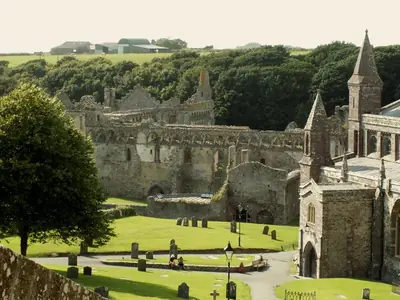
Beside St Davids Cathedral, the ruins of St Davids Bishop’s Palace form one of the most important ecclesiastical sites in Wales. The site dates back as far as the 6th century, although most of the remains visible today were built in the late 13th and 14th centuries.
Known in Welsh as Llys yr Esgob Tyddewi, the palace is cared for by Cadw, the historic environment service of the Welsh Government. Its atmospheric ruins are open to visitors and are also used as an open-air theatre.
St Non’s Chapel
On the coast outside St Davids, the ruins of St Non’s Chapel occupy a windswept and atmospheric site traditionally associated with the birthplace of St David, the patron saint of Wales.
The chapel has an unusual north-to-south alignment rather than the more typical east-to-west orientation. Its exact date cannot be established, but the ruins, nearby retreat, modern chapel and holy well all form part of a long-standing sacred site.
Pentre Ifan
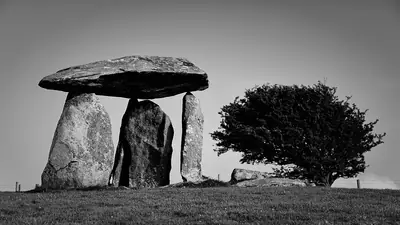
Pentre Ifan is the largest and best-preserved Neolithic dolmen in Wales. Located in the parish of Nevern, the monument dates from around 3500 BC and is roughly five and a half thousand years old.
Its most recognisable feature is the capstone: a slab measuring 5.1 metres long and weighing around 16 tonnes, balanced at an angle on upright stones. The tomb was originally covered by a stone mound approximately 36 metres long. Excavations also revealed a crescent-shaped front, an entrance and rows of stones and holes that may have had ritual significance.
Castell Henllys
Castell Henllys is an Iron Age hillfort in north Pembrokeshire. Its name means “castle of the old court” in Welsh, and the site offers a glimpse into life more than 2,000 years ago.
Four roundhouses and a granary have been reconstructed directly on their original foundations. The site has been excavated since the beginning of the 21st century, alongside experiments in prehistoric farming and reconstruction archaeology. These buildings are therefore based on archaeological evidence from the hillfort rather than being simple modern interpretations.
St Dogmaels Abbey
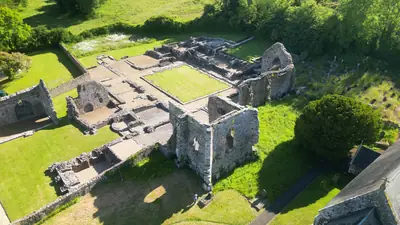
On the banks of the River Teifi, near Cardigan and Poppit Sands, the ruins of St Dogmaels Abbey preserve substantial parts of a medieval monastic complex. The Abbey of St Mary, also known as St Dogmaels Abbey, is a Grade I listed site.
The abbey was founded around 1115 by the Fitzmartin family of Cemais and established by the Order of Tiron. In 1120, it became an abbey, with its monks following the Rule of Saint Benedict. Today, the western end wall, north wall, north transept and parts of the crypt remain, along with monastic buildings to the south and a detached 13th-century building, probably an infirmary.
Llawhaden Castle
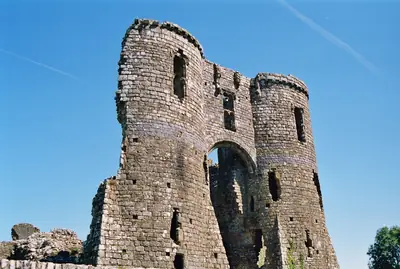
Llawhaden Castle is a Grade I listed ruin in the Pembrokeshire countryside, around ten miles east of Haverfordwest. It was a seat of power for the bishops of St Davids.
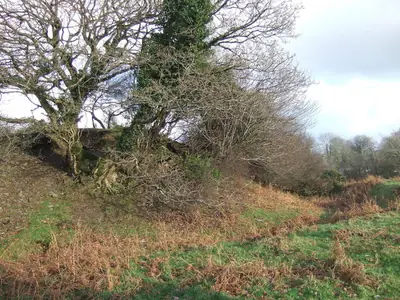
Bishop Bernard built the first castle here in 1115 as a Norman motte and bailey. The earthworks, ditch and earthen bank can still be identified. Most of the surviving structure belongs to a later castle commissioned by Bishop Adam de Houghton between 1362 and 1389, including residential chambers and the great gatehouse tower. King Richard II stayed at Llawhaden Castle in 1394. The castle was abandoned in the 16th century, after which much of its stone was reused locally.
Pembroke Castle
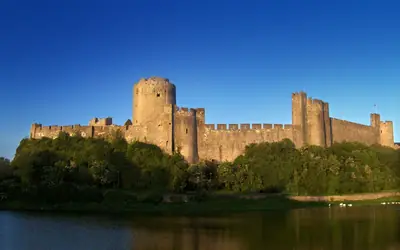
Pembroke Castle stands in the centre of Pembroke beside the Pembroke River. The fortress began in 1093, when Arnulf of Montgomery built a wooden stronghold on the promontory during the Norman invasion of Wales.
Richard I later gave the castle to William Marshal, who rebuilt it in stone. It became the family seat of the Earldom of Pembroke and resisted several attempts by the Welsh to capture it. The castle also has a cave beneath it that was used as a storeroom, where Roman silver coins have reportedly been found. Later, Jasper Tudor brought his sister-in-law Margaret Beaufort to the castle while she was expecting her only child, the future King Henry VII.
Carew Castle and Carew Cross
Carew Castle occupies a valley just 11 metres above sea level, surrounded mainly by grassland. Fortifications have stood on this site for at least 2,000 years, before the present castle developed. The existing fortress is believed to have originally been built by Gerald de Windsor.
Nearby, in the village of Carew, the Carew Cross is an 11th-century Celtic cross and a Grade I listed building. It commemorates Maredudd fab Edwin, king of the Kingdom of Deheubarth, and offers a tangible connection with the rulers and craftsmen of early medieval Wales.
Smaller historic sites in Pembrokeshire
The wider area contains several quieter places of historical and religious interest. Castell Crychydd is a castle site standing about 154 metres above sea level. Castell Eglwyswrw is another castle site in the rolling Pembrokeshire countryside, while Castell Pen yr Allt is a hillfort at about 127 metres above sea level.
Blaenffos Baptist Chapel is a small place of worship in the village of Blaenffos. The Church of Saint Clydai is located in Clydau, and the Church of Saint David in Carregwen stands in Manordeifi. Each is a modest local site rather than a major attraction, but together they reflect the historic character of the Pembrokeshire landscape.
For more places to explore in the region, see the guide to Wales. You can also compare St Davids with Tenby, another Welsh destination on the Pembrokeshire coast.
Explore St Davids with Neywo
Neywo’s free audio guide turns a visit into a self-guided walking tour of St Davids. The city currently has one walking tour: “Britain’s Smallest City: From Cathedral to the Birthplace of St David”. The route covers 2.01 km, takes around 60 minutes and includes five narrated stops: Tabernacl Chapel, St Davids Cathedral, St Davids Bishop’s Palace, St Non’s Chapel, and Chapel of Our Lady & St. Non.
The app tells the story of each place as you reach it, at your own pace, with no group and no schedule. Narration is available in 11 languages, making it an easy way to explore St Davids independently while keeping the city’s history in context.
Places with an audio guide in St Davids
8 places in St Davids with a Neywo audio guide. Each one starts telling its story as you reach it.
Self-guided tours in St Davids
1 tour in St Davids, free in the Neywo app. Each stop tells its story as you reach it.
- Walk
Britain's Smallest City: From Cathedral to the Birthplace of St David
St Davids is a city the size of a village, and its pilgrim road still works. Start among the chapels of the town, step down into the cathedral where two trips here once counted as one to Rome, then cross to the ruined bishops' palace. Finish on the windswept cliff path at St Non's, where tradition places the birth of Wales's patron saint.
Tabernacl Chapel · St Davids Cathedral · St Davids Bishop's Palace · St Non's Chapel · Chapel of Our Lady & St. Non
Open this tour: Britain's Smallest City: From Cathedral to the Birthplace of St David
Walk St Davids with Neywo
Neywo turns St Davids into a self-guided audio tour. Stories arrive as you reach the place they belong to, and the route reshapes when you wander off it.

