Things to Do in Avebury, United Kingdom: Walking Guide
Things to Do in Avebury: Prehistoric Stones, Mounds and Village History
The best things to do in Avebury are found across an extraordinary prehistoric landscape, where a modern village sits inside one of Europe’s largest Neolithic stone circles. Explore the ancient monument, visit the Alexander Keiller Museum, and follow the surrounding landscape to Silbury Hill and West Kennet Long Barrow. Neywo has a free audio guide for Avebury with five narrated places, available in 11 languages.
What to See in Avebury
Avebury Stone Circle
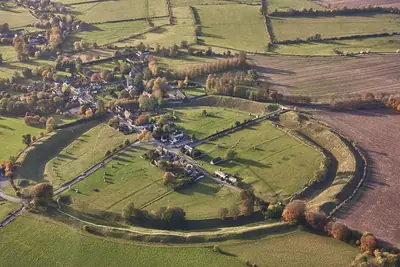
Avebury Stone Circle is the centrepiece of the landscape and one of the most important places to see in Avebury. This Neolithic henge is over five thousand years old, making it older than Stonehenge, which lies a few kilometres to the south. Together with Stonehenge and the surrounding ancient landscape, it became a UNESCO World Heritage Site in 1986.
The monument covers roughly fifteen hectares. Its outer stone circle measures 335 metres across, making it the largest of its kind in the world. It originally contained 98 local sarsen stones, some weighing more than 40 tonnes and reaching up to four metres in height. The stones were brought from about two kilometres away.
Avebury is unusual because the village stands within the prehistoric circle. Roads, houses and everyday life exist alongside the surviving stones, giving the site a distinctive atmosphere that is different from an isolated archaeological monument.
Inside the great ring were two smaller circles. The northern circle was about 98 metres wide, although only a couple of its stones remain upright. At its centre is a cove: three stones arranged like an open box, with its entrance facing north-west. The southern circle was slightly larger.
Alexander Keiller Museum
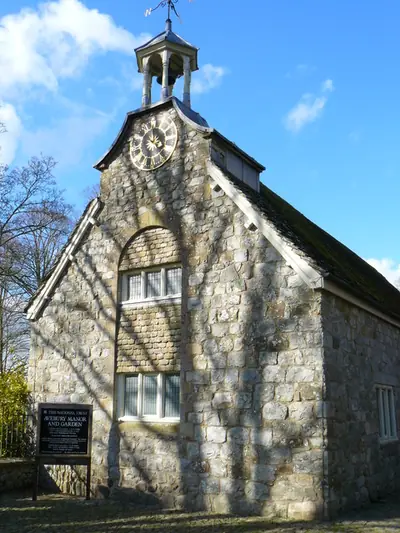
The Alexander Keiller Museum introduces the people who built and used Avebury’s prehistoric monuments. It opened in 1938 and was created to display discoveries made by Alexander Keiller, the archaeologist whose work helped reveal and preserve the site.
The exhibits include artefacts from the surrounding landscape and offer a closer look at the communities connected with the henge. One particularly poignant display is the skeleton of a Neolithic child, about three years old, known as Charlie. The discovery provides a direct connection with the families who lived here more than four thousand years ago.
Church of St James
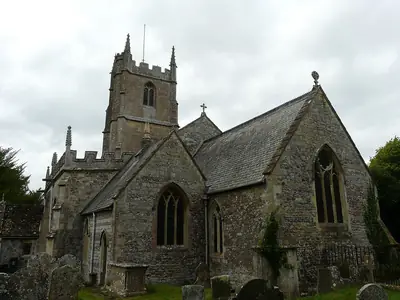
The Church of St James is Avebury’s parish church, located within the village and its ancient stone-circle setting. It adds another layer to the landscape: the prehistoric monument is not separated from later history, but remains part of a place that continued to be inhabited and used over many centuries.
Silbury Hill
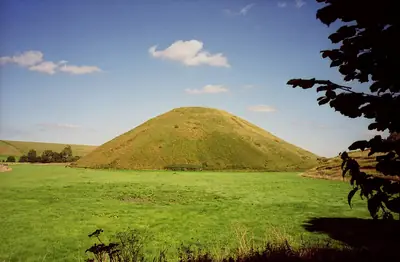
Silbury Hill rises from the chalk downland like a great green pyramid. At nearly 40 metres high, it is the tallest prehistoric man-made mound in Europe. Its volume is comparable to that of the smaller pyramids at Giza, although Silbury Hill was constructed entirely by hand more than four thousand years ago.
The mound is a near-perfect cone with a flat platform at the top, 30 metres across. Its base measures 167 metres, and it contains around a quarter of a million cubic metres of chalk and earth. The scale of the work is remarkable, especially as the builders had no metal tools, wheels or beasts of burden.
Its purpose remains unknown. No burial, treasure or chamber has been found inside. It may have been a territorial marker, a ceremonial platform or a representation of a sacred mountain, but archaeologists continue to debate its meaning. Silbury Hill is in the care of English Heritage, and visitors cannot climb it because the chalk is too fragile.
West Kennet Long Barrow
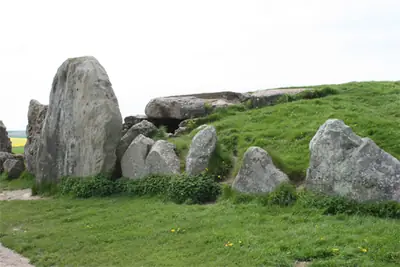
West Kennet Long Barrow is one of the largest and best-preserved Neolithic tombs in Britain. About 5,500 years old, it stands on a prominent chalk ridge a short walk from Avebury and forms part of a wider group of around 30 monuments known as the Cotswold-Severn Group.
The mound is a sub-rectangular tumulus held in place by a ring of kerb-stones. Its builders used local sarsen megaliths and brought oolitic limestone from the Cotswolds. Inside, a central passage leads to five small chambers where the dead were placed.
The first burials took place between 3670 and 3635 BC. Archaeologists found the remains of men, women and children. After more than a century of silence, people returned around 3620 BC and continued placing human remains inside the tomb for several centuries. The barrow offers a powerful insight into the rituals and communities of the first farming societies in Britain.
Explore Avebury with a Self-Guided Walking Tour
An Avebury self-guided walking tour is a practical way to connect the village, the stones and the surrounding monuments. Neywo’s walk, Avebury: Stones, Mounds and the First Farmers, covers 3.51 km, takes 84 minutes and includes five narrated stops:
- Alexander Keiller Museum
- Church of St James
- Avebury Stone Circle
- Silbury Hill
- West Kennet Long Barrow
The app tells the story of each place as you reach it, at your own pace. There is no group and no schedule, so you can explore Avebury independently while keeping the historical context with you throughout the walk.
Download Neywo for Avebury
Download Neywo to explore Avebury with one walking tour covering 3.51 km in 84 minutes and five narrated stops. The free audio guide explains the story of each place as you arrive, with narration available in 11 languages. Walk at your own pace, without a group or a schedule, and discover Avebury’s stones, mounds and village history as part of one connected landscape.
Avebury is in England, within the United Kingdom.
Places with an audio guide in Avebury
5 places in Avebury with a Neywo audio guide. Each one starts telling its story as you reach it.
Self-guided tours in Avebury
1 tour in Avebury, free in the Neywo app. Each stop tells its story as you reach it.
- Walk
Avebury: Stones, Mounds and the First Farmers
Walk through a village built inside the world's largest stone circle, then follow the ancient landscape south to Silbury Hill, Europe's tallest prehistoric mound, and finish at West Kennet Long Barrow, a 5,500-year-old tomb you can step inside. Older than Stonehenge, and free to wander.
Alexander Keiller Museum · Church of St James · Avebury Stone Circle · Silbury Hill · West Kennet Long Barrow
Open this tour: Avebury: Stones, Mounds and the First Farmers
Walk Avebury with Neywo
Neywo turns Avebury into a self-guided audio tour. Stories arrive as you reach the place they belong to, and the route reshapes when you wander off it.

