What to See in Mesa, United States: Free Audio Guide
Things to Do in Mesa, Arizona: Museums, History and the Arts
Looking for things to do in Mesa? This Arizona city brings together museums focused on art, natural history and aviation, historic military structures, a major arts campus and distinctive landmarks such as the Mesa Arizona Temple. Neywo has a free audio guide for Mesa with 10 narrated places, so you can explore the city while listening to its stories.
Mesa is part of Arizona, in the United States, and its attractions offer several different ways to understand the city: through its museums, its cultural institutions and the remains of its military past.
What to See in Mesa
The following places form a varied introduction to Mesa. They include the four stops covered by Neywo’s downtown walk, as well as other narrated sites around the city.
i.d.e.a. Museum
The i.d.e.a. Museum is designed around participation. Rather than keeping art behind a rope, it encourages visitors to touch, explore and experience it. Its name stands for imagination, design, experience and art.
The museum is primarily aimed at younger visitors, but its exhibits, classes and activities are intended for different age groups. Art classes, workshops and family programs introduce artistic principles and techniques through hands-on activities. The institution was formerly known as the Arizona Museum for Youth before taking its current name on February 6, 2014.
Arizona Museum of Natural History
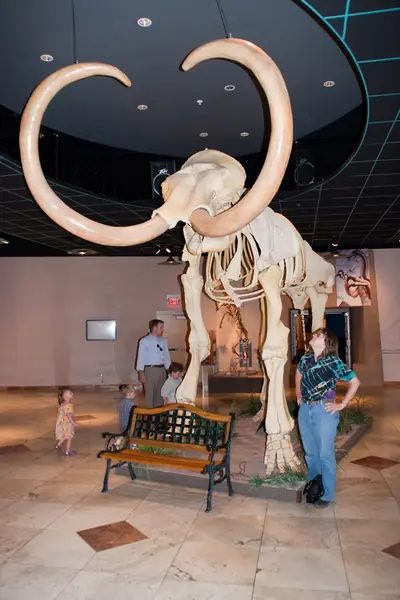
The Arizona Museum of Natural History explores the natural and cultural history of the Southwestern United States. Its collections bring together subjects including regional landscapes, wildlife, anthropology, history and art.
The museum began in 1977 as the Mesa Southwest Museum, operating from Mesa’s City Hall with a small collection of Arizona artifacts. The City Hall building, dating from 1937, was designed by Lescher and Mahoney and built with Works Progress Administration funds during the Great Depression. Before the museum moved in, the building housed city facilities including a tennis center, public library, police department and fire department.
The museum expanded in 1983 and 1987, with another wing added in 2000. Its complex now covers nearly 74,000 square feet, including about 46,000 square feet of exhibition space, and its collection contains roughly 60,000 objects.
Mesa Historical Museum
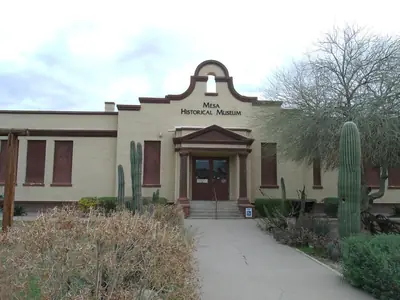
The Mesa Historical Museum preserves the story of Mesa and the surrounding area. Opened in 1987 by the Mesa Historical Society, it presents the city’s history through exhibitions, changing galleries and a replica of an early adobe one-room schoolhouse.
Its collection of historic agricultural equipment offers a direct connection to the region’s farming heritage. The museum buildings are also significant: the main building was constructed in 1913 and 1914 as the Lehi School, when the area was known as Lehi, Arizona. An auditorium was added in the 1930s as a Works Progress Administration project. Together, the buildings were listed on the National Register of Historic Places in 2001 as Lehi School.
Mesa Arts Center
The Mesa Arts Center is the largest comprehensive arts campus in Arizona. Opened in 2005, the complex covers more than 210,000 square feet and brings together performances, visual art and creative learning in downtown Mesa.
The campus is organized around four performance venues. They range from the 99-seat Farnsworth Studio Theater to the 1,600-seat Ikeda Theater. The Mesa Contemporary Arts Museum adds five galleries with about 5,500 square feet of exhibition space.
Indoor and outdoor gathering areas host presentations, events and community meetups, giving the campus a role beyond its performances and exhibitions.
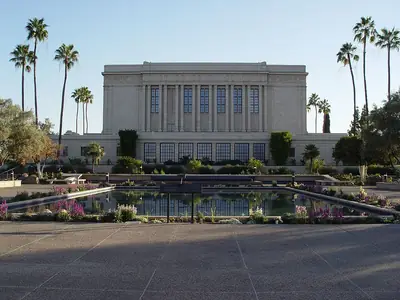
Mesa Arizona Temple
The Mesa Arizona Temple is one of Mesa’s most distinctive landmarks. It is the seventh operating temple of The Church of Jesus Christ of Latter-day Saints.
The intention to build it was announced by church president Heber J. Grant on October 1, 1919. Groundbreaking took place on April 25, 1922, and Grant dedicated the temple on October 23, 1927. Before its construction, church members in the region travelled to the St. George Temple in Utah for religious ceremonies.
The temple was nicknamed the Lamanite Temple because it became the destination of annual excursions for Hispanic and Native American church members, primarily from Mexico. In 1945, it became the first temple to present the endowment ceremony in a language other than English, offering it in Spanish.
Arizona Commemorative Air Force Museum
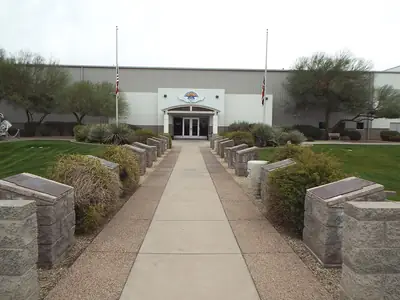
At Falcon Field, the Arizona Commemorative Air Force Museum focuses on aviation history. Established in 1978 as the 10th unit of the Commemorative Air Force, it has grown into a collection dedicated to preserving historic aircraft and their stories.
Its exhibits include World War II artifacts, helicopters, and classic American and foreign combat planes. It is a particularly relevant stop for visitors interested in military history and aviation.
Mesa Amphitheatre
Mesa Amphitheatre is an outdoor concert venue that has welcomed audiences since 1979. Its original design has been carefully preserved, including the tiered lawn seating.
There are no fixed seats: visitors sit on the grass at different levels, with each tier offering its own view of the stage. With a capacity of just under 5,000, the venue accommodates both large acts and more intimate performances.
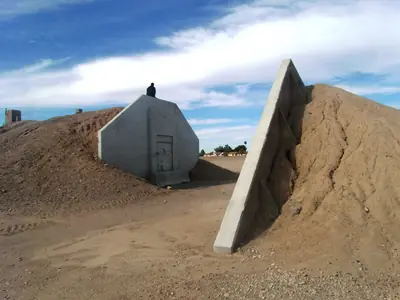
Ammo Bunker S-1007 and Ammo Bunker S-1008
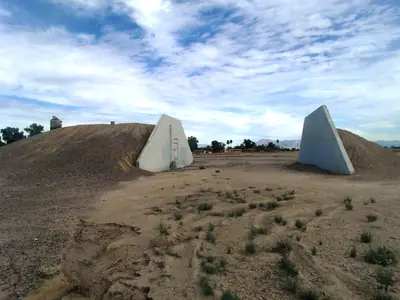
Ammo Bunker S-1007 and Ammo Bunker S-1008 are modest but meaningful reminders of Mesa’s military history. These structures were built as ammunition storage facilities, with practical designs intended to protect their contents from the elements and potential hazards.
The thick concrete walls of S-1008 were designed to contain an accidental explosion and direct its force upward rather than outward. Together, the two bunkers show how military infrastructure became part of the landscape of this area.
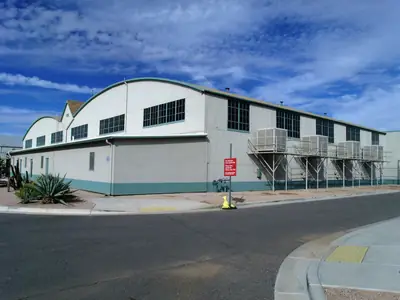
Demountable Hangar, Williams Air Force Base
The Demountable Hangar at Williams Air Force Base is a rare example of a military hangar designed to be taken apart and moved. Unlike a permanent structure built in place, it could be disassembled, transported and reassembled elsewhere when required.
Its design reflects the need for military bases to remain flexible and adapt quickly to changing missions.
Explore Mesa with a Free Audio Guide
Neywo’s Downtown Mesa: Museums, Stage and Temple is a 2.09-kilometre walking tour that takes about 50 minutes. It includes four narrated stops: the i.d.e.a. Museum, Arizona Museum of Natural History, Mesa Arts Center and Mesa Arizona Temple.
The app tells the story of each place as you reach it, at your own pace. There is no group and no schedule, so you can explore independently while following a route through downtown Mesa. Narration is available in 11 languages.
Download Neywo and take this Mesa self-guided walking tour through the city’s museums, arts spaces and landmarks. If you are continuing through the region, you can also discover nearby Phoenix and Tempe.
Places with an audio guide in Mesa
8 places in Mesa with a Neywo audio guide. Each one starts telling its story as you reach it.

Self-guided tours in Mesa
1 tour in Mesa, free in the Neywo app. Each stop tells its story as you reach it.
- Walk
Downtown Mesa: Museums, Stage and Temple
A short stroll through Mesa's cultural core, from a hands-on art museum and the Southwest's natural history housed in a 1937 City Hall, to Arizona's largest arts campus. It ends at the white Mesa Arizona Temple, a landmark with a surprising first in its history.
I.d.e.a. Museum · Arizona Museum of Natural History · Mesa Arts Center · Mesa Arizona Temple
Open this tour: Downtown Mesa: Museums, Stage and Temple
Walk Mesa with Neywo
Neywo turns Mesa into a self-guided audio tour. Stories arrive as you reach the place they belong to, and the route reshapes when you wander off it.

