Phoenix, United States: Self-Guided Walking Tour
Things to Do in Phoenix: Museums, Historic Buildings and Desert Landmarks
Looking for things to do in Phoenix? The capital of Arizona combines major museums, historic buildings, contemporary art spaces and distinctive desert landmarks. From Downtown Phoenix and Heritage Square to Papago Park and the city’s wider cultural attractions, there is plenty to explore at your own pace. Neywo offers a free Phoenix audio guide with 89 narrated places.
What to See in Phoenix
Arizona Mining and Mineral Museum
The former Arizona Mining and Mineral Museum was devoted to the minerals and mining industry of Arizona. Its collections explored the natural materials and working history connected with mining. The museum closed in May 2011, and legislation passed in April 2017 to reopen it under the ownership of the University of Arizona.
It is one of the stops on the Capitol Mall route, which connects the Arizona State Capitol and Downtown Phoenix.
David & Gladys Wright House
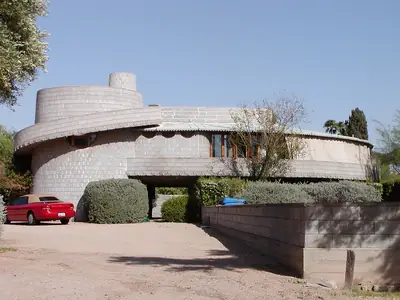
The David & Gladys Wright House is a Phoenix residence designed by Frank Lloyd Wright for his son David and daughter-in-law Gladys. Built between 1950 and 1952, it is known for its flowing, organic design and unusual spiral approach.
The main house curves in a 270-degree arc around an interior courtyard and rests on seven piers. Concrete blocks and mahogany boards form much of the structure, while a spiraling ramp creates a gradual transition from outside to inside. Circular motifs and geometric shapes continue through the interior, which includes a kitchen, living room, three bedrooms and four bathrooms. Some furnishings, including a carpet, were also designed by Wright.
A smaller guesthouse stands to the northeast and uses similar materials.
Heard Museum
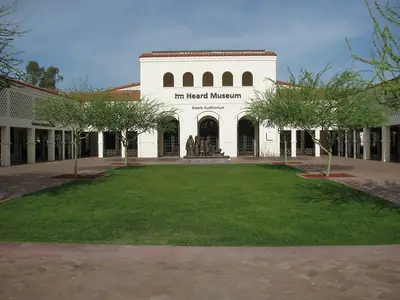
The Heard Museum explores American Indian art and culture, with a particular focus on the cultures of the Southwest. Its exhibitions present the stories of American Indian people alongside traditional and contemporary artworks.
Dwight and Maie Bartlett Heard founded the museum in 1929 for their private collection. It has since grown to more than 40,000 pieces, supported by a library and archive. Highlights include Hopi katsina dolls, Navajo and Zuni jewelry, Southwestern ceramics, Navajo textiles and basketry from many tribes.
The museum also presents contemporary art associated with the American Indian Fine Art Movement of the twentieth century. Its Around the World exhibition includes parts of the Heards’ collection from journeys to places including Sudan, Egypt and Hawaii.
Arizona Science Center
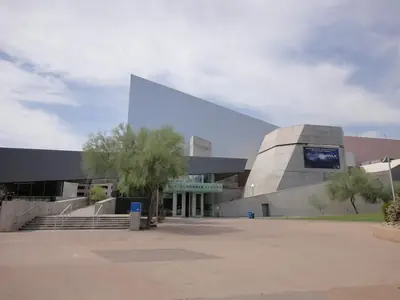
In Heritage and Science Park, the Arizona Science Center offers hands-on experiences for visitors of all ages. More than 300 displays are arranged across permanent galleries and traveling exhibitions, making this a particularly engaging stop for families.
The building, designed by Antoine Predock, was completed in 1997. It covers more than 120,000 square feet across five floors, including over 40,000 square feet of gallery and display space. Beyond the exhibits, the center presents daily demonstrations, shows in the Dorrance DOME and films in a five-story giant-screen IMAX Theater.
The Arizona Science Center is included in the Heritage Square, Basilica and the Science Park walk.
George Washington Carver Museum and Cultural Center
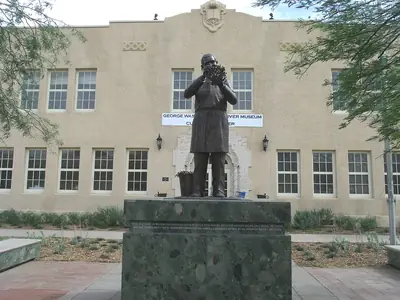
The George Washington Carver Museum and Cultural Center occupies the former Carver High School. The building’s history is connected to school segregation and to the African American students it was created to serve.
Established in 1926 as Phoenix Union Colored High School, it was a public high school specifically for African American students during the period when schools were segregated.
Children’s Museum of Phoenix
The Children’s Museum of Phoenix is designed for young children, with an emphasis on touching, playing and learning through practical activities. Families can explore the noodle jungle, wash tricycles, race around a car track and play in a grocery store.
The book loft provides a quieter place to pause. Because there is a lot to explore, families should plan to spend at least half a day here.
Hunt’s Tomb
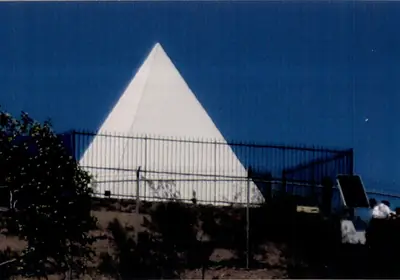
In Papago Park, a small white pyramid stands on a hill overlooking the Phoenix Zoo and the eastern part of the Valley of the Sun. Known as Hunt’s Tomb or Governor Hunt’s Tomb, it was built in 1931 by George W. P. Hunt, Arizona’s first governor, for the burial of his wife. Hunt was placed there after his death in 1934, along with their daughter and members of his wife’s family.
The pyramid was listed on the National Register of Historic Places in 2008. Plaques on the structure describe aspects of Hunt’s political career and public life. Its unusual shape and elevated position make it one of Papago Park’s most distinctive landmarks.
Hall of Flame Fire Museum
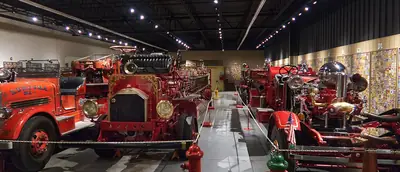
The Hall of Flame Museum of Firefighting preserves the history of firefighting through vintage fire engines, uniforms, tools and other artifacts. Founded in 1961, it also promotes fire-safety education.
The museum’s five exhibit bays include hand- and horse-drawn apparatus, motorized apparatus and wildland firefighting equipment. The National Firefighting Hall of Heroes forms another part of the collection. One particularly distinctive display is its large collection of fire department arm patches.
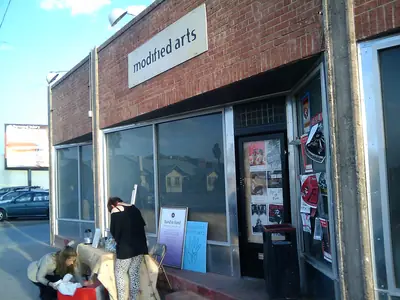
Modified Arts
Modified Arts is a contemporary art space founded in 1999. Its program focuses on emerging and mid-career artists working in experimental practices. Exhibitions may include painting, sculpture, photography, video and performance art, while workshops, events and live performances add to the gallery’s programme.
Musical Instrument Museum
The Musical Instrument Museum brings together musical instruments and related objects from nearly 200 countries and territories. Opened in April 2010, it is described as the largest museum of its type in the world.
Its collection contains more than 15,000 instruments and associated objects, representing every inhabited continent. It offers a broad way to explore how music and instruments differ across cultures.
Phoenix Art Museum
The Phoenix Art Museum is the largest museum of its kind in the southwestern United States. Its collection includes more than 18,000 works, covering American, Asian, European, Latin American and Western American art, as well as modern and contemporary art and fashion design.
The museum’s story began in 1912, the year Arizona became the forty-eighth state in the Union. It purchased its first painting in 1915 and presented it to the City of Phoenix. The current facilities developed during the 1950s, and the museum has since hosted more than 400 international exhibitions.
A Sculpture Garden, dining and shopping extend the visit beyond the galleries. The museum is also designated a Phoenix Point of Pride.
Phoenix Police Museum
Inside the first floor of Historic Phoenix City Hall, the Phoenix Police Museum traces more than a century of Phoenix law enforcement history. The story begins in 1881, when Henry Garfias was elected the city’s first marshal.
Exhibits follow the development of the Phoenix Police Department and explore the history of crime in the area. One notable display explains the connection between the Phoenix Police and the Miranda Rights. Other exhibits invite visitors to engage with the material interactively.
Pioneer Living History Village
Pioneer Living History Village, also known as Pioneer Arizona, is an open-air living museum focused on life in Arizona during the pioneer era. Its ninety-acre property contains 30 original and reconstructed buildings dating from the 1880s and early 1900s.
The village creates a historical setting where the buildings themselves help tell the story of Arizona’s past.
Rosson House
In Heritage Square, the Rosson House Museum offers a glimpse into domestic life at the turn of the twentieth century. Built between 1894 and 1895 for Dr. Roland Lee Rosson and Flora Murray Rosson, the house combines Stick Eastlake and Queen Anne styles.
Locally produced red brick and wood form much of the building. Details include a moon gate, an octagonal tower often associated with French design, and a distinctive Victorian exterior. The restored house was added to the National Register of Historic Places in 1971, and docent-guided tours explore its rooms and domestic history.
Shemer Art Center and Museum
The Shemer Art Center and Museum brings together art education and gallery exhibitions in a mission-style house set on three acres. Martha Shemer purchased the property in 1984 with the intention of preserving it and donating it to the City of Phoenix for art education.
After the center faced possible closure because of budget constraints in 2010, local citizens formed the Shemer Art Center and Museum Association to help manage and preserve it. It is now recognized as one of the Phoenix Points of Pride.
Explore Phoenix with a Self-Guided Audio Tour
A Phoenix self-guided walking tour lets you discover the city without joining a group or following a fixed timetable. Neywo has four walking tours, one bus route and one bike route in Phoenix:
- Four walking tours, covering between 1.38 and 3.62 km and lasting between 61 and 107 minutes, with 8 to 12 narrated stops each.
- One bus route, covering 4.1 km in 18 minutes with 5 narrated stops.
- One bike route, covering 1.7 km in 8 minutes with 3 narrated stops.
The routes include Downtown Phoenix, Heritage Square, the Arizona State Capitol, Roosevelt and Central Avenue, the Heard Museum, the Phoenix Art Museum, Papago Park, Hunt’s Tomb and the Hall of Flame Fire Museum. The app tells the story of each place as you reach it, at your own pace, with no group and no schedule. Narration is available in 11 languages.
Download Neywo to explore Phoenix with a free audio guide, and continue discovering Arizona and the wider United States one narrated place at a time.
Places with an audio guide in Phoenix
8 places in Phoenix with a Neywo audio guide. Each one starts telling its story as you reach it.
Self-guided tours in Phoenix
6 tours in Phoenix, free in the Neywo app. Each stop tells its story as you reach it.
- Bike ride
Papago Park Ride: Hall of Flame, Hunt's Tomb and the Desert Garden
An easy, mostly flat ride through the red sandstone buttes of Papago Park: the fire-fighting museum, the white pyramid of the first governor's tomb and the Desert Botanical Garden, along the park's bike paths.
Hall of Flame Fire Museum · Hunt's Tomb · Desert Botanical Garden
Open this tour: Papago Park Ride: Hall of Flame, Hunt's Tomb and the Desert Garden - Bus ride
Bus 0 up Central Avenue: Luhrs Building to the Heard Museum
Valley Metro's Central Avenue line is the city's spine: ride it north from the 1920s Luhrs Building through the old hotels and towers of downtown to the railway museum and the Heard Museum of Native American art.
Luhrs Building · Hotel San Carlos · Westward Ho · Arizona Street Railway Museum · Heard Museum
Open this tour: Bus 0 up Central Avenue: Luhrs Building to the Heard Museum - Walk
Psycho, Ghosts and Skyscrapers: Downtown Phoenix
Phoenix's downtown skyline in the order it was built: the 1920s Heard Building and Luhrs towers, an Art Deco giant that Hitchcock put in Psycho, a hotel with a resident ghost and the tallest tower in Arizona. Start at City Hall and the Spanish Revival Orpheum, finish under the Luhrs Tower.
Phoenix City Hall · Orpheum Theatre · U.S. Bank Center · 44 Monroe · Hotel San Carlos · Security Building …
Open this tour: Psycho, Ghosts and Skyscrapers: Downtown Phoenix - Walk
Heritage Square, Basilica and the Science Park
Where Phoenix grew from a desert town: the Victorian Rosson House in Heritage Square, the oldest Catholic parish in the valley, the science center, and the stadium, arena and concert hall that make today's downtown, linked by a flat, shady-in-places stroll.
Chase Field · Mortgage Matchup Center · Bank of America Tower · Phoenix Symphony Hall · Hyatt Regency Phoenix · Herberger Theater Center …
Open this tour: Heritage Square, Basilica and the Science Park - Walk
Capitol Mall to Downtown: Statehouse, Minerals and a Formula One Circuit
Start under the copper dome of the Arizona Capitol and the memorials on Wesley Bolin Plaza, then walk east along Washington Street past a Spanish Colonial church and the police museum to the streets where Formula One raced in 1989-91.
Arizona State Capitol · Wesley Bolin Memorial Plaza · 9/11 Memorial in Arizona · Arizona Mining and Mineral Museum · First Presbyterian Church · Arizona Federal Theatre …
Open this tour: Capitol Mall to Downtown: Statehouse, Minerals and a Formula One Circuit - Walk
Roosevelt and Central Avenue: Cathedral, Trolleys and Art
A walk north along Central Avenue: the floating sculpture of Civic Space Park, the Spanish Colonial post office, the Westward Ho tower, two historic churches, Hance Park on top of the freeway, trolleys, the central library, the first synagogue in the valley and the Phoenix Art Museum, ending at the Heard Museum.
Phoenix Civic Space Park · United States Post Office (Phoenix, Arizona) · Westward Ho · First Church of Christ, Scientist · Trinity Cathedral · Margaret T. Hance Park …
Open this tour: Roosevelt and Central Avenue: Cathedral, Trolleys and Art
Walk Phoenix with Neywo
Neywo turns Phoenix into a self-guided audio tour. Stories arrive as you reach the place they belong to, and the route reshapes when you wander off it.

