Things to Do in Aspen, United States: Walking Guide
Things to Do in Aspen: Art, History, and Mountain-Town Character
Looking for things to do in Aspen? This Colorado mountain town combines contemporary art, historic buildings, and the remains of its silver-mining and ranching past. Aspen is also a natural base for experiencing the landscapes of Colorado, while its cultural attractions offer plenty to explore beyond the ski slopes.
Neywo has a free audio guide for Aspen with four narrated places. The app tells the story of each one as you reach it, so you can explore independently and at your own pace.
What to See in Aspen
The most interesting places to visit in Aspen reveal several sides of the town: a changing contemporary art scene, a distinctive historic church, and the industrial and agricultural stories that shaped the valley.
Aspen Art Museum
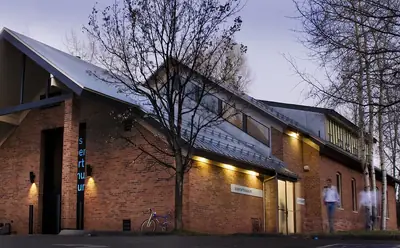
The Aspen Art Museum brings contemporary art to the center of this mountain town. Founded in 1979, it is notable for what it does not have: there is no permanent collection. Instead, all exhibitions are temporary, allowing the museum to change continually and respond to current artistic work.
The program can include paintings and drawings as well as room-sized sculptures, multimedia installations, and electronic media. For anyone researching what to see in Aspen beyond outdoor activities, the museum offers a direct encounter with contemporary art in a distinctly local setting.
Baldwin Gallery
Baldwin Gallery has been part of Aspen’s contemporary art scene since Richard Edwards founded it in 1994. Its exhibitions feature mainly American artists alongside international names, working across painting, drawing, sculpture, photography, video, and installation.
The gallery’s program changes regularly, so each visit offers a different selection. It is a useful stop for visitors interested in how Aspen’s cultural life extends beyond museums and into the town’s gallery spaces.
Aspen Community Church
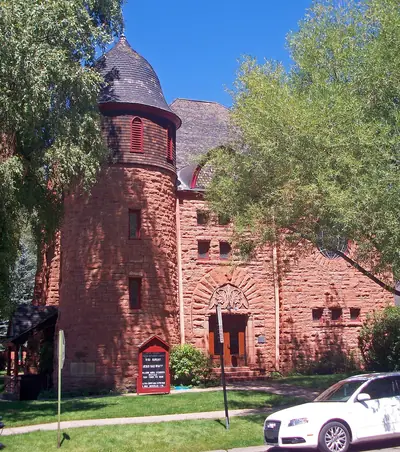
At the corner of East Bleeker and North Aspen streets, Aspen Community Church stands out for its stone architecture. Its fortress- or castle-like appearance reflects the solid, imposing character that has long drawn attention.
Built in the late 1800s, it is the only house of worship in Pitkin County listed on the National Register of Historic Places. Much of the original structure remains intact. The church first served a Presbyterian congregation during Aspen’s silver-mining boom, but the town’s population later fell dramatically. Decades afterward, the Presbyterian congregation merged with local Methodists.
A careful restoration in the early 2000s preserved the building and added the largest pipe organ on Colorado’s Western Slope. The sanctuary is now also a music venue: the Aspen Music Festival holds recitals there each year, and the church has its own musical programming. Its history makes it one of the most distinctive places to include on an Aspen self-guided walking tour.
Holden/Marolt Mining and Ranching Museum
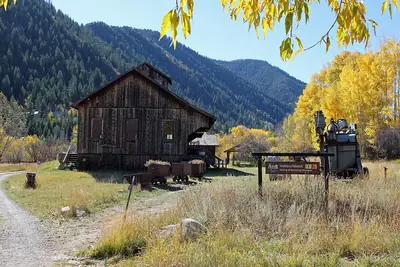
On Aspen’s western edge, where the mountains meet the valley floor, the Holden/Marolt Mining and Ranching Museum traces two very different periods in local history.
The site was first home to the Holden Lixiviation Works, a large industrial plant built in 1891 to extract silver from ore through a chemical process known as lixiviation. The operation was ambitious but short-lived. A change in federal silver policy caused the market to collapse, and the works went bankrupt after barely two years.
The property later became a working ranch. The Marolt family raised cattle there for generations, alongside the surviving industrial ruins. Two original buildings from the lixiviation works remain, including the sampling building, which houses the museum exhibits.
The site also includes the relocated McMurchy and Zupancis family homes. Together, these buildings show what domestic life looked like during Aspen’s ranching era. The museum is therefore more than a mining attraction: it brings together the town’s silver boom, its industrial decline, and the quieter agricultural period that followed.
Exploring Aspen Beyond Its Main Attractions
Aspen’s character comes from the meeting of mountain scenery and human history. The Holden/Marolt site places the town’s past directly in the valley landscape, while Aspen Community Church shows how an important historic building continued to serve the community through major changes.
The art museums and gallery add another layer. Their changing exhibitions give Aspen a contemporary cultural identity, complementing its historic architecture and outdoor setting. Together, these places make the town worth exploring even when your plans are not centered on skiing or hiking.
If you are extending a Colorado itinerary, you can also compare Aspen with other destinations in the state, including Boulder, Buena Vista, and Glenwood Springs.
Explore Aspen with Neywo’s Free Audio Guide
Neywo’s free Aspen audio guide includes four narrated places. It is designed for independent exploration: the app tells the story of each place as you reach it, at your own pace, with no group and no schedule. Narration is available in 11 languages.
Download Neywo and explore Aspen while the city’s stories unfold around you—from contemporary art and historic worship to the mining and ranching past of the valley.
Places with an audio guide in Aspen
3 places in Aspen with a Neywo audio guide. Each one starts telling its story as you reach it.
Walk Aspen with Neywo
Neywo turns Aspen into a self-guided audio tour. Stories arrive as you reach the place they belong to, and the route reshapes when you wander off it.

