Visiting Hội An, Vietnam: Top Sights on Foot
Things to Do in Hội An: Museums, Trading History and the Japanese Bridge
The best things to do in Hội An include exploring its museums, discovering the history of its international trading port, and crossing the famous Japanese Bridge in the historic old town. With its Vietnamese architecture and foreign influences, Hội An offers a compact journey through centuries of cultural exchange. Neywo has a free audio guide for Hội An with 7 narrated places, available in 11 languages.
What to See in Hội An
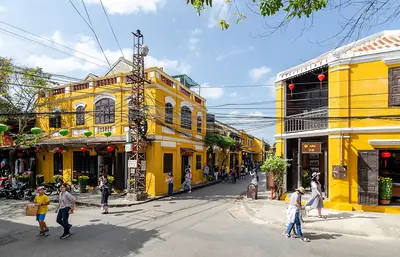
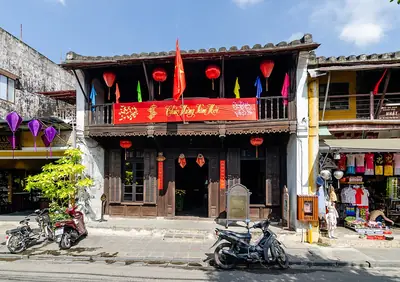
The town’s historic character comes from its role as an international port. From the 15th century onward, traders from China, Japan, Portugal and India passed through Hội An, which remained an important harbour until the 19th century. Its architecture combines indigenous Vietnamese styles with influences from abroad.
These are the main places to include in your visit.
Hội An Museum
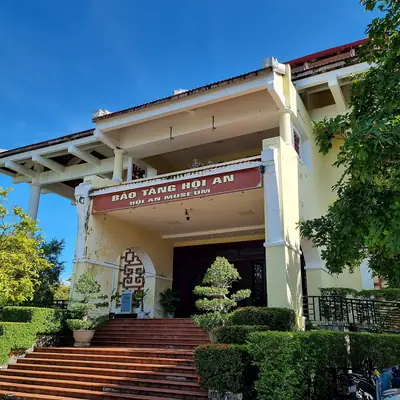
The Hội An Museum, also known as the Hội An Museum of History and Culture, traces the story of the ancient town from its earliest days to the present. Founded on 10 November 1989, it occupies a modest space of about 800 square metres.
Its collection includes original objects and historic photographs that illustrate Hội An’s development and bring its long history to life. It is a useful starting point for understanding the town before exploring its streets and monuments.
Precious Heritage Art Gallery Museum
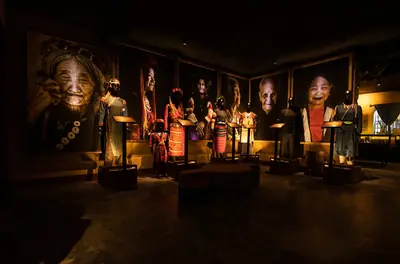
The Precious Heritage Art Gallery Museum presents the cultural diversity of Vietnam’s 54 officially recognized ethnic groups. Large-scale portrait photographs, traditional costumes and recorded personal stories introduce the communities represented in the collection.
The museum opened on 1 January 2017, following Réhahn’s Precious Heritage Project. He began the project in 2010 after travelling through Vietnam to document its ethnic cultures, and his work continues to be featured in the museum.
Museum of Trade Ceramics
The Museum of Trade Ceramics explores the commercial connections that shaped Hội An. Its collection reflects centuries of exchange between Vietnam, China, India, Japan, the Philippines and Thailand.
The museum is housed in a restored traditional wooden building whose design recalls the merchant houses of Kyoto. Opened in 1995 with the help of Japanese experts, it offers a focused look at the ceramic trade and Hội An’s place within wider Asian networks.
The audio guide also includes the Museum of Local Products, known locally as Bảo Tàng Thó Sản, which showcases products from the Hội An region.
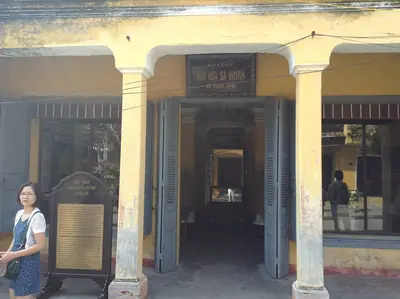
Museum of Sa Huynh Culture
The Museum of Sa Huynh Culture presents the history of the region’s earliest settlers. Established in 1994, it contains pottery, tools, ornaments and other objects connected with burial customs, beliefs about life and death, and the development of the area.
Among the highlights are terracotta works and a collection from Bai Ong on Cham Island. These artefacts trace the Sa Huynh culture back around 3,000 years and reveal its trading links with Southeast Asia, South India and China. The museum’s collection is considered the largest and most unusual assemblage of Sa Huynh artefacts in Vietnam.
You can find the museum at 149 Tran Phu Street, in the historic centre of Hội An.
Japanese Bridge
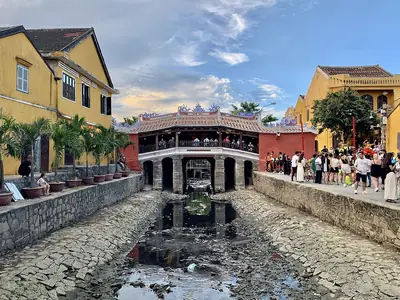
The Japanese Bridge, also known as Chùa Cầu, is Hội An’s most recognizable landmark. This covered footbridge spans the Thu Bồn River and includes a small temple built directly above the walkway.
Japanese traders originally erected the wooden bridge in the late 1500s. It has since undergone several recorded restorations, in 1817, 1865, 1915 and 1986. About 18 metres long, it stands on Trần Phú Street and is also known locally as Lai Viễn Kiều.
Its pink-painted structure and temple make it particularly distinctive among the old town’s historic buildings. The bridge forms part of a larger temple complex and can sometimes be partially submerged during the winter months when water levels rise.
Kazimierz Kwiatkowski
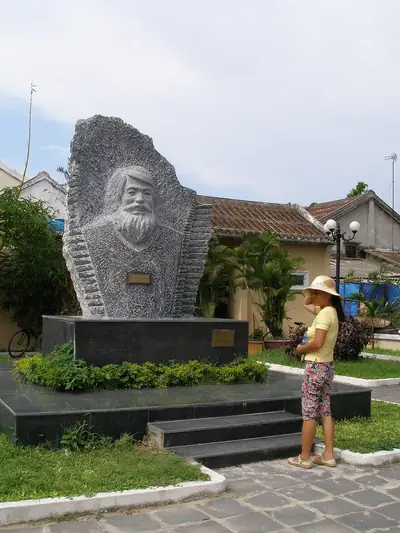
The monument to Kazimierz Kwiatkowski recalls the architect and conservationist whose work helped preserve Hội An’s historic character. Born in Poland on 2 July 1944, Kwiatkowski died on 19 March 1997.
As you walk through the lantern-lit streets, the monument offers a reminder that the town’s heritage also depends on the people who worked to protect it.
Hội An’s Historic Atmosphere
Hội An’s appeal lies in the relationship between its individual landmarks and the town around them. Museums explain the region’s ancient cultures and trading connections, while the Japanese Bridge and the preserved streets show how those histories remain visible in the urban landscape.
A slow walk through the old town connects these places naturally. The museums provide context for Hội An’s role as a port, and the traditional buildings and riverfront give that history a physical setting.
For travellers exploring Vietnam, Hội An also offers a different perspective from the country’s larger cities. It is possible to continue your journey to nearby Da Nang, or compare its heritage with Hue, another important cultural destination.
Explore Hội An with Neywo
Download Neywo and follow a self-guided walking tour through Hội An’s trading past. The route, Hoi An’s Trading Past: Museums and the Covered Bridge, covers 1.41 km, takes about 45 minutes and includes 5 narrated stops:
- Precious Heritage Art Gallery Museum
- Museum of Local Products, or Bảo Tàng Thó Sản
- Hội An Museum
- Museum of Sa Huynh Culture
- Japanese Bridge
Neywo’s stories play as you reach each place, at your own pace. There is no group and no schedule: simply walk, listen and explore Hội An with the free audio guide.
Places with an audio guide in Hội An
7 places in Hội An with a Neywo audio guide. Each one starts telling its story as you reach it.
Self-guided tours in Hội An
1 tour in Hội An, free in the Neywo app. Each stop tells its story as you reach it.
- Walk
Hoi An's Trading Past: Museums and the Covered Bridge
Hoi An was a thriving international port long before it became a lantern-lit tourist favourite. Walk through the old town's museums, from the faces of Vietnam's ethnic groups and the ceramics that crossed the seas to the prehistoric Sa Huynh people, and finish at the covered bridge built by Japanese merchants.
Precious Heritage Art Gallery Museum · Bảo Tàng Thó Sản · Hoi An Museum · Sa Huynh · Japanese Bridge
Open this tour: Hoi An's Trading Past: Museums and the Covered Bridge
Walk Hội An with Neywo
Neywo turns Hội An into a self-guided audio tour. Stories arrive as you reach the place they belong to, and the route reshapes when you wander off it.

