Hanoi, Vietnam: Self-Guided Walking Tour
Things to do in Hanoi: historic landmarks, temples and museums
Hanoi is Vietnam’s capital, a city shaped by more than a thousand years of political, religious and cultural history. Its major sights range from the Imperial Citadel of Thăng Long and Ba Đình Square to ancient temples, colonial buildings and museums. Neywo offers a free Hanoi audio guide with 81 narrated places, so you can explore the city while listening to its stories.
What to see in Hanoi
Ho Chi Minh Mausoleum and Ba Đình Square
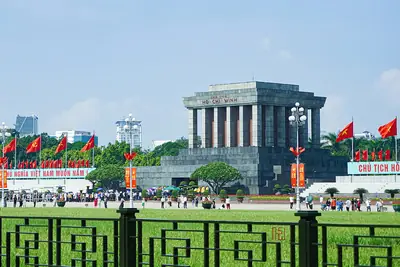
The Ho Chi Minh Mausoleum stands at the heart of Ba Đình Square, on the site of the old podium where Ho Chi Minh addressed crowds. Construction began on September 2, 1973, and the building opened on August 29, 1975.
The mausoleum is 21.6 metres high and 41.2 metres wide. Its exterior is clad in grey granite, while the front bears the inscription “CHỦ TỊCH HỒ-CHÍ-MINH” in pink stone. The building has three levels, including the embalming chamber, corridors, stairways and a three-tiered roof. Gardens surround the monument.
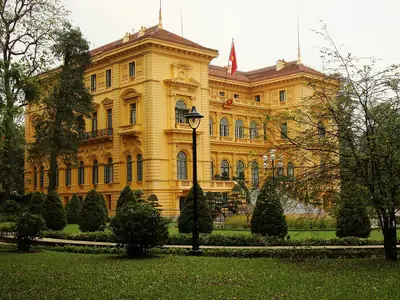
Nearby, the Presidential Palace of Vietnam remains the official residence of the president and the seat of the presidential office. The French colonial building was originally the Palace of the Governor-General of Indochina and is used today for ceremonial receptions and state events.
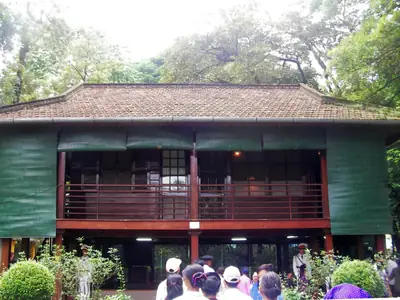
The adjacent Presidential Palace Historical Site covers more than fourteen hectares and contains sixteen historic constructions. Ho Chi Minh lived and worked here from December 19, 1954, until his death on September 2, 1969. The site includes his stilt house, House 54, House 67, a Politburo meeting room, the presidential garden, Mango Road and the Ho Chi Minh pond.
One Pillar Pagoda
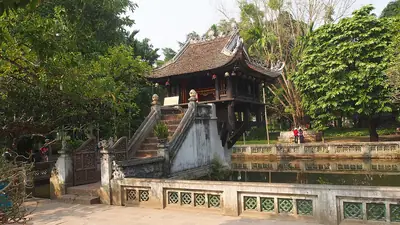
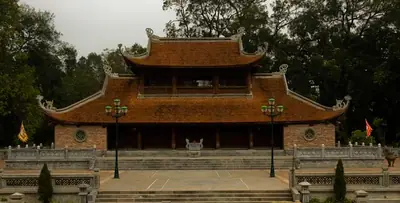
The One Pillar Pagoda is one of Hanoi’s most distinctive Buddhist temples. Its small wooden sanctuary, the Liên Hoa Đài, rests on a single stone pillar and resembles a lotus rising from the water.
The square building measures about three metres on each side. Its curved roof, surrounding corridors and wooden brackets form part of the lotus design. The pillar is roughly 1.25 metres in diameter and four metres high. The original pagoda was built in 1049 under Emperor Lý Thái Tông, while the present version was rebuilt in 1955 after the earlier structure was destroyed.
Imperial Citadel of Thăng Long
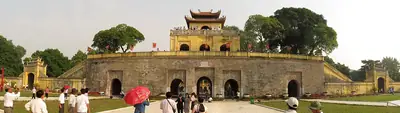
The Imperial Citadel of Thăng Long has watched over Hanoi for more than a thousand years. Construction began in 1010 under Emperor Lý Thái Tổ and was completed the following year. The complex was later expanded during the Trần and Later Lê periods, then substantially reconstructed under Emperor Gia Long in 1805.
Much of the original citadel disappeared during French colonial rule, when parts of the site were cleared for offices and barracks. The North Gate and Flag Tower survived, while archaeological excavations in the central area since 2002 have revealed layers of occupation spanning centuries.
For a wider look at Hanoi’s historic centre, the Vietnam page places the capital within the country’s broader cultural landscape.
Hỏa Lò Prison
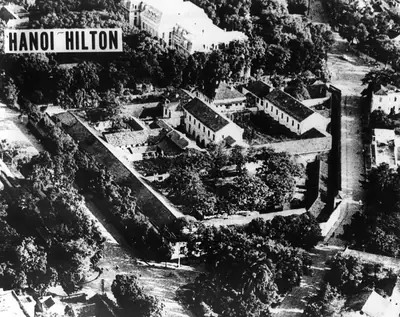
Hỏa Lò Prison was built by French colonists to hold political prisoners. During the Vietnam War, American prisoners of war called it the “Hanoi Hilton”. The prison later held Vietnamese dissidents before most of the complex was demolished between 1993 and 1994.
The remaining gatehouse now operates as a museum. It stands at 1 Hỏa Lò Street in Cửa Nam ward and presents the site’s history through its colonial and wartime chapters.
Ho Chi Minh Museum
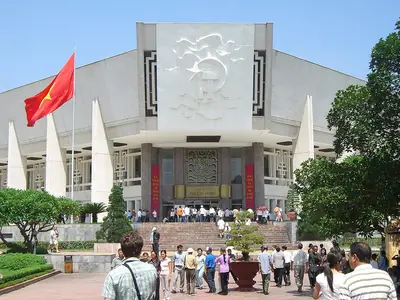
Behind the Ho Chi Minh Mausoleum, beside Bach Thao Park, the Ho Chi Minh Museum traces the life of the country’s revolutionary leader and Vietnam’s struggle against foreign powers.
The museum is organised into eight chronological exhibitions. They cover Ho Chi Minh’s childhood and youth, his travels in search of a way to free Vietnam from colonial rule, the foundation of the Vietnamese Communist Party, the period from 1945 to his death in 1969, and his later status as a national hero.
Hanoi Opera House
The Hanoi Opera House stands at August Revolution Square, at the head of Tràng Tiền Street. Its French Neoclassical design combines influences from opera houses in southern France and European theatres of the early twentieth century.
Construction began in 1901 and finished in 1911. The building was modelled on Paris’s Opéra Garnier, though on a smaller scale and with materials adapted to the local climate. Restoration between 1995 and 1997 returned much of its historic appearance.
The Old Quarter and Bach Ma Temple
Hanoi’s Old Quarter is a dense historic district of narrow streets and shophouses. Its street names recall the guilds and trades that once organised commerce, while Chinese-inspired details and French façades reflect the area’s layered past.
On Hang Buom Street, Bach Ma Temple is one of the Old Quarter’s most important historic sanctuaries. Also known as the White Horse Temple, it was one of the four guardian temples of Thăng Long and protected the eastern side of the old imperial capital.
The four guardian temples
Hanoi’s historic religious landscape includes several temples associated with the protection of Thăng Long. Quán Thánh Temple stands beside West Lake and dates from the reign of Lý Thái Tổ, between 1010 and 1028. It is dedicated to Trấn Vũ and was one of the city’s four great Taoist temples.
Voi Phục Temple, next to Thủ Lệ Park, was another of the Four Sacred Temples guarding the old citadel’s gateways. Kim Liên shrine served as the southern guardian. Built around the sixteenth or seventeenth century, it also functioned as the communal house of the original Kim Liên settlement.
Vietnam Museum of Ethnology
The Vietnam Museum of Ethnology introduces the traditions, artefacts and stories of Vietnam’s 54 officially recognised ethnic groups. Its site covers 43,799 square metres in Cầu Giấy District, roughly eight kilometres from the city centre.
A second exhibition building, opened in 2013, focuses on the cultures and peoples of Southeast Asia.
Vietnam Military History Museum
The Vietnam Military History Museum preserves more than 150,000 documents and artefacts. Its collection includes helicopters, tanks and MiG aircraft, as well as four national treasures: MiG-21 aircraft numbered 4324 and 5121, the Hồ Chí Minh Campaign map and a T-54B tank numbered 843.
Founded on July 17, 1956, the museum moved to its present premises on Thăng Long Boulevard in November 2024.
Son Tay Ancient Citadel
Around Hanoi’s northwestern outskirts, Son Tay Ancient Citadel is a stone fortress built in 1822 under Emperor Minh Mang. It covers about sixteen hectares and was designed to defend the approaches to Thăng Long.
The walls use locally found beehive stone. Four main gates face south, north, east and west, each reached by a stone bridge over the moat. The moat’s red-earth embankment is roughly 1.8 kilometres long and twenty metres wide. The citadel was recognised as a national historical and architectural relic in 1994.
Explore Hanoi with a self-guided audio tour
Neywo’s Hanoi audio guide includes six walking tours and one bus route, covering 81 narrated places in total. The walks range from 1.95 to 3.93 km and from 51 to 111 minutes:
- Ba Dinh: Ho Chi Minh’s Hanoi — 2.85 km, 111 minutes, 9 stops
- A Thousand Years of Thang Long — 2.13 km, 71 minutes, 7 stops
- Hoan Kiem Lake: Legends, Gates and Temples — 3.93 km, 104 minutes, 9 stops
- French Quarter: Opera, Prison and Cathedral — 3.39 km, 102 minutes, 9 stops
- Old Quarter Gates, a Mosque and the Long Bien Bridge — 1.95 km, 51 minutes, 4 stops
- West Lake: Northern Gate, Temples and Pagodas — 3.83 km, 78 minutes, 4 stops
There is also one bus route: Bus 04: Lake, Opera House and the Old Quarter, covering 2.5 km in 11 minutes with 5 stops.
Download Neywo and explore Hanoi at your own pace. The app tells the story of each place as you reach it, with no group and no schedule. Narration is available in 11 languages.
Places with an audio guide in Hanoi
8 places in Hanoi with a Neywo audio guide. Each one starts telling its story as you reach it.
Self-guided tours in Hanoi
6 tours in Hanoi, free in the Neywo app. Each stop tells its story as you reach it.
- Bus ride
Bus 04: Lake, Opera House and the Old Quarter
A city bus that rides from the Long Bien side through the heart of old Hanoi. Get off for the French-era art gallery near the Opera House, the State Guest House, the Pen Tower on Hoan Kiem Lake and the White Horse Temple in the Old Quarter.
Nhà triển lãm Mỹ thuật · Quảng trường Cách Mạng Tháng Tám · State Guest House · Tháp Bút · Bach Ma temple
Open this tour: Bus 04: Lake, Opera House and the Old Quarter - Walk
Ba Dinh: Ho Chi Minh's Hanoi
Start at the B-52 Victory Museum, where the wreckage of a bomber shot down in 1972 lies in the open air, then walk through the political heart of Vietnam: the museum and stilt-house compound of Ho Chi Minh, the One Pillar Pagoda and the mausoleum on Ba Dinh Square where he declared independence in 1945. Pass the National Assembly and the French colonial palace, and end at the ancient Quan Thanh Temple beside West Lake.
B-52 Victory Museum · Ho Chi Minh Museum · One Pillar Pagoda · Ho Chi Minh Mausoleum · Ba Ðình Square · National Assembly of Vietnam …
Open this tour: Ba Dinh: Ho Chi Minh's Hanoi - Walk
A Thousand Years of Thang Long
Follow the story of Hanoi from the Temple of Literature, Vietnam's first university, through the national art museum and the Flag Tower to the UNESCO-listed Imperial Citadel. Pass through Doan Mon gate, reach the throne hall where emperors once ruled and end at the church named after the old citadel's Northern Gate.
Temple of Literature · Vietnam National Museum of Fine Arts · Flag Tower of Hanoi · Đoan Môn · Imperial Citadel of Thang Long · Kính Thiên Palace …
Open this tour: A Thousand Years of Thang Long - Walk
Hoan Kiem Lake: Legends, Gates and Temples
Start at the last surviving gate of old Thang Long and slip through the Old Quarter past the White Horse Temple. Reach Hoan Kiem, the Lake of the Returned Sword, with the Pen Tower, the red Huc Bridge to Ngoc Son Temple and the Turtle Tower on its islet. Finish south of the lake at a Franciscan church and the temple of the Trung Sisters.
Ô Quan Chưởng · Bach Ma temple · Đền Bà Kiệu · Tháp Bút · Ngọc Sơn Temple · Hoàn Kiếm Lake …
Open this tour: Hoan Kiem Lake: Legends, Gates and Temples - Walk
French Quarter: Opera, Prison and Cathedral
Wander the colonial boulevards south of the lake, from the neo-Gothic Saint Joseph Cathedral and the seat of Vietnamese Buddhism to the gatehouse of Hoa Lo Prison, the Women's Museum and the former palace of the French governor. Finish at the Opera House on August Revolution Square and the two history museums behind it.
Saint Joseph Cathedral · Quán Sứ Temple · Hỏa Lò Prison · Vietnamese Women’s Museum · State Guest House · Hanoi Opera House …
Open this tour: French Quarter: Opera, Prison and Cathedral - Walk
Old Quarter Gates, a Mosque and the Long Bien Bridge
A short walk through the east side of the Old Quarter: Hanoi's only mosque on Hang Luoc street, the White Horse Temple, Quan Chuong gate and finally Hanoi's first steel bridge over the Red River, with its original maker's plate.
Al-Noor Mosque · Bach Ma temple · Ô Quan Chưởng · Long Bien Bridge
Open this tour: Old Quarter Gates, a Mosque and the Long Bien Bridge
Walk Hanoi with Neywo
Neywo turns Hanoi into a self-guided audio tour. Stories arrive as you reach the place they belong to, and the route reshapes when you wander off it.

