What to See in Bandung, Indonesia: Free Audio Guide
Things to Do in Bandung: Museums, History and the Bandung Spirit
Looking for things to do in Bandung? This West Java city is a rewarding destination for anyone interested in geology, art, local culture and Indonesia’s modern history. Its museums and historic buildings reveal Bandung’s many layers, from the geological forces that shaped the archipelago to the independence struggles and creative traditions of the present day.
Neywo offers a free audio guide for Bandung with 42 narrated places, so you can explore the city while hearing the story of each site as you reach it.
What to See in Bandung
Many of Bandung’s most interesting places are concentrated around its central streets and historic districts. These are the highlights to look for, roughly following the city’s historical and cultural story.
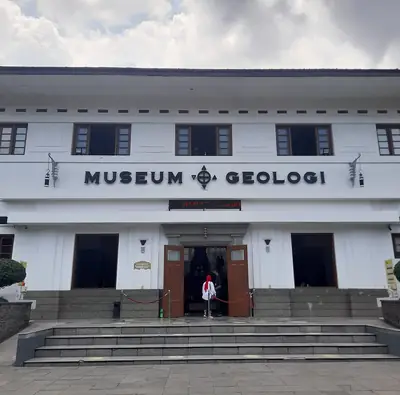
Bandung Geological Museum
The Bandung Geological Museum is the first geological museum in Asia and has been a national historical landmark since its opening on May 16, 1929. Its collections were built through fieldwork across Indonesia dating back to 1850.
Inside, fossils of ancient animals, rocks, minerals and detailed dioramas explain the geological history of the archipelago. The museum also displays geological maps, mining tools, oil-drilling equipment and scientific archives. Its volcanology section is particularly significant in a country shaped by numerous active volcanoes.
Asian-African Conference Museum
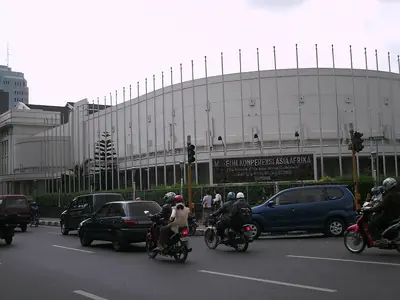
The Asian-African Conference Museum occupies part of the historic Gedung Merdeka complex on Jalan Asia Afrika. In April 1955, delegates from 29 Asian and African nations met here for the first large-scale conference of its kind.
The museum preserves that turning point through three-dimensional objects and documentary photographs. Its exhibitions trace the events leading to the conference, including the Tugu Meeting, the Colombo Conference and the Bogor Conference. The adjacent building was the conference hall where the delegates actually met.
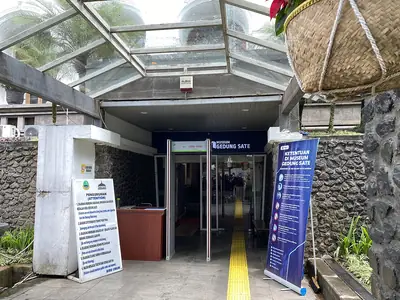
Gedung Sate Museum
Beside the famous Gedung Sate building, the Gedung Sate Museum explains the history of the landmark itself, Bandung and the wider West Java province. Gedung Sate is recognizable for the satay-shaped ornament on its roof, while the museum uses interactive technology to make its exhibits more engaging.
Opened on December 8, 2017, the museum is in the Citarum area of Bandung Wetan. The Museum Pos Indonesia is also located nearby, making this a useful area for exploring several museums in one outing.
Museum Kota Bandung
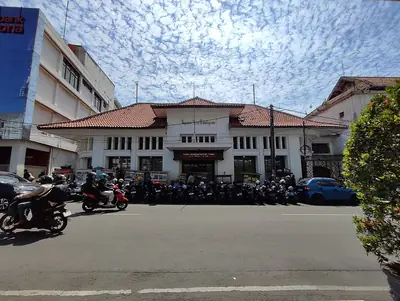
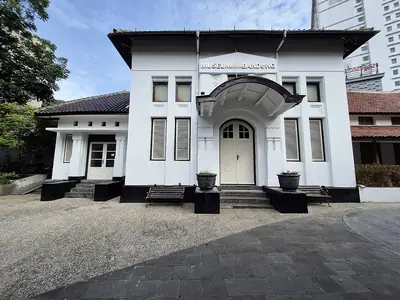
The Museum Kota Bandung is dedicated entirely to the history of the city and its people. It stands on Jalan Aceh, across from the Bandung Planning Gallery, in a building inaugurated on October 31, 2018.
The white façade includes details inspired by Dutch colonial architecture. Its focus makes it a natural stop for visitors who want to understand Bandung as a city rather than only see individual monuments.
Sri Baduga Museum
The Sri Baduga Museum is the state museum of West Java, located on Jalan B.K.R. in the Tegallega district, near the Bandung Sea of Fire Monument. Its building takes inspiration from the traditional Sundanese rumah panggung, or stilt house, with a long roof reinterpreted in a modern design.
The collections cover the province’s geological, archaeological, ethnographic and numismatic heritage. They also include fine art, traditional handicrafts, furniture, philological material and examples of traditional technology. Together, the exhibits offer a broad introduction to Sundanese history and culture.
Bandung Sea of Fire Monument
The Bandung Sea of Fire site commemorates one of the most dramatic episodes in Indonesia’s struggle for independence. On the night of March 23, 1946, Indonesian Republican forces set fire to much of southern Bandung to prevent British and Dutch troops from using the city as a military base.
Around 200,000 residents fled towards the mountains to the south, leaving their homes behind. The event remains a powerful symbol of resistance and sacrifice in Bandung’s history.
Mandala Wangsit Siliwangi Museum
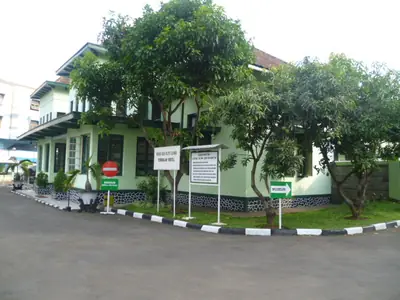
The Mandala Wangsit Siliwangi Museum occupies a building on Jalan Lembong that once served as the headquarters of the Siliwangi Division, the Indonesian Army’s regional command for West Java and Banten.
The museum explores West Java’s struggle for independence and preserves objects connected with the fighters of that period. The building retained much of its original Dutch colonial architecture, while its military history includes its role as a target during the APRA attack in 1950.
Bandung Cathedral
Bandung Cathedral is the oldest Catholic church in the city. The first parish on this site was dedicated to Saint Francis Regis in 1895, when Bandung was still the capital of the Priangan Residency.
The present church was built in 1921 and designed by Charles Prosper Wolff Schoemaker in a late neo-Gothic style. Its pointed arches, ribbed vaults and symmetrical cross-shaped floor plan culminate in a building consecrated on February 19, 1922.
Galeri Pusat Kebudayaan
Galeri Pusat Kebudayaan on Jalan Naripan is a cultural landmark dedicated to Sundanese arts. Its programme has included wayang golek puppet performances, traditional dance, theatre and music, as well as painting exhibitions and other visual arts.
The building has also played a social role. During the 1980s, when Bandung had few available venues, it was used for weddings and community celebrations. Part of the complex now houses a restaurant.
Barli Museum
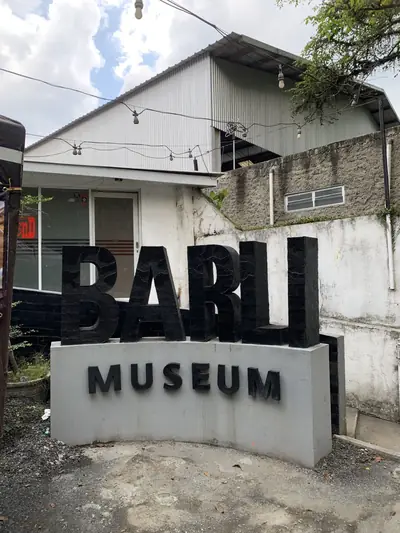
The Barli Museum is a private art space in Bandung’s Sukasari district dedicated to the Indonesian painter Barli Sasmitawinata. Founded in 1990 and officially opened two years later, it began as a personal collection and developed into a wider cultural space.
The galleries contain paintings and sculptures by Barli and other Indonesian artists, while the grounds display works by various sculptors. Cafés and restaurants on the site add to its informal, creative atmosphere.
Soemardja Gallery
Located within the Faculty of Art and Design at the Bandung Institute of Technology, Soemardja Gallery has supported art education since 1974. The gallery focuses on contemporary art, with many exhibitions organized by students as part of their curatorial training.
Its programme includes fine art, industrial design, architecture, crafts and photography. The gallery also publishes a quarterly bulletin and presents the Soemardja Award to outstanding fine arts students. Exhibitions and public talks are free and open to everyone.
National Education Museum
The National Education Museum stands on the Universitas Pendidikan Indonesia campus in Bandung’s Isola district. The five-story building traces the development of education in Indonesia, with particular attention to the university itself.
The museum approaches its subject through conservation, education, research and recreation. It is therefore more than a display of historical objects: it presents education as something to be studied, taught and experienced.
Museum Kebudayaan Tionghoa
The Museum Kebudayaan Tionghoa on Jalan Nana Rohana explores the history and culture of Chinese Indonesians. Open since 2012, it was established to present the community’s contributions to politics, the economy, society, culture and the arts across the Indonesian archipelago.
One of the stories visitors can learn about is Admiral Cheng Ho and his historic voyages to the region.
Preanger Museum
The Preanger Museum occupies the ground floor of the historic Grand Preanger Hotel on Jalan Asia Afrika. It is also known as the Wolff Schoemaker Museum, named after the architect who founded it.
The setting is part of the experience: the museum is inside one of Schoemaker’s own creations, allowing visitors to explore the history of the building alongside the museum’s collection.
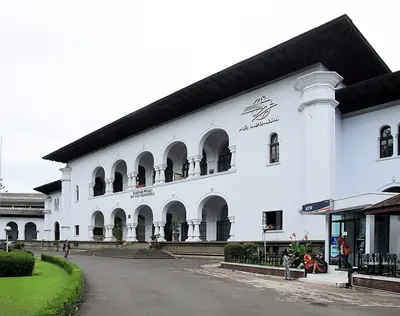
Museum Pos Indonesia
The Indonesia Postal Museum stands beside the headquarters of the national postal service on Jalan Cilaki. It is located to the right of the main PT Pos Indonesia office building, with Gedung Sate to the west.
Its location makes it easy to combine with the Gedung Sate Museum and the Bandung Geological Museum during a walk through the district.
Explore Bandung with a Self-Guided Audio Tour
A Bandung self-guided walking tour lets you discover the city without joining a group or following a fixed timetable. Neywo’s free Bandung audio guide includes two walking tours and one bus route:
- Gedung Sate District: Independence, Treasure and Rocks — a 4.02 km walk lasting 105 minutes, with 9 narrated stops.
- Old Bandung: Mosques, Colonial Streets and the Bandung Spirit — a 4.93 km walk lasting 120 minutes, with 10 narrated stops.
- Feeder FD1: Old Bandung by Minibus — a 5.4 km bus route lasting 23 minutes, with 6 narrated stops.
The app tells the story of each place as you reach it, at your own pace, with no group and no schedule. Narration is available in 11 languages, making it a practical way to explore Bandung independently.
Download Neywo and Explore Bandung at Your Own Pace
Download Neywo to explore Bandung with 42 narrated places, two walking tours and one bus route. Follow the route, arrive at each stop and let the app tell you what happened there. You can pause, continue or change direction whenever you like—without a guide, a group or a schedule.
Bandung is part of West Java, a region with other destinations to discover across Indonesia.
Places with an audio guide in Bandung
8 places in Bandung with a Neywo audio guide. Each one starts telling its story as you reach it.
Self-guided tours in Bandung
3 tours in Bandung, free in the Neywo app. Each stop tells its story as you reach it.
- Bus ride
Feeder FD1: Old Bandung by Minibus
A cheap local feeder line (Metro Jabar Trans FD1) through the old centre, past the Chinese-style Al-Imtizaj mosque, the cultural gallery on Jalan Naripan, the cathedral and the Bandung city museum. Ride it to see everyday Bandung between sights.
Al-Imtizaj Mosque · Galeri Pusat Kebudayaan · Bethel Church of Bandung · Museum Kota Bandung · Bandung Cathedral · Treasury Museum
Open this tour: Feeder FD1: Old Bandung by Minibus - Walk
Gedung Sate District: Independence, Treasure and Rocks
Start at Asia's first campus mosque, then walk Bandung's civic heart around the Gedung Sate. Pass the monument to West Java's independence fighters, then visit the museums where the 1955 Asian-African Conference secretariat, postal history and Asia's first geological museum sit within a few blocks.
Salman ITB Mosque · Monumen Perjuangan Rakyat Jawa Barat · Treasury Museum · Asian–African Conference · Gedung Sate Museum · Museum Pos Indonesia …
Open this tour: Gedung Sate District: Independence, Treasure and Rocks - Walk
Old Bandung: Mosques, Colonial Streets and the Bandung Spirit
Walk north from the Sundanese stilt-house museum and the Sea of Fire memorial to the Grand Mosque and Alun-alun, then through Old Bandung: a mosque dressed as a Chinese temple, the museum of the 1955 Asian-African Conference, Wolff Schoemaker's neo-Gothic cathedral and the city museum.
Sri Baduga Museum · Bandung Sea of Fire · Grand Mosque of Bandung · Alun-alun Bandung · Al-Imtizaj Mosque · Asian-African Conference Museum …
Open this tour: Old Bandung: Mosques, Colonial Streets and the Bandung Spirit
Walk Bandung with Neywo
Neywo turns Bandung into a self-guided audio tour. Stories arrive as you reach the place they belong to, and the route reshapes when you wander off it.

