Things to Do in Bukittinggi, Indonesia: Walking Guide
Things to Do in Bukittinggi: Museums, Mosques and Minangkabau History
The best things to do in Bukittinggi include exploring historic forts, museums, monuments and places connected with Mohammad Hatta, one of Indonesia’s proclaimers of independence. Set in West Sumatra, the city also offers a close look at Minangkabau architecture and local religious heritage. Neywo has a free audio guide for Bukittinggi with 18 narrated places.
What to See in Bukittinggi
The main sights are concentrated around the city centre and the historic hilltop area. Together, they tell the story of Bukittinggi’s colonial past, Minangkabau culture and role in Indonesian history.
Museum Perjuangan Tri Daya Eka Dharma
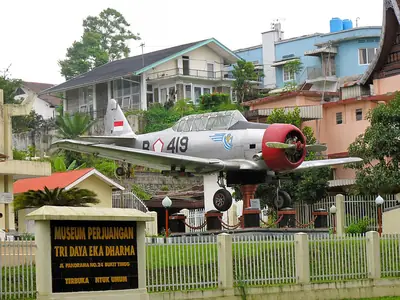
Museum Perjuangan Tri Daya Eka Dharma preserves hundreds of wartime weapons in a collection open to the public. Mohammad Hatta officially opened the museum on 16 August 1973. Before becoming a museum, the building served as a rest house for the Governor of Sumatra. Its creation was supported by Brigadier General Widodo, one of the leaders of the Indonesian military in Central Sumatra.
Istana Bung Hatta
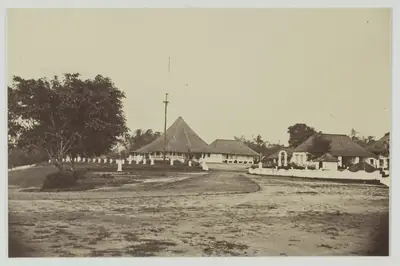
In the centre of Bukittinggi, facing the Jam Gadang garden, Istana Bung Hatta is closely associated with Mohammad Hatta, Indonesia’s first vice president and one of the country’s proclaimers of independence. Hatta lived here in 1946, and in 1947 the building became the centre of the emergency government of the Republic of Indonesia.
The present building was renovated in 1961 after the original was burned during the Second Dutch Military Aggression in 1948.
Tugu Pahlawan Tak Dikenal
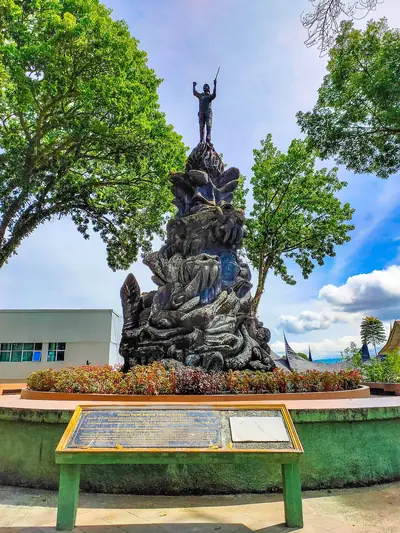
Near Jam Gadang and across from Taman Monumen Bung Hatta, the Unknown Hero Monument stands in Aur Tajungkang Tengah Sawah. The monument is nine metres high. Its circular field is decorated with plants and a dragon-snake ornament, while a young man holding what appears to be a sword stands at the top.
Jam Gadang
Jam Gadang is one of Bukittinggi’s central landmarks and sits close to several of the city’s historic sights, including the Unknown Hero Monument and Istana Bung Hatta. Its garden provides a useful starting point for exploring the surrounding centre on foot.
Fort de Kock
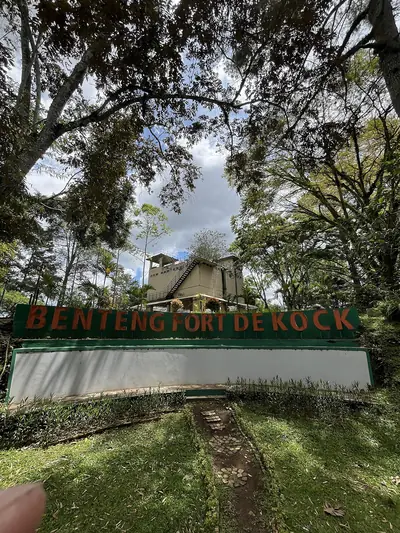
Fort de Kock occupies Bukit Jirek and preserves traces of a nineteenth-century Dutch colonial fort. Captain Bouer established it in 1825, during the period when Hendrik Merkus de Kock was commander of the Dutch forces and acting Governor General of the Dutch East Indies. The fort took de Kock’s name.
It was built as a defensive position during resistance by the Minangkabau people, particularly during the Padri War, which lasted from 1821 to 1837. The original buildings have disappeared, but earthworks and several nineteenth-century cannons remain on the hilltop.
Limpapeh Bridge
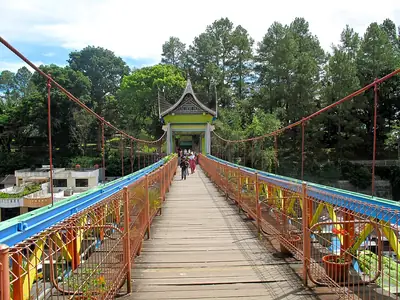
Limpapeh Bridge, also known locally as Jambatan Limpapeh, crosses Jalan Ahmad Yani and connects Taman Margasatwa dan Budaya Kinantan with Fort de Kock. The suspension bridge is 90 metres long and 3.8 metres wide, making it a distinctive elevated link between two important Bukittinggi attractions.
Museum Rumah Gadang Kinantan
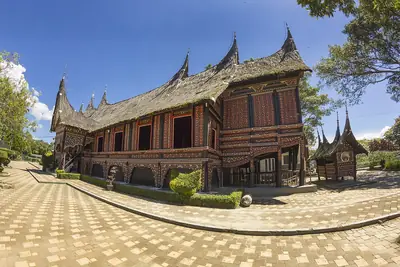
Museum Rumah Gadang Kinantan stands inside Taman Margasatwa dan Budaya Kinantan in a traditional rumah gadang building. Its form reflects Minangkabau architecture, while its collections preserve historical and cultural heritage from the region. The grounds include rangkiang, the traditional Minangkabau rice barns, and much of the museum continues to use traditional building materials.
The museum covers 2,798 square metres. It was established on 1 July 1935 by a Dutch official named Modelar Countrolleur. First called Museum Baanjuang, it later became Museum Bundo Kanduang and, under a 2005 regional regulation, received the name Museum Rumah Adaik Baanjuang.
Museum of Zoology
Also inside Taman Marga Satwa dan Budaya Kinantan, Bukittinggi’s Museum of Zoology displays preserved animals and material connected with the region’s natural heritage. The museum was established in 1894, with a purpose similar to the Museum of Zoology in Bogor, and was rebuilt by the City Government of Bukittinggi in 2010.
Its collection includes elephants, clouded leopards, estuarine crocodiles, tapirs, deer, barking deer, sun bears, mouse-deer, zebras and many birds. Peacocks, hornbills, cockatoos, pelicans and owls are also represented. Altogether, the museum holds more than two thousand types of preserved animals.
Bung Hatta Birth House
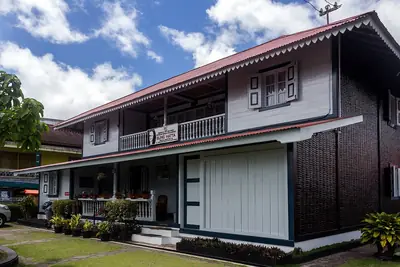
The Bung Hatta Birth House recalls the early life of Mohammad Hatta, who was born and spent his childhood in Bukittinggi. The traditional wooden house was established around the 1860s and includes a main building, pavilion, rice barn, kitchen, horse stable and fish pond.
The main building was used for receiving guests and family meals, with rooms for Hatta’s mother, uncle and grandfather. The pavilion served as Hatta’s bedroom. He lived here until the age of eleven, before beginning his secondary education. He later studied in Padang, Batavia—now Jakarta—and Rotterdam.
Bukittinggi’s Mosques and Religious Heritage
Bukittinggi’s mosques add another layer to the city’s history and everyday character. Several are connected with local communities, while others preserve stories of renovation and religious education.
Jamik Birugo Mosque stands on Jalan Sudirman in Birugo. Construction began in 1956, when Sheikh Ibrahim Musa Parabek laid the foundation stone with Haji Abu Samah, also known as Inyiak Kurai. Its design resembles the Syuhada Mosque in Yogyakarta.
Jamik Mandiangin Mosque, in Campago Ipuh in the Mandiangin Koto Selayan district, began as Surau Gadang Mandiangin, a prayer house within the complex of Tuanku Kurai’s tomb. The mosque underwent major renovations in 1980 and again in 2022.
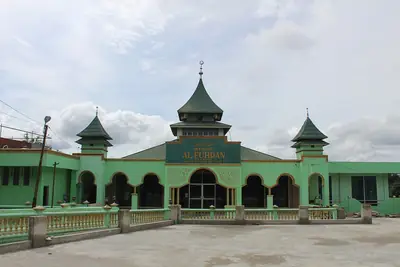
Other places of worship included in Bukittinggi’s heritage include Al-Furqan Campago Mosque, Gantiang Sawah Laweh Jami’ Mosque, Jamik Tangah Sawah Mosque, Masjid Raya Bukittinggi and Surau Inyiak Tuo Pakak. Together, they offer a way to encounter the city beyond its principal monuments and museums.
Explore Bukittinggi with a Self-Guided Audio Tour
Neywo’s Bukittinggi self-guided walking tour follows a 2.26-kilometre route lasting around 83 minutes, with nine narrated stops. It includes Museum Perjuangan Tri Daya Eka Dharma, Istana Bung Hatta, Tugu Pahlawan Tak Dikenal, Jam Gadang, Fort de Kock, Limpapeh Bridge, Museum Rumah Gadang Kinantan, the Museum of Zoology and the Bung Hatta Birth House.
Download Neywo to explore Bukittinggi with a free audio guide. The app tells the story of each place as you reach it, at your own pace, with no group and no schedule. The narration is available in 11 languages, and Bukittinggi currently has one walking tour.
Bukittinggi is part of Indonesia, whose destinations include Jakarta, Medan and Banda Aceh.
Places with an audio guide in Bukittinggi
8 places in Bukittinggi with a Neywo audio guide. Each one starts telling its story as you reach it.
Self-guided tours in Bukittinggi
1 tour in Bukittinggi, free in the Neywo app. Each stop tells its story as you reach it.
- Walk
Hatta's Hometown: Clock Tower, Fort and the Statesman's Birthplace
Bukittinggi is where Indonesia's first vice president grew up and where an emergency republic ran in 1948. Start with a wartime arms museum, pass Hatta's palace and the Jam Gadang clock tower, climb to the Dutch fort, cross the long suspension bridge into the Minangkabau cultural park, and end at the house where Hatta was born.
Museum Perjuangan Tri Daya Eka Dharma · Istana Bung Hatta · Tugu Pahlawan Tak Dikenal · Jam Gadang · Fort de Kock · Limpapeh Bridge …
Open this tour: Hatta's Hometown: Clock Tower, Fort and the Statesman's Birthplace
Walk Bukittinggi with Neywo
Neywo turns Bukittinggi into a self-guided audio tour. Stories arrive as you reach the place they belong to, and the route reshapes when you wander off it.

