What to See in Cirebon, Indonesia: Free Audio Guide
Things to Do in Cirebon: Palaces, Mosques and Cultural Heritage
The best things to do in Cirebon include exploring its historic sultanate palaces, distinctive places of worship and the artificial caves of Gua Sunyaragi. On Java’s northern coast, the city brings together Javanese, Chinese, Arab and Islamic influences in a compact cultural landscape. Neywo’s free audio guide for Cirebon covers 11 narrated places, helping you discover the city as you walk.
Cirebon is in West Java, on the island of Java in Indonesia. Its heritage is especially visible around the former royal courts, where palace architecture, religious buildings, royal objects and local traditions reveal the city’s layered past.
What to see and do in Cirebon
Palace Kasepuhan and its heritage museum
Palace Kasepuhan, also known as Keraton Kasepuhan, was once the centre of government for the Cirebon Sultanate. Its courtyard is enclosed by red brick walls and contains a pendopo, a traditional open pavilion. The main white building includes a reception room, a sleeping room and the royal throne.
The palace museum displays royal heirlooms and paintings. Its northern section contains historic weapons, cannons, royal furnishings and the Singa Barong carriage. The southern section holds jewellery, ornaments, plates and palace equipment associated with the time of Sunan Gunung Jati.
The Singa Barong is one of the collection’s most distinctive objects. Its design combines several cultural influences: an elephant’s head, a trident held by the trunk, wings recalling the garuda and a dragon-shaped tail.
Inside the complex, the Kasepuhan Palace Heritage Museum explains the palace’s history through objects associated with the Padjajaran Kingdom, Fatahillah, Sunan Gunung Jati, Panembahan Ratu and Sultan Sepuh the First.
Great Mosque of Cirebon
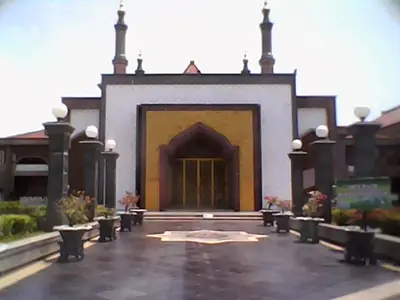
The Great Mosque of Cirebon, or Masjid Agung Sang Cipta Rasa, stands west of Cirebon’s town square within the Kasepuhan Palace complex. It was built by Sunan Gunung Jati, with Sunan Kalijaga as its architect, and is described as one of the oldest mosques in Indonesia.
Its roof rises in several tiers, in a style described as similar to that of the Great Mosque in Banten. Its position beside the palace makes it an important part of Cirebon’s historic royal landscape.
Kraton Kanoman
Kraton Kanoman is one of Cirebon’s two sultanate palaces. Founded in the late seventeenth century by Pangeran Mohamad Badridin, also known as Pangeran Kertawijaya, it preserves old buildings, royal traditions and objects connected with the history of Islam in western Java.
The complex covers about six hectares. Important structures include Bangsal Witana, regarded as the starting point of the palace; the central Siti Hinggil complex; and Bangsal Jinem, which was used to receive guests, crown sultans and grant blessings during events such as the celebration of the Prophet Muhammad’s birth.
Two carefully preserved royal carriages, Paksi Naga Liman and Jempana, are also found here. Their forms are associated with the burak, the creature ridden by the Prophet Muhammad during Isra Mi’raj. Chinese porcelain plates set into the palace walls add another visible trace of Cirebon’s cultural connections.
Kraton Kacirebonan
Kraton Kacirebonan is a palace built around the 1800s, with the date 1807 also associated with its establishment. It once served as a residence for the consorts of the kings and sultans of Kasepuhan Palace.
The colonial-era complex contains historic objects including keris, shadow puppets, weapons, gamelan instruments and other relics. Its grounds cover about 46,500 square metres, and the layout extends from north to south, following the same orientation as Cirebon’s other palaces.
Masjid Merah Panjunan
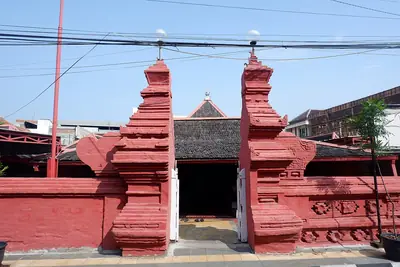
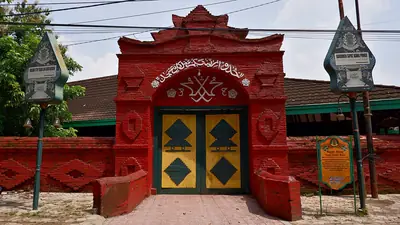
Masjid Merah Panjunan, or the Red Mosque of Panjunan, stands among the residences of Kampung Arab. It is associated with Sheikh Syarif Abdurrahman and is recognised as a cultural heritage building.
The mosque’s appearance reflects Cirebon’s layered history. Its architecture has been described as Arab and Chinese, while also displaying distinctive Javanese Hindu artistic elements. After renovation, it was named after Jalan Panjunan, where it stands. The name Masjid Abang, meaning Red Mosque, remains part of its identity.
Tiao Kak Sie
Tiao Kak Sie, also known as Vihara Dewi Welas Asih, is a Chinese temple in Kampung Kamiran, in Cirebon’s Panjunan area. Its setting adds another dimension to the neighbourhood’s religious heritage: the temple stands beside the historic former Nederlandsch Indische Escompto Maatschappij building, now occupied by Bank Mandiri.
At-Taqwa Mosque
At-Taqwa Mosque, also known as Masjid Raya At-Taqwa, stands in the Kejaksan area. Its history reaches back to 1918, when an earlier building called Tajug Agung occupied the site.
That building eventually became too old, its prayer space too small and its position insufficiently aligned with the qibla. R.M. Arhatha proposed rebuilding it on the same site and naming it At-Taqwa. The new building was completed in 1951 and formally inaugurated as At-Taqwa in 1963.
Gua Sunyaragi
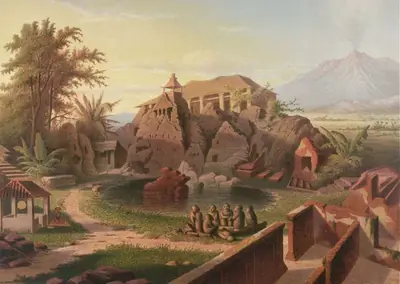
Gua Sunyaragi, also called Taman Sari Sunyaragi, is an artificial cave complex created as a retreat and place of meditation for the Sultans of Cirebon and their families. Made from rocky stone formations, the complex covers about fifteen hectares.
The site was used by sultans and royal officials for relaxation and seclusion, and it is also described as a former water palace. Around the caves and gardens, Talaga Jati contributes to the atmosphere of a landscaped royal retreat.
Saint Joseph Church
Saint Joseph Church, or Gereja Katolik Santo Yusuf Cirebon, is one of Cirebon’s oldest Catholic churches. More than 144 years old, it remains a place of worship today and is named for Joseph, the father of Jesus Christ.
The Order of the Holy Cross, known by the initials OSC, has carried out its pastoral ministry here since OSC priests first came to Indonesia. The church represents generations of Christian worship and teaching in Cirebon.
Saint Mary Church
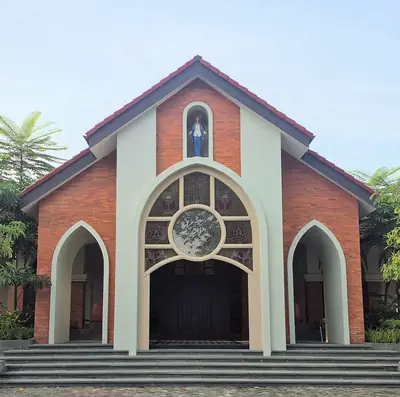
Saint Mary Church, also known as Gereja Katolik Bunda Maria or Gereja Paroki Bunda Maria Dukuh Semar, serves Cirebon’s Catholic community. It stands on Jalan Dukuh Semar in Cirebon, West Java.
Explore Cirebon with a free audio guide
Neywo’s “Sultans, Mosques and Kampung Arab” is a 3.68-kilometre self-guided walking tour lasting 102 minutes, with eight narrated stops. The route includes Masjid Merah Panjunan, Tiao Kak Sie, Saint Joseph Church, Kraton Kanoman, Kraton Kacirebonan, the Great Mosque of Cirebon, the Kasepuhan Palace Heritage Museum and Palace Kasepuhan.
Download Neywo and explore Cirebon at your own pace. The app tells the story of each place as you reach it, with no group and no schedule. Narration is available in 11 languages, making this a practical Cirebon self-guided walking tour for discovering the city’s palaces, mosques and historic neighbourhoods.
Places with an audio guide in Cirebon
8 places in Cirebon with a Neywo audio guide. Each one starts telling its story as you reach it.
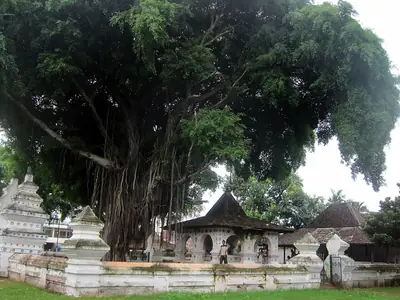
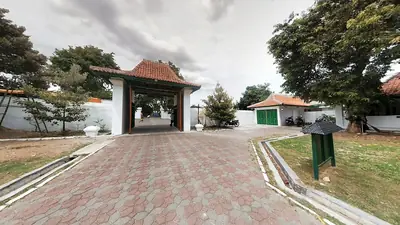
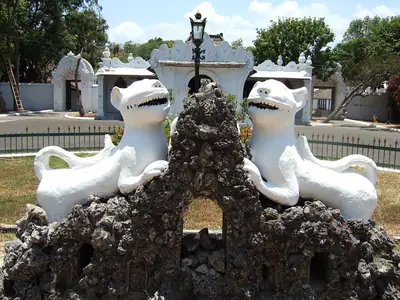
Self-guided tours in Cirebon
1 tour in Cirebon, free in the Neywo app. Each stop tells its story as you reach it.
- Walk
Sultans, Mosques and Kampung Arab
Cirebon was a Javanese sultanate where Islam, Chinese ceramics and Arab traders mixed. Start in the old Arab quarter at the Red Mosque and a Chinese temple, then walk through the sultans' palaces and the Great Mosque Sang Cipta Rasa, one of the oldest in Indonesia, and end at the Kasepuhan palace with its royal carriage.
Masjid Merah Panjunan · Tiao Kak Sie · Saint Joseph Church, Cirebon · Kraton Kanoman · Kraton Kacirebonan · Great Mosque of Cirebon …
Open this tour: Sultans, Mosques and Kampung Arab
Walk Cirebon with Neywo
Neywo turns Cirebon into a self-guided audio tour. Stories arrive as you reach the place they belong to, and the route reshapes when you wander off it.

