Things to Do in Ballyshannon, Ireland: Walking Guide
Things to do in Ballyshannon, Ireland
Ballyshannon is a historic town in County Donegal, at the southern gateway to the county where the River Erne meets the Atlantic. Its strategic river crossing, Gaelic heritage, ruined monastery and surviving churches make it a rewarding place to explore on foot. Neywo has a free audio guide for Ballyshannon with 6 narrated places.
What to see in Ballyshannon
The best things to do in Ballyshannon are concentrated around the town and its historic relationship with the River Erne. A self-guided walk connects the main sites, moving from religious buildings and medieval history to the town itself.
Assaroe Abbey
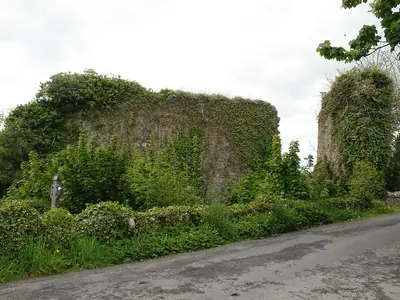
Assaroe Abbey is the ruined remains of a Cistercian monastery founded in the late twelfth century. It was never a large or wealthy foundation, and it faced repeated crises before finally closing in 1607.
Only fragments of stonework remain among the grass today, offering faint traces of the former church and cloister. The quiet, weathered site also inspired the poet William Allingham, who found something memorable in its silence and decay.
St Anne’s Church, Kilbarron
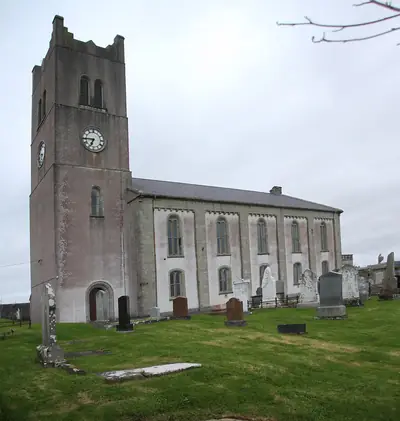
St Anne’s Church, Kilbarron is also known as Ballyshannon Church of Ireland. It forms part of Ballyshannon’s religious and architectural heritage and is one of the places to include while exploring the town on foot.
Ballyshannon Castle
Nothing remains above ground of Ballyshannon Castle: its walls and towers have completely disappeared. Yet the site was once one of the most important centres of Tyrconnell, the last independent Irish kingdom.
The castle belonged to the O’Donnell clan and controlled the strategic crossing of the River Erne. Unlike a hilltop fortress, it was a lowland castle built on flat ground. Its defensive importance came from its position beside the river and its command of the surrounding territory.
The Irish name, Caisleán Bhéal Átha Seanaidh, means the castle at the mouth of the ford of the old trees. Even without visible ruins, the site helps explain why Ballyshannon developed where it did: the river crossing was central to the town’s history.
Ballyshannon and the River Erne
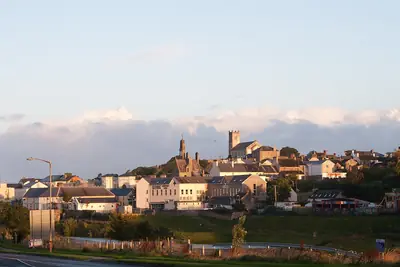
Ballyshannon grew around a strategic crossing on the River Erne. Its Irish name, Béal Átha Seanaidh, means the mouth of Seannach’s ford, although local tradition also connects the name with Áed, an ancient Irish god of fire and sun.
The town received its formal charter in March 1613, making it one of the oldest incorporated towns in Ulster. Today, just over two thousand people live in Ballyshannon. The river remains an essential part of its identity, and the memory of the former Assaroe Falls continues to shape the town’s connection with the water. The falls once thundered over the Erne before hydroelectric development changed the river’s course.
Ballyshannon also occupies an important position at the southern entrance to County Donegal. The N3 from Dublin terminates here, while the N15 crosses the river and continues north along the coast.
Saint Joseph’s
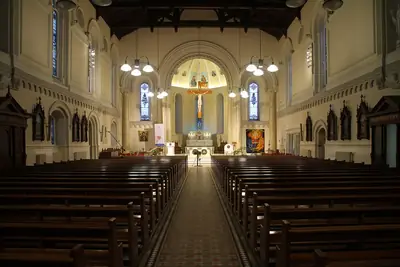
Saint Joseph’s is another church building in Ballyshannon. Its exterior contributes to the town’s collection of religious landmarks and offers another stop for visitors exploring Ballyshannon’s built heritage.
St Patrick’s Church
St Patrick’s Church is included among the historic places in the town centre and forms part of the route through Ballyshannon. Together with St Anne’s Church, Kilbarron and Saint Joseph’s, it reflects the town’s long religious history.
Exploring Ballyshannon on foot
Ballyshannon’s appeal comes from the way its sites fit together. The ruined Assaroe Abbey evokes medieval religious life, while Ballyshannon Castle recalls the power of the O’Donnell clan and the importance of the Erne crossing. The churches add later layers to the town’s history, and the river explains the location of the settlement itself.
For a wider trip through Ireland, Ballyshannon can also be combined with destinations such as Letterkenny, or with other places across the country including Galway, Dublin and Cork. See more destinations on the Ireland page.
Download the Neywo audio guide to Ballyshannon
Neywo offers one walking tour in Ballyshannon: “Ballyshannon: Abbey Ruins, Clan Castle and the River Erne.” The route is 1.42 km long, takes around 40 minutes and includes 4 narrated stops: Assaroe Abbey, St Anne’s Church, Kilbarron, Ballyshannon Castle and St Patrick’s Church, Ballyshannon.
Download the free Neywo app and explore at your own pace. The app tells the story of each place as you reach it, with no group and no schedule. Narration is available in 11 languages, so you can discover Ballyshannon through a self-guided walking tour whenever it suits you.
Places with an audio guide in Ballyshannon
5 places in Ballyshannon with a Neywo audio guide. Each one starts telling its story as you reach it.
Self-guided tours in Ballyshannon
1 tour in Ballyshannon, free in the Neywo app. Each stop tells its story as you reach it.
- Walk
Ballyshannon: Abbey Ruins, Clan Castle and the River Erne
Walk above the River Erne in County Donegal. Start at the ruins of Cistercian Assaroe Abbey that inspired the poet William Allingham, pass the town's two churches, and stand where the O'Donnells' vanished castle once guarded the ford into the kingdom of Tyrconnell.
Assaroe Abbey · St Anne's Church, Kilbarron · Ballyshannon Castle · St Patrick's Church, Ballyshannon
Open this tour: Ballyshannon: Abbey Ruins, Clan Castle and the River Erne
Walk Ballyshannon with Neywo
Neywo turns Ballyshannon into a self-guided audio tour. Stories arrive as you reach the place they belong to, and the route reshapes when you wander off it.

