Visiting Letterkenny, Ireland: Top Sights on Foot
Things to Do in Letterkenny: History, Culture and Donegal Landscapes
Letterkenny is a lively town in County Donegal, combining a modern commercial centre with historic churches, cultural venues and reminders of the area’s complex past. It is also a useful starting point for discovering Donegal’s mountains, coastline, lakes and historic sites. Neywo has a free audio guide for Letterkenny with 15 narrated places.
What to See in Letterkenny and Nearby
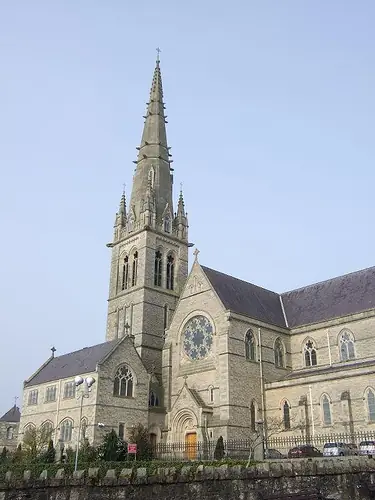
Cathedral of St. Eunan and St. Columba
The Cathedral of St. Eunan and St. Columba is one of Letterkenny’s most distinctive landmarks. Built between 1890 and 1900, the Catholic cathedral follows the Neo-Gothic style, giving it a strong architectural presence in the town.
Conwal Parish Church
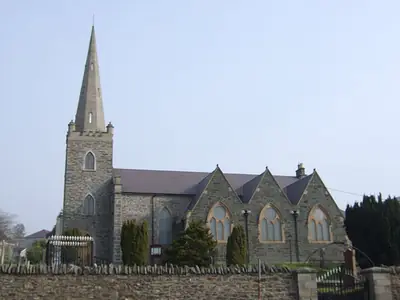
At the top of Church Street, Conwal Parish Church stands opposite the cathedral. This Church of Ireland building has roots reaching back to the seventeenth century, creating an especially notable pairing with the Cathedral of St. Eunan and St. Columba.
Donegal County Museum
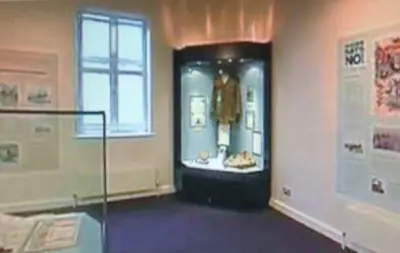
Donegal County Museum offers an introduction to the history of County Donegal. The museum occupies a building completed in 1843, originally constructed as the Warden’s House of the Letterkenny Workhouse before being repurposed as a museum in the late twentieth century.
Its setting adds another layer to the visit: the building itself connects the museum to the social history of Letterkenny and the wider county.
An Grianán Theatre
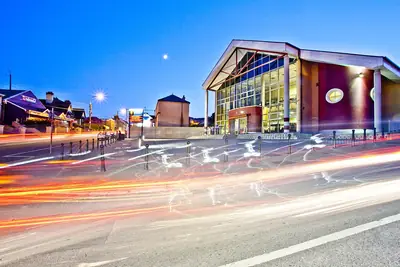
In Letterkenny’s Port Road district, An Grianán Theatre is the largest theatre in County Donegal. The 383-seat venue hosts drama, comedy, music, pantomime and family shows, as well as festivals, workshops and classes.
Its name comes from Grianán of Aileach, a prehistoric ring fort in Burt. The name is translated as “Stony House of the Sun”, and the fort is believed to date back to 1700 BCE.
Newmills Corn and Flax Mills
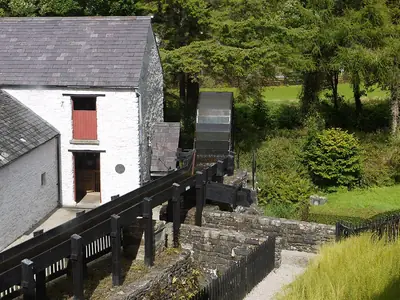
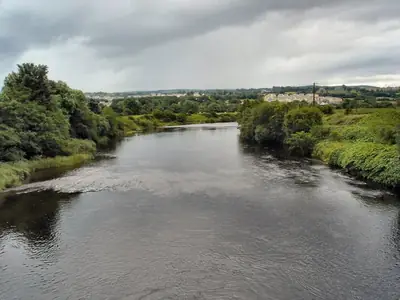
About five kilometres west of Letterkenny, near Newmills Bridge in Milltown, Newmills Corn and Flax Mills is a working watermill beside the River Swilly. It is also known by its Irish name, An Muileann Úr.
The mill’s enormous operating waterwheel is among the largest in Ireland. Water reaches it through a millrace running for one kilometre, making the site a particularly clear illustration of how the river was harnessed for industry.
Glebe Gallery
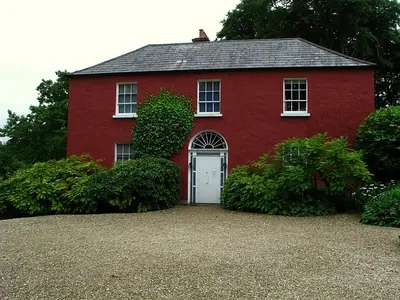
Near Churchill, Glebe Gallery—also known as Glebe House and Gallery—is a peaceful lakeside estate beside Lough Gartan. It brings together a historic house, an art collection, a modern exhibition space and woodland gardens.
The house was built in 1828 and was the home and workplace of English portrait and landscape painter Derek Hill from 1954. In 1982, Hill presented the house and his art collection to the Irish state. His former studio is now a gallery for changing exhibitions, while the permanent collection remains displayed in the former home alongside European and oriental furniture, William Morris wallpapers and fabrics.
The setting is part of the experience: the house, art and gardens sit together beside the lake. The gallery opens for a limited season, usually around Easter and then from June until the end of September. Access to the permanent collection in Glebe House is by guided tour.
Glenveagh Castle
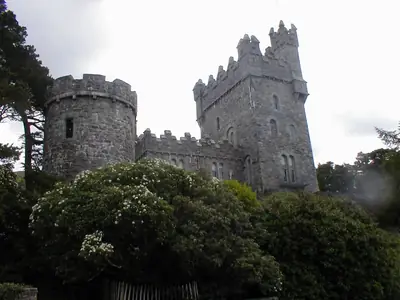
Glenveagh Castle is a castellated mansion beside Lake Veagh, within Glenveagh National Park in County Donegal. Built around 1870, it combines the appearance of a castle with the character of a mansion.
The setting is on a remarkable scale: Glenveagh National Park covers 170 square kilometres. The castle’s position beside the lake makes it one of the most striking historic places to visit in the area around Letterkenny.
Pluck Standing Stone
Pluck Standing Stone is an ancient landmark in County Donegal and a recognised National Monument. Its simple form gives it a different kind of presence from the area’s churches, museums and country houses, connecting the landscape with a much earlier period of Irish history.
Old Leck Church
Old Leck Church is another historic church in Letterkenny and forms part of a wider journey through the area’s religious heritage. It can be included alongside the cathedral and other local churches when exploring the town and its surroundings.
Rockhill House Estate
Rockhill House Estate is a seventeenth-century country house set within a substantial family-owned estate. Historically the seat of the Stewart family, it later served as an Irish Army post during the twentieth century.
Today, Rockhill House operates as a hotel, spa and exclusive-use wedding venue. The estate covers about 130 acres, including roughly 100 acres of ancient woodland. The Georgian character of the house reflects four documented extensions and redesigns over time.
The Church Restaurant and Bar is located at the estate, offering a place to pause for food and drink during a visit.
Churches around Letterkenny
Several other churches add local depth to the area’s heritage. Kiltoy Church of Ireland is a church in Letterkenny, while Trinity Hall is a church hall in the town.
Further out, St Columba’s Church in Glenswilly serves the parishes of Glenswilly and Templedouglas. The Catholic church belongs to the Roman Catholic Diocese of Raphoe and is included in Donegal County Council’s Record of Protected Structures. Built in the early 1840s and renovated in 1994, it remains an important place of worship in the area.
Discover County Donegal from Letterkenny
Letterkenny is set within County Donegal, Ireland’s northernmost county and one of the most distinctive parts of the province of Ulster. Its landscape includes mountains, cliffs, bays, islands, lakes and rivers, along with a remarkably long coastline.
The mountains include Errigal, Slieve League, Muckish Mountain, the Blue Stack Mountains and the Derryveagh Mountains. Coastal landmarks include Malin Head, Horn Head and Slieve League, as well as numerous beaches, bays, islands and sea channels. Glenveagh Deer Forest is another part of the county’s varied landscape.
Donegal also has deep historical roots. It has been known as Tyrconnell, or Tír Chonaill, after the historical territory associated with it and Inishowen. The county was home to the O’Donnells, one of the most powerful families of late Gaelic Ireland.
For travellers comparing destinations across Ireland, Letterkenny offers a different perspective from cities such as Sligo, Galway or Dublin: it combines a regional town centre with access to Donegal’s historic and natural landscapes.
Explore Letterkenny with Neywo
Download Neywo and explore Letterkenny with a self-guided audio walk. The city has one walking tour: “Two Churches, a Workhouse and a Stage”, covering 1.1 kilometres in around 36 minutes, with four narrated stops—An Grianán Theatre, Donegal County Museum, Conwal Parish Church and the Cathedral of St. Eunan and St. Columba.
The app tells the story of each place as you reach it, at your own pace, with no group and no schedule. The narration is available in 11 languages, making this a simple way to follow a Letterkenny self-guided walking tour while discovering the town’s history and architecture.
Places with an audio guide in Letterkenny
8 places in Letterkenny with a Neywo audio guide. Each one starts telling its story as you reach it.
Self-guided tours in Letterkenny
1 tour in Letterkenny, free in the Neywo app. Each stop tells its story as you reach it.
- Walk
Two Churches, a Workhouse and a Stage
A short stroll through the heart of Donegal's biggest town. Start at An Grianan Theatre, the county's largest stage, pass the museum housed in a Victorian workhouse building, then finish at two churches that face each other across Church Street: a seventeenth-century Church of Ireland parish church and a Neo-Gothic Catholic cathedral.
An Grianán Theatre · Donegal County Museum · Conwal Parish Church · Cathedral of St. Eunan and St. Columba
Open this tour: Two Churches, a Workhouse and a Stage
Walk Letterkenny with Neywo
Neywo turns Letterkenny into a self-guided audio tour. Stories arrive as you reach the place they belong to, and the route reshapes when you wander off it.

