Galway, Ireland: Self-Guided Walking Tour
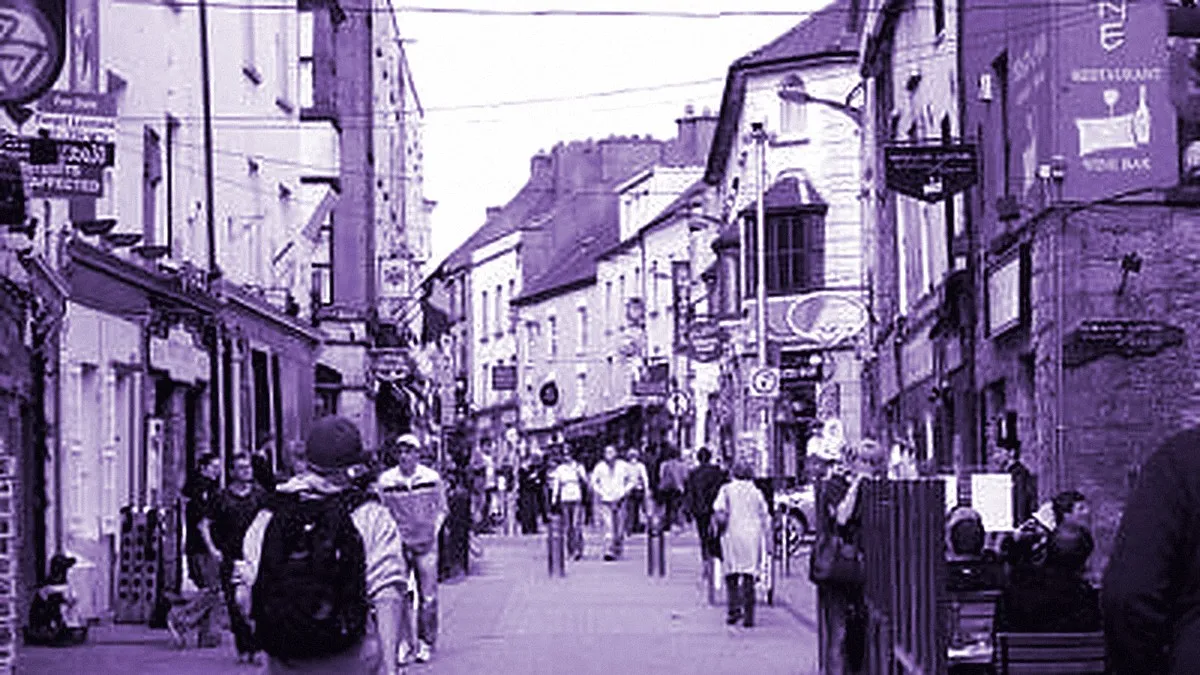
Things to do in Galway: the best places to see in Galway, Ireland
Looking for things to do in Galway? This lively city on Ireland’s west coast brings together medieval buildings, river views, cultural venues and the atmosphere of an Atlantic port. Galway is compact enough to explore on foot, and its historic centre is full of places that reveal how the city developed from a trading town into one of Ireland’s most distinctive urban destinations. Neywo’s free audio guide to Galway includes 29 narrated places, so you can discover the city while you walk.
Galway is part of Ireland’s western story, but it deserves more than a brief stop on the way to somewhere else. Its landmarks range from a medieval parish church and fortified merchant houses to a modern cathedral, museums, theatres and the River Corrib.
What to see in Galway
St. Nicholas’ Collegiate Church
St. Nicholas’ Collegiate Church is one of Galway’s most important medieval landmarks and remains in use as a parish church. Founded in 1320 and dedicated to Saint Nicholas of Myra, the patron saint of seafarers, it reflects Galway’s long history as a port.
The church began in the Gothic style and was later enlarged by the Lynch and French families during the 16th century. Their additions created a distinctive square interior with three parallel roofs. Inside, historical details include the gravestone of Adam Bures, a Crusader who died in the 13th century, and a lepers’ gallery above the north aisle. The church is also associated with the Leabhar na nGenealach, a monumental work of Irish genealogy produced there in 1650.
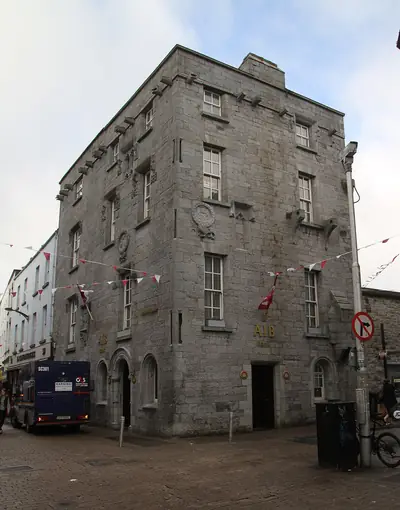
Lynch’s Castle
At the corner of Shop Street and Abbeygate Street, Lynch’s Castle is a fortified townhouse built by the Lynch family, one of the Tribes of Galway. The family played a major role in the city’s civic life: members provided 80 mayors between around 1450 and 1690.
The four-storey limestone building has elaborately carved windows, gargoyles and ornamental cornices. Its façade displays the Lynch family coat of arms, together with those of King Henry VII and the Fitzgeralds of Kildare. A dark local legend connects the castle with Mayor James Lynch and his son Walter, who was accused of murdering a Spanish sailor in 1493.
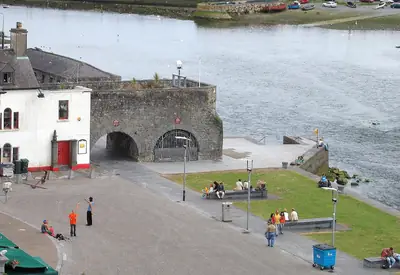
The Spanish Arch
The Spanish Arch is one of Galway’s most recognisable landmarks and one of the last surviving parts of the old Front Wall. Built around 1504, the wall extended from Martin’s Tower to the River Corrib and helped protect the town while controlling access to the waterfront.
Two arches remain here: the Spanish Arch and the adjacent Caoċ Arch, sometimes called a “blind arch”. In the 18th century, the Eyre family extended the quays along the river, creating what is now known as the Long Walk. An additional arch was built to connect the town with the new quay, and although it was initially called the Eyre Arch, the name Spanish Arch eventually became established. The arches were damaged by the tsunami generated by the Lisbon earthquake in 1755, but survived.
Galway City Museum
Beside the Spanish Arch, Galway City Museum traces the city’s story from its medieval beginnings to its modern cultural life. The museum opened in 2007 in a contemporary building designed by Ciarán O’Connor and Gar Harvey. Its light-filled architecture contrasts with the old stonework of the arch and city walls nearby.
The museum was previously housed in Comerford House, a Georgian residence built around 1800. Its collections include medieval stones, folk artefacts and military relics, while exhibitions explore archaeology, maritime traditions, folk life and Galway’s development through the centuries.
Monument to Christopher Columbus
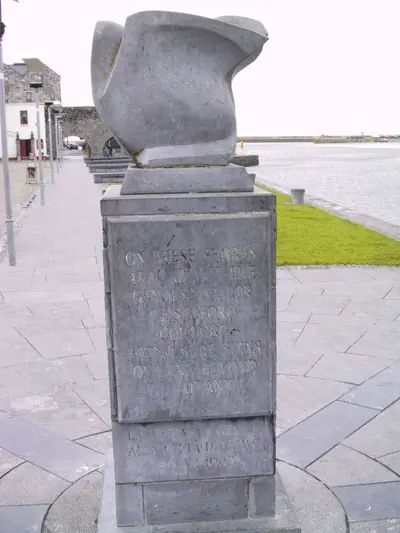
The Monument to Christopher Columbus commemorates Columbus’s visit to Galway in 1477. It was erected in 1992, the year of the Columbus Quincentenary, and connects the city with its maritime past.
Galway Arts Centre
Galway Arts Centre is a year-round gallery and cultural venue that has brought contemporary visual art to the city for more than 40 years. Its programme extends beyond exhibitions to include films, music, literature, workshops, residencies, festivals, theatre and performance.
The centre works with local, national and international artists, creating opportunities for audiences to encounter art and ideas in a broad range of forms.
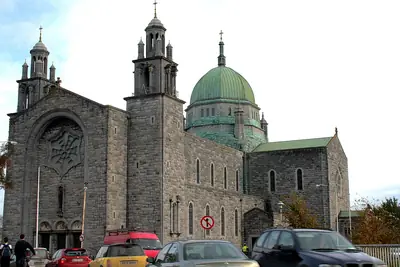
Galway Cathedral
The Cathedral of Our Lady Assumed into Heaven and St Nicholas, usually known as Galway Cathedral, stands prominently above the River Corrib. Construction began in 1958 on the site of Galway’s former county jail, and the building was completed and dedicated on 15 August 1965.
The cathedral is known as the last major stone cathedral built in Europe. Its 145-foot dome gives Galway a striking skyline, while the design by architect John J. Robinson combines Renaissance and Romanesque Revival influences with mid-20th-century architecture.
Inside, octagonal pillars support rounded arches. Marble flooring and altars, detailed stonework, stained-glass windows, mosaic accents, carved capitals and wooden pews contribute to the building’s distinctive character. Its vaulted ceilings also enhance the acoustics for music and worship.
Salmon Weir Bridge
The Salmon Weir Bridge is the oldest surviving bridge across the River Corrib in Galway. Built between 1818 and 1819 from local limestone, it was constructed to link the county courthouse with the old jail, which once stood on the site now occupied by Galway Cathedral.
The bridge’s arches span the fast-flowing river. During the salmon runs in spring and early summer, fish can be seen leaping upriver to spawn, making the bridge a natural place to pause and watch the water. It also offers views of Galway Cathedral upstream and Wolfe Tone Bridge downstream.
The Corrib fisheries were important to Galway for centuries. In medieval times, local religious orders such as the Franciscans controlled them before they later passed into private hands after the Dissolution.
Town Hall Theatre
The Town Hall Theatre has served several purposes since its construction in the 1820s. It began as a courthouse, later became a town hall and was converted into a cinema in the 1950s. After falling into disrepair in the 1990s, it underwent a major refurbishment between 1993 and 1995.
The venue reopened on 14 October 1995 as a Municipal Theatre. Its programme includes theatre, music, comedy, dance, film, literary events, and family and community events.
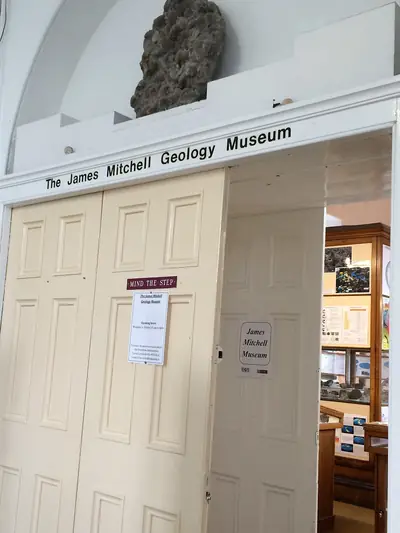
James Mitchell Geology Museum
The James Mitchell Geology Museum is located in the Main Quad at the University of Galway. The entrance is reached by a staircase in the south-east corner of the structure. It offers a quieter museum stop within Galway’s university setting.
Menlo Castle
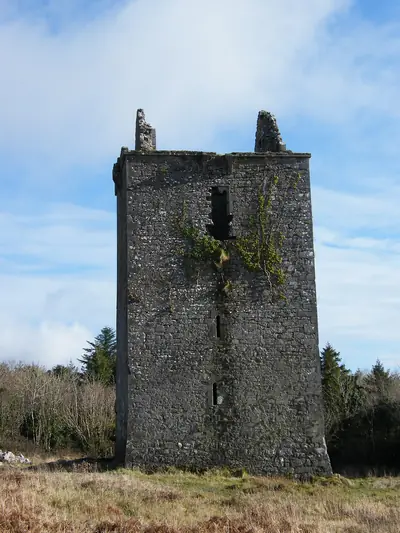
Menlo Castle, also known as Menlough Castle or Blake’s Castle, stands in ruins after a fire destroyed the building in 1910. It was built on the site of an earlier mid-16th-century tower house and was later expanded by the Blake family during the 18th century.
The additions included a four-storey block and a square turreted structure. The Blakes also hosted the “Maying in Menlo” festival for villagers. After the fire, the castle was left in ruins, and the Blake estate was divided by the Land Commission in 1923.
Roscam and Galway’s surrounding castles
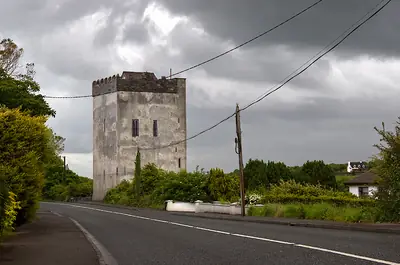
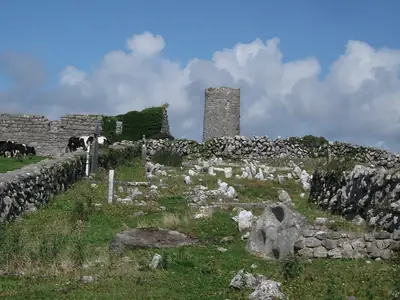
Outside the central landmarks, Galway’s heritage includes Roscam, a medieval ecclesiastical site, as well as Ballindooley Castle, also known as Ballindooly Castle, and Merlinpark Castle, also called Merlin Castle or Merlin Park Castle. Castlegar Castle is another stop connected with Castlegar.
Together, these places show that the area’s history extends beyond the city centre, from medieval religious sites to tower houses and castle ruins.
Explore Galway with a self-guided walking tour
A Galway self-guided walking tour is a simple way to connect the city’s landmarks without joining a group or following a fixed timetable. Neywo has three walking tours in Galway, with routes ranging from 0.34 to 1.59 km and lasting from 27 to 63 minutes.
- The Spanish Arch and the city museum covers 1.1 km in 63 minutes, with 8 narrated stops, including Galway City Museum, the Spanish Arch, the Monument to Christopher Columbus, Galway Arts Centre, St. Nicholas’ Collegiate Church and Lynch’s Castle.
- The Cathedral and the Salmon Weir covers 0.34 km in 27 minutes, with 4 stops: Galway Cathedral, Salmon Weir Bridge, Galway Courthouse and Town Hall Theatre.
- The Ultimate Galway: cathedral to the Spanish Arch covers 1.59 km in 63 minutes, with 5 stops, including the James Mitchell Museum, Galway Cathedral, Lynch’s Castle, the Monument to Christopher Columbus and the Spanish Arch.
Download Neywo and explore Galway at your own pace
Download Neywo’s free Galway audio guide and choose between three walking tours, with 29 narrated places across the city. Each story plays as you reach the place, at your own pace, with no group and no schedule. Narration is available in 11 languages, making it easy to explore Galway independently while learning the history behind its churches, castles, museums, bridges and riverside landmarks. After Galway, continue exploring Ireland with Dublin, Cork or Limerick.
Places with an audio guide in Galway
8 places in Galway with a Neywo audio guide. Each one starts telling its story as you reach it.
Self-guided tours in Galway
3 tours in Galway, free in the Neywo app. Each stop tells its story as you reach it.
- Walk
The Spanish Arch and the city museum
Four hundred metres at the mouth of the Corrib: the surviving arch of the old quay wall, the city museum behind it, and the Columbus monument on the water.
Galway City Museum · The Spanish Arch · Monument to Christopher Columbus · Róisín Dubh · Galway Arts Centre · William O'Brien Bridge …
Open this tour: The Spanish Arch and the city museum - Walk
The Cathedral and the Salmon Weir
Three hundred metres by the Corrib: the 1965 cathedral in limestone and Connemara marble, the weir bridge where the salmon run in summer, and the courthouse and town hall theatre opposite.
Cathedral of Our Lady Assumed into Heaven and St Nicholas, Galway · Salmon Weir Bridge · Galway Courthouse · Town Hall Theatre
Open this tour: The Cathedral and the Salmon Weir - Walk
The Ultimate Galway: cathedral to the Spanish Arch
A kilometre and a half through the whole city — the cathedral, the university's geology museum, Lynch's Castle, and down to the Spanish Arch on the river. Galway is small and this is all of it.
James Mitchell Museum · Cathedral of Our Lady Assumed into Heaven and St Nicholas, Galway · Lynch's Castle · Monument to Christopher Columbus · The Spanish Arch
Open this tour: The Ultimate Galway: cathedral to the Spanish Arch
Walk Galway with Neywo
Neywo turns Galway into a self-guided audio tour. Stories arrive as you reach the place they belong to, and the route reshapes when you wander off it.

