What to See in Civitavecchia, Italy: Free Audio Guide
Things to do in Civitavecchia: a historic harbour town by the sea
The things to do in Civitavecchia range from exploring ancient Roman remains and historic churches to walking beside a working port. Once known as Centumcellae, the town combines a long maritime history with a compact historic centre and an important archaeological heritage. Neywo offers a free audio guide for Civitavecchia with 8 narrated places, available in 11 languages.
What to see in Civitavecchia
Civitavecchia National Archaeological Museum
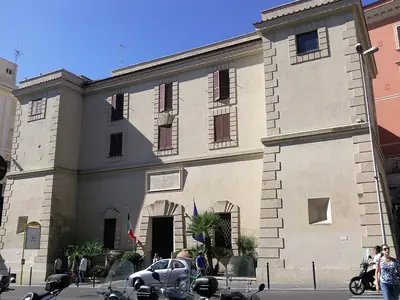
The Civitavecchia National Archaeological Museum, or Museo Archeologico Nazionale, occupies an eighteenth-century palace commissioned by Pope Clement XIII. The building once housed the papal garrison, giving the museum an architectural setting closely connected to the town’s history.
Its collections bring together archaeological discoveries from the ancient city of Centumcellae and the surrounding territory. The focus is especially on Etruscan and Roman remains, including finds from nearby Monte Rovello. The museum extends across three levels, so it is worth taking time to see both the objects and the palace that contains them.
Cathedral of Saint Francis of Assisi
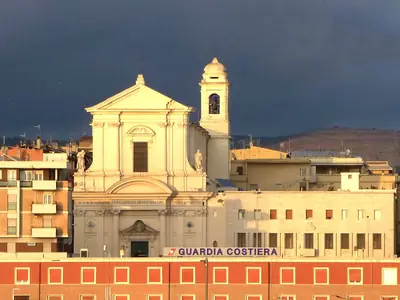
In Piazza Vittorio Emanuele II stands the Cathedral of Saint Francis of Assisi, the principal church of Civitavecchia. Its position in the historic centre makes it one of the city’s key landmarks and a natural stop while exploring the old town.
Forte Michelangelo
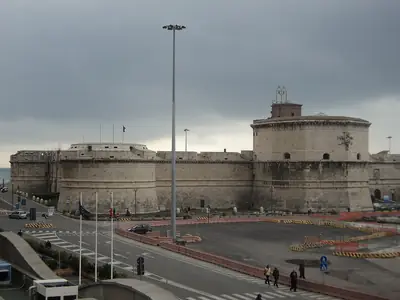
Forte Michelangelo is one of Civitavecchia’s most distinctive sights. The fortress protected the port for centuries, reflecting the strategic importance of the harbour.
Construction began in 1508, and the fortress was completed in 1537 during the pontificate of Paul the Third. Antonio da Sangallo the Younger directed the work. Its name comes from a local tradition that attributes the design of the main tower, or keep, to Michelangelo Buonarroti. That tradition, however, has no supporting evidence.
Teatro Traiano
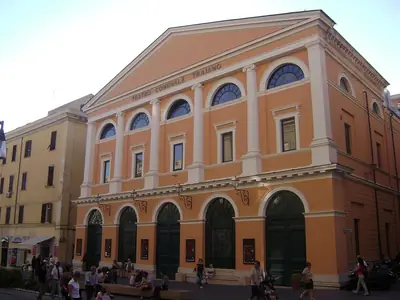
Teatro Traiano stands on Corso Centocelle, between Largo Plebiscito and Via Traiana, in the heart of Civitavecchia’s cultural life. The theatre was built during the first half of the nineteenth century and opened on 4 May 1844.
Its name honours the emperor who founded the city. Across from the theatre is the eighteenth-century Palazzo del Quartierone, formerly the home of the military garrison and now the headquarters of the Guardia di Finanza.
Sant’Agostino
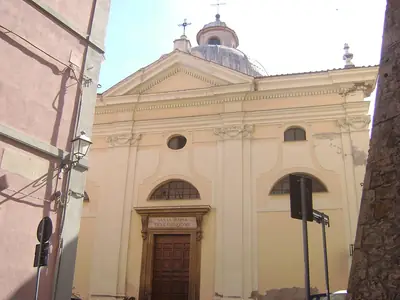
Sant’Agostino is one of the religious buildings encountered around Civitavecchia. It offers another opportunity to see the city’s ecclesiastical heritage while walking between its historic landmarks.
Santa Maria dell’Orazione e Morte
Santa Maria dell’Orazione e Morte is a church in Civitavecchia with its own place in the city’s historic landscape. The building and its surroundings make it a worthwhile stop on a walk through the town.
Church of the Holy Japanese Martyrs
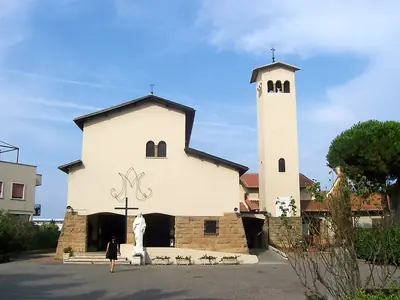
The Church of the Holy Japanese Martyrs is another religious landmark in Civitavecchia. It adds to the variety of churches and historic buildings found beyond the city’s better-known fortress and museum.
Terme Taurine
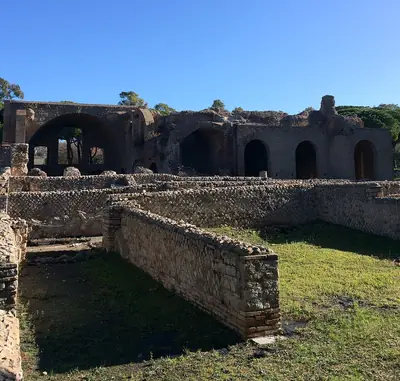
A little beyond Civitavecchia, on an isolated hill, the Terme Taurine preserve the remains of a Roman bathing complex. Also known as Aquae Tauri or the Baths of Trajan, the archaeological site offers a glimpse of the ancient world away from the modern town.
The baths are among the Roman remains associated with Civitavecchia and its surrounding territory in Lazio. The surviving structures give an impression of a much larger thermal complex that once occupied the hill.
A Civitavecchia self-guided walking tour
A Civitavecchia self-guided walking tour is a practical way to explore the city’s main historic sights without following a group. The central route connects Forte Michelangelo, the Civitavecchia National Archaeological Museum, Teatro Traiano, Sant’Agostino, the Cathedral, and Santa Maria dell’Orazione e Morte.
The harbour fortress provides a strong starting point, while the museum reveals the area’s Etruscan and Roman past. From there, the route continues through the cultural and religious landmarks of the historic centre. Civitavecchia’s compact character makes it well suited to discovering these places on foot.
For more ideas in the surrounding region, see Lazio and Italy. The city can also be combined with time in nearby Rome, while Tivoli and Viterbo offer further destinations in Lazio.
Explore Civitavecchia with Neywo
Download Neywo and explore Civitavecchia with its free audio guide. The app includes 1 walking tour: “Port, Popes and Trajan: Civitavecchia’s Old Harbour Town”, a 1.5 km route lasting 51 minutes with 6 narrated stops.
The walk includes Forte Michelangelo, the Civitavecchia National Archaeological Museum, Teatro Traiano, Sant’Agostino, the Cathedral, and Santa Maria dell’Orazione e Morte. Each story plays as you reach the place, at your own pace, with no group and no schedule.
Places with an audio guide in Civitavecchia
7 places in Civitavecchia with a Neywo audio guide. Each one starts telling its story as you reach it.
Self-guided tours in Civitavecchia
1 tour in Civitavecchia, free in the Neywo app. Each stop tells its story as you reach it.
- Walk
Port, Popes and Trajan: Civitavecchia's Old Harbour Town
A short stroll through the old port town founded by the emperor Trajan. Start at the Sangallo fortress that has guarded the harbour since the 1500s, see the papal palace that now holds Etruscan and Roman finds, step into the 1844 Teatro Traiano, and finish at the cathedral and the churches of the historic centre.
Forte Michelangelo · Civitavecchia national archaeological museum · Teatro Traiano · Sant'Agostino · Cathedral · Santa Maria dell'Orazione e Morte
Open this tour: Port, Popes and Trajan: Civitavecchia's Old Harbour Town
Walk Civitavecchia with Neywo
Neywo turns Civitavecchia into a self-guided audio tour. Stories arrive as you reach the place they belong to, and the route reshapes when you wander off it.

