What to See in Como, Italy: Free Audio Guide
Things to do in Como: what to see in the lakeside city
Looking for things to do in Como? The city brings together a cathedral rich in artistic detail, Romanesque churches, museums devoted to archaeology and silk, Rationalist architecture, and a lakeside shaped by Alessandro Volta’s legacy. It is also a useful starting point for discovering the wider Lombardy region and Lake Como. Neywo has a free audio guide for Como with 67 narrated places.
What to see in Como
Como’s main sights are concentrated around the historic centre, the waterfront and the hills above the city. These are the places that best introduce its history and character.
Como Cathedral and the Broletto
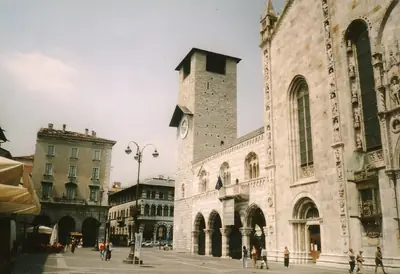
Como Cathedral, or the Duomo di Como, is the city’s principal church and the seat of the Bishop of Como. Dedicated to Saint Mary of the Assumption, it was begun in 1396 and completed in 1740. Its façade combines Gothic and Renaissance details, including a rose window, carved portals and statues of Pliny the Elder and Pliny the Younger.
The building also incorporates Rococo elements, and its dome was designed by Filippo Juvarra. Inside, look for soaring vaults, stained glass, richly decorated chapels, sixteenth- and seventeenth-century tapestries, and paintings by Bernardino Luini and Gaudenzio Ferrari.
Beside the cathedral stands the Broletto, Como’s medieval town hall. Built in 1215, it once housed the city government. Its marble façade is arranged in white, grey and red bands, combining Romanesque, Gothic and Renaissance features. Its civic role ended in 1764, after which the building was used as a theatre and later for city archives.
Casa del Fascio
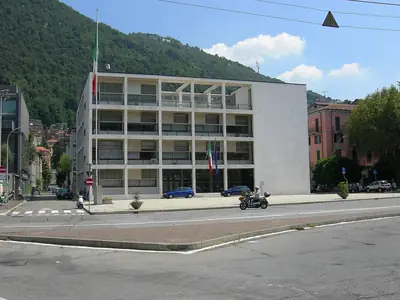
Opposite the cathedral, Casa del Fascio—also called Palazzo Terragni—offers a very different architectural experience. Designed by Giuseppe Terragni and inaugurated in 1936, it is one of the best-known examples of Italian Rationalism.
The square building measures about 33.2 metres on each side, and its height is half its width. Each façade has a different arrangement of solid Botticino marble panels and transparent glass blocks, but all follow a precise geometric rhythm. The building was originally created as the local headquarters of the National Fascist Party. Since 1945, its use has changed, and it is now occupied by the provincial command of the Guardia di Finanza.
Basilica of Sant’Abbondio
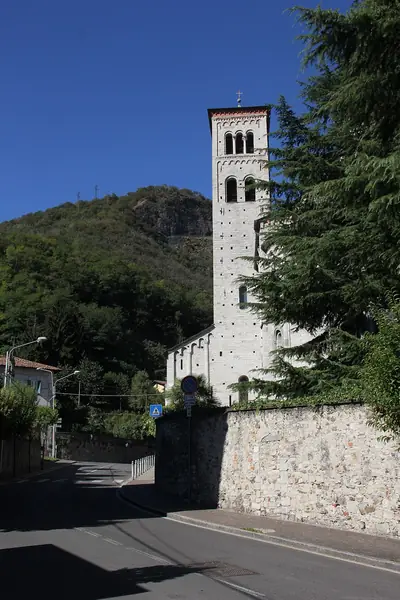
The Basilica of Sant’Abbondio is one of Como’s most important Romanesque churches. Built between 1050 and 1095 on the remains of a fifth-century basilica, it was consecrated by Pope Urban II in 1095.
Its exterior is notable for four projecting sections and twin bell towers at the rear—features associated with northern European influences. Floral, animal and geometric reliefs add to the richly carved façade. Inside, the vast church is divided into five naves by granite pillars and columns. The relics of Saint Abbondio, Como’s fourth bishop and patron saint, are believed to lie beneath the high altar.
Como Civic Art Gallery
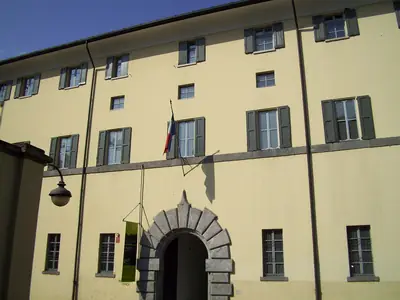
The Como Civic Art Gallery, or Pinacoteca Civica, occupies Palazzo Volpi, a seventeenth-century palace built between about 1610 and 1633. The building later served as a courthouse before becoming a public art gallery in 1989.
Its collections trace Como’s visual history from the early medieval period to the twentieth-century avant-garde. The medieval galleries include Carolingian stone sculptures, Romanesque and Gothic frescoes, and remains from the ancient Basilica of San Giorgio in Borgovico. Other sections include Renaissance works, portraits connected with Paolo Giovio’s series of Illustrious Men, and objects linked to the construction of Como Cathedral.
Paolo Giovio Archaeological Museum
The Paolo Giovio Archaeological Museum explores Como’s past through objects found around Lake Como and beyond. Its collections range from prehistoric tools to Roman mosaics, inscriptions and ceramics, alongside Lombard, medieval, Egyptian, Greek and Magna Graecia artefacts.
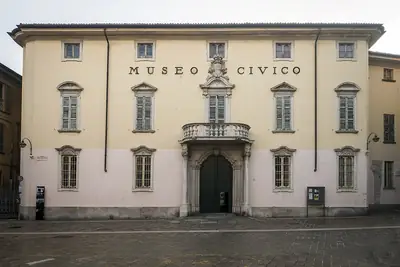
The museum is housed in Palazzo Giovio, a palace with medieval roots that was reshaped in the sixteenth century by Benedetto Giovio. Its rooms contain frescoes and architectural details from later alterations, including grand windows, a new staircase and a garden shrine.
Museo della Seta di Como
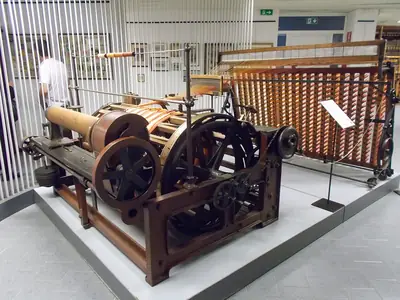
To understand Como’s long association with silk, visit the Museo della Seta di Como. Its dozen rooms follow the textile process from silkworm cultivation through twisting, dyeing, hand printing and weaving.
Antique looms, twisting machines and printing presses stand alongside raw materials, finished textiles, early fashion collections and printed labels. Many of the original machines have been restored and remain in working order. Opened in 1990, the museum occupies about 900 to 1,000 square metres in the same building as the Paolo Carcano Silk Factory Technical Institute.
Giuseppe Garibaldi Historical Museum
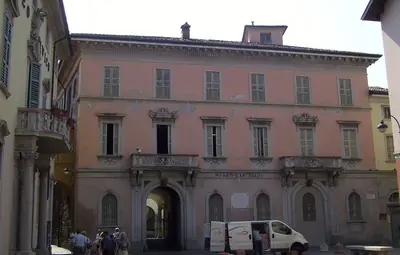
At Palazzo Olginati, the Giuseppe Garibaldi Historical Museum presents Como’s role in the period of Italian unification. The museum was established in 1932 in memory of Garibaldi’s stay in Como in 1866, and grew from an earlier collection displayed in the city in 1884.
Uniforms, weapons and documents relate to episodes including the Battle of San Fermo on 27 May 1859, when Garibaldi and his Hunters of the Alps defeated Austrian forces. The fifteenth-century palace was donated to the city by the Olginati family, and its rooms are connected by covered walkways to the Archaeological Museum next door.
Castello Baradello
On the wooded hill above Como, Castello Baradello is marked by its square Romanesque tower. The site is linked to Roman and Byzantine fortifications, while the present castle dates mainly from the twelfth century, when it was rebuilt and strengthened by Emperor Frederick Barbarossa.
The tower has a footprint of roughly eight by eight metres and reaches about 28 metres in height. It was the only part of the fortress left standing after Spanish forces dismantled it in 1527. From the hill, views extend across Como and the lake towards the Alps, the Po Valley and the distant Apennines.
The Volta lakefront
Como’s waterfront brings together several places connected with Alessandro Volta, the physicist born in the city and associated with the invention of the first electrical battery.
The Tempio Voltiano is a Neoclassical museum completed in 1927 and opened in 1928. Its collection includes original instruments, personal belongings, documents, honours and examples of Volta’s voltaic piles. The building has a raised portico with six fluted Corinthian columns, a triangular pediment and a cylindrical dome.
At the end of the breakwater, Life Electric provides a striking contemporary contrast. Designed by Daniel Libeskind and completed in 2015, the sculpture is dedicated to Volta. Its steel form consists of two opposing sinusoidal curves around a shallow pool, rising 49 feet from its base.
Sant’Agostino and Villa Olmo
Near the waterfront, the Church of Sant’Agostino is the only surviving example of Gothic Cistercian architecture in Como. Built in the late fourteenth century by Augustinian monks from Civiglio, it was restored in the 1960s, when later vaults were removed and original wooden trusses and medieval frescoes were revealed.
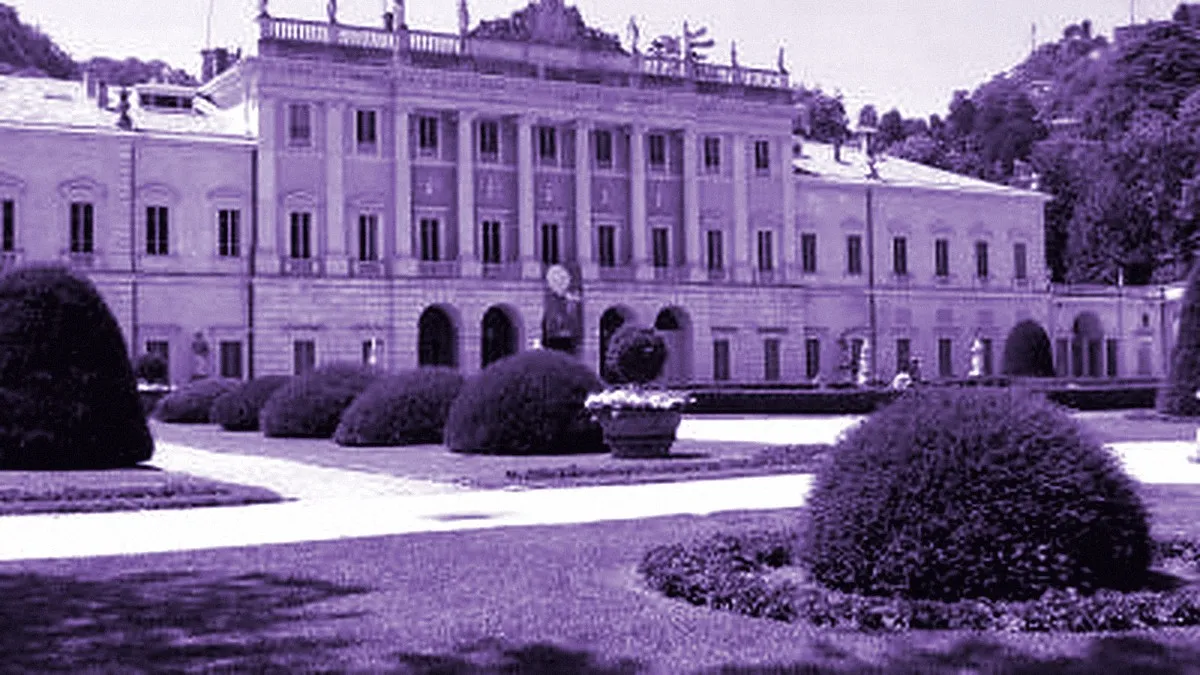
Further along the lakefront, Villa Olmo offers a Neoclassical setting and extensive gardens. Commissioned by Marquis Innocenzo Odescalchi and designed by Simone Cantoni, it was built between 1797 and 1812. The municipality acquired the villa in 1924. Its name refers to an elm tree that once stood in the gardens, where around 800 varieties of trees now grow. The associated Teatrino di Villa Olmo is another cultural feature of the site.
Explore Como with a self-guided audio tour
Neywo’s Como audio guide includes four walking tours and one bus route, with narration available in 11 languages. The app tells the story of each place as you reach it, at your own pace, with no group and no schedule.
The walks cover:
- Como’s stone heart: 1.81 km, 90 minutes and 11 narrated stops.
- Volta’s lakefront: 3.17 km, 94 minutes and 10 narrated stops.
- Walls, silk and sanctuaries: 2.98 km, 77 minutes and 7 narrated stops.
- Barbarossa’s tower: 3 km, 65 minutes and 4 narrated stops.
There is also one bus route, Bus 11 along Como’s lake: Villa Olmo to the old town, covering 8.6 km in 37 minutes with 5 narrated stops. Together, the routes make it easy to explore Como’s cathedral quarter, lakefront, museums, silk heritage and Baradello hill independently.
Download Neywo and discover Como while you walk, letting the city’s history unfold exactly where it happened. When you continue exploring northern Italy, nearby destinations include Milan, Bergamo and Bellagio.
Places with an audio guide in Como
8 places in Como with a Neywo audio guide. Each one starts telling its story as you reach it.
Self-guided tours in Como
5 tours in Como, free in the Neywo app. Each stop tells its story as you reach it.
- Bus ride
Bus 11 along Como's lake: Villa Olmo to the old town
A ride on the city's own bus line 11, from the neoclassical gardens of Villa Olmo along the western lakeshore and past the Rationalist stadium, then into the old town by the Roman baths and Piazza Cavour. It is a cheap way to see Como's lakefront and centre before walking the Duomo district.
Villa Olmo · Stadio Giuseppe Sinigaglia · Roman Baths of Como · Piazza Cavour (Como) · Church San Giorgio
Open this tour: Bus 11 along Como's lake: Villa Olmo to the old town - Walk
Como's stone heart: the Duomo, the Broletto and a Rationalist icon
Start on the lakeside where Como's old town begins and walk into a few hundred metres that hold nearly a thousand years: the striped Broletto, the cathedral with its good-luck frog, a Jesuit church and a Romanesque basilica. Along the way you will pass Terragni's Casa del Fascio, a landmark of Rationalist architecture, and Roman baths hidden under a car park.
Piazza Cavour (Como) · Broletto · San Giacomo Church · Como Cathedral · Teatro Sociale · Casa del Fascio (Como) …
Open this tour: Como's stone heart: the Duomo, the Broletto and a Rationalist icon - Walk
Volta's lakefront: batteries, futurist towers and a neoclassical villa
Follow Como's shoreline west from the funicular side to Villa Olmo. This walk is the city of Alessandro Volta: his statue, a Libeskind sculpture shaped like an electric charge, the neoclassical temple that holds his instruments and the futurist war memorial designed from a sketch by Sant'Elia. It ends in the gardens of Villa Olmo, past a Romanesque church and the site of Paolo Giovio's museum.
Sant'Agostino · Life Electric · Piazza Alessandro Volta (Como) · Monumento alla Resistenza europea · Tempio Voltiano · War memorial in Como …
Open this tour: Volta's lakefront: batteries, futurist towers and a neoclassical villa - Walk
Walls, silk and sanctuaries: Como beyond the Duomo
Walk the southern edge of the old town, where Como's medieval walls still stand. You will pass the 1192 Porta Torre, a Baroque church of nuns, the city's largest sanctuary after the Duomo and the silk museum that explains why Como has dressed Europe for centuries.
Como Civic Art Gallery · Shrine Santissimo Crocifisso (complex) · Porta Torre · Antonio Ratti cultural centre · Sant'Orsola · Museo della seta di Como …
Open this tour: Walls, silk and sanctuaries: Como beyond the Duomo - Walk
Barbarossa's tower: Romanesque Como and the Baradello hill
Climb out of town to the places where Como began: the Romanesque basilica of Sant'Abbondio, the early Christian church of San Carpoforo and a modernist fountain in Camerlata. Finish at Castello Baradello, the tower Frederick Barbarossa gave to the city, standing on a wooded hill with views to the Alps.
Basilica of Sant'Abbondio · Camerlata fountain · San Carpoforo · Castello Baradello
Open this tour: Barbarossa's tower: Romanesque Como and the Baradello hill
Walk Como with Neywo
Neywo turns Como into a self-guided audio tour. Stories arrive as you reach the place they belong to, and the route reshapes when you wander off it.

