What to See in Sanremo, Italy: Free Audio Guide
Things to Do in Sanremo: What to See in Italy’s Riviera of Flowers
Looking for things to do in Sanremo? This Ligurian city combines a historic center, churches, museums, a famous casino, the Sanremo Music Festival and villas connected with the city’s past. From the medieval streets of La Pigna to the coast and the hill villages around it, Sanremo offers plenty to explore in and around the city. Neywo has a free audio guide for Sanremo with 37 narrated places, available in 11 languages.
Sanremo lies in Liguria, on the Italian Riviera. Its attractions range from Roman archaeology and religious heritage to art collections, music and grand historic buildings.
What to see in Sanremo
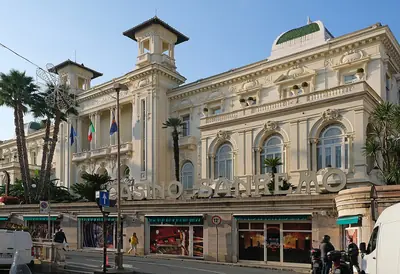
Sanremo Casino and the Italian Song Festival
The Sanremo Casino, or Casinò Municipale di Sanremo, combines gaming and entertainment in a Liberty-style building designed by French architect Eugène Ferret. It is one of Italy’s four gaming houses and includes a theatre.
The casino also has a central place in the history of the Sanremo Music Festival, one of Italy’s best-known musical traditions. The annual competition for new songs began at the casino in 1951 and was held there until 1976. Since 1977, its main venue has been the Teatro Ariston, apart from 1990, when it took place at the Nuovo Mercato dei Fiori.
The festival is a competition for new songs rather than an award for past successes. It includes a main section and a category for emerging artists, and has awarded prizes for critics, lyrics, arrangements and musical and literary qualities.
The Cathedral of San Siro
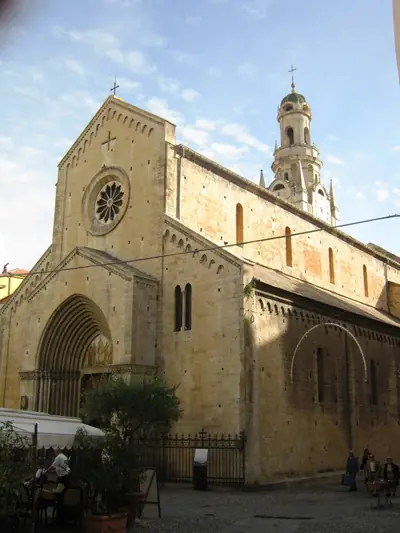
In the historic center, the Cathedral of San Siro is Sanremo’s oldest church and one of the most important examples of Romanesque architecture in western Liguria. It was built in the twelfth century in the square that bears its name.
The building combines Romanesque and Gothic elements with later Baroque alterations. Its long history makes it a useful starting point for exploring Sanremo’s older streets and religious landmarks.
La Pigna and the churches on the hill
La Pigna is Sanremo’s medieval quarter, built on the hillside in a pattern of narrow lanes and passages. Its name refers to the shape of a pine cone. Historic gates, stone walls and defensive remnants give the district a very different atmosphere from the modern coastal areas.
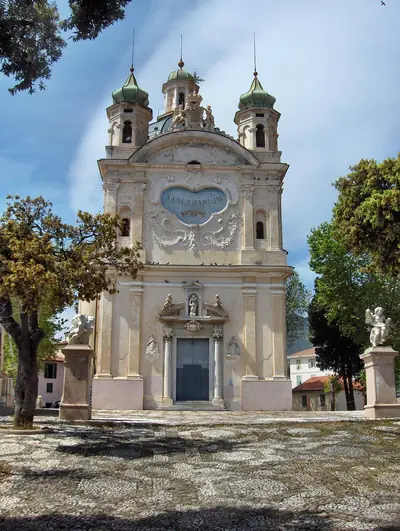
A walk through this part of the city can include Santa Maria degli Angeli, also known as Chiesa degli Angeli, as well as Santo Stefano, San Costanzo and San Giuseppe. Higher up, the Madonna della Costa—also called the Santuario della Madonna della Costa—is one of Sanremo’s notable places of devotion.
Museo Civico di Sanremo
The Museo Civico di Sanremo is one of the city’s places for discovering its cultural heritage. It is included among the main stops in the historic center and offers another perspective on Sanremo beyond its seaside and festival identity.
Forte di Santa Tecla
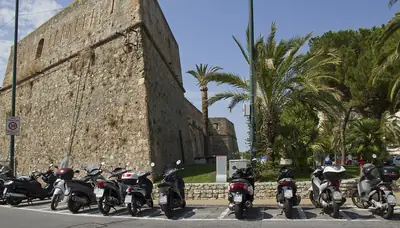
Forte di Santa Tecla is considered Sanremo’s most important building in terms of both its dimensions and its history. The fort is one of the city’s major historic landmarks and appears naturally alongside the old town, the casino and the seafront.
Villa Nobel
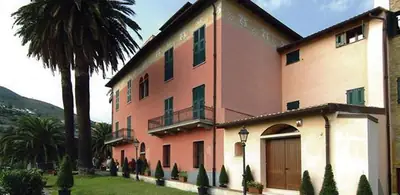
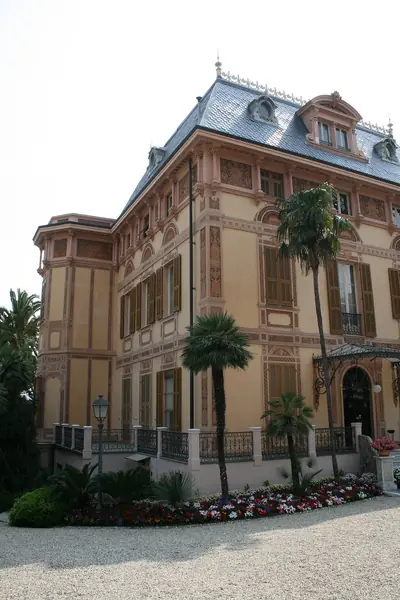
Villa Nobel is a historic residence with an eclectic architectural style. It was once owned by Alfred Nobel, the Swedish industrialist, and was his last residence and the place where he died.
The villa adds an unusual scientific and personal chapter to Sanremo’s history. It also forms part of the city’s coastal heritage, close to other landmarks connected with the waterfront.
The Russian Church
The Church of Christ the Savior, the Great Martyr Catherine, and Saint Seraphim of Sarov is commonly known as the Russian Church, or Chiesa Russa. Built at the beginning of the twentieth century, it reflects the presence of Russian nobility who chose Sanremo for tourism and restorative stays.
Its name and history recall the international character Sanremo acquired as a destination on the Italian Riviera.
Pinacoteca Rambaldi in Coldirodi
In Coldirodi, a district of Sanremo, the Pinacoteca Rambaldi brings together art and books collected by the priest Paolo Stefano Rambaldi. The collection began with his bequest to the municipality of Colla, now Coldirodi, after his death. The Pinacoteca was established in 1865.
Its picture collection includes around one hundred works dating from the fifteenth to the nineteenth century. Highlights include a Madonna and Child attributed to Lorenzo di Credi, from Verrocchio’s workshop, and the Holy Family by Fra Bartolomeo della Porta. The collection also includes works by Michele Rocca, Salvator Rosa and Jacopo Vignali, along with portraits by Anton Raphael Mengs.
Since July 2006, the Pinacoteca has been arranged in the larger rooms of the Museo di Villa Luca.
Bussana and its Roman villa
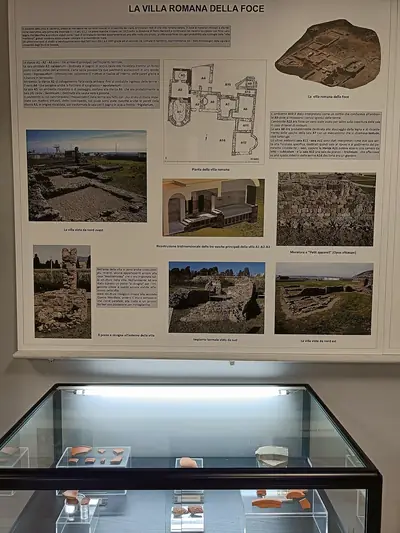
The Roman Villa of Bussana is an archaeological site near the mouth of the Armea stream. Its remains stand on terraces descending towards the sea and belong to a villa dating from the first and second centuries AD. The building was probably designed for both residential and productive use and may have belonged to a high-ranking patron.
The Via Iulia Augusta passed near the site. Surviving walls built in petit appareil show the quality of the original construction, although the villa was probably much larger than the visible remains. The site has been known since at least 1908, with investigations in 1914 and later excavations between 1980 and 2006.
Nearby Bussana Vecchia adds a more dramatic historical setting. The parish church of Sant’Egidio was partially destroyed by an earthquake on February 23, 1887, along with the surrounding village. It was never rebuilt, and its damaged state remains closely connected with the history of Bussana Vecchia.
Other historic and religious places
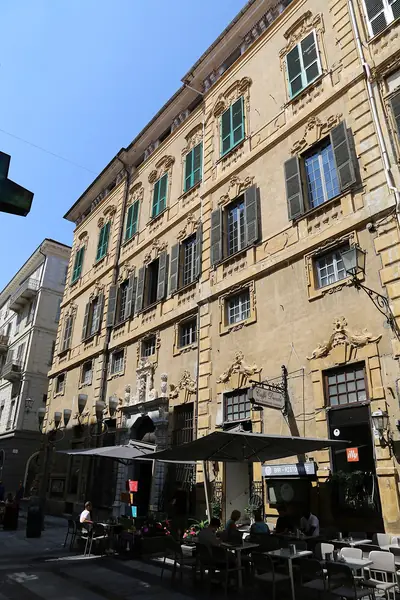
Sanremo’s heritage also includes Palazzo Roverizio, a historic city palace, and Santa Maria degli Angeli. Around Palazzo Gentile Spinola, the itinerary includes the Cappella di Nostra Signora dei Dolori, Barbiere and Tutto Mat. These smaller stops add detail to a visit through the city’s historic areas.
The Museo della Canzone Italiana focuses on Italian song and is associated with the setting around Palazzo Borea d’Olmo, a historic Baroque palace. Together with the Sanremo Music Festival, it highlights the city’s lasting connection with Italian musical culture.
A Sanremo self-guided walking tour with Neywo
Neywo lets you explore Sanremo with stories that play as you reach each place, at your own pace, with no group and no schedule. The city guide includes four walking tours and one bike route:
- Sanremo: Casino, Song Festival and the Seafront Old Town — 3.28 km, 97 minutes and 10 narrated stops.
- La Pigna and the Sanctuary on the Hill — 1.66 km, 59 minutes and 7 narrated stops.
- Coldirodi: Art and Chapels in a Hill Village — 1.17 km, 37 minutes and 4 narrated stops.
- Bussana: From the Roman Villa to the Ruins of the Old Village — 5.38 km, 102 minutes and 5 narrated stops.
- Riviera dei Fiori by Bike: Sanremo to the Roman Villa of Bussana — 7.2 km, 36 minutes and 5 narrated stops.
Download Neywo to explore Sanremo with a free audio guide and hear the story of each place as you arrive. Choose a walk or the bike route, follow the city at your own pace, and discover Sanremo without a group or a schedule. When planning a wider journey through Italy, Sanremo also makes a natural stop in Liguria, alongside Bordighera, Genoa and the Cinque Terre.
Places with an audio guide in Sanremo
8 places in Sanremo with a Neywo audio guide. Each one starts telling its story as you reach it.
Self-guided tours in Sanremo
4 tours in Sanremo, free in the Neywo app. Each stop tells its story as you reach it.
- Bike ride
Riviera dei Fiori by Bike: Sanremo to the Roman Villa of Bussana
Ride the Riviera dei Fiori cycle path along the Ligurian coast, from the Russian church and the fort of Santa Tecla through Villa Nobel, where Alfred Nobel spent his last years, to the Roman villa of Bussana and the cave-church of the Annunziata.
Chiesa Russa · Forte di Santa Tecla · Villa Nobel · Villa romana di Bussana · Santissima Annunziata
Open this tour: Riviera dei Fiori by Bike: Sanremo to the Roman Villa of Bussana - Walk
Sanremo: Casino, Song Festival and the Seafront Old Town
Start at the Russian church that recalls the Russian aristocrats who wintered here, pass the Liberty-style Casino where the Sanremo Song Festival was born in 1951, climb into the old quarter to the Romanesque cathedral of San Siro, and finish at the waterfront fort of Santa Tecla.
Chiesa Russa · Sanremo Casino · Chiesa dei Frati Cappuccini · Cathedral of San Siro · Palazzo Roverizio · Museo Civico di Sanremo …
Open this tour: Sanremo: Casino, Song Festival and the Seafront Old Town - Walk
La Pigna and the Sanctuary on the Hill
Climb through the stepped lanes of La Pigna, Sanremo's medieval hill quarter, past small churches and oratories to the sanctuary of Madonna della Costa, whose big feast falls on 15 August.
Palazzo Roverizio · Cathedral of San Siro · Santa Maria degli Angeli · Santo Stefano · San Costanzo · San Giuseppe …
Open this tour: La Pigna and the Sanctuary on the Hill - Walk
Coldirodi: Art and Chapels in a Hill Village
A quiet walk in Coldirodi, the hill village at Sanremo's western edge, from the Rambaldi picture gallery to its parish church and oratory and on to the shrine of Madonna Pellegrina.
Pinacoteca Rambaldi · San Sebastiano · Sant'Anna · Madonna Pellegrina
Open this tour: Coldirodi: Art and Chapels in a Hill Village
Walk Sanremo with Neywo
Neywo turns Sanremo into a self-guided audio tour. Stories arrive as you reach the place they belong to, and the route reshapes when you wander off it.

