Things to Do in Tivoli, Italy: Walking Guide
Things to Do in Tivoli: What to See in the Historic Hill Town
The best things to do in Tivoli include exploring Hadrian’s Villa, admiring the fountains of Villa d’Este, and walking through a historic town shaped by Roman, medieval, and Renaissance heritage. Set in Lazio, Tivoli combines monumental archaeological sites with churches, castles, waterfalls, and dramatic views over the Aniene valley. Neywo has a free audio guide for Tivoli with 15 narrated places, available in 11 languages.
What to See in Tivoli
Hadrian’s Villa
Known locally as Villa Adriana, Hadrian’s Villa is one of the most extensive and complex Roman villas ever discovered. Emperor Hadrian built it as an extra-urban imperial residence around AD 120, near the ancient town of Tibur and about 20 kilometres from Rome.
The archaeological site covers at least a square kilometre and includes more than 30 monumental buildings arranged across artificial terraces. Gardens, water basins, and fountains complete the vast complex. Its architecture also reflects Hadrian’s travels across the Roman Empire: buildings were named after places he had visited, including the Lyceum, the Academy, the Prytaneum, Canopus, the Poecile, and Tempe.
Villa d’Este
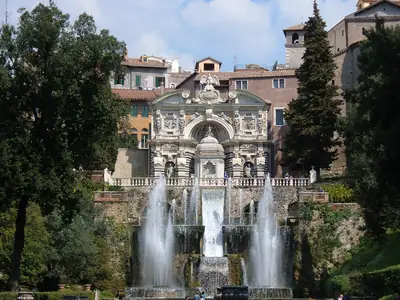
Villa d’Este is one of Tivoli’s defining sights and a masterpiece of 16th-century Italian architecture and garden design. Built on a terraced hillside, the villa is known for its fountains, ornamental basins, and inventive water features.
The gardens are designed to be explored slowly, with architectural details and water effects appearing throughout the terraces. Villa d’Este has been recognized as a UNESCO World Heritage Site since 2001 and operates as an Italian state museum.
Rocca Pia
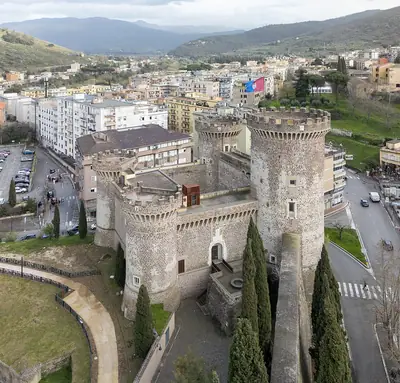
In the heart of Tivoli, Rocca Pia is a 15th-century fortress built between 1458 and 1461 on the orders of Pope Pius II. Its name comes from the pope himself. The stronghold adds a later layer of history to a town otherwise known especially for its Roman and Renaissance monuments.
Tibur Amphitheatre
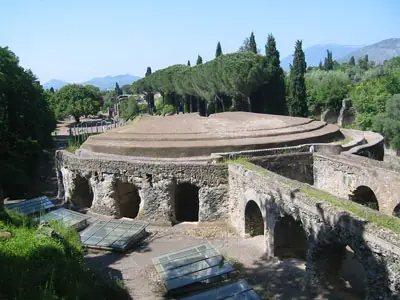
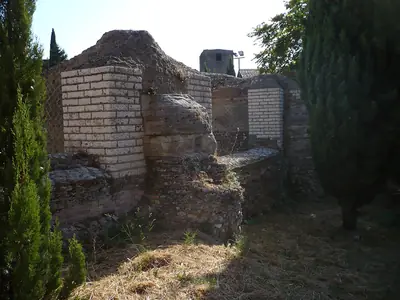
The remains of the Tibur amphitheatre, also known as the Anfiteatro di Bleso, stand in Tivoli’s city centre. Dating from the second century, during the Roman Imperial age, the amphitheatre is a reminder that public spectacles and communal gatherings were central to life in ancient Tibur.
Cathedral of San Lorenzo Martire
The Cathedral of San Lorenzo Martire, also called the Duomo di Tivoli, is dedicated to Saint Lawrence, the city’s patron saint. Located in the centre of Tivoli, it serves as the seat of the bishop of Tivoli and has been an important part of the community’s religious life for centuries.
Santa Maria Maggiore
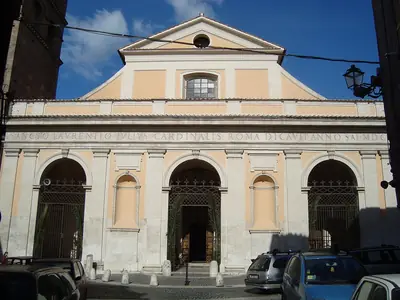
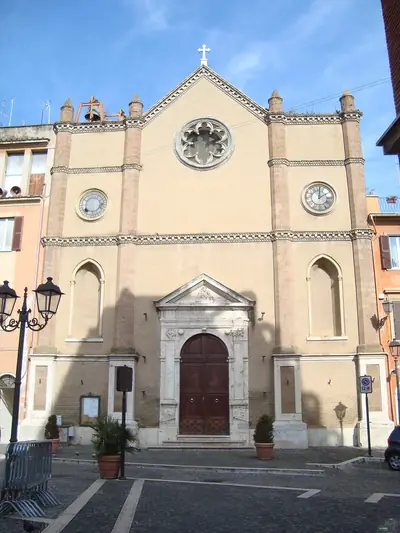
Santa Maria Maggiore stands in Piazza Trento, in the Santa Croce district, one of Tivoli’s four historic quarters. Locals have also traditionally called it San Francesco. The church has been dedicated to the Virgin Mary since the fifth century, giving it deep roots in Tivoli’s history.
Villa Gregoriana
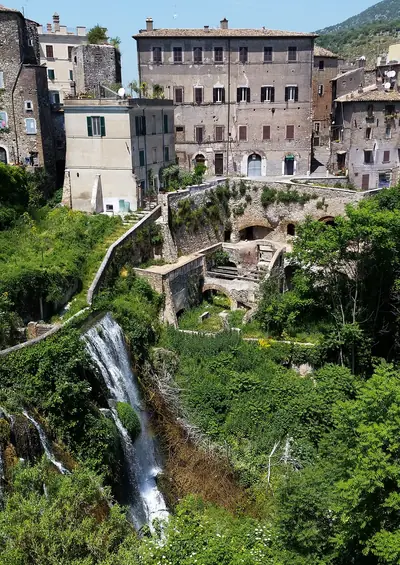
Villa Gregoriana is a historic nature park in a steep valley between the right bank of the Aniene River and the ancient Roman acropolis. Its main attraction is the Great Waterfall, which runs through dramatic gorges and wooded landscapes.
The park’s paths lead through woodland, caves, and cascades, including the caves of Neptune and the Sirens. The small circular Temple of Vesta is another highlight. Villa Gregoriana was created after a devastating flood damaged the Aniene valley in 1826. In 1835, Pope Gregory XVI commissioned the rebuilding of the riverbed, and Clemente Folchi shaped the park around the area’s waterfalls and natural features.
Temple of Vesta
The so-called Temple of Vesta is one of Tivoli’s most picturesque ancient monuments. The small circular temple stands on the acropolis of the ancient Etruscan and Roman city, overlooking the Aniene waterfalls and a narrow gorge.
It dates from the early first century BC and is traditionally associated with Vesta, the Roman goddess of the hearth. Its dedication remains debated: it may instead have been connected with Hercules, Albunea, the Sibyl of Tibur, or Tiburnus, the city’s legendary hero.
The temple’s capitals are particularly distinctive. Their unusual Corinthian variation, known as the Tivoli order, features two rows of acanthus leaves and large hibiscus flowers. The columns and decorative stonework make this an especially rewarding stop beside the falls.
San Pietro alla Carità
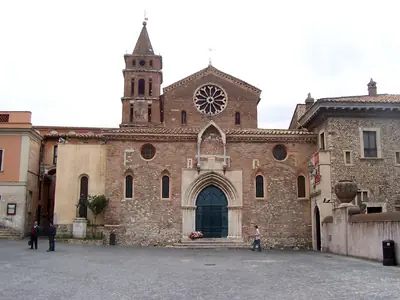
San Pietro alla Carità is one of Tivoli’s oldest churches. The present Romanesque building largely dates from a 12th-century reconstruction, while its current appearance also reflects restoration after damage during the Second World War.
Inside, look for the cosmatesque floor, made with decorative stone inlay associated with medieval Roman craftsmen.
Other historic churches
Tivoli’s historic centre includes several smaller religious buildings. San Michele is also known as the Chiesa di San Michele Arcangelo. San Biagio, San Silvestro, and Sant’Andrea are additional churches to encounter while exploring the town.
The Madonna di Quintiliolo sits in the hills above Tivoli and provides a peaceful pause away from the centre. Together, these places give a sense of the town’s long religious and architectural history beyond its major villas.
Ponte degli Arcinelli
Ponte degli Arcinelli is an ancient Roman aqueduct bridge and a surviving example of the infrastructure that carried water across the landscape. Its stonework offers a quieter glimpse of Roman engineering amid Tivoli’s better-known monuments.
Walking Through Tivoli
A visit to Tivoli is not only about entering its major archaeological sites and villas. The town itself is made for walking, with historic lanes, stone stairways, churches, and squares connecting the larger landmarks.
A Tivoli self-guided walking tour can bring these places together without requiring a group or fixed departure time. For a broader journey through the region, explore Lazio, or combine Tivoli with time in Rome.
Explore Tivoli with Neywo
Neywo offers one walking tour in Tivoli: a 2.84-kilometre route lasting 109 minutes, with 11 narrated stops. It includes San Michele, Rocca Pia, the Tibur amphitheatre, Santa Maria Maggiore, Villa d’Este, San Pietro alla Carità, San Silvestro, the Cathedral of San Lorenzo Martire, San Biagio, the Temple of Vesta, and Villa Gregoriana.
There is also one bus route: a 5.5-kilometre journey lasting 24 minutes, with four narrated stops at the Cathedral of San Lorenzo Martire, San Pietro alla Carità, Rocca Pia, and San Biagio.
Download Neywo and explore at your own pace. The app tells the story of each place as you reach it, with no group and no schedule.
Places with an audio guide in Tivoli
8 places in Tivoli with a Neywo audio guide. Each one starts telling its story as you reach it.
Self-guided tours in Tivoli
2 tours in Tivoli, free in the Neywo app. Each stop tells its story as you reach it.
- Bus ride
Bus 15 around the old town of Tivoli
Circular city bus 15 loops through Tivoli's historic centre. Hop on at the cathedral and ride past San Pietro alla Carità and the Rocca Pia fortress to the church of San Biagio, an easy way to link the old town's landmarks without the uphill walking.
Cathedral of San Lorenzo Martire · San Pietro alla Carità · Rocca Pia · San Biagio
Open this tour: Bus 15 around the old town of Tivoli - Walk
Popes, Fountains and the Temple above the Falls
Tivoli was a Roman getaway and a Renaissance showpiece. Start at the papal fortress and the Roman amphitheatre, pass the churches of the old town on the way to the Villa d'Este and its garden of wonders, then finish on the acropolis at the little round Temple of Vesta and the romantic gorge of Villa Gregoriana.
San Michele · Rocca Pia · Tibur amphitheatre · Santa Maria Maggiore (Tivoli) · Villa d'Este · San Pietro alla Carità …
Open this tour: Popes, Fountains and the Temple above the Falls
Walk Tivoli with Neywo
Neywo turns Tivoli into a self-guided audio tour. Stories arrive as you reach the place they belong to, and the route reshapes when you wander off it.

