Chefchaouen, Morocco: Self-Guided Walking Tour
Things to Do in Chefchaouen: What to See in Morocco’s Blue City
Looking for things to do in Chefchaouen? This distinctive mountain city in Morocco is known for its blue-painted medina, historic landmarks, and strong cultural heritage. From the lively Outa Hammam Square to the Ethnographic Museum, Chefchaouen is worth visiting for the way its architecture, history, and local traditions come together in a compact old urban centre.
Neywo has a free audio guide for Chefchaouen with 3 narrated places, available in 11 languages.
What to See in Chefchaouen
Outa Hammam Square and the Great Mosque
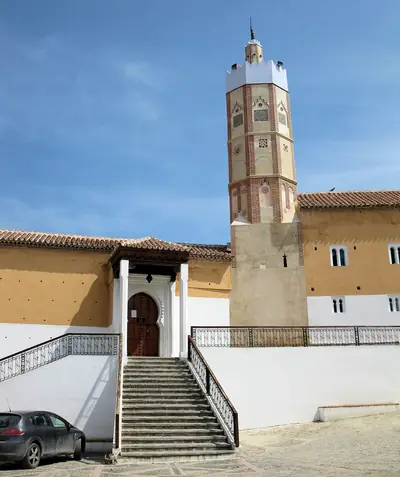
Outa Hammam Square is one of the central places in Chefchaouen and lies close to the historic kasbah. It is also where you can find the Great Mosque of Chefchaouen, a landmark dating from the sixteenth century, during the rule of the Idrisid scholarly Banu Rashid dynasty.
The mosque was founded by Sidi Mohammed, son of Moulay Ali, and its construction was completed in the year 969 of the Hijri calendar. Its most distinctive architectural feature is its eight-sided minaret. Inside, the building is also known for an unusual wooden chandelier positioned near the mihrab in the centre of the prayer hall.
The square provides a useful starting point for exploring the old city and understanding the importance of the historic centre.
Chefchaouen Ethnographic Museum
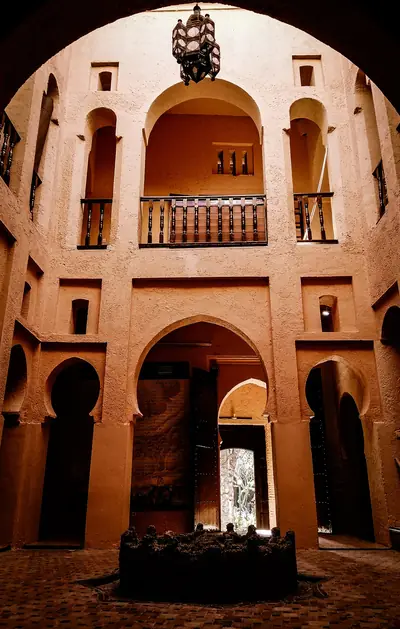
The Chefchaouen Ethnographic Museum explores the material culture of the city and the surrounding rural communities. Its collections offer a glimpse into five centuries of cultural interaction in Chefchaouen.
The museum is arranged around a central foyer, with two main halls and several adjoining spaces. Its objects and artworks reflect the local Jebala and Ghomara tribal groups, as well as the Andalusian and Jewish communities that settled in the city from its beginnings in the late fifteenth century.
For visitors deciding what to see in Chefchaouen beyond the blue streets, this is one of the city’s most important historical museums. It presents the city’s heritage through the different communities that helped shape Chefchaouen and its surroundings.
Chefchaouen Church
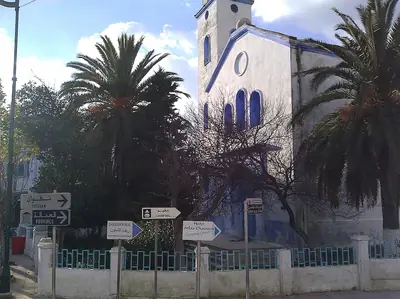
Chefchaouen Church is another place connected with the city’s cultural heritage. It offers a quieter opportunity to pause and consider the different influences present in Chefchaouen.
Together with the mosque and the museum, it forms part of a broader picture of the city: one shaped by several communities and layers of cultural interaction rather than by its colour alone.
The Blue Medina
Chefchaouen’s medina is the city’s defining experience. Its narrow lanes, stairways, doorways, and walls appear in shifting shades of blue, creating a setting that changes from one turn to the next.
Walking through the old town is the simplest way to appreciate its character. The lanes lead past painted façades, shaded corners, quiet courtyards, and traditional market streets. They also reveal the everyday side of Chefchaouen, with woven goods, clothing, pottery, spices, and other handmade products on display.
The medina is particularly memorable because the architecture and the surrounding mountain setting are so closely connected. The blue streets sit beneath the rugged peaks of the Rif Mountains, giving the city an atmosphere that is both urban and distinctly mountainous.
The Kasbah and Traditional Market Streets
Close to Outa Hammam Square, the historic kasbah is an important part of Chefchaouen’s old centre. The kasbah houses an ethnographic museum and offers views across the blue rooftops towards the surrounding mountains.
The market streets nearby are a natural continuation of a visit to the square and kasbah. Their woven goods, clothing, pottery, spices, and handmade products provide a direct connection with the city’s craft traditions and daily life.
A Self-Guided Walk Through Chefchaouen
A Chefchaouen self-guided walking tour is a natural way to explore the city because many of its most distinctive experiences are found by moving through the old streets at a relaxed pace. The blue medina, Outa Hammam Square, the Great Mosque, the kasbah, and the Ethnographic Museum are all part of the historic centre’s story.
Chefchaouen also works well as a stop on a wider journey through Morocco. Other destinations to consider include Fes, Marrakesh, and Rabat. For a coastal contrast, Essaouira offers a very different setting.
Explore Chefchaouen with Neywo
Download Neywo and explore Chefchaouen with a free audio guide covering 3 narrated places. The app tells the story of each place as you reach it, at your own pace, with no group and no schedule. Narration is available in 11 languages.
It is an easy alternative to a conventional free walking tour in Chefchaouen: walk through the city independently, follow your own rhythm, and listen when you arrive at each narrated place.
Places with an audio guide in Chefchaouen
3 places in Chefchaouen with a Neywo audio guide. Each one starts telling its story as you reach it.
Walk Chefchaouen with Neywo
Neywo turns Chefchaouen into a self-guided audio tour. Stories arrive as you reach the place they belong to, and the route reshapes when you wander off it.

