Rabat, Morocco: Self-Guided Walking Tour
Things to Do in Rabat: What to See in Morocco’s Capital
Looking for things to do in Rabat? Morocco’s capital brings together archaeological sites, royal monuments, historic gates, museums, mosques and distinctive twentieth-century architecture in a city shaped by the Bou Regreg River and the Atlantic coast. It is a rewarding place to explore on foot, especially if you want to experience Morocco’s history at a measured pace. Neywo’s free Rabat audio guide narrates 30 places in 11 languages as you visit them.
What to See in Rabat
Chellah
Chellah gathers several layers of Rabat’s past in one fortified archaeological site. The medieval Marinid necropolis stands over an ancient settlement that began as a Phoenician trading post and later became the Roman colony of Sala Colonia.
Excavations have revealed the Decumanus Maximus, a paved Roman street leading towards a forum, as well as a monumental fountain, public baths, stores, temples and a courthouse. The Marinids later transformed the site into a religious and funerary complex. In the fourteenth century, part of Chellah was enclosed by a five-sided wall reinforced with twenty square towers.
The Mausoleum of Mohammed V
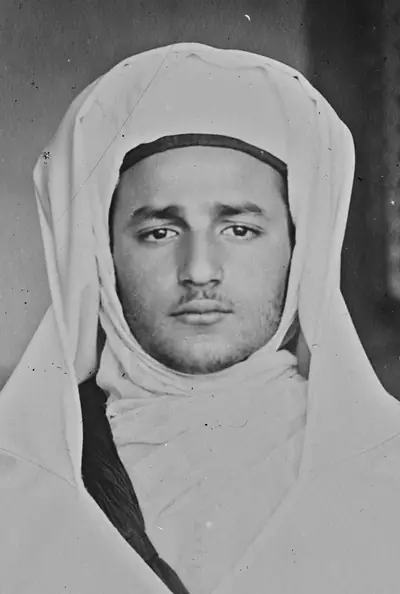
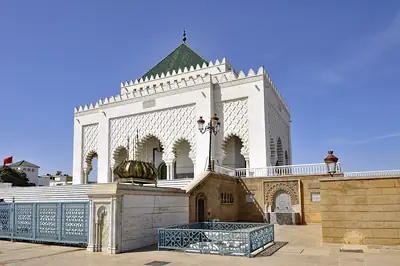
On the esplanade beside Hassan Tower, the Mausoleum of Mohammed V commemorates the Moroccan king associated with the restoration of the country’s independence. Mohammed V became sultan in 1927, was sent into exile in 1953 after opposing the French protectorate, and returned to his throne on 16 November 1955. Morocco’s independence was declared a few months later.
The mausoleum now holds the tombs of Mohammed V, his son King Hassan II and Prince Abdallah. Designed by the Vietnamese architect Eric Vo Toan, it follows a classical Moroccan style connected with traditional Arab-Andalusian art. More than 400 Moroccan craftspeople worked on the building, whose construction was completed in 1971. Its position above the mouth of the Bouregreg River also gives views towards Salé across the water.
Hassan Tower and Rabat’s Almohad gates
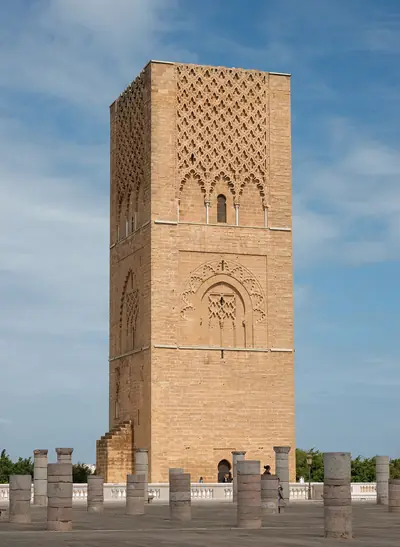
Hassan Tower is one of Rabat’s defining landmarks, and it appears alongside the mausoleum on one of the city’s most important historic esplanades. The nearby Almohad ramparts include Bab ar-Rwah, or Bab Rouah, known as the Gate of the Winds.
Built in 1197 by the Almohad caliph Abu Yusuf Yaqub ibn Yusuf al-Mansur, Bab ar-Rwah is one of the five gates surrounding Rabat’s walls. Its richly decorated entrance measures 28 metres in length and rises 12 metres high. Inside, four square halls are connected by two passageways, creating a sequence of spaces within the monumental gate.
The Museum of History and Civilizations in Rabat
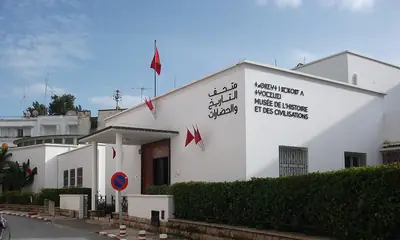
The Museum of History and Civilizations, also known as the Rabat Archaeological Museum, follows Morocco’s past from prehistory through the Islamic period. Its collections include rare archaeological objects from Fès, Salé, the Middle Atlas and the Rif.
Many of the museum’s pieces come from discoveries at Volubilis, Banasa and Thamusida. The prehistoric collection ranges from the Middle Paleolithic to the Neolithic, while later objects trace the civilizations that shaped Morocco before and during the Islamic period. The museum was established in 1932 and reopened under its current name in April 2017 after renovation.
The Kasbah of the Oudayas and the Oudaya Museum
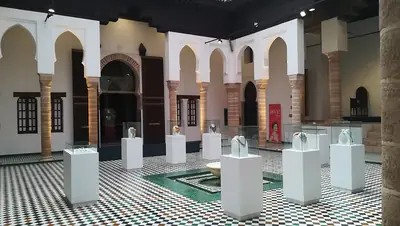
The Kasbah of the Oudayas is home to the Oudaya Museum, also known as the Musée des Oudayas. The collection brings together Moroccan jewellery, historic artistic objects and ethnographic material connected with the country’s different communities.
The museum opened in 1915 during the French protectorate. Its current role is also linked to Morocco’s National Jewellery Museum, which opened to the public in January 2023 in the former Musée des Oudayas. The complex contains three exhibition halls and a central foyer, with additional rooms in its southern section.
The medina and Moulay Slimane Mosque
Rabat’s medina offers a close look at the city’s traditional urban life. Rue des Consuls and Souk es-Sabat are associated with carpets, ceramics, leather, jewellery, spices and other Moroccan crafts, while the central market provides another view of everyday activity.
Within the medina, the Moulay Slimane Mosque is the second-largest mosque after the Great Mosque. Built in 1812 by the Alawi sultan Moulay Slimane, it has a courtyard and an interior prayer hall supported by rows of columns. The mosque covers about 1,000 square metres and its minaret rises 32 metres.
Sunnah Mosque and the Mohammed VI Museum of Modern and Contemporary Art
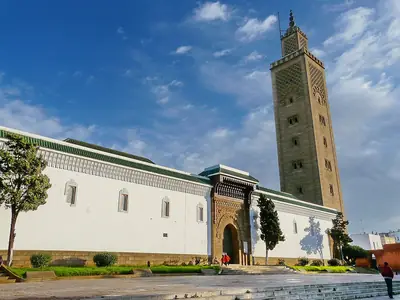
The Sunnah Mosque, or As-Sunna Mosque, is one of Morocco’s largest mosques and stands in central Rabat. Nearby, the Mohammed VI Museum of Modern and Contemporary Art offers a very different perspective on the city.
Opened in 2014, the museum was the first large-scale museum built in Morocco since independence in 1956 and the first Moroccan public museum to meet international museography standards. Its twentieth- and twenty-first-century collection includes works by more than 200 Moroccan artists, including Hassan Hajjaj and Ahmed Yacoubi, alongside international modern and contemporary art.
St. Peter’s Cathedral
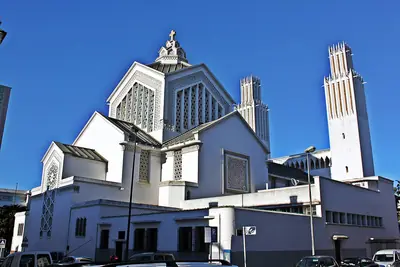
St. Peter’s Cathedral, or Cathédrale Saint-Pierre de Rabat, stands in Golan Square in the Hassan district. Construction began in 1919, and the cathedral was inaugurated in 1921 by Hubert Lyautey. Its two towers were added in the 1930s.
The building’s Art Deco character makes it a distinctive part of Rabat’s urban landscape. Its religious purpose and early twentieth-century design add another layer to the city’s architectural history.
The Royal Theatre of Rabat
On the left bank of the Bou Regreg River, the Royal Theatre of Rabat is one of the capital’s major cultural and architectural projects. Formerly known as the Grand Theatre of Rabat, the complex includes a main auditorium, a smaller theatre and an outdoor amphitheatre, together with facilities for performers and audiences.
Construction began in 2010 and was completed in 2021. The venue officially opened on 22 April 2026, with an inaugural evening featuring Moroccan musicians and performers.
More places to explore
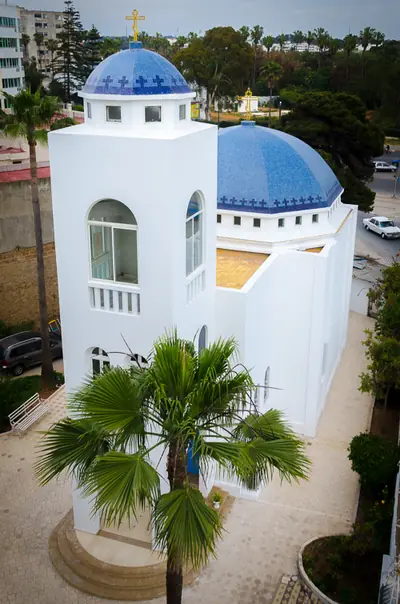
Rabat’s heritage extends beyond its best-known monuments. The Russian Orthodox Church in Rabat, dedicated to the Holy Resurrection, was inaugurated in 1932 and decorated with frescoes in 2011. It is the oldest of Morocco’s three functioning Orthodox churches.
Al-Atiq Mosque is recognized as a Moroccan cultural heritage site, while Badr Mosque forms part of the capital’s contemporary religious landscape. The Bank Al-Maghrib Museum focuses on Morocco’s coins and artistic heritage. A little farther from the city centre, Prince Moulay Abdellah Stadium is a 69,500-seat football venue opened in September 2025 and part of a larger sports complex with athletics, swimming and indoor facilities.
Rabat is one of the highlights of Morocco, but it also works well as part of a wider journey. Other destinations to consider include Meknes, Fes, Tangier and Essaouira.
Explore Rabat with Neywo
Neywo offers two walking tours and one bus route in Rabat:
- From the Unfinished Minaret to the Kasbah: a 4.46 km walk lasting 117 minutes, with 10 narrated stops.
- Roman Ruins, Almohad Gates and Art Deco Rabat: a 4.67 km walk lasting 112 minutes, with 9 narrated stops.
- Chellah to the Gate of the Winds: a 6.3 km bus route lasting 27 minutes, with 5 narrated stops.
The app tells the story of each place as you reach it, at your own pace, with no group and no schedule. Download Neywo’s free audio guide and explore Rabat with the city’s history in your ear.
Places with an audio guide in Rabat
8 places in Rabat with a Neywo audio guide. Each one starts telling its story as you reach it.
Self-guided tours in Rabat
3 tours in Rabat, free in the Neywo app. Each stop tells its story as you reach it.
- Bus ride
Bus 108: Chellah to the Gate of the Winds
Line 108 of the Rabat bus network runs from Chellah's Roman and Marinid ruins past the post museum and the Almohad gate Bab ar-Rwah to the city's ramparts, linking four of Rabat's UNESCO-listed highlights with one ticket.
Chellah · Mosquée Moulina · National Post Museum of Morocco · Bab ar-Rwah · Fortifications of Rabat
Open this tour: Bus 108: Chellah to the Gate of the Winds - Walk
From the Unfinished Minaret to the Kasbah
Begin at Zaha Hadid's riverside theatre, then stand before the Mausoleum of Mohammed V and the Hassan Tower, the minaret of a mosque that was meant to be the largest in the western Muslim world. Walk into the medina past the synagogue of the Mellah, the Great Mosque and the mosques of Moulay Slimane and Moulay El-Mekki, and finish at the jewellery museum in the Kasbah of the Oudayas.
Royal Theatre of Rabat · Mausoleum of Mohammed V · Hassan Tower · Rabbi Shalom Zaoui synagogue · Bab Chellah · The Great Mosque of Rabat …
Open this tour: From the Unfinished Minaret to the Kasbah - Walk
Roman Ruins, Almohad Gates and Art Deco Rabat
Rabat's layers in one route: Chellah, the Roman town of Sala and Marinid necropolis, the Almohad ramparts and the Gate of the Winds, then the museums, the Sunnah mosque and the Art Deco cathedral of the French-built new town, ending at the theatre and the museums of coins and stamps.
Chellah · Fortifications of Rabat · Bab ar-Rwah · Museum of History and Civilizations in Rabat · Sunnah Mosque · St. Peter's Cathedral (Rabat) …
Open this tour: Roman Ruins, Almohad Gates and Art Deco Rabat
Walk Rabat with Neywo
Neywo turns Rabat into a self-guided audio tour. Stories arrive as you reach the place they belong to, and the route reshapes when you wander off it.

