Visiting Tangier, Morocco: Top Sights on Foot
Things to Do in Tangier: What to See in Morocco’s Coastal Gateway
Looking for things to do in Tangier? This northern Moroccan city brings together a historic medina, palaces, mosques, museums, cathedrals and dramatic Atlantic-Mediterranean viewpoints. Its position between Africa and Europe has shaped a city with a distinctly layered history and an international character. Neywo offers a free audio guide for Tangier with 26 narrated places, so you can explore while the story unfolds around you.
What to See in Tangier
Tangier’s most important sights are spread between the old medina, the city’s historic neighborhoods and the coastline. These are the places that best reveal its religious, political, cultural and maritime history.
The American Legation
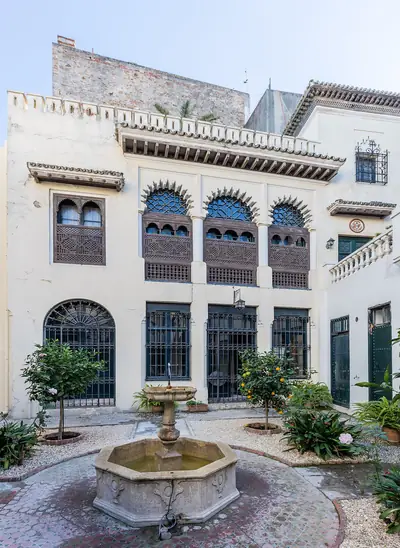
In the heart of the medina, the American Legation occupies a remarkable place in diplomatic history. Sultan Mohammed ben Abdallah gifted the building to the United States government on May 17, 1821, making it the first American public property abroad and the only U.S. National Historic Landmark outside the United States.
It served as the U.S. diplomatic post for 140 years. After a period of neglect, it was restored by the Tangier American Legation Museum Society, founded in 1976 by former U.S. diplomats. Today, the building functions as a cultural centre, museum and research library focused on Arabic language studies.
The Great Mosque of Tangier
The Great Mosque stands in the Zoco Chico area at the centre of the old medina. Although its present design dates from the early 19th century, the site has been used for worship since antiquity. Archaeological layers point to a Roman temple dedicated to Hercules and a Portuguese cathedral that once stood beneath the current mosque.
The mosque originated during the reign of Moulay Ismail and was enlarged in 1815 under Sultan Moulay Sliman. Its setting makes it an important stop when exploring Tangier’s historic core.
Sidi Bou Abid Mosque and the Grand Socco
Built in 1917, Sidi Bou Abid Mosque rises above the Grand Socco with a striking exterior covered in polychrome tiles. Its colourful appearance makes it one of the most recognisable religious buildings in the city.
The Grand Socco is also a useful point from which to understand the transition between Tangier’s old medina and its newer neighbourhoods.
Dar el Makhzen and the Kasbah
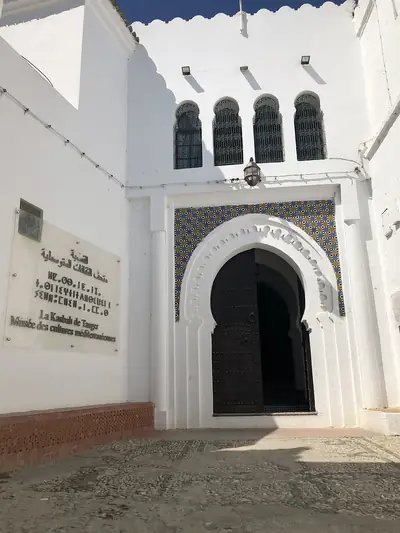
Dar el Makhzen crowns the Kasbah and overlooks the medina and the Strait of Gibraltar. For centuries, the palace served as the governor’s residence and as a royal retreat for Morocco’s sultans. Built during the reign of Moulay Ismail in the early 18th century, it was converted into a museum in 1922.
The palace is arranged around two courtyards decorated with carved wooden ceilings, marble fountains and arabesques. Some of its columns date from Roman times. Its collections include the Museum of Moroccan Arts and the Museum of Antiquities, alongside a contemporary art space added in 2021.
The Kasbah Museum is housed in another historic palace, Dar al-Makhzen, constructed between 1684 and 1740 by Pacha Ali ben Abdallah Er-Riffi and his son Ali. Opened as a museum in 1922, it presents archaeological and ethnographic objects that illustrate Tangier’s Mediterranean connections and the different layers of its past.
Kasbah Ghilane
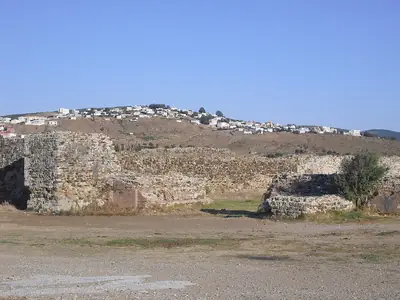
East of the old medina, just off the road to Malabata, Kasbah Ghilane stands on the right bank of the Wadi al-Halaq. The fortress was erected around 1664 and takes its name from al-Khidr Ghilan, the commander associated with the campaign against the English forces occupying Tangier between 1662 and 1684.
Its defensive layout includes two quadrilateral walls reinforced by semi-circular towers, with a large Umrani gate between them.
Gran Teatro Cervantes
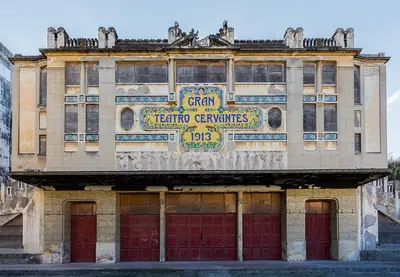
The Gran Teatro Cervantes is dedicated to Miguel de Cervantes and opened in 1913. Built by a wealthy Spanish merchant, it became one of the largest and most famous theatres in North Africa, particularly during the 1950s.
The theatre reflects the Spanish influence that forms part of Tangier’s modern history and architectural identity.
Abdelhafid Palace
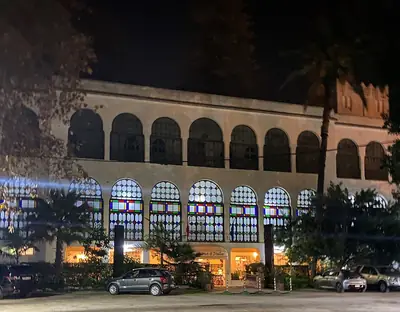
In the Hasnouna neighbourhood, Abdelhafid Palace was built in 1912–1913 as the intended residence of Sultan Abdelhafid after his abdication. He never lived there. Italy acquired the building in 1927, renaming it Palazzo Littorio and using it for schools and a hospital.
In 1943, under the Badoglio government, it became Casa d’Italia. Later it was known as the Palace of the Italian Institutions. Although renovated in the early 2000s, the building has remained largely underused.
Tangier Cathedral
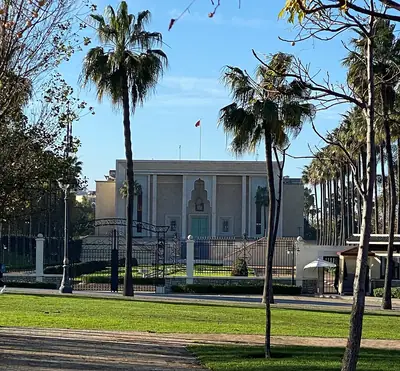
Also known as the Spanish Cathedral, Tangier Cathedral is dedicated to the Assumption of Mary and serves as the seat of the Roman Catholic Archdiocese of Tangier. Its architecture is a rare example of Spanish modern architecture from the second half of the 20th century and the only example of its kind in the city.
The cathedral’s popular name reflects both its architectural style and its large Spanish-speaking congregation.
Lalla Abla Mosque and the Fishing Harbour
At the end of Mohammed VI Street, Lalla Abla Mosque stands beside Tangier’s modern fishing harbour. Completed in 2017 and inaugurated by King Mohammed VI in July 2018, it replaced an older Port Mosque.
The complex includes separate prayer halls for men and women, residences for the imam and muezzin, commercial shops and a spacious square in front of the building. It accommodates more than 1,900 worshippers.
Cape Spartel Lighthouse
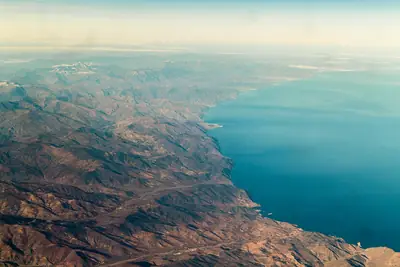
About fourteen kilometres west of Tangier, Cape Spartel marks the meeting point of the Mediterranean Sea and the Atlantic Ocean. Its lighthouse is the oldest in Morocco and guides vessels through the busy strait between Europe and Africa.
The tower rises 25 metres above a cliff that stands 315 metres above the sea. Sultan Mohammed IV commissioned it in 1864 after the Brazilian steamship Dona Isabel struck rocks near the cape, killing 250 sailors.
The Caves of Hercules
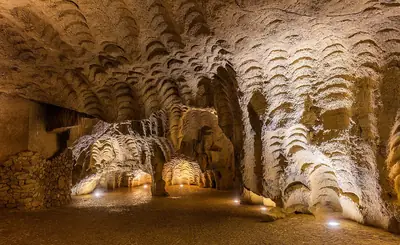
The Caves of Hercules form a natural cave complex on Cape Spartel and extend roughly thirty metres into the mountain. They have two openings: one facing inland and another looking towards the sea.
The sea-facing opening is known as “El Mapa de África” because its outline resembles the African continent when viewed from the water. Local legend says that the Greek hero Heracles rested in the cave before beginning his eleventh labour, the theft of the golden apples from the garden of the Hesperides.
Cape Malabata
East of Tangier, Cape Malabata guards the entrance to the bay. Its lighthouse and medieval-style castle were built in the early 20th century, creating a distinctive coastal viewpoint.
The cape has also been associated with plans for a tunnel under the Strait of Gibraltar linking it with Punta Paloma in Spain. In 2007, the area was selected for the Royal Resort Cap Malabata, a 129-hectare tourist complex.
Exploring Tangier with a Self-Guided Walking Tour
A Tangier self-guided walking tour is a practical way to connect the city’s historic sights without joining a group. Neywo’s first walk, Through the Medina Gates: Socco to Kasbah, covers 2.5 kilometres in 93 minutes and includes 10 narrated stops, from the Gran Teatro Cervantes and Grand Socco to the American Legation, Dar el Makhzen, Bab El Bhar and Lalla Abla Mosque.
The second walk, International Tangier: Cathedrals, Moorish Churches and Italian Palaces, covers 3.62 kilometres in 82 minutes and includes 6 stops. It focuses on the city’s international heritage, with places such as Tangier Cathedral, Abdelhafid Palace, Marshan Palace and the city’s churches.
Download Neywo and Explore Tangier at Your Own Pace
Download Neywo to explore Tangier with two walking tours and 26 narrated places. Each story plays as you reach the place, at your own pace: no group and no schedule. Narration is available in 11 languages, making the app a flexible alternative to a traditional free walking tour in Tangier.
Tangier is a vivid introduction to Morocco, and its location makes it part of a wider journey through the country. Continue to Rabat, Chefchaouen or Essaouira to discover more of Morocco’s historic cities and Atlantic landscapes.
Places with an audio guide in Tangier
8 places in Tangier with a Neywo audio guide. Each one starts telling its story as you reach it.
Self-guided tours in Tangier
2 tours in Tangier, free in the Neywo app. Each stop tells its story as you reach it.
- Walk
Through the Medina Gates: Socco to Kasbah
Cross the Grand Socco, the round market square that separates the medina from the new town, and plunge into the old streets. You will pass the first American public property abroad, the only church inside the city walls, Petit Socco and the sultan's palace on the Kasbah, then leave by the sea gate toward the fishing harbour.
Gran Teatro Cervantes · Grand Socco · Sidi Bou Abid Mosque · American Legation, Tangier · Church of the Immaculate Conception · Petit Socco …
Open this tour: Through the Medina Gates: Socco to Kasbah - Walk
International Tangier: Cathedrals, Moorish Churches and Italian Palaces
Tangier was once an international zone, and this walk through the new town shows it. Take in an Art Deco French church, a Spanish modern cathedral, the Kuwaiti-funded mosque built to out-top it, an English church with Moorish decor and a palace built for a sultan who never lived in it.
French Church of Tangier · Tangier Cathedral · Mohammed V Mosque · Abdelhafid Palace · Church of Saint Andrew · Marshan Palace, Tangier
Open this tour: International Tangier: Cathedrals, Moorish Churches and Italian Palaces
Walk Tangier with Neywo
Neywo turns Tangier into a self-guided audio tour. Stories arrive as you reach the place they belong to, and the route reshapes when you wander off it.

