What to See in Maastricht, Netherlands: Free Audio Guide
Things to do in Maastricht: historic squares, fortresses and castles
Maastricht is a historic city in Limburg, in the south of the Netherlands, shaped by the River Maas and centuries of military, religious and civic history. The best things to do in Maastricht include exploring its medieval centre, visiting fortifications and castles, discovering art beside the river, and finding the statues and traditions that express local identity. Neywo has a free audio guide for Maastricht with 199 narrated places.
What to see in Maastricht
Vrijthof and Maastricht’s historic centre
Vrijthof is one of the city’s central squares and a natural starting point for discovering what to see in Maastricht. The square is surrounded by the Basilica of Saint Servatius and Saint John’s Church, two buildings that show different sides of the city’s religious heritage.
Nearby, the Treasury of the Basilica of Saint Servatius adds to the story of this important religious site. The Dominicanenklooster, now associated with Boekhandel Dominicanen, occupies another remarkable historic setting, while the Museum aan het Vrijthof brings art and local history into the centre of the city.
Maastricht’s civic history is visible at Maastricht City Hall. The square and surrounding streets also provide encounters with local symbols, including the statue of ’t Mooswief. For a wider look at the region, you can continue exploring Limburg, whose landscape and history extend beyond Maastricht.
Onze Lieve Vrouweplein and the Basilica of Our Lady
Onze Lieve Vrouweplein is home to the Basilica of Our Lady, one of Maastricht’s best-known religious landmarks. Its treasury provides another perspective on the basilica and its long spiritual history.
The surrounding area contains several other historic places. The Bisschopsmolen reflects Maastricht’s urban heritage, while the Waalse Kerk adds another religious building to the city’s architectural mix. The route also reaches the Maastricht Natural History Museum, offering a different way to understand the natural world around the city.
Helpoort and the medieval walls
Helpoort is the oldest surviving city gate in the Netherlands and an important part of Maastricht’s defensive heritage. It stands within the remains of the first medieval city wall, where the city’s former role as a fortified settlement becomes especially clear.
The route through this part of Maastricht continues towards De Vijf Koppen, the Pater Vincktoren, Poort Waerachtig and Nieuwenhofpoortje. Together, these gates, towers and wall sections reveal how the historic centre was protected and how its fortifications shaped the city.
The Meuse, Sint Servaasbrug and Wyck
The Sint Servaasbrug crosses the Meuse and connects the historic centre with Wyck. This bridge provides a direct link between two parts of Maastricht while offering a chance to experience the river at the heart of the city.
On the Wyck side, Sint-Martinuskerk and the former Annunciatenklooster add to the neighbourhood’s historic character. The Mariamonument, Sint-Gerarduskerk and Wycker Waterpoort continue the story, while Plein 1992 and Centre Céramique show the area’s cultural and modern dimensions.
Bonnefanten Museum
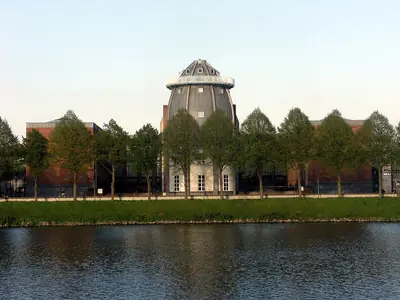
Beside the Meuse, the Bonnefanten Museum combines historic, modern and contemporary art in a distinctive building designed by Aldo Rossi. Its most recognizable feature is a 28-metre rocket-shaped tower, built in red brick and bluestone.
The museum’s E-shaped layout includes a grand staircase inspired by Liège’s Montagne de Bueren, and natural light reaches deep into the building. Its historic collection includes paintings, sculptures and applied art dating from about 1000 to 1700, with a particular focus on medieval sculpture and Southern Netherlandish painting. Contemporary art also has a major place in the museum.
The institution’s history began in 1863, when the Historical and Archaeological Society in the Duchy of Limburg started collecting antiquities. The museum therefore connects Maastricht’s collecting tradition with its present-day cultural life.
Fort Sint Pieter and Sint-Pietersberg
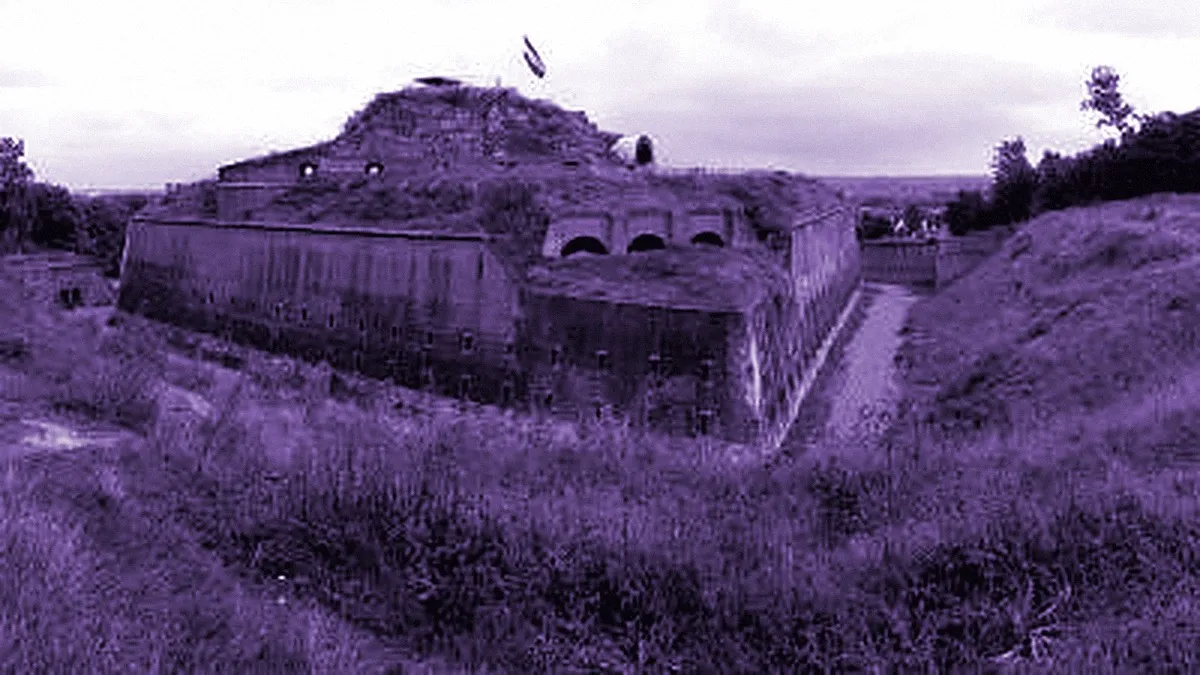
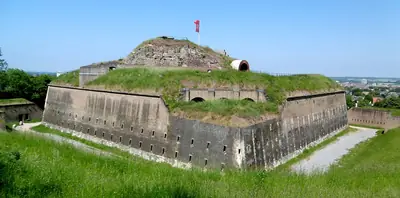
Fort Sint Pieter stands on the northern slope of Sint-Pietersberg, overlooking Maastricht and the surrounding Limburg countryside. Built in 1701 and 1702, it was designed to prevent another attack from the south after French forces had captured the hill in 1673 and used it to attack Maastricht’s southern fortifications.
The fortress has a powerful five-sided shape, thick walls and cannon openings. Its underground network includes tunnels, cannon galleries and a concealed water well. The nearby marl caves are closely connected with the fort and form part of the wider experience of Sint-Pietersberg.
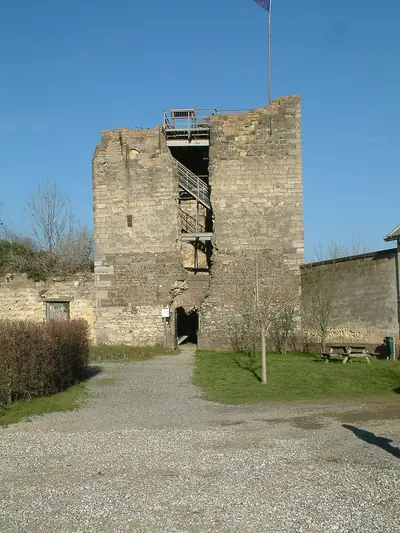
The hill also contains Huis de Torentjes, a castle-like manor that is partly sixteenth century. Further away, Castle Lichtenberg survives as a medieval ruin, with a ruined keep and part of the north wing forming part of the Hoeve Lichtenberg farm complex. Hoogenweerth Castle, a castle-like country residence beside the Meuse, adds a riverside setting to this collection of historic places.
Château Neercanne and the marl quarries
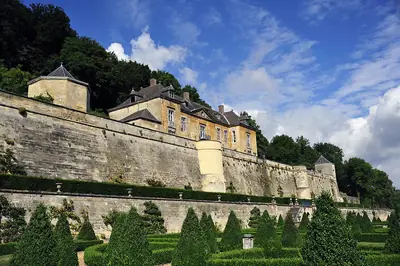
Château Neercanne is the only terraced castle in the Netherlands. The present château is a seventeenth-century Baroque country house arranged against the slope of the Cannerberg. Its façade centres on a sculpted pediment and is flanked by two wings, while the reconstructed Baroque garden extends in terraces in front of the building.
The site was once known as Agimont, and a castle in the lordship of Neerkanne is mentioned as early as the fourteenth century. The estate has an unusual border history: in 1843, Baron van Trier arranged for the property to lie on Dutch territory, leaving the border with a notably irregular shape. Today, Château Neercanne is also home to a renowned restaurant.
Nearby, the Jezuïetenberg occupies an old marl quarry close to the Belgian border. From 1880 to 1967, Jesuit students used its underground galleries in their free time, creating drawings, sculptures, reliefs and water features. The surviving works include charcoal drawings and carved reliefs, including winged bulls and a representation of the Alhambra.
Fort Willem
Fort Willem was built between 1815 and 1818 to strengthen Maastricht’s northern and northwestern defences. It was named after King William the First of the Netherlands, who visited Maastricht in June 1815 while construction was still underway.
The fort was built as a pentagonal lunette with a central casemate and underground galleries. A dry moat surrounded it, while the ring gallery contained 136 vaulted rooms with loopholes. After Maastricht lost its fortress status, part of the fort was demolished in 1869 and its functions changed over time.
Castles and estates around Maastricht
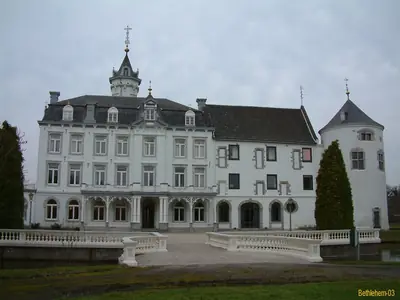
Maastricht’s historic landscape extends beyond the city centre. Bethlehem Castle, near the former village of Limmel, was built in the twelfth century and belonged to the Teutonic Order for almost three centuries. Since 2010, it has housed Teaching Hotel Château Bethlehem, connected with Maastricht’s Hotel Management School.
Borgharen Castle stands beside the Maas in the village of Borgharen. Its position was important from the early Middle Ages because shipping travelling to and from Maastricht could be monitored there and tolls could be collected. The castle, castle farm, tenant farm and gardens form a larger historic ensemble.
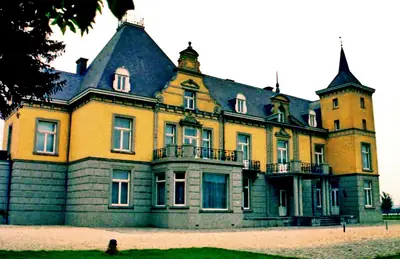
Other estates add further variety. Kasteel Vaeshartelt stands in Limmel, while Geusselt Castle, largely seventeenth-century in character, forms part of the Buitengoed Geul and Maas estate in Geusseltpark. La Grande Suisse is an eighteenth-century villa and country estate, also known as De Kanjel and Huize Mariënwaard. Nearby Villa Kanjel, also known as La Petite Suisse, is a monumental nineteenth-century villa whose main building is now used as an event venue.
Explore Maastricht with Neywo
If you are looking for a Maastricht self-guided walking tour, Neywo lets you explore independently with stories that play as you reach each place. The app includes 5 walking tours, 1 bus route and 1 bike route, with narration available in 11 languages.
The walks cover between 1.6 and 3.88 km and last between 63 and 100 minutes, with 8 to 12 narrated stops each. The bus route covers 9 km, lasts 39 minutes and includes 12 stops. The bike route covers 3.4 km, lasts 17 minutes and includes 7 stops.
Choose a free walking tour in Maastricht through the historic squares, the old city walls, Wyck and the Meuse, Sint-Pietersberg or Maastricht’s bronze statues. The app tells the story of each place as you reach it, at your own pace, with no group and no schedule. Download Neywo and explore Maastricht with a free audio guide.
You can also continue your journey through the Netherlands, or discover nearby Valkenburg in Limburg.
Places with an audio guide in Maastricht
8 places in Maastricht with a Neywo audio guide. Each one starts telling its story as you reach it.
Self-guided tours in Maastricht
7 tours in Maastricht, free in the Neywo app. Each stop tells its story as you reach it.
- Bike ride
Sint Pietersberg: fort, valley and hilltop castle
A ride through the Sint Pietersberg nature area, where signed cycle routes link the church at the foot of the hill, the fortress, the viewpoint over the Oehoe valley, a sixteenth-century manor, a Baroque chapel, the Lichtenberg castle ruin and Hoogenweerth castle by the Meuse. Hilly; allow about an hour and a half.
Sint-Pieter beneden · Saint Peter Fort · Kiekoet · Huis de Torentjes · Observantenklooster · Castle Lichtenberg …
Open this tour: Sint Pietersberg: fort, valley and hilltop castle - Bus ride
Bus 3: from the station district to the Vrijthof
Arriva's city line 3 runs from the villa estates of the north-east past the Dome Church and the Mariamonument, through Wyck and the Markt, to the Vrijthof and the former Bonnefanten monastery. A cheap ride that links Maastricht's country villas, churches, squares and its architecture centre; stay on towards Wolder if you like.
La Grande Suisse · Villa Kanjel · Antonius van Paduakerk · Heilige Familiekerk · Koepelkerk · Mariamonument …
Open this tour: Bus 3: from the station district to the Vrijthof - Walk
Vrijthof and Markt: Maastricht's Two Great Squares
Start at a Gothic monastery church turned hotel, then step onto the Vrijthof, where a Catholic basilica with its treasury and a Protestant church with a red tower have stood side by side for centuries. Pass the carnival fountain, a theatre built over a convent and the Spanish Government house, then a medieval church that now sells books, and finish on the Markt with the vegetable woman, the inventor of gas lighting and the Golden Age town hall.
Kruisherenkerk · Basilica of Saint Servatius · Treasury of the Basilica of Saint Servatius · Sint-Janskerk · Vrijthof · Fontein Hawt uuch vas …
Open this tour: Vrijthof and Markt: Maastricht's Two Great Squares - Walk
Star of the Sea and the Oldest City Gate
Follow the Romanesque Basilica of Our Lady and the oldest working watermill in the Netherlands through the quiet Jekerkwartier to Helpoort, the oldest surviving city gate in the Netherlands. Pass a twelve-sided Huguenot church, the first medieval city wall, the Five Heads bastion and a fanciful gate, then walk along the second city wall to the museum where a mosasaur skull from the local chalk quarries is the star.
Onze Lieve Vrouweplein · Basilica of Our Lady · Treasury of Onze-Lieve-Vrouwebasiliek · Bisschopsmolen · Waalse Kerk · Helpoort …
Open this tour: Star of the Sea and the Oldest City Gate - Walk
Across the Old Bridge: Wyck and the Meuse
Cross the Sint Servaasbrug, the oldest bridge in the Netherlands, to Wyck on the east bank. Visit Cuypers' neo-Gothic church with its thirteenth-century Black Christ, wander the convent streets and the Marian column, look through a medieval watergate onto the river, then cross into the modern Céramique quarter and end at Aldo Rossi's rocket-towered Bonnefanten Museum.
Sint Servaasbrug · Sint-Martinuskerk · Annunciatenklooster · Mariamonument · Sint-Gerarduskerk · Wycker Waterpoort …
Open this tour: Across the Old Bridge: Wyck and the Meuse - Walk
Fortress Hill: Sint Pietersberg
Leave the centre for the green hill that guarded Maastricht's southern flank. Walk by the park and the riverside to Frits Peutz's marlstone church and the five-sided Fort Sint Pieter, where Tsar Peter the Great was once welcomed, then along the fortifications to a valley viewpoint, a castle-like manor and the neo-Gothic church on the hill. Wear good shoes: the paths climb.
Monseigneur Nolenspark · Pierre Kemp · Sint-Pieter beneden · Saint Peter Fort · Fortifications of Maastricht · Kiekoet …
Open this tour: Fortress Hill: Sint Pietersberg - Walk
Maastricht in Bronze: Spirits, Donkeys and a Musketeer
Maastricht loves its statues. Meet the Mestreechter Geis, the spirit of the city, then a mother with four children, a storyteller talking to three kids, a small bronze donkey and the musketeer D'Artagnan, who died besieging the city. End at a sculpture on the old ramparts.
Mestreechter geis · Jupiter · Levensvreugd · Statue of Fons Olterdissen · Ezelke · Sjeng Tans Monument …
Open this tour: Maastricht in Bronze: Spirits, Donkeys and a Musketeer
Walk Maastricht with Neywo
Neywo turns Maastricht into a self-guided audio tour. Stories arrive as you reach the place they belong to, and the route reshapes when you wander off it.

