Things to Do in Haarlem, Netherlands: Walking Guide
Things to Do in Haarlem, Netherlands
Haarlem is a historic Dutch city in North Holland, known for its churches, elegant civic buildings, museums, courtyards, and relaxed streets. Its compact centre offers plenty to see on foot, from the monumental Grote Kerk on the Grote Markt to quiet hofjes and landmarks along the Spaarne. Neywo’s free Haarlem audio guide tells the stories of 101 narrated places as you explore.
What to See in Haarlem
Grote Kerk and Grote Markt
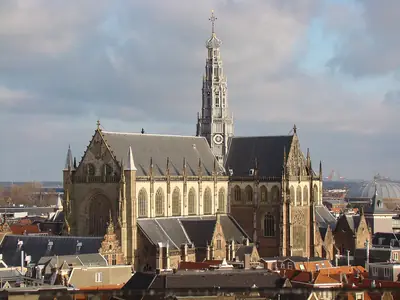
The Grote Kerk dominates Haarlem’s Grote Markt with its Brabantine Gothic architecture and almost 78-metre-high wooden crossing tower, covered in lead and topped by a late Gothic spire. Built between the 14th and early 16th centuries, it was originally Catholic and became the cathedral of the Diocese of Haarlem in 1559. After the Reformation, Protestants took possession of the church in 1578.
The building also carries the memory of the violent upheaval of that year, when Calvinists stormed the Sint-Bavo on Sacramentsday, looting the interior, destroying furnishings and killing a priest. Today, the church remains the defining landmark of the Grote Markt.
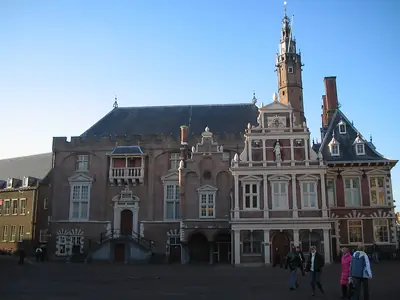
Nearby, Haarlem City Hall occupies a site once associated with the counts of Holland and a Dominican monastery founded by Floris V in 1296. The present building was erected in 1370 and was expanded and altered over the centuries. Its complex includes the Zaalgebouw and Gravenzaal, along with a Dutch Renaissance wing designed by Lieven de Key.
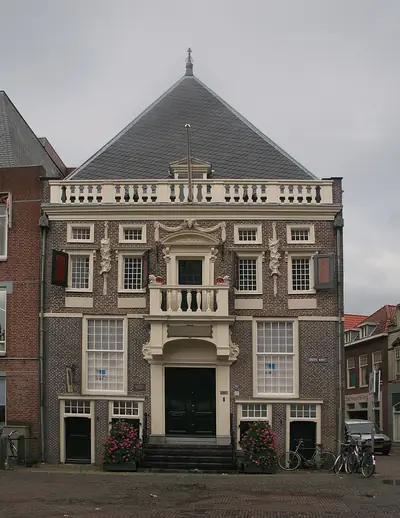
The Hoofdwacht, also on the square, is one of Haarlem’s oldest buildings and a protected national monument. The 13th-century structure has served as a town hall, home, shop, jail, printshop and headquarters of the city militia. Close by stands the statue of Laurens Janszoon Coster, affectionately known locally as “Lautje”.
De Vishal
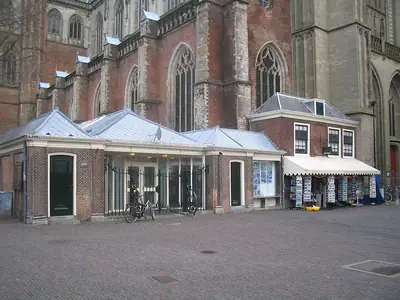
De Vishal stands against the Grote Kerk on the Grote Markt. Built in 1769, it replaced a much larger fish market that had occupied the square since 1603. The market began as an open-air area, while the present roof with its skylight was added in 1899.
The building’s name means “fish hall”, recalling its original purpose. Today, De Vishal presents changing exhibitions of modern art, making it a place where Haarlem’s commercial past meets its contemporary cultural life.
Janskerk and the Waalse Kerk
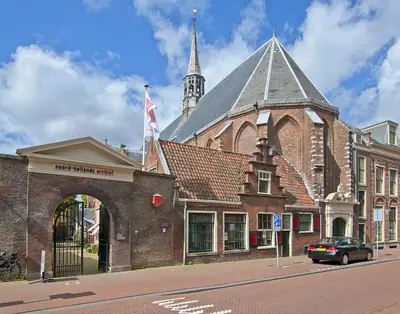
The Janskerk, or St. John’s Church, dates from 1310 to 1318. Together with its adjoining monastery, it served as the seat of the Commanderij of Saint John from the early 14th century until 1625. The building now houses the North Holland Archives, whose regional records are preserved within its historic walls.
The Waalse Kerk is Haarlem’s oldest church, dating from 1348. Located on the Begijnhof, it was originally a Catholic chapel known as the Begijnhofkapel before the Reformation. The church is a national monument and a reminder of the religious history woven through Haarlem’s centre.
The Waag beside the Spaarne
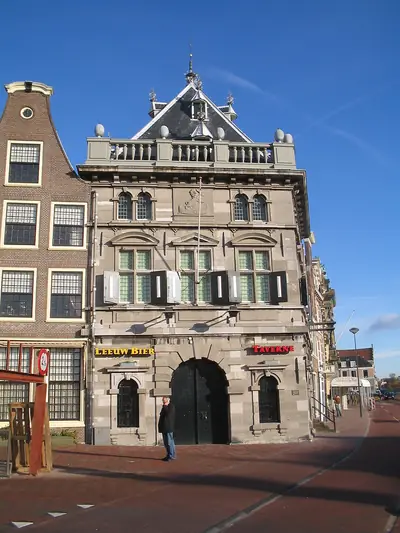
At the corner of the Spaarne and Damstraat, the Waag is a Renaissance weigh house built between 1594 and 1598. Haarlem’s city architect Lieven de Key designed the three-storey building, which was constructed using blue stone imported from Namur.
For centuries, goods loaded and unloaded on the Spaarne were weighed here. The building kept that function until 1915 and later housed municipal fire pumps. Since 1821, its upper floor has been used by the artists’ association KZOD, or “Kunst zij ons doel”. The Waag now welcomes visitors as a café.
Bakenesserkerk and Nieuwe Kerk
The Bakenesserkerk stands in the Bakenes neighbourhood on Vrouwestraat. Its white tower is almost identical to the tower of the Grote Kerk, creating a distinctive visual link between the two buildings. The church is now the seat of a local archaeological workgroup.
At Nieuwe Kerksplein, the Nieuwe Kerk is a 17th-century Protestant church built in 1649. It was Haarlem’s first stone church constructed specifically for Protestant worship, replacing an earlier wooden preaching shed and a small medieval chapel.
Architect Jacob van Campen designed the interior around the pulpit. Its plan is a Greek cross contained within a square, although the cross shape is not obvious from the outside. The arrangement was intended to ensure that the preacher remained visible and audible from every seat.
Haarlem’s cathedrals
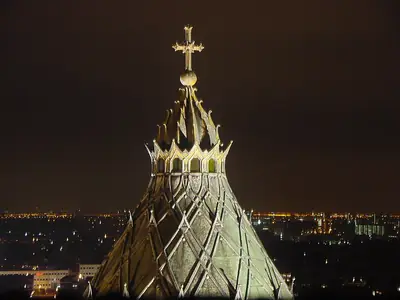
The Cathedral of Saint Bavo, also known as KoepelKathedraal Haarlem since 2019, rises in the Houtvaartkwartier. Designed by Joseph Cuypers, it was constructed between 1895 and 1930 and combines neo-Romanesque, Romano-Byzantine and neo-Gothic elements.
It is the cathedral of the Roman Catholic Diocese of Haarlem-Amsterdam and the second-largest Catholic church in the Netherlands. Dedicated to Saint Bavo, Haarlem’s patron saint, it became a basilica in 1948 when Pope Pius XII granted it that title. The former sacristy contains the KathedraalMuseum, with historic material and relics of Saint Engelmundus.
The Old Catholic Church of Sts Anne and Mary is the cathedral of the Old Catholic Diocese of Haarlem and the seat of its bishop. Located on Kinderhuissingel, it is a national and municipal monument. Its Künckel cabinet organ is a particularly important feature and helped earn the building its national-monument status.
Frans Loenenhofje
Haarlem’s hofjes are small almshouse courtyards tucked behind street façades. The Frans Loenenhofje on Witte Herenstraat was founded in 1607 to provide homes for poor, single women, and it continues to serve that purpose.
Above the entrance, look for the unusual façade stone depicting a decapitated lion. The hofje was established using the fortune of Frans Klaeszoon Loenen, a Haarlem linen merchant who left his money to the poor. In 1609, five additional rooms were added by the provost Jacobus Zaffius. The courtyard is a protected national monument.
Villa Welgelegen
Opposite Haarlemmerhout park, Villa Welgelegen is a neoclassical mansion on Paviljoenslaan. Built between 1785 and 1789, it has served several purposes and has been the Provinciehuis of North Holland since 1930.
The villa now houses the offices of the province’s executives. Its neoclassical style is relatively uncommon in the Netherlands, giving the building a distinctive appearance. As a Rijksmonument, it is one of Haarlem’s notable pieces of protected heritage.
Smaller landmarks with stories to tell
The Janswegspoorbrug is a railway bridge built around 1906, when Haarlem’s railway lines were raised as part of the renewal of Haarlem Station. Its cast-iron columns were made by the IJzergieterij Deventer foundry.
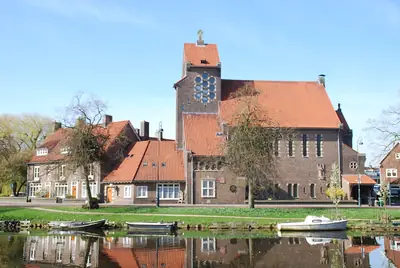
The Moeder-van-de-Verlosserkerk is a Roman Catholic parish church in Boerhaavewijk. Its dedication is unusual: it is one of only two churches in the Netherlands with this name.
Explore Haarlem with Neywo
A Haarlem self-guided walking tour is an easy way to connect the city’s landmarks without following a group or a fixed timetable. Neywo offers five walking tours, one bus route and one bike route in Haarlem, with distances ranging from 1.11 to 6 km and durations from 11 to 112 minutes. Together, they include narrated stops across the city’s historic centre, churches, courtyards, bridges, museums and former ramparts.
The walks include routes through the Grote Markt, along the Spaarne, around Haarlem’s hofjes, and between Saint Bavo and Villa Welgelegen. The bus route covers 6 km in 26 minutes, while the bike route covers 2.1 km in 11 minutes. Neywo’s narration is available in 11 languages: each story plays as you reach the place, at your own pace, with no group and no schedule.
Download Neywo and explore Haarlem through its history as you walk, ride or travel across the city. Haarlem is part of North Holland in the Netherlands, and it makes a rewarding stop alongside Amsterdam, Zaandam or Alkmaar.
Places with an audio guide in Haarlem
8 places in Haarlem with a Neywo audio guide. Each one starts telling its story as you reach it.
Self-guided tours in Haarlem
7 tours in Haarlem, free in the Neywo app. Each stop tells its story as you reach it.
- Bike ride
By Bike Along the Old Ramparts: Stadshart to Huis ter Kleef
Ride Haarlem's western ring of cycle paths from the Stadshartkerk past almshouse courtyards, the Old Catholic cathedral and the railway bridge of 1906, then north to a neo-Gothic church and the ruins of Huis ter Kleef.
Wilhelminakerk, Haarlem · De Hoeksteen · Frans Loenenhofje · Old Catholic Church of Sts Anne and Mary · Kenau spoorbrug · Heilig-Hartkerk …
Open this tour: By Bike Along the Old Ramparts: Stadshart to Huis ter Kleef - Bus ride
Bus 3: From the Northern Churches to the Frans Hals Museum
A regular Connexxion city line that rolls south from Haarlem-Noord's neo-Gothic churches past a railway bridge of 1906, the Stadshartkerk and Mona Gaga's public art to the doors of the Frans Hals Museum, home of Haarlem's Golden Age painters.
Mariakerk, Haarlem · Adelbertuskerk · Janswegspoorbrug · Wilhelminakerk, Haarlem · Mona Gaga · Frans Hals Museum
Open this tour: Bus 3: From the Northern Churches to the Frans Hals Museum - Walk
Grote Markt: The Beating Heart of Haarlem
Haarlem's market square is a stage set of the Dutch Golden Age: a Gothic church with a 78-metre tower, a Renaissance meat hall by Lieven de Key, a fish hall, a gateway left from a Carmelite monastery, and the house where Pieter Teyler's fortune began. Then slip down to the old swing bridge on the Spaarne.
Haarlem City Hall · Hoofdwacht · Vleeshal · Frans Hals Museum - Hal · Guldenbergspoortje · De Vishal …
Open this tour: Grote Markt: The Beating Heart of Haarlem - Walk
Spaarne Stories: Resistance, Science and a Windmill
From the watchmaker's house where the Ten Boom family hid refugees, past the two Jans churches, a Walloon church from 1348 and Teylers, the Netherlands' oldest museum, to the weigh house, a windmill, a swing bridge and the city's last gate.
Corrie ten Boom House · Janskerk · St. Joseph Kerk · Waalse Kerk · Toneelschuur · Teylers Museum …
Open this tour: Spaarne Stories: Resistance, Science and a Windmill - Walk
Hofjes and Hals: Haarlem's Secret Courtyards
Slip through doorways into the peaceful almshouse courtyards Haarlem is famous for, with a former church turned brewery, a monastery site and a modern cycle bridge on the way. Start at the Frans Hals Museum and end at an Old Catholic cathedral.
Frans Hals Museum · Proveniershuis · Nieuwe Kerk · Hofje van Loo · Brouwershofje · Vestekerk …
Open this tour: Hofjes and Hals: Haarlem's Secret Courtyards - Walk
Saint Bavo and Villa Welgelegen
A walk through Haarlem's western quarter: a neo-Romanesque basilica, a war memorial, the historic theatre on Wilsonsplein, the neoclassical Villa Welgelegen now seat of North Holland's provincial government, and the lanes where the Colonial Museum and a local painter's museum once stood.
Cathedral of Saint Bavo · Treurende Vrouw · Stadsschouwburg Haarlem · Colonial Museum · Villa Welgelegen · Museum Het huis van Looy …
Open this tour: Saint Bavo and Villa Welgelegen - Walk
Haarlem North: Bridges, Bolwerken and a Windmill
Leave the centre by the railway bridges and walk the old fortification parks of the Bolwerken to the mind museum, a former monastery, the ruins of a medieval castle and a polder windmill.
Kenau spoorbrug · Heilig-Hartkerk · Noorderbrug · Museum of the Mind Dolhuys · Het Klooster · Noorderkerk …
Open this tour: Haarlem North: Bridges, Bolwerken and a Windmill
Walk Haarlem with Neywo
Neywo turns Haarlem into a self-guided audio tour. Stories arrive as you reach the place they belong to, and the route reshapes when you wander off it.

