Venlo, Netherlands: Self-Guided Walking Tour
Things to Do in Venlo: What to See in the Historic City and Beyond
Looking for things to do in Venlo? This compact city in Limburg, in the southeast of the Netherlands, brings together Gothic churches, Renaissance architecture, museums and a rich monastic heritage. Its position near the German border adds an extra layer to the history of the city and its surrounding villages. Neywo offers a free audio guide for Venlo with 108 narrated places.
What to See in Venlo
The best way to explore Venlo is to begin in the historic center, then continue into the nearby parts of the municipality. The city’s churches, museums and former monasteries reveal different chapters of its religious, artistic and industrial past.
City Hall of Venlo and the Markt
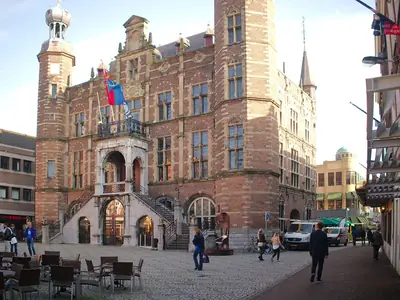
The Markt is the central square of Venlo’s old town and one of the city’s main gathering places. At its center stands the City Hall of Venlo, or Stadhuis, a freestanding Renaissance building. Its position, separate from the surrounding buildings, gives it a particularly strong presence on the square.
Sint-Martinusbasiliek
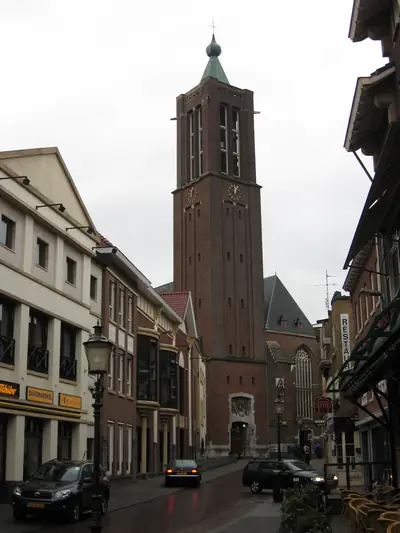
The Sint-Martinusbasiliek, also known as the Grote Kerk, is one of Venlo’s most recognizable landmarks. It is a Gothic hall church with three aisles, built over a long period between 1410 and 1610.
The tower has been rebuilt several times and dates in its current form from the 1950s. Its copper spire, topped by an egg-shaped crown, is a distinctive feature of the Venlo skyline. Dedicated to Saint Martin of Tours, the church became a basilica minor in 2019 after Pope Francis granted it that honorary title.
Sint-Joriskerk
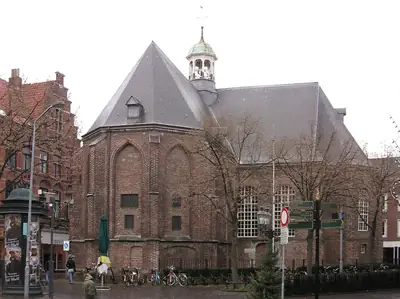
The Protestant Sint-Joriskerk stands in the heart of Venlo and has a history reaching back to the early sixteenth century. Its oldest section is the late-Gothic choir, dating from 1509. It originally formed part of the chapel of the Sint Jorisgasthuis, a former hospital on the site.
The chapel was transferred to the Protestant community in the seventeenth century. As that community grew, the church was expanded, taking on its present form in 1718. Bombardments in 1944 caused considerable damage, and restoration was completed in 1957.
Jongerenkerk
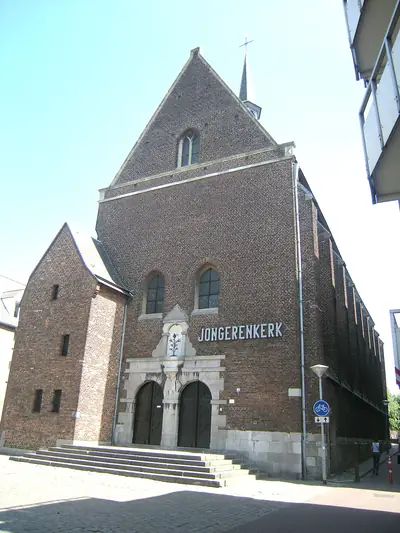
The Jongerenkerk is a single-nave Gothic church with a three-sided closure. It is also known as the Minderbroederskerk and was built as part of a Franciscan monastery in the early seventeenth century.
The first Franciscan friars arrived in Venlo in 1612, and construction of their monastery began in 1614. The monastery was completed in 1616 and the church by 1620. The friars left in 1797 during the upheaval of the French Revolution, after which the former monastery served as a cavalry barracks.
Museum van Bommel van Dam
Museum van Bommel van Dam presents modern art through the personal collection of Maarten and Reina van Bommel-van Dam. After the Second World War, the couple assembled around 1,200 paintings, drawings, etchings and lithographs.
In 1969, they donated the collection to the Municipality of Venlo on the condition that a museum be created in a building connected to a private house. The museum opened in 1971. Its character comes from the collectors’ individual taste: the collection includes abstract art, a woodcut by Hokusai and ethnological art, without following one particular artistic movement.
Limburg Museum
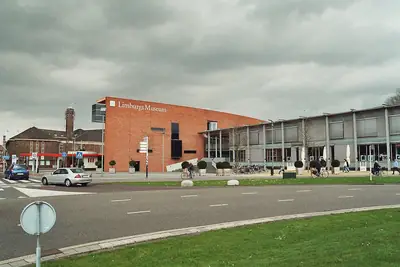
The Limburg Museum, in Julianapark, is a cultural-history museum devoted to the province of Limburg. Its archaeological collection includes material from the Neolithic period, while its folklore displays explore everyday life through agricultural tools, kitchen utensils, textiles and traditional clothing.
The museum also presents objects connected with carnival and popular religious devotion. Special exhibitions, events, activities and historical film showings add to its programme.
Fort Sint-Michiel
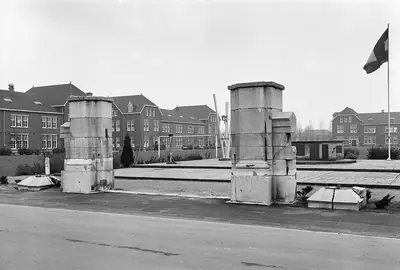
Fort Sint-Michiel marks an important chapter in Venlo’s military history. Construction began in 1641 on September 29, the feast day of the archangel Michael, after whom the fort was named.
It was a Spanish fort, built when the region formed part of the Duchy of Geldern. The fort survived for more than two centuries before being demolished in 1867. Today, the site preserves the memory of this former defensive stronghold.
Museums and Monasteries Around Venlo
Venlo’s story continues beyond the old town, particularly in Tegelen, Steyl and the surrounding countryside.
Ulingsheide Abbey
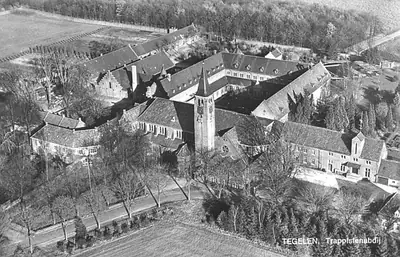
Ulingsheide Abbey is a former Trappist monastery in Tegelen, close to the German border. It was founded in 1884 as a daughter house of Westmalle Abbey in Belgium, providing a place where German novices could train after the Kulturkampf.
The monastery buildings were constructed between 1888 and 1892 to designs by Caspar Franssen, a pupil of Pierre Cuypers. The chapel, added in 1926, combines Traditionalist architecture with Expressionist and Art Deco influences. Its interior was restyled in 1980.
Keramiekcentrum Tiendschuur Tegelen
Keramiekcentrum Tiendschuur Tegelen occupies the former tithe barn of Kasteel Holtmühle. Since 1987, it has housed a ceramics museum and studio connected with Tegelen’s long pottery tradition.
The collection began with everyday pottery made in Tegelen and later expanded to include contemporary ceramics by international artists. The studio also offers workshops and classes focused on learning pottery techniques.
Mission Museum in Steyl
The Mission Museum in Steyl was founded in 1931 by the Steyler Missionaries, also known as the Society of the Divine Word. Its ethnographic and natural-history collection was gathered by missionaries during their work around the world.
The exhibition has remained unchanged since the death of its founder in 1934. As a result, the museum itself has become a historical monument to the exhibition practices of that period, with displays of art objects and natural-history specimens.
Océ Museum
The Océ Museum traces the history of one of the region’s influential companies. Its story begins with the invention of the blueprint machine, known in Dutch as the boterkleursel, and continues through the company’s later development.
Hansenhof
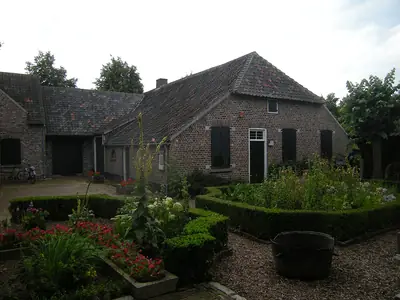
Hansenhof is a local cultural-history museum in the countryside of Velden, a village in the municipality of Venlo. Its focus is the history of everyday life in this part of North Limburg.
Mariadal
Mariadal is a former monastery in the Venlo countryside with roots in nineteenth-century Germany. It was the only monastery in the Netherlands belonging to the Sisters of the Second Order of Saint Dominic.
The sisters arrived from the motherhouse at Arenberg near Koblenz in 1881, in the context of the religious emigration caused by the Kulturkampf. They first settled in the Helschriksel area before building a new home on the Geritten estate. Their first residence and monastery chapel were established there, and by the end of 1882 the sisters had moved into their new home, called Klein Mariënthal.
Other Places to Discover
Venlo also has several more specialised museums. Van Wasrol tot DVD follows the history of sound recording and playback, from early phonograph records to DVDs. The Heilige Geestklooster, meanwhile, recalls the former Holy Spirit Monastery that once stood at the corner of the Jodenstraat and Heilige Geeststraat in the city center.
Explore Venlo with a Self-Guided Audio Tour
For a Venlo self-guided walking tour, download Neywo and explore the city at your own pace. The app has two walking tours and one bike route in Venlo, with narration available in 11 languages.
The main old-town walk covers 1.08 km in 76 minutes and includes nine narrated stops, from the Oude Markt and City Hall of Venlo to the Sint-Joriskerk, Sint-Martinusbasiliek, Jongerenkerk, Museum van Bommel van Dam and Limburg Museum. In Steyl, a 0.89 km walk takes around 43 minutes and includes six stops focused on the monastery village on the Maas. The bike route in Steyl covers 0.5 km, takes around two minutes and has two narrated stops.
Neywo tells the story of each place as you reach it, at your own pace, with no group and no schedule. It is a simple way to turn a visit to Venlo into your own guided experience.
Places with an audio guide in Venlo
8 places in Venlo with a Neywo audio guide. Each one starts telling its story as you reach it.
Self-guided tours in Venlo
3 tours in Venlo, free in the Neywo app. Each stop tells its story as you reach it.
- Bike ride
Steyl by bike: from the monastery villa to the missionary motherhouse
A short, easy ride on a cycle lane through Steyl, the monastery village on the Maas. Start at the Saint Joseph villa and its chapel and ride north to the motherhouse of the Steyl Missionaries, founded in 1875, with its church on the river.
Saint Joseph Monastry Villa Moubis · Missiehuis St. Michaël
Open this tour: Steyl by bike: from the monastery villa to the missionary motherhouse - Walk
Venlo's old town: egg-shaped spires, Renaissance brick and a market square
Venlo's historic core survived centuries of sieges and the bombs of 1944. Walk from the Oude Markt past the freestanding Renaissance town hall, a brick house of 1588 with two busts in its gable and the old orphanage, to the Grote Kerk with its copper spire and the two museums of the Julianapark.
Oude Markt · City hall of Venlo · Sint-Joriskerk · Huize Schreurs · Ald Weishoes · Sint-Martinusbasiliek …
Open this tour: Venlo's old town: egg-shaped spires, Renaissance brick and a market square - Walk
Steyl: the monastery village on the Maas
A few kilometres south of Venlo, a missionary congregation built a whole village on the river bank. Visit the motherhouse founded in 1875, the print shops and boiler house that powered its mission, a museum frozen since 1934 and the neo-Gothic church that is now a museum of marksmen's guilds.
Missiehuis St. Michaël · Sint-Michaëlklooster: print shops · Sint-Michaëlklooster: machine hall and adjacent boiler house · Wereldpaviljoen · Mission museum, Steyl · Schutterijmuseum
Open this tour: Steyl: the monastery village on the Maas
Walk Venlo with Neywo
Neywo turns Venlo into a self-guided audio tour. Stories arrive as you reach the place they belong to, and the route reshapes when you wander off it.

