Vlissingen, Netherlands: Self-Guided Walking Tour
Things to do in Vlissingen: what to see in this maritime city
Vlissingen is a historic port city on the coast of Zeeland in the Netherlands, shaped by the sea, naval history and defensive architecture. The best things to do in Vlissingen include exploring its forts and churches, visiting maritime museums, and following the waterfront beside the Scheldt. Neywo has a free audio guide for Vlissingen with 29 narrated places, available in 11 languages.
Part of Zeeland, Vlissingen is a rewarding destination for anyone interested in the maritime history of the Netherlands. Its landmarks range from a sixteenth-century sea fort to a surviving medieval city gate, while nearby Oost-Souburg and Ritthem add further historical sites to explore.
What to see in Vlissingen
Fort Rammekens
Near Ritthem, east of Vlissingen, Fort Rammekens is considered one of the oldest surviving coastal fortifications in Western Europe. It was built in the sixteenth century to protect the ports of Middelburg, Vlissingen and Antwerp.
Mary of Hungary, sister of Charles V and regent of the Spanish Netherlands, ordered its construction at the southeastern tip of Walcheren. The Italian architect Donato de Boni di Pellizuoli designed it in the trace italienne style. Its gate is a rare example of Italian Renaissance architecture in the Netherlands. The fort was originally also known as Zeeburg and changed considerably after the period of French rule.
Keizersbolwerk
The Keizersbolwerk is one of Vlissingen’s most distinctive defensive landmarks. The fortification dates from 1548 and was expanded during the French period, when it acquired much of its present form.
Known as the Waterpoort, it is the only intact city gate remaining in Vlissingen. A statue of the naval hero Michiel de Ruyter has crowned the structure since 1894, while a lighthouse has stood here since 1891 to guide shipping on the Westerschelde estuary.
Gevangentoren
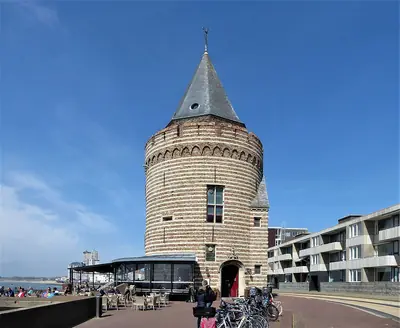
The Gevangentoren rises above the boulevard as a surviving fragment of Vlissingen’s medieval defenses. Dating from the sixteenth century, it once formed part of the Westpoort, the former city gate. The tower is also known as the Bomvrije.
Its alternating layers of brick and natural stone give it a distinctive appearance, as does the pointed cap above the tower. It is an especially atmospheric landmark to encounter while walking beside the sea.
Statue of Michiel de Ruyter
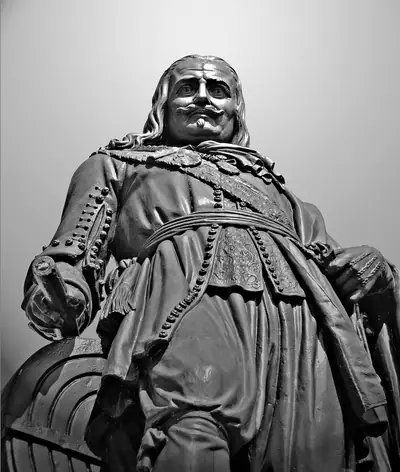
On Boulevard de Ruyter, a cast-iron statue commemorates Michiel de Ruyter, Vlissingen’s most famous naval hero. Louis Royer created the statue in 1841, showing De Ruyter on the deck of a ship, with a spyglass in one hand and his back against the ship’s wheel.
The statue is affectionately known locally as “Michieltje”. A popular story says that a small dog is tucked under his arm, although many experts believe the object is a rolled-up piece of paper. De Ruyter’s reputation extended beyond the Netherlands: a statue in Debrecen commemorates his rescue of 26 Hungarian Reformed ministers from slavery on a Spanish galley in 1676.
St James the Great Church
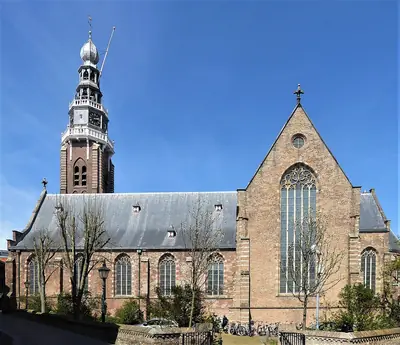
The Grote Kerk, also called the Sint-Jacobskerk or St James the Great Church, stands on the Oude Markt in the historic center. Originally Roman Catholic, it has belonged to the Dutch Reformed Church since 1572 and to the Protestant Church in the Netherlands since 2004.
Its architecture combines features of a pseudobasilica and a hall church. The side aisles are nearly as wide as the central nave, and each of the three aisles has its own vault. The central nave rises above the side aisles without a clerestory.
Lutherse Kerk
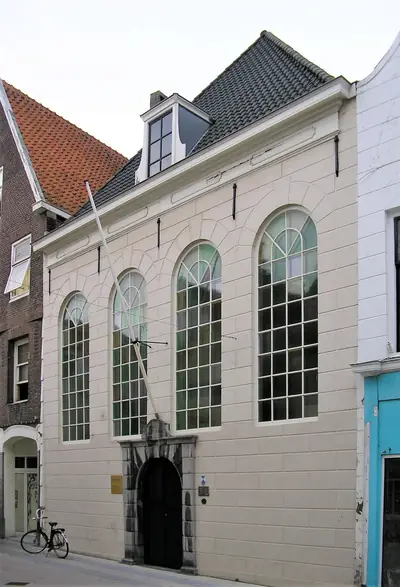
The Lutherse Kerk is a modest former Lutheran parish church in a row of buildings on Walstraat. It was founded in 1735 on the site of the former Schuttershof of Sint-Joris and enlarged in 1778. Above the entrance, the inscription “Renovat 1778” records that work.
The building is a simple hall church with a gabled façade, arched windows and a natural-stone entrance. Inside are a Louis XIV-style pulpit and two notable lecterns: one wooden lectern decorated with a swan, and a copper example dating from 1656. The church suffered serious damage during the British bombardment of Vlissingen in 1809 and was restored in 1904 and 1905.
Maritime Muzeeum Zeeland
The Maritime Muzeeum Zeeland, usually called the MuZEEum, tells the maritime story of Vlissingen and Zeeland. The museum is in the heart of the city, beside the marina, where the setting itself reinforces its connection with boats and the sea.
It continues the work of the former Stedelijk Museum Vlissingen and is a natural stop for anyone wanting to understand the city’s maritime identity.
Museum Scheldewerf
Museum Scheldewerf focuses on the industrial and maritime history of the former Koninklijke Maatschappij De Schelde, the shipyard that played a central role in Vlissingen.
The museum occupies the former shipyard dressing room, later used by the company’s medical service. Its location gives the history a direct connection with the working life of the city.
Oostbeer
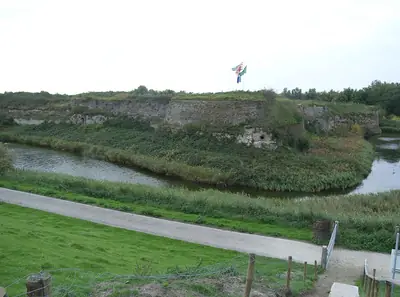
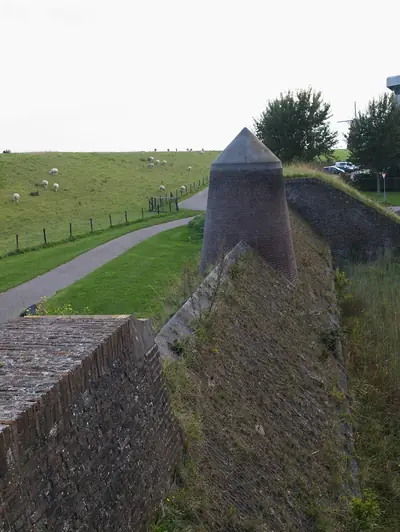
The Oostbeer is a Napoleonic fortification built to separate the water in Vlissingen’s moat from the open sea, preventing the moat from draining at low tide. It dates from the French period in Vlissingen, between 1795 and 1814.
After the British bombardment of 1809, Napoleon ordered the fortress to be modernized and expanded. The Oostbeer was built in 1810 on the eastern side of the city, while the Westbeer stood on the western side. Its sloping masonry sides were designed to prevent attackers from climbing into the fortress. A smooth ridge, known as an “ezelsrug”, and a central round turret called a “monnik” made the structure even harder to cross.
Oranjemolen
The Oranjemolen is Vlissingen’s last surviving city mill and the closest windmill to the sea in the Netherlands. It stands along the Oranjedijk and has been associated with the city since at least 1699, when it first appeared in written records.
Originally a corn mill and later a pearl mill, it is the only survivor of the 23 city mills that once stood in Vlissingen. Its sails span more than 24 metres. The mill also bears traces of the city’s wartime history: a cannonball from the English fleet in 1809 is said to remain in its southwest wall, and Allied forces landed nearby in 1944.
The Scheldt
The Scheldt is the river and estuary that has shaped Vlissingen’s history. Known to the Romans as the Scaldis, it flows through France, Belgium and the southwestern Netherlands before reaching the North Sea.
The Westerschelde, the estuary visible from Vlissingen, can reach five kilometres across. Its tidal influence extends inland as far as Ghent, around 160 kilometres from the sea. The mudflats around the estuary are ecologically rich, while the surrounding landscape has been strongly shaped by Dutch poldering.
Water Tower Vlissingen
The red-brick Vlissingen Water Tower has been part of the city skyline since 1894. Built in a neo-Renaissance style by the local water company, it rises 35 metres and contains a reservoir with a capacity of 300 cubic metres.
The ground and first floors were originally residential and remained a home until 1953, before being converted into offices in 1974. The tower is recognized as a Dutch national heritage site.
Churches in Oost-Souburg and Ritthem
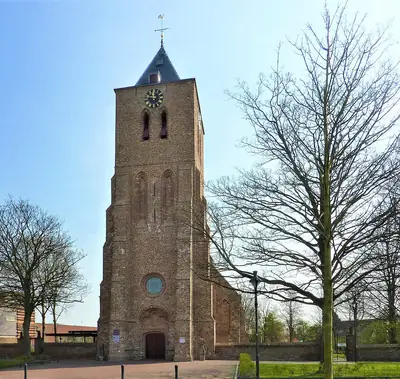
The Hervormde kerk, also known as the Open Havenkerk, stands on Oranjeplein in Oost-Souburg. Its nave and tower have been protected as Dutch national monuments since 1967.
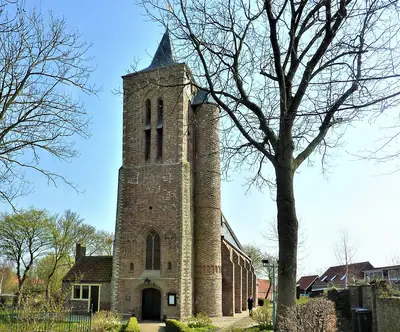
In Ritthem, the small Hervormde kerk is also known as the Protestantse kerk and the Onze-Lieve-Vrouwekerk. It has been a Dutch national monument since 1966. Its second name recalls the building’s earlier Catholic history before the Reformation.
Oost-Souburg is also associated with the remains of a Karolingische ringwalburg, a circular defensive embankment of the kind used for protection in the early Middle Ages and earlier periods. The site offers a reminder that the history of the area reaches back long before the modern port city.
Explore Vlissingen with a self-guided audio tour
A Vlissingen self-guided walking tour is an easy way to connect the city’s forts, churches, monuments and museums without joining a group. Neywo offers three walking tours in Vlissingen:
- De Ruyter’s Harbour Town: Ramparts, Mills and the Sea — 2.88 km, 114 minutes and 11 narrated stops.
- Souburg: A Vanished Castle, a Lost Church and a Ring Fort — 1.87 km, 52 minutes and 5 narrated stops.
- Boulevard, Singel and Shipyard — 2.47 km, 55 minutes and 4 narrated stops.
The app tells the story of each place as you reach it, at your own pace, with no group and no schedule. Download Neywo’s free Vlissingen audio guide and explore the city through its maritime heritage, defensive landmarks and historic streets.
Places with an audio guide in Vlissingen
8 places in Vlissingen with a Neywo audio guide. Each one starts telling its story as you reach it.
Self-guided tours in Vlissingen
3 tours in Vlissingen, free in the Neywo app. Each stop tells its story as you reach it.
- Walk
De Ruyter's Harbour Town: Ramparts, Mills and the Sea
Walk the old port of Vlissingen, the home of admiral Michiel de Ruyter. You pass the red water tower and the old city gate, the churches of the old town, the last intact water gate with its lighthouse and the cast-iron admiral himself, then finish at the last city windmill and a Napoleonic sea fortification.
Watertoren Vlissingen · Gevangentoren (Vlissingen) · Bellamypark · St James the Great Church · Lutherse Kerk · Maritime Muzeeum Zeeland …
Open this tour: De Ruyter's Harbour Town: Ramparts, Mills and the Sea - Walk
Souburg: A Vanished Castle, a Lost Church and a Ring Fort
Leave the harbour for the villages of Souburg. Stand where Castle Aldegonde and the medieval church of West-Souburg once stood, pass a 1938 church that became an Adventist chapel, walk the line of a Carolingian ring fort and finish at the Open Havenkerk, a national monument on Oranjeplein.
Kasteel Aldegonde · Kerk van West-Souburg · Sint-Martinuskerk · Karolingische ringwalburg · Hervormde kerk
Open this tour: Souburg: A Vanished Castle, a Lost Church and a Ring Fort - Walk
Boulevard, Singel and Shipyard
Start at the stainless-steel merchant navy monument on the Boulevard Evertsen, a tribute to more than 3,500 lost seafarers. Cross to the Catholic church on the Singel, then visit the old Schelde shipyard museum and the site of the vanished New Church.
Koopvaardijmonument · Onze-Lieve-Vrouw van de Heilige Rozenkrans en Sint-Jacobus de Meerderekerk · Museum Scheldewerf · Nieuwe Kerk
Open this tour: Boulevard, Singel and Shipyard
Walk Vlissingen with Neywo
Neywo turns Vlissingen into a self-guided audio tour. Stories arrive as you reach the place they belong to, and the route reshapes when you wander off it.

