Visiting Hulst, Netherlands: Top Sights on Foot
Things to do in Hulst: what to see in the fortified town
Looking for things to do in Hulst? This historic town in Zeeland, in the Netherlands, is known for its remarkably well-preserved seventeenth-century fortifications, historic gates, churches and museums. Its compact center and surrounding defensive landscape make it a rewarding place to explore on foot. Neywo has a free audio guide for Hulst, with 24 narrated places to discover as you walk or travel around the area.
What to see in Hulst
Hulsterse bolwerken
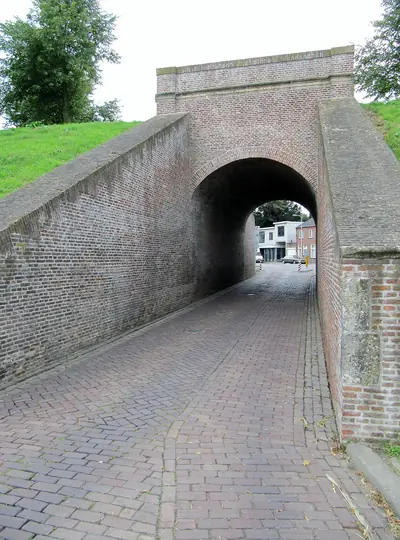
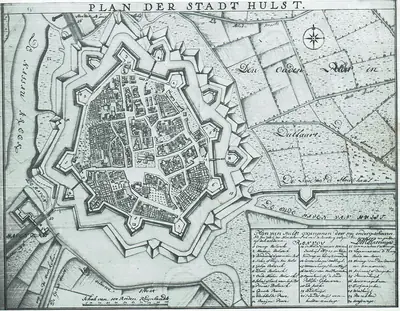
The best place to begin is the Hulsterse bolwerken, the city’s remarkably intact defensive landscape. The fortifications combine earthen walls, four gates, a ravelin and nine bastions. The four gates are the Bagijnepoort, Keldermanspoort, Gentse Poort and Dubbele Poort.
The bolwerken surround Hulst with a distinctive green and historic setting. Their structure is protected from new construction and changes, and restoration work continues. In 2026, the restoration of a ravelin in the city park was announced.
St. Willibrord
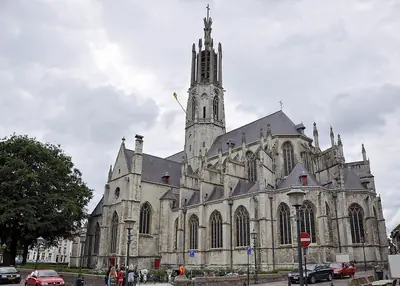
At the heart of the fortress city stands the Sint-Willibrordusbasiliek, also known as St. Willibrord. Dedicated to Willibrord, often called the apostle of the Benelux countries, the church was selected as the most beautiful church in the Netherlands by a Dutch radio programme in May 2009.
Its nave dates from the thirteenth to the fifteenth centuries. The central tower has been destroyed several times, most recently during the Second World War, and its present appearance dates from the 1950s. Inside, the organ is a particularly notable feature: Louis Isoré of Saint-Omer built its case between 1610 and 1612, and it is described as the only surviving organ case from before 1645. Flentrop restored and later enlarged the organ.
Gentse Poort
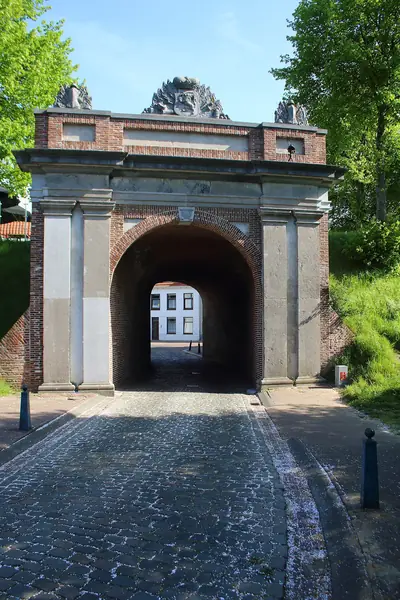
The Gentse Poort dates from 1780 and was formerly known as the Hospitaalpoort. Today, it is a protected national monument of the Netherlands. Natural stone ornaments decorate the top of the gate, while the center displays a coat of arms with the Generality Lion of the Republic of the Seven United Netherlands.
Bagijnepoort
The Bagijnepoort, also called the Graauwsche Poort, recalls the changes made to Hulst’s defenses in the seventeenth and eighteenth centuries. When the fortress was expanded and raised, the original gate had to be replaced. Mayor Benjamin de Beaufort ordered the new gate in 1704, and it acquired its present appearance in the eighteenth century.
Its name refers to the beguinage that once stood close to this entrance. The gate is therefore both a surviving part of Hulst’s defenses and a reminder of a place that has disappeared from the immediate surroundings.
Museum De Vier Ambachten
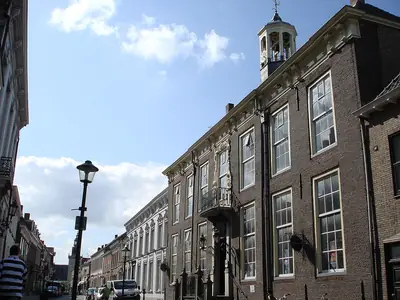
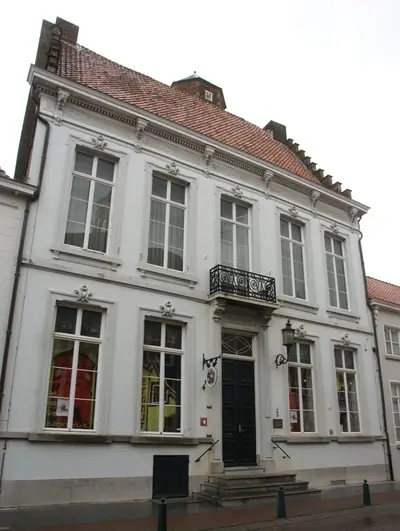
Museum De Vier Ambachten, also known as Museum Hulst, is housed in ’s-Landshuis, a seventeenth-century listed monument. The regional museum presents the history of Hulst and the surrounding Land van Hulst, with displays covering a period from millions of years ago to the present day.
Refugie Ter Duinen
On Steenstraat, Refugie Ter Duinen is a tall stone house with a long and varied history. It was built in the second half of the sixteenth century as the home of Hulst’s schout, a local official. Later, it became a refuge house for Our Lady of the Dunes Abbey.
The building’s height, plastered façade and cellars reveal some of its changing history. The plaster dates from 1860. After the property was confiscated in 1645 and came into the possession of the Prince of Orange, it became known as the Princenhuys, or Prince’s House. Around 1800, it was privately owned and used as a jenever distillery. It later housed a Roman Catholic boys’ club and served as the home of the regional Museum Hulst from 1979 until 2022.
Sint Joseph
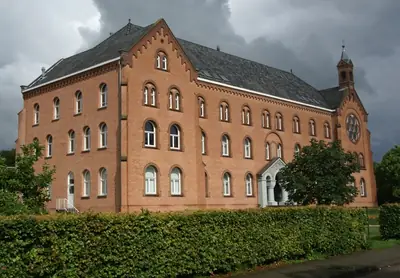
Sint Joseph is a former monastery in Hulst. Its history as a monastic place gives the building a distinct presence among the town’s historic sites.
Fort Moerschans
Northeast of Hulst, the remains of Fort Moerschans can be found about halfway along the Liniedijk. Its bastions and moat still reveal the shape of the former fort.
Fort Moerschans was part of the Line of Communication east of Hulst, within the wider network known as the Staats Spanish Lines. The States built the fort and line shortly after 1591 on the orders of Prince Maurits. The fort changed hands during the conflict between the States and the Spanish side; after losing Hulst and the line in 1596, the States regained them in 1645.
The fort remained in military use during the War of the Spanish Succession, from 1701 to 1714, when it was enlarged with four bastions. Today, the surviving earthworks and moat offer a clear impression of the military landscape that protected Hulst.
More places to visit around Hulst
Hulst’s wider area includes several churches, memorials and landscape viewpoints.
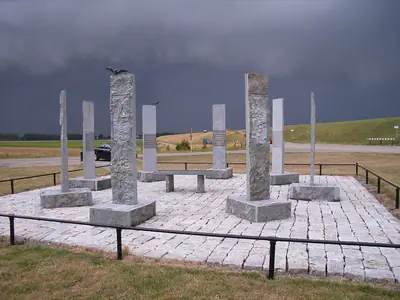
- Watersnoodmonument: Near the sea dike at the Westerschelde in Kruisdorp, this memorial commemorates the victims of the 1953 flood disaster. Unveiled on January 31, 2003, it consists of eight pillars carrying the victims’ names and a poem by Chris Ferket. The monument was renovated in 2020.
- Panoramaheuvel: This artificial hill is one of the points of interest in Grenspark Groot Saeftinghe.
- Kapel Onze-Lieve-Vrouw ter Eecken: In Kapellebrug, this small chapel is connected with devotion to Mary and with the healing hopes of visitors. It may originally have been dedicated to Saint George.
- Maria Hemelvaartkerk: Located in Graauw, this church on Dorpsstraat 50 is built in the Neo-Gothic style.
- Nederlands Hervormde Kerk: Also known as the Hof te Zande church, this is a church in Kloosterzande.
- Sint Catharinakerk: This Roman Catholic church is one of the churches associated with the Zeeland area.
- Sint Corneliuskerk: The parish church of Lamswaarde stands on Jacobus de Waalstraat in Zeeuws-Vlaanderen.
Hulst is a strong choice for travellers interested in Zeeland’s history and fortified towns. You can also continue exploring the province with a visit to Vlissingen, Breskens or Zierikzee.
Explore Hulst with Neywo
Download Neywo and explore Hulst with a free audio guide that tells the story of each place as you reach it. Hulst has one walking tour and one bus route:
- Walking tour: 2.56 km, 88 minutes and 7 narrated stops
- Bus route: 23.8 km, 102 minutes and 6 narrated stops
The walking tour visits the Gentse Poort, Hulsterse bolwerken, Museum De Vier Ambachten, Refugie Ter Duinen, Hulst, St. Willibrord, Bagijnepoort and Sint Joseph. The bus route travels through the Land of Hulst, with stops including the Gentse Poort, St. Willibrord, Museum De Vier Ambachten, Maria Hemelvaartkerk and Sint Corneliuskerk.
Each story plays as you reach the place, at your own pace, with no group and no schedule. Narration is available in 11 languages, so you can explore Hulst independently while the app provides the context along the way.
Places with an audio guide in Hulst
8 places in Hulst with a Neywo audio guide. Each one starts telling its story as you reach it.
Self-guided tours in Hulst
2 tours in Hulst, free in the Neywo app. Each stop tells its story as you reach it.
- Bus ride
Bus 589 through the Land of Hulst
A small community bus line that runs from the fortified town of Hulst out to the villages of Zeeland Flanders. Ride past the Gentse Poort gate, the basilica and the town museum to the neo-Gothic church of Graauw.
Sint-Henricuskerk · Gentse Poort · St. Willibrord · Museum De Vier Ambachten · Maria Hemelvaartkerk · Sint Corneliuskerk
Open this tour: Bus 589 through the Land of Hulst - Walk
Hulst, the Fortress Town of Zeeland Flanders
Hulst is one of the best-preserved star fortresses in the Netherlands. Walk from the Gentse Poort to the town's museum, a prince's house and the church voted most beautiful in the country, then follow the seventeenth-century ramparts and the gate that once led out to the beguinage.
Gentse Poort · Hulsterse bolwerken · Museum De Vier Ambachten · Refugie Ter Duinen, Hulst · St. Willibrord · Bagijnepoort …
Open this tour: Hulst, the Fortress Town of Zeeland Flanders
Walk Hulst with Neywo
Neywo turns Hulst into a self-guided audio tour. Stories arrive as you reach the place they belong to, and the route reshapes when you wander off it.

