Ibiza, Spain: Self-Guided Walking Tour
Things to do in Ibiza: historic streets, museums and the harbour
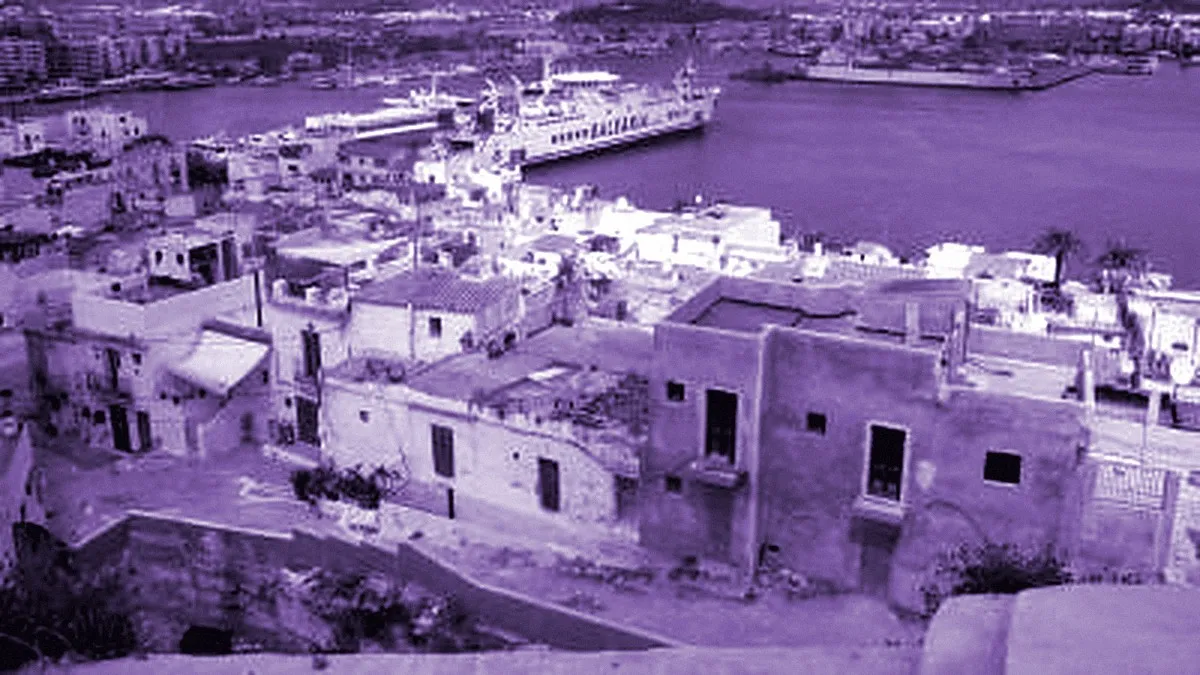
Ibiza is the capital of the island of Ibiza, known officially as Eivissa, and a place where fortified history, Mediterranean culture, art and nightlife meet. The best things to do in Ibiza include exploring the UNESCO-listed upper town of Dalt Vila, visiting the ancient Puig des Molins necropolis and following the harbour towards the Botafoc lighthouse. Neywo has a free audio guide for Ibiza with 17 narrated places.
What to see in Ibiza
Dalt Vila and the Portal de ses Taules
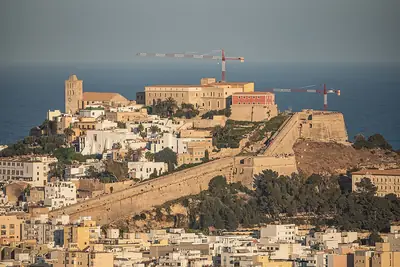
Dalt Vila—literally the “upper town”—is the historic high area of Ibiza. It has been recognised as a UNESCO World Heritage site since December 1999, under the title “Ibiza, biodiversity and culture.”
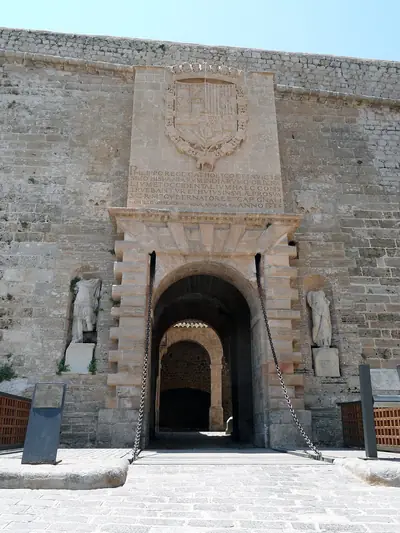
The Portal de ses Taules is one of the principal entrances to the fortified old town. Built between 1584 and 1585, it stands between the bastions of Sant Joan and Santa Llúcia. The gate bears the coat of arms of Philip II, while replicas of headless Roman statues stand on either side. The original marble statues are kept in the Ibiza Archaeological Museum.
The walls around the entrance are about two metres thick. The defences once included a moat and drawbridge; the original wooden structure was replaced by a permanent bridge in the early 20th century.
Ibiza Cathedral
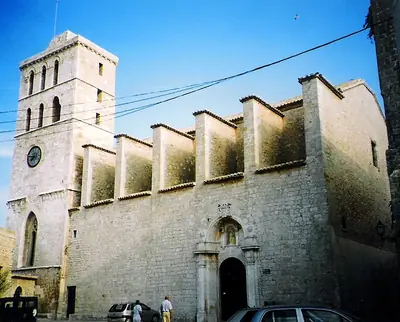
Inside Dalt Vila, Ibiza Cathedral is the island’s main Catholic landmark. Also known as the Catedral de la Verge de les Neus, it was built over the ancient mosque of Yebisah.
The cathedral was constructed in the 13th century in Catalan Gothic style, although its nave was later remodelled in the Baroque style. The image of the Virgen de las Nieves presides over the main altar, and the sacristy museum can also be visited.
Isidor Macabich
Among the eucalyptus trees of Sa Carrossa, a seated statue commemorates Isidoro, or Isidor, Macabich i Llobet. A priest and historian, Macabich devoted himself to studying Ibiza’s history and cultural roots.
The bronze figure shows him seated with an open book. The statue was inaugurated in 1980, seven years after Macabich’s death, and its missing glasses have become part of its story: they fell off just one day after the inauguration.
Museum of Contemporary Art of Ibiza
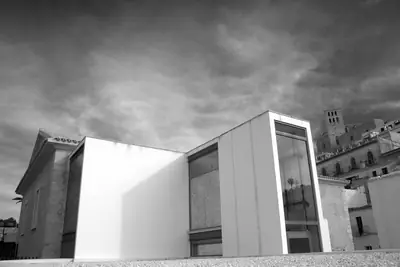
The Museum of Contemporary Art of Ibiza, known as MACE, brings modern creativity together with the archaeological history of Dalt Vila. It opened in 1964 and reopened in 2012 after extensive remodelling.
The museum occupies the historic Hall of Arms and Prova warehouse, designed by Simón Poulet in 1727. A modern glass building was integrated into the old garden, while archaeological excavations revealed Punic dwellings from the 4th century BCE. These remains can be seen through a transparent floor. The permanent collection focuses on works created from the 1960s onwards.
Teatro Pereyra
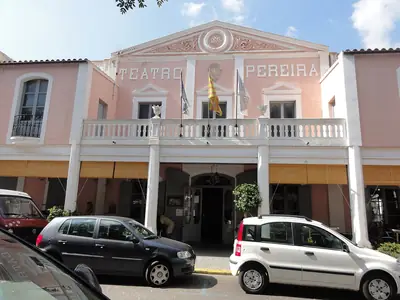
Teatro Pereyra opened in 1899 and has been part of Ibiza’s social and cultural life for more than 125 years. Its programme has included theatre, dances, variety shows, meetings and film screenings.
The building was declared a Class 1 Cultural Heritage Site in 2006. After a long renovation, it reopened as a venue for artistic and social gatherings. Its architecture draws on the style of a classic 19th-century French theatre circus, while the neighbouring Café Pereyra remains a meeting place.
Plaça del Sol and the Capella de Sant Ciriac
Plaça del Sol offers a quieter corner near Ibiza’s historic centre, with cobblestones, trees and potted plants. Stone steps connect the square with the Sant Pere Bastion, which also functions as an open-air theatre.
Nearby, the Capella de Sant Ciriac is a small chapel dedicated to Ibiza’s patron saint, who has been associated with the city since 1650. Built in 1754, it is traditionally believed to stand where Catalan forces entered the city in 1235 during the conquest of the Moorish rulers. Beneath the altar, a simulated tunnel represents the route taken by the conquerors. Local custom says that throwing a coin through the arch brings good luck.
Església de Santa Creu
The Holy Cross Church, or Església de Santa Creu, represents a more recent chapter in Ibiza’s religious architecture. Construction began in 1948, and the church was completed in 1957 to serve the growing community of the Eixample area.
Its neo-Romanic exterior differs from the whitewashed simplicity associated with traditional Ibizan churches. Inside, five half-barrel arches create a spacious atmosphere. A large statue of Christ on the cross was added during a later restoration.
Puig des Molins
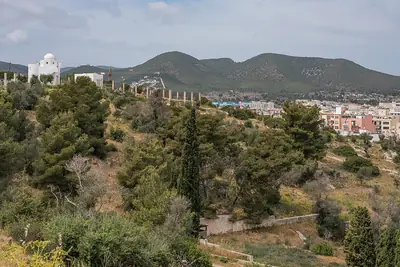
One of the most important places to visit in Ibiza for understanding the island’s ancient past is Puig des Molins, a Punic necropolis near the city. It is regarded as the largest and best-preserved Phoenician-Punic complex in the western Mediterranean.
The necropolis was laid out in the 7th century BC, during the period of Phoenician settlement, and continued to be used by Carthaginians and Romans. Around 3,000 grave structures remain, although parts of the original site were later built over.
Many of the graves are underground hypogea. Access is through the Monographic Museum of Ibiza at Via Romana number 31, where grave goods from different periods and cultures include clay figures of goddesses such as Tanit. The museum also presents the Dama de Ibiza, whose original is displayed in the Madrid Archaeological National Museum.
Monument to Vara de Rey
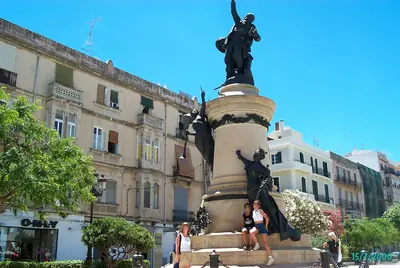
The Monument to Vara de Rey stands on one of Ibiza’s best-known promenades. It commemorates General Joaquin Vara de Rey, who was born in Ibiza and led the defence at the Battle of El Caney during the Spanish–American War in 1898.
The general stands on a mound holding a sword, accompanied by two female figures representing glory and Spain. Designed by August Font Carreras and created by Eduard Alentorn, the monument has stood on the promenade since 1904.
Gran Hotel Montesol Ibiza
Near the Vara de Rey promenade, Gran Hotel Montesol Ibiza is notable for its neocolonial architecture and white-and-yellow exterior. Opened in 1933, it is often described as Ibiza’s first established hotel.
During the Spanish Civil War, it was used by the Spanish army and remained in military use until the end of World War II in 1945. The building later became part of the Curio Collection by Hilton in 2014 before becoming independent again in 2020.
Ibiza’s port and the Botafoc lighthouse
The Port of Ibiza Town combines fishing, commerce, passenger traffic and leisure. Its sports marinas provide 1,400 moorings for leisure boats, while cruise ships and fuel operations are associated with the Botafoc breakwater.
Port activity reaches back to the Carthaginian foundation of the city around 650 BC and continued through Roman, Arab, Catalan and Spanish periods.
At the harbour entrance, the Far de Botafoc rises 30 metres above the cliffs. The lighthouse first shone in 1861 and offers views towards the Mediterranean and Dalt Vila. Its name is traditionally connected with fires once lit on the islet to guide sailors to shore.
Pacha
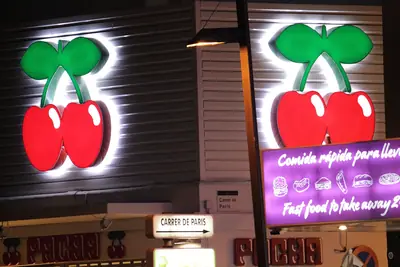
Pacha is one of Ibiza’s most recognisable nightclubs. The island venue opened in 1973 and is located near the harbour in Ibiza Town. It has three main rooms and a capacity of up to 3,500 guests.
Its interiors evoke a traditional farmhouse, with intimate spaces, winding paths and garden terraces. The music centres on house, with rooms catering to electronic and pop styles.
Explore Ibiza with Neywo
A self-guided walk is a practical way to connect Ibiza’s old town, museums and archaeological heritage. Neywo offers two walking tours in Ibiza: one covers 1.96 km in 90 minutes with 12 narrated stops, and the other covers 2.56 km in 115 minutes with 15 stops. There is also one 3.1 km bike route that takes 16 minutes and includes three stops, following the harbour front to the Botafoc lighthouse.
The app tells the story of each place as you reach it, at your own pace, with no group and no schedule. Narration is available in 11 languages.
Download Neywo and explore Ibiza independently, from the Portal de ses Taules and Ibiza Cathedral to Puig des Molins, the harbour and Far de Botafoc. You can also continue discovering the Balearic Islands and other island cities such as Palma de Mallorca, Mahón and Ciutadella de Menorca.
Places with an audio guide in Ibiza
8 places in Ibiza with a Neywo audio guide. Each one starts telling its story as you reach it.
Self-guided tours in Ibiza
2 tours in Ibiza, free in the Neywo app. Each stop tells its story as you reach it.
- Bike ride
Harbour front to the Botafoc lighthouse
Leave the Vara de Rey promenade and the white-and-yellow Montesol hotel, roll along the working harbour of Ibiza Town and keep going on the dedicated bike lane to the Botafoc lighthouse at the harbour mouth. Flat, easy and framed all the way by the walls of Dalt Vila.
Gran Hotel Montesol Ibiza · Port of Ibiza Town · Far de Botafoc
Open this tour: Harbour front to the Botafoc lighthouse - Walk
Dalt Vila and the Puig des Molins necropolis
Two kilometres from the cathedral on the acropolis, down through the Renaissance walls and out to the Phoenician-Punic burial hill — over three thousand tombs, and the reason Ibiza is on the UNESCO list.
Puig des Molins, Ibiza · Necròpoli de Puig des Molins (excavations) · Església de Santa Creu · Sala de Cultura "Sa Nostra" · Plaça del Sol · Capella de Sant Ciriac …
Open this tour: Dalt Vila and the Puig des Molins necropolis
Walk Ibiza with Neywo
Neywo turns Ibiza into a self-guided audio tour. Stories arrive as you reach the place they belong to, and the route reshapes when you wander off it.

