Things to Do in Exeter, United Kingdom: Walking Guide
Things to Do in Exeter: What to See in the Cathedral City
Exeter is a historic city in Devon, shaped by Roman, medieval and religious history. The best things to do in Exeter include visiting Exeter Cathedral, exploring Norman castle remains, discovering museums and following the route of the medieval bridge across the River Exe. Neywo offers a free audio guide for Exeter with 64 narrated places.
What to See in Exeter
Exeter Cathedral
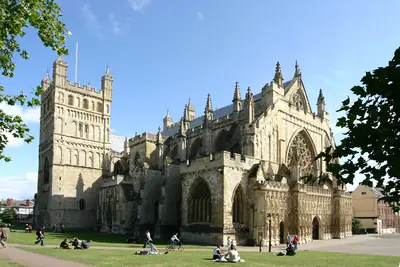
Exeter Cathedral, formally the Cathedral Church of Saint Peter, is an Anglican cathedral and the seat of the Bishop of Exeter. The present building was largely complete by about 1400, after Norman origins in 1114 and a major rebuilding that began in 1270 under Bishop Walter Branscombe.
Its most remarkable feature is the longest uninterrupted medieval stone vaulted ceiling in the world. The building also brings together Norman and Gothic design, with fourteenth-century sculptures on the west front, early misericords, decorated ceilings and a fifteenth-century astronomical clock in the north transept. Other features include a minstrels’ gallery, a library of medieval books, relics and burials.
The cathedral sits at the centre of a group of historic churches and streets, making it a natural starting point for discovering England.
Rougemont Castle and Danes Castle
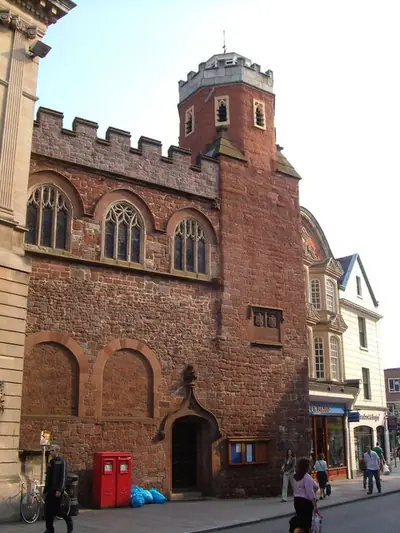
Rougemont Castle began taking shape in or shortly after 1068, when it was built into the northern corner of Exeter’s Roman city walls following the city’s rebellion against William the Conqueror. Its large early Norman gatehouse, made from the red stone found on the hill, is the most striking surviving feature.
The castle was besieged by King Stephen in 1136, and an outer bailey was added later in the twelfth century. The site also appears in Shakespeare’s Richard III, in connection with the king’s visit to Exeter in 1483. Rougemont Castle is surrounded on three sides by Rougemont Gardens and Northernhay Gardens.
Danes Castle is another castle site in Exeter, Devon, offering a further point of reference for the city’s defensive history.
Royal Albert Memorial Museum & Art Gallery
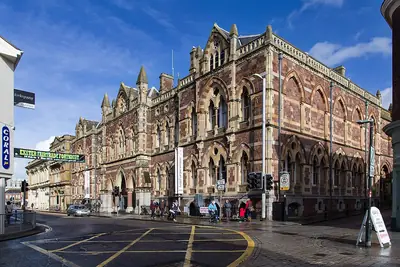
The Royal Albert Memorial Museum & Art Gallery, usually called RAMM, is Exeter’s largest museum. Its collections cover zoology, geology, anthropology, archaeology and fine art, bringing together natural history and human culture under one roof.
Founded in 1868, RAMM occupies a Gothic Revival building made from local New Red Sandstone. It has been extended several times, while retaining its distinctive architectural character. The museum reopened on 15 December 2011 after a four-year redevelopment.
St Petrock’s Church and St Mary Steps
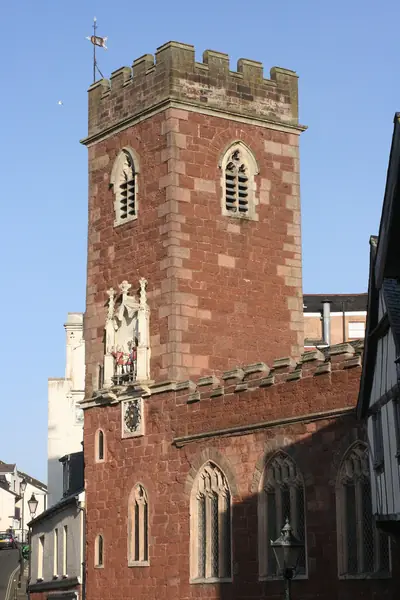
St Petrock’s Church is a small, distinctive church in the centre of Exeter. Its interior was described by Nicholas Pevsner as among the most confusing of any church in England, making it a rewarding place to examine carefully. The church may reach back as far as the sixth century, although other sources place its origins in the eleventh century.
Its history also reflects Exeter’s medieval civic life: William the Conqueror directed the City Provost to pay St Petrock’s one silver penny from public taxes, along with twenty-nine other churches.
The Church of St Mary Steps, also known as St Mary Steps, is another protected historic building. It is listed at Grade I and forms part of the city’s rich collection of medieval and later churches.
The Deerstalker
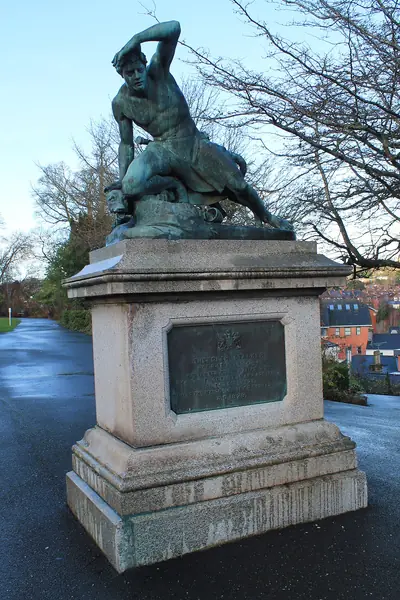
The Deerstalker is a sculpture by Edward Bowring Stephens. It provides a change of scale from Exeter’s churches, castles and museums, and a chance to pause and look closely at the artist’s sculptural style.
The Bill Douglas Cinema Museum and University of Exeter
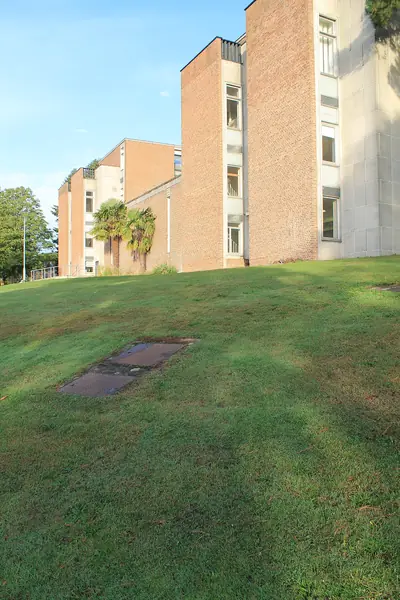
The Bill Douglas Cinema Museum is a public museum and research facility on the University of Exeter’s Streatham Campus. Its two galleries explore the history and prehistory of cinema through a collection of more than 80,000 artefacts, ranging from the seventeenth century to the present day.
The displays include books, prints, film-related objects, publicity and merchandising material. They also look at the world before cinema, with material connected to magic lanterns, shadow puppets, panoramas, dioramas, optical illusions and peep shows.
The museum takes its name from filmmaker Bill Douglas. The original collection was assembled by Douglas and his friend Peter Jewell, and the museum was founded in 1994 before opening to the public in 1997.
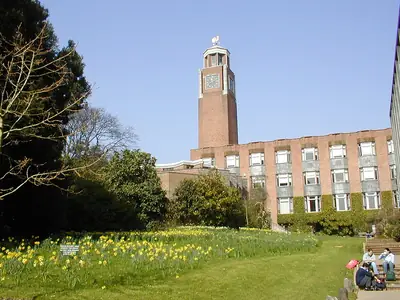
The University of Exeter itself was officially founded in 1955, when it received a royal charter from Queen Elizabeth II. Its origins reach back to teaching in theology and music from 1840. The university has four campuses: Streatham and St Luke’s in Exeter, and Penryn and Truro in neighbouring Cornwall. Streatham contains most of the administrative buildings and is regarded as one of the most beautiful campuses among Britain’s non-ancient universities.
Exeter’s religious and civic heritage
Exeter’s historic centre contains a dense network of religious buildings and remains. The former Church of St Edmund is part of the Old Exe Bridge, a medieval crossing built between 1190 and 1214. It is the oldest surviving bridge of its size in England and the oldest bridge in Britain with a chapel still on it.
The bridge was at least 590 feet, or 180 metres, long, with probably seventeen or eighteen arches. It replaced simpler crossings that had been used sporadically since Roman times. The former Church of St Edmund served as the bridge chapel and was part of the original medieval project.
Other religious landmarks include the Baptist Church, also known as South Street Baptist Church, and Sacred Heart Church. Sacred Heart Church was built between 1883 and 1884 in the Gothic Revival style to a design by Leonard Stokes. It is listed at Grade II and belongs to the Roman Catholic Diocese of Plymouth.
The remains of St Catherine’s Almshouses offer another glimpse into Exeter’s historic institutions, while Exeter monastery represents the city’s long connection with monastic and religious life. St Catherine’s Almshouses, churches and the former bridge chapel can be explored together on foot.
Barnfield Theatre
Barnfield Theatre is a performance venue near the centre of Exeter. The building began as a hall constructed by the Exeter Literary Society near the end of the nineteenth century and became a theatre in 1972. It now operates as a charity and welcomes both amateur and professional theatrical companies.
Topsham Museum
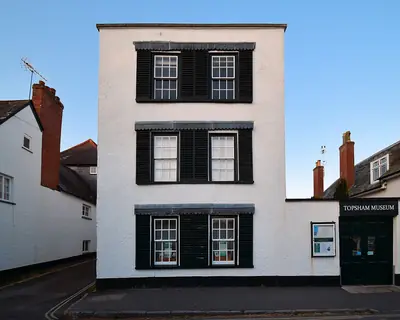
Topsham Museum is a local museum in Topsham, a Devon town associated with the River Exe. It offers a place to learn about Topsham and its history, and can be included in a wider exploration of the town’s churches and former port setting.
Explore Exeter with a Free Audio Guide
An Exeter self-guided walking tour is a simple way to connect the cathedral, churches, museums, castle remains and the Old Exe Bridge without joining a group. Neywo has six walking tours and one bus route in Exeter, with narration available in 11 languages.
The walks include:
- Cathedral Close and the Churches of Medieval Exeter — 1.48 km, 99 minutes and 12 stops.
- Norman Rougemont and the Statues of Northernhay — 1.88 km, 93 minutes and 12 stops.
- Down the Hill to the Medieval Exe Bridge — 2.15 km, 74 minutes and 8 stops.
- Cinema, Theatre and Scholars on the University Hill — 1.39 km, 45 minutes and 5 stops.
- Topsham, the Old Port on the Exe: Towers and Chapels — 1.14 km, 36 minutes and 4 stops.
- Heavitree and the Ancient Yew — 1.44 km, 46 minutes and 5 stops.
There is also Bus E2: Old Exe Bridge to the Sidwell Street Churches, a 3.6 km route lasting 15 minutes with 7 stops.
Download Neywo and explore Exeter at your own pace. The app tells the story of each place as you reach it, so you can walk without a group and without a schedule. With six walking tours, one bus route and 64 narrated places, it turns an Exeter audio guide into a flexible way to discover the city and its history. After Exeter, continue exploring the United Kingdom or compare it with nearby destinations such as Falmouth.
Places with an audio guide in Exeter
8 places in Exeter with a Neywo audio guide. Each one starts telling its story as you reach it.
Self-guided tours in Exeter
7 tours in Exeter, free in the Neywo app. Each stop tells its story as you reach it.
- Bus ride
Bus E2: Old Exe Bridge to the Sidwell Street Churches
Stagecoach's E2 city route crosses the heart of Exeter. Ride it from the Sidwell Street churches down the High Street past St Stephen's and St Petrock's, to the medieval Old Exe Bridge and St Thomas on the river.
St James · Sidwell Street Methodist Church · St Stephen's Church, Exeter · St Petrock's Church, Exeter · St Olave's Church · Old Exe Bridge …
Open this tour: Bus E2: Old Exe Bridge to the Sidwell Street Churches - Walk
Cathedral Close and the Churches of Medieval Exeter
Exeter's oldest streets are packed with churches. Begin at a Georgian chapel turned pub, reach the cathedral with the world's longest medieval stone vaulted ceiling, and trace the Saxon crypt, the Lutyens war cross and a church tucked inside a shopping centre.
George's Chapel, Exeter · Baptist Church · Exeter monastery · Exeter Cathedral · St. Mary Major · Devon County War Memorial …
Open this tour: Cathedral Close and the Churches of Medieval Exeter - Walk
Norman Rougemont and the Statues of Northernhay
Climb to the red-stone gatehouse of William the Conqueror's castle and wander one of England's oldest public parks. You pass a Victorian statue gallery, war memorials, a deerstalker in bronze and the city museum with its collections from around the world.
Royal Albert Memorial Museum & Art Gallery · Statue of Sir Thomas Dyke Acland · Statue of Sir John Dinham · Exeter War Memorial · Danes Castle · Devonshire Volunteers Memorial …
Open this tour: Norman Rougemont and the Statues of Northernhay - Walk
Down the Hill to the Medieval Exe Bridge
Walk from the Gothic spire of Mount Dinham down to the river. You pass a Georgian synagogue, small medieval churches in the old West Quarter and the ruined arches of the old Exe bridge, once the only crossing for miles.
St Michael and All Angels Church, Mount Dinham, Exeter · Exeter Synagogue · St Mary Arches Church · St Olave's Church · Church of St Mary Steps · Old Exe Bridge …
Open this tour: Down the Hill to the Medieval Exe Bridge - Walk
Cinema, Theatre and Scholars on the University Hill
Exeter's university campus holds a surprising museum of early cinema, a chapel with a story and the city's leading theatre. A short stroll between the hidden gems of Streatham campus.
St David's Church, Exeter · Bill Douglas Cinema Museum · Mary Harris Memorial Chapel of the Holy Trinity · University of Exeter · Northcott Theatre
Open this tour: Cinema, Theatre and Scholars on the University Hill - Walk
Topsham, the Old Port on the Exe: Towers and Chapels
Leave the city for Topsham, the old estuary port that once rivalled Exeter. A small local museum, a Methodist chapel and Holy Cross Church lead to St Margaret's, where a fourteenth-century Gothic tower stands against a Victorian Gothic Revival church.
Topsham Museum · St Margaret's Church · St Nicholas Methodist Church · Holy Cross Church
Open this tour: Topsham, the Old Port on the Exe: Towers and Chapels - Walk
Heavitree and the Ancient Yew
A suburban walk east of the centre to Heavitree, a place of worship since Saxon times. See the Victorian Gothic Revival parish church beside one of the oldest yew trees in Devon, then follow the road back towards the city past chapels and churches.
Church of Saint Michael and All Angels, Heavitree · United Reformed Church · Church of the Blessed Sacrament · St Luke's University Chapel · St Matthew's Church
Open this tour: Heavitree and the Ancient Yew
Walk Exeter with Neywo
Neywo turns Exeter into a self-guided audio tour. Stories arrive as you reach the place they belong to, and the route reshapes when you wander off it.

