Liverpool, United Kingdom: Self-Guided Walking Tour
Things to do in Liverpool: a self-guided guide to the city
Liverpool combines maritime history, striking architecture, major cultural landmarks and the story of The Beatles. The city’s waterfront, historic centre, cathedrals and music-related places offer plenty to explore on foot. Neywo has a free audio guide for Liverpool with 88 narrated places, so you can discover the city while its stories play at the places themselves.
What to see in Liverpool
The Three Graces and the Pier Head
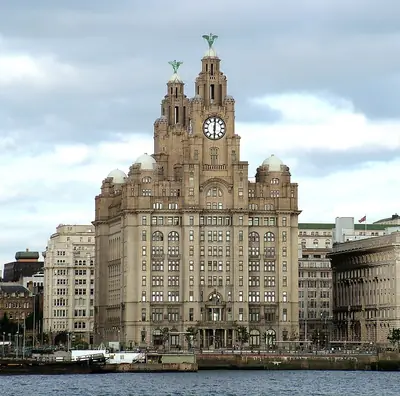
Liverpool’s waterfront is anchored by the Three Graces: the Royal Liver Building, the Cunard Building and the Port of Liverpool Building.
The Royal Liver Building opened in 1911 as the headquarters of Royal Liver Assurance. Its reinforced-concrete construction was pioneering, while its two clock towers are topped by the Liver bird statues. The clock faces, made by Gent and Company of Leicester, measure 7.6 metres across and have no numerals. The birds are known as Bella, watching the sea, and Bertie, looking towards the city.
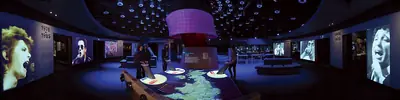
The Cunard Building, constructed between 1914 and 1917, blends Italian Renaissance and Greek Revival influences. It was the headquarters of the Cunard Line until the 1960s and also contained passenger facilities for transatlantic journeys from Liverpool. Today, it houses the British Music Experience, a permanent exhibition about British music.
Close by, the Church of Our Lady and Saint Nicholas has a history of worship dating back at least to the 1250s. The church stands near the River Mersey and is connected to Liverpool’s maritime identity: Saint Nicholas is the patron saint of sailors. Its tower collapsed in 1810, killing members of the congregation, and the church became the parish church for Liverpool’s waterfront in 2006.
Royal Albert Dock and Liverpool’s maritime past
Royal Albert Dock is one of the city’s key places to visit. Its historic warehouse buildings now form a cultural quarter that includes Tate Liverpool, the International Slavery Museum and The Beatles Story.
Liverpool’s prosperity was connected to maritime commerce, including wealth generated through slavery and colonial trade. The International Slavery Museum addresses this difficult part of the city’s history, making the dock an important place for understanding Liverpool beyond its architecture and attractions.
Liverpool’s two cathedrals
Liverpool has two very different cathedrals, connected by Hope Street.
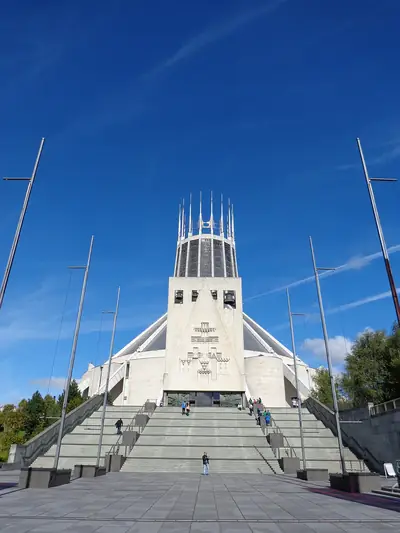
Liverpool Metropolitan Cathedral was designed by Frederick Gibberd after he won a worldwide competition. Construction began in 1962 and finished in 1967. Its circular, conical form gives it the distinctive appearance that led locals to call it “Paddy’s Wigwam”. The structure is supported by 16 boomerang-shaped concrete trusses, while the design incorporates the pre-existing Lutyens crypt. The cathedral can seat 2,000 people with clear views of the altar.
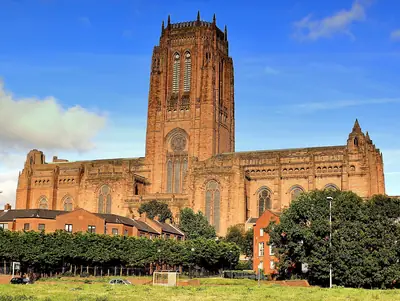
Liverpool Cathedral is the Cathedral Church of Christ in Liverpool and the seat of the Anglican Bishop of Liverpool. Designed by Giles Gilbert Scott, it was built between 1904 and 1978. The red-sandstone building is 189 metres long externally, including the Lady Chapel, and its tower reaches 101 metres. Its bell tower houses the highest and heaviest ringing peal of bells in the world, while the organ was made by Henry Willis & Sons.
William Brown Street and the Walker Art Gallery
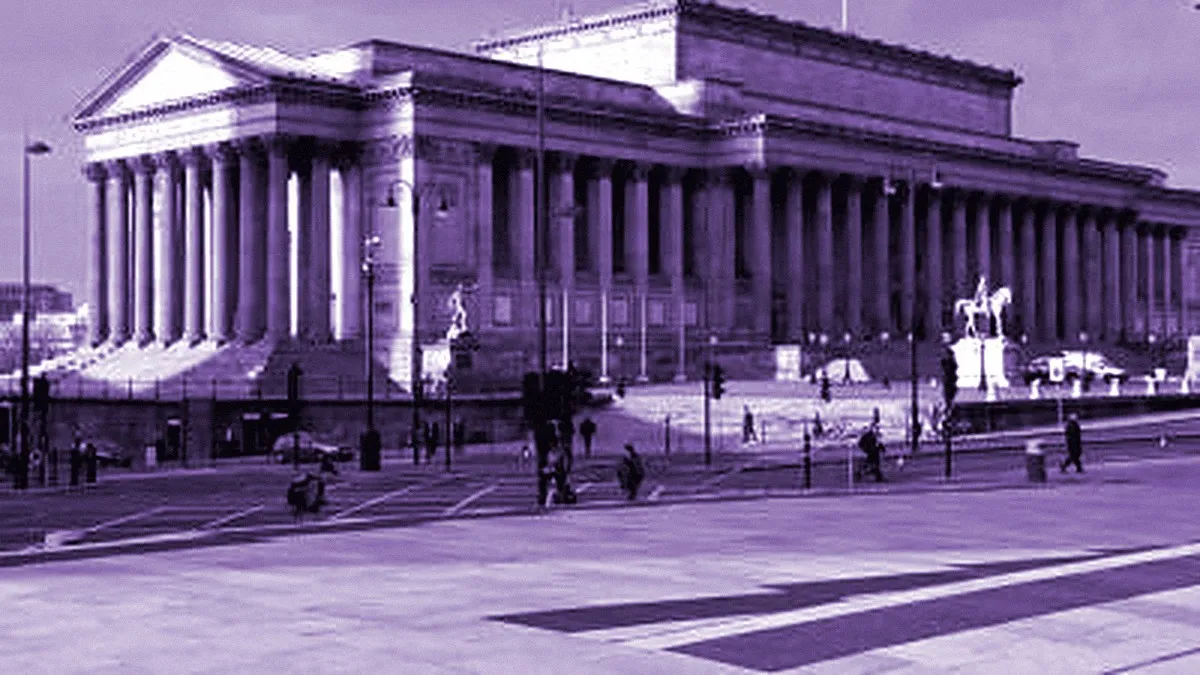
William Brown Street brings several major cultural buildings together, including St George’s Hall, World Museum Liverpool and Liverpool Central Library.
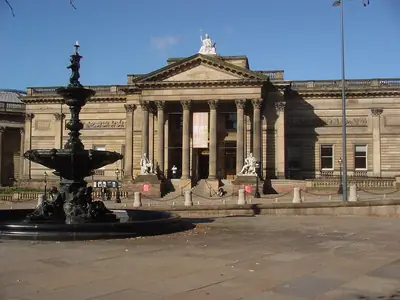
The Walker Art Gallery is one of England’s largest art collections outside London. Its history began with 37 paintings from William Roscoe’s collection in 1819. The gallery officially opened on 6 September 1877 in a neo-classical building designed by Cornelius Sherlock and H.H. Vale. It was later expanded, refurbished in 2002 and reopened after the Second World War in 1951.
Nearby, Liverpool Lime Street railway station is the city’s main terminus on the West Coast Mainline and its largest and oldest railway station. It opened for public services in August 1836 after being built by the Liverpool and Manchester Railway. Its later expansion included what was then the world’s largest arched train shed.
Liverpool Empire Theatre, which opened in 1925, has the largest two-tier auditorium in the United Kingdom, seating 2,348 people. It has hosted musicals, theatre productions and pop concerts, and The Beatles performed there early in their career.
The Oratory and Saint James’ Cemetery
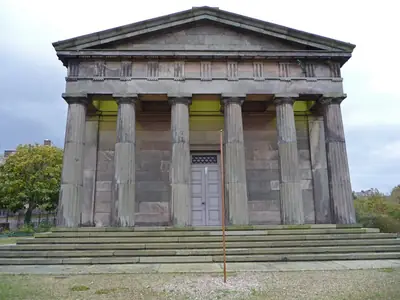
The Oratory is a former funeral chapel built for St James Cemetery. Designed by John Foster and opened in 1829, it takes the form of a Greek Doric temple, with a six-column portico and a windowless interior lit through a glass ceiling. Today, it houses a sculpture collection, including memorial pieces from places of worship across Liverpool.
The nearby Huskisson Monument stands in Saint James’ Cemetery, adding another historical stop to the area around the two cathedrals.
Philharmonic Hall and Hope Street
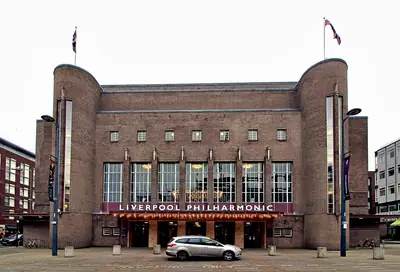
Philharmonic Hall on Hope Street is home to the Royal Liverpool Philharmonic Society. The present building opened in 1939 after its predecessor was destroyed by fire in 1933. Designed by Herbert J. Rowse in the Streamline Moderne style, it has fawn-coloured brickwork, a canopied entrance and semicircular stair turrets.
Details include etched glass panels by Hector Whistler, gilded Apollo reliefs and art deco figures representing “musical moods”. Inside, the curved auditorium contains a three-manual pipe organ by Rushworth and Dreaper.
The Beatles in Liverpool
The Beatles’ story is spread across Liverpool, from venues in the city centre to places associated with the band’s early years.
St Peter’s Church in Woolton is one of the most important Beatles locations. In July 1957, John Lennon was performing with The Quarrymen at the church hall when he was introduced to Paul McCartney. Lennon later asked McCartney to join the group that would eventually become The Beatles. Lennon also occasionally sang in the church choir. In the churchyard, Lennon’s uncle George Smith is buried, as is Eleanor Rigby, believed to have inspired the song of the same name.
Other Beatles-related places include the Cavern Club, the Jacaranda, Penny Lane, Strawberry Field, Mendips and Forthlin Road. The British Music Experience and The Beatles Story offer further ways to explore the band’s place in Liverpool’s wider music history.
Bold Street, Chinatown and live music
Liverpool’s music culture extends beyond Beatles landmarks. Bold Street, Chinatown and the surrounding streets form part of the city’s lively cultural landscape. The Chinese Arch is a prominent local landmark, while venues such as the Blue Angel, The Jacaranda and Cream connect the area with Liverpool’s live music and club history.
Goodison Park
Goodison Park in Walton was Everton’s home venue for more than a century, through the end of the 2024–2025 season. From the 2025–2026 season, it became the permanent home of Everton Women and is described as the largest English stadium mainly dedicated to women’s football.
Known as “The Grand Old Lady”, the stadium bears the influence of Archibald Leitch, with original metal trusses surviving in the Bullens Road Stand. It hosted the 1910 FA Cup Final and five matches during the 1966 World Cup, including a semi-final.
Explore Liverpool with Neywo
Neywo offers a Liverpool self-guided walking tour experience with seven walking tours and one bus route. Together, the walks range from 0.61 to 4.61 kilometres and from 32 to 214 minutes. They include routes through the two cathedrals and Hope Street, the Three Graces and Pier Head, William Brown Street, the commercial district and Beatles trail, Royal Albert Dock, and Bold Street and Chinatown.
The bus route, Bus 80 from Bold Street to Penny Lane, covers 6.1 kilometres in 26 minutes. The tours include five, seven, twelve or fourteen narrated stops, depending on the route. Across Liverpool, the app provides 88 narrated places, with narration available in 11 languages.
Download Neywo and explore at your own pace: the app tells the story of each place as you reach it, with no group and no schedule. Liverpool is in England, part of the United Kingdom, and makes a rewarding stop for anyone building a wider journey through the country.
Places with an audio guide in Liverpool
8 places in Liverpool with a Neywo audio guide. Each one starts telling its story as you reach it.
Self-guided tours in Liverpool
9 tours in Liverpool, free in the Neywo app. Each stop tells its story as you reach it.
- Bus ride
Bus 80: Bold Street to Penny Lane
A regular city bus from Liverpool ONE out through the Georgian Quarter to Penny Lane. See the Cream and Blue Angel clubs near Bold Street, get off at the Philharmonic Hall on Hope Street, see the Byzantine Revival St Philip Neri and the Neoclassical St Bride's, then ride on through Toxteth to St Barnabas' Church, on the corner of Penny Lane.
Cream · Blue Angel · Philharmonic Hall · Church of St Philip Neri · St Bride's Church, Liverpool · Church of St. Agnes and St. Pancras, Toxteth Park …
Open this tour: Bus 80: Bold Street to Penny Lane - Bus ride
Bus 14 · Lime Street to the Town Hall
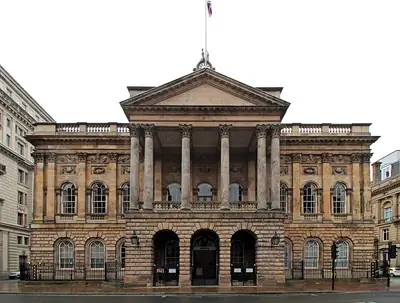
7 narrated places along the way: O2 Academy Liverpool, Liverpool Empire Theatre, Prince Albert, Municipal Buildings, The Temple, Liverpool, Liverpool Town Hall, Victoria Monument.
O2 Academy Liverpool · Liverpool Empire Theatre · Prince Albert · Municipal Buildings · The Temple, Liverpool · Liverpool Town Hall …
Open this tour: Bus 14 · Lime Street to the Town Hall - Walk
The two cathedrals and Hope Street
The largest Anglican cathedral in Britain at one end, Lutyens's crypt under the concrete crown of the Catholic one at the other, and between them the Philharmonic Hall, the art-nouveau pub of the same name and the school the Beatles went to.
Liverpool Metropolitan Cathedral · Liverpool Medical Institution · Wellington Rooms, Liverpool · Church of Saint Andrew, Liverpool · Philharmonic Dining Rooms · Philharmonic Hall …
Open this tour: The two cathedrals and Hope Street - Walk
The Three Graces and the Pier Head
The waterfront that made Liverpool: the Liver Building with its mythical birds, the Cunard and Port of Liverpool buildings, the Western Approaches war bunker, the town hall, and the Museum of Liverpool at the end.
Church of Our Lady and Saint Nicholas, Liverpool · Hargreaves Building · Western Approaches Museum · Nelson Monument · Liverpool Town Hall · Oriel Chambers …
Open this tour: The Three Graces and the Pier Head - Walk
William Brown Street: St George's Hall and the Walker
The finest neoclassical street in England — St George's Hall's tunnel-vaulted great hall, the Walker Art Gallery's pre-Raphaelites, the World Museum and the Picton reading room — with Lime Street station opposite.
Prince Albert · St George's Hall · St John's Gardens · World Museum · Picton Reading Room and Hornby Library · Walker Art Gallery …
Open this tour: William Brown Street: St George's Hall and the Walker - Walk
The commercial district and the Beatles trail
Between the waterfront and the shops: the White Star Line's head office where the Titanic's loss was announced, the Municipal Buildings, the Beatles museum on Mathew Street, and the Bluecoat, the oldest building in the city centre.
Albion House, Liverpool · Victoria Monument · Royal Insurance Building · The Temple, Liverpool · Municipal Buildings · Eleanor Rigby statue …
Open this tour: The commercial district and the Beatles trail - Walk
Royal Albert Dock
Six hundred metres round the dock's cast-iron colonnades: Tate Liverpool, the Beatles Story, and the International Slavery Museum, which is the one that will stay with you.
Tate Liverpool · Hartley Bridge, Royal Albert Dock · International Slavery Museum · The Beatles Story · The Wheel of Liverpool
Open this tour: Royal Albert Dock - Walk
Bold Street and Chinatown
Under a kilometre from the Chinese arch — the largest outside Asia — up Bold Street past the clubs that made Liverpool's other reputation, the Jacaranda and Cream among them.
Chinese Arch · Blue Angel · Bold Street · The Jacaranda · Cream
Open this tour: Bold Street and Chinatown - Walk
The Ultimate Liverpool: the cathedral to the Pier Head
Four and a half kilometres from the Anglican cathedral down Hope Street to the Metropolitan, past Lime Street, St George's Hall and the Walker, and out to the town hall and the Three Graces on the river.
St Bride's Church, Liverpool · Huskisson Monument In Saint James' Cemetery · Liverpool Cathedral · The Oratory · Philharmonic Hall · Liverpool Metropolitan Cathedral …
Open this tour: The Ultimate Liverpool: the cathedral to the Pier Head
Walk Liverpool with Neywo
Neywo turns Liverpool into a self-guided audio tour. Stories arrive as you reach the place they belong to, and the route reshapes when you wander off it.

