What to See in Leeds, United Kingdom: Free Audio Guide
Things to do in Leeds: the best places to see
Leeds is a Yorkshire city where medieval churches, Victorian streets, industrial heritage and contemporary art come together. The best things to do in Leeds include exploring its museums and galleries, discovering the remains of Kirkstall Abbey, seeing important historic churches and enjoying the city’s sporting and cultural landmarks. Neywo offers a free Leeds audio guide with 273 narrated places, so you can learn more as you explore.
What to see in Leeds
Leeds Cathedral
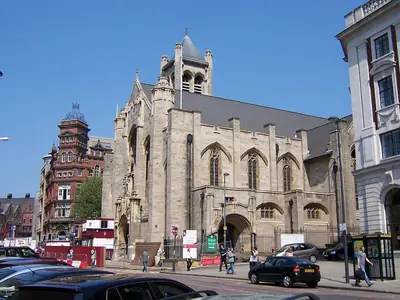
Leeds Cathedral, formally the Cathedral Church of St Anne, is the Roman Catholic cathedral of Leeds and the seat of the Roman Catholic Bishop of Leeds. The present building on Cookridge Street was completed in 1904, after construction began in 1901.
Designed by John Henry Eastwood, the cathedral is an example of Gothic Revival architecture. It is built in Weldon stone, with cream-coloured Ketton stone used for details. On the west front, a tall gable rises between buttresses and Gothic turrets, topped by a large ornamental crucifix. Leaded bay windows along the north side give part of the building a distinctive mock Georgian appearance.
The cathedral replaced earlier Catholic buildings, including Lady Lane Chapel, built in 1786, and Saint Anne’s Church, completed in 1838. The present cathedral was restored in 2006.
Kirkstall Abbey and Abbey House Museum
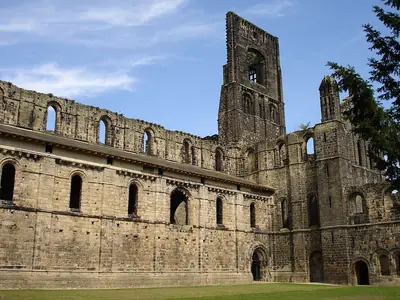
The ruins of Kirkstall Abbey stand in a public park beside the River Aire. Founded around 1152, this Cistercian monastery later closed during the Dissolution of the Monasteries under Henry VIII and fell into ruin. Its remains still reveal the scale and layout of monastic life, including the chancel, chapels, nave, cloister, chapter house, library, refectory, kitchen, dormitories, infirmary and malt house.
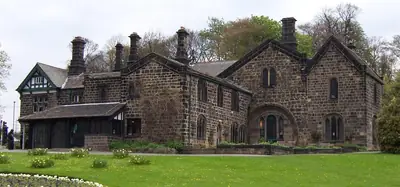
The gatehouse forms part of the Leeds Museums and Galleries group. Inside it, Abbey House Museum recreates Leeds streets as they appeared around 1880. The ground floor includes Abbey Fold, Harewood Square and Stephen Harding Gate, with shops containing original Victorian fittings. The museum opened to the public in July 1927, while Stephen Harding Gate was added in 1954.
Together, the abbey ruins and museum connect medieval architecture with the daily life of nineteenth-century Leeds.
Leeds Industrial Museum at Armley Mills
Leeds Industrial Museum at Armley Mills occupies a Grade II* listed building that was once the world’s largest woollen mill. Its collections explore the machinery, transport and engineering that shaped Leeds and West Yorkshire.
The site was recorded as a group of fulling mills in the mid-sixteenth century. Its position between the Leeds and Liverpool Canal and the River Aire helped transport raw materials and finished goods. After a major fire, Benjamin Gott built the present structures in 1805, introducing fireproof features such as cast-iron columns and brick floors.
Waterwheels powered the mill before steam engines took over. The collections now show how these changes transformed textile production during the Industrial Revolution.
Leeds Art Gallery and the Henry Moore Institute
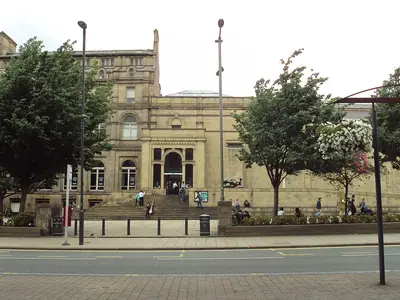
Leeds Art Gallery is a major cultural stop in the city centre. Its twentieth-century British art collection was recognised by the British government in 1997 as being of national importance, while the gallery also presents art from the nineteenth century and earlier.
The gallery occupies a Grade II listed building administered by Leeds City Council. It is closely connected to the Henry Moore Institute, whose building stands to the east and is linked to the gallery by a bridge. Outside the entrance is Henry Moore’s Reclining Woman: Elbow, created in 1981. Inside, a marble statue of Queen Anne dating from 1712 is Leeds’s oldest civic sculpture.
The Henry Moore Institute focuses on sculpture through exhibitions, research and its library and archive. Founded in 1993 as part of the Henry Moore Foundation, it is named after the British sculptor who began his artistic training in Leeds. The institute does not display Moore’s own works, but its collections include more than 12,000 objects, while its library and archive contain more than 19,000 books, catalogues and photographs. Admission to its exhibitions and events is free.
Leeds City Museum
Leeds City Museum occupies a former Mechanics’ Institute on Millennium Square. The building was designed by Cuthbert Brodrick and constructed between 1865 and 1868. After a major redesign, the museum reopened there in 2008.
Its history began with the Leeds Philosophical and Literary Society, which opened a museum to the public in 1821. Today, the displays combine historic collections, Leeds Archive material and special exhibitions. Memorable objects include the oversized Leeds Tiger, a giant moose skeleton and a carved wooden cart. A large map of Leeds printed across the central hall floor and a model of the Quarry Hill flats help place the collections in the context of the city.
Elland Road
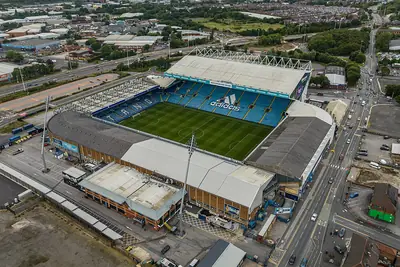
Elland Road is the home of Leeds United in Beeston and one of the city’s most important sporting landmarks. The ground has been closely associated with the club since its formation in 1919, although Leeds City played there from 1904 to 1919.
The all-seater stadium has four stands named after Don Revie, Jack Charlton, Norman Hunter and John Charles. The Don Revie Stand is also known as the Kop. Elland Road has hosted rugby league matches, cup finals, international fixtures and games during Euro 96. Its greatest recorded attendance was 57,892 for an FA Cup replay between Leeds United and Sunderland on 15 March 1967, before the stadium became all-seater.
Harewood House
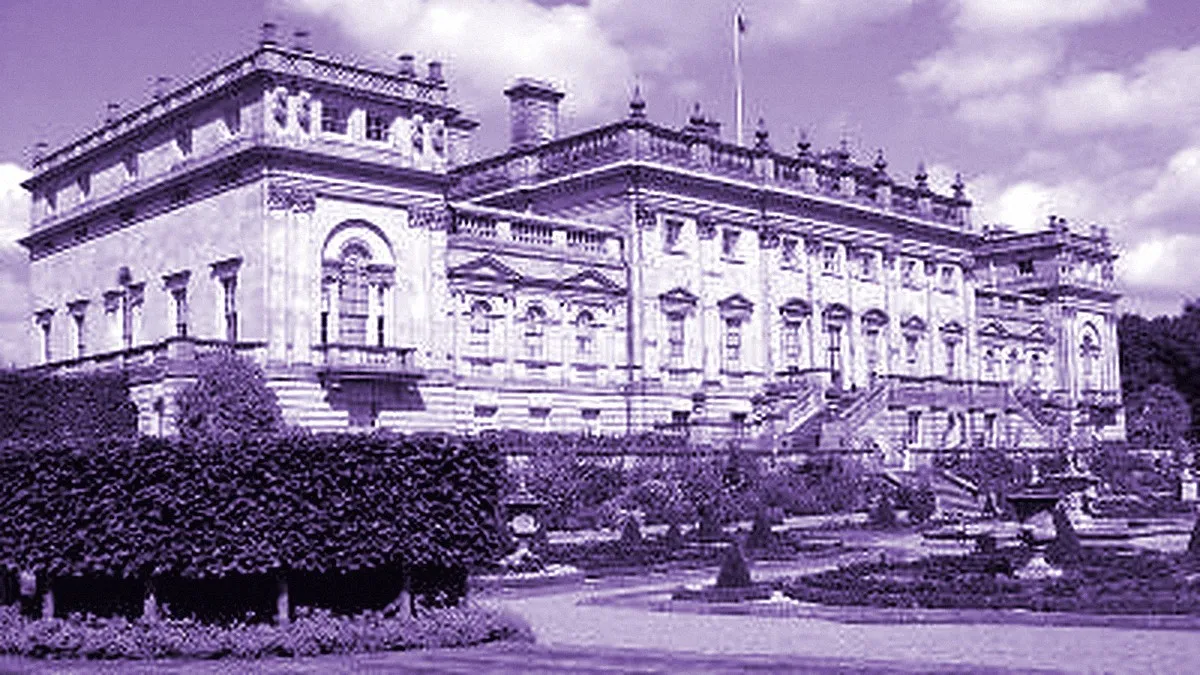
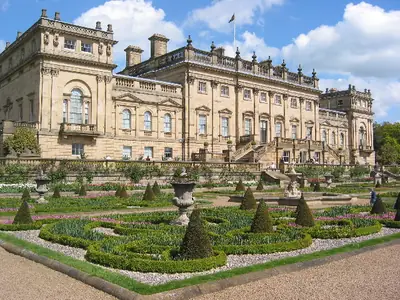
Harewood House is a Grade I listed country house and historic house museum in West Yorkshire. Built between 1759 and 1771 for Edwin Lascelles, the first Baron Harewood, it was designed by John Carr and Robert Adam. Lancelot “Capability” Brown created the surrounding landscape, which forms part of the estate’s approximately 1,000 acres.
The house was altered in 1840 when Sir Charles Barry added a second level to both wings, creating more bedrooms for Henry Lascelles, the third Earl of Harewood, and his thirteen children. Barry also added terraces and more formal gardens.
During the Second World War, Harewood House was briefly used as a convalescent hospital. It later became the home of Princess Mary, daughter of George the Fifth, after her marriage to Henry Lascelles. The estate includes extensive grounds beyond the main house, including the original Capability Brown landscape.
Church of St John the Baptist in Adel
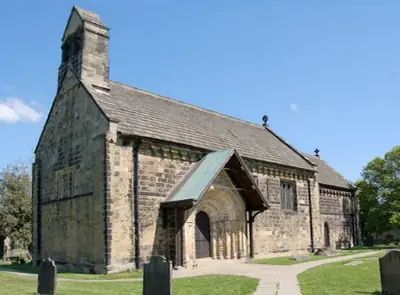
The Church of St John the Baptist in Adel is a Grade I listed building with a mainly Norman character. It has been described by Nicholas Pevsner as one of the best and most complete Norman churches in Yorkshire.
Its south doorway is particularly notable for its carved decoration, while the highly carved Norman chancel arch is a highlight inside. A replica of a thirteenth-century sanctuary ring can be seen on the exterior of the south door; the original was stolen in 2002. The church remains an active Anglican parish church in the Archdeaconry of Leeds and the Diocese of Leeds.
Otley Bridge
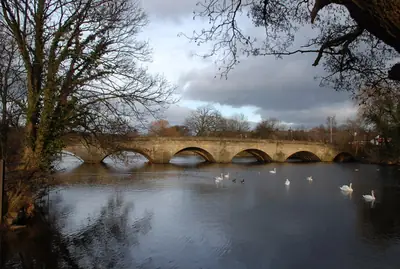
Otley Bridge crosses the River Wharfe on seven stone arches. The first bridge at this location was completed in 1229 after being commissioned by the Archbishop of York the previous year. Repaired and upgraded many times, the present bridge is recognised as a scheduled monument.
Today, Bridge Street, also known as the B6451, crosses the river over the historic structure. Road traffic shares the bridge with a pedestrian walkway, linking its long history with the everyday life of Otley.
More museums to discover
Leeds has several smaller museums and collections for visitors who want to explore beyond the main city-centre sights. Leeds Discovery Centre stores more than one million objects, ranging from natural science specimens and textiles to social history, world cultures and archaeology. Its climate-controlled collections can be explored through regular tours.
Middleton Railway Museum focuses on transport and its preservation. Fulneck Moravian Museum offers a local museum experience in Pudsey, while Horsforth Village Museum explores the history of Horsforth.
For another city break in England, Leeds can also be combined with destinations such as Liverpool or Lincoln.
Explore Leeds with Neywo
Looking for a Leeds self-guided walking tour? Neywo has four walking tours, one bus route and one bike route in the city, with 273 narrated places in total. The walks range from 1.76 to 3.31 kilometres and take between 77 and 102 minutes, with 8 to 12 narrated stops each.
The bus route covers 5.2 kilometres in 22 minutes and has 10 stops. The bike route covers 4.9 kilometres in 25 minutes and has 7 stops. The app tells the story of each place as you reach it, at your own pace, with no group and no schedule. Download Neywo and explore Leeds with a free audio guide, available in 11 languages.
Places with an audio guide in Leeds
8 places in Leeds with a Neywo audio guide. Each one starts telling its story as you reach it.
Self-guided tours in Leeds
6 tours in Leeds, free in the Neywo app. Each stop tells its story as you reach it.
- Bike ride
Leeds by Bike: From Armley Mills to the City Centre
A ride on Leeds's cycle lanes from Armley Mills, once the world's largest woollen mill, into the city centre, passing the Victorian Principal Met Hotel, Mill Hill Chapel, the Time Ball Buildings, Leeds Bridge and the Tetley brewery.
Leeds Industrial Museum · Principal Met Hotel · Mill Hill Chapel · Time Ball Buildings · Leeds Bridge · The Tetley …
Open this tour: Leeds by Bike: From Armley Mills to the City Centre - Bus ride
First 28: From Kirkgate Market to the University and Headingley
A regular First West Yorkshire city route from Leeds's market and Victorian core out past the art gallery and the University of Leeds to Headingley. Ride it for a cheap, direct tour of the city's north side.
Leeds Kirkgate Market · Holy Trinity Church, Leeds · Mill Hill Chapel · Leeds Art Gallery · Stanley & Audrey Burton Gallery · Memorial to Queen Victoria …
Open this tour: First 28: From Kirkgate Market to the University and Headingley - Walk
Civic Leeds: Owls, Marble and a Mummy
Walk through the Victorian and twentieth-century heart of Leeds, from the white Civic Hall with its gilded owls and Millennium Square to the Town Hall's 225-foot clock tower. Meet Nesyamun, the Egyptian priest in the City Museum, then take in a Gothic cathedral, the galleries, the Georgian calm of Park Square, its Hispano-Moorish warehouse and the Black Prince in City Square.
Leeds Civic Hall · Millennium Square · Leeds City Museum · Nesyamun · Leeds Cathedral · Henry Moore Institute …
Open this tour: Civic Leeds: Owls, Marble and a Mummy - Walk
Arcades, Pubs and a Pioneer Film: Old Leeds on Foot
Follow Leeds's medieval street plan from the river bridge where Louis Le Prince filmed some of the first moving pictures. Pass a telescope-shaped steeple, Briggate's arcades, a perfectly preserved Victorian pub, the City Varieties music hall, the oldest church in the centre and the Grand Theatre, then see Kirkgate Market, the Corn Exchange and Leeds Minster, on the oldest church site in the city.
Leeds Bridge · Holy Trinity Church, Leeds · Time Ball Buildings · Briggate · Whitelock's Ale House · Stained glass canopy of the Victoria Quarter, Leeds …
Open this tour: Arcades, Pubs and a Pioneer Film: Old Leeds on Foot - Walk
Leeds Waterfront: Art, Brewing and Arms
Leave the centre for the River Aire and Leeds Dock. Pass the sculpture that remembers David Oluwale, the Art Deco Tetley brewery and the Royal Armouries, home of the national collection of arms and armour, then cross to the Discovery Centre, where a million objects are stored, and climb to the churches of Richmond Hill.
Hibiscus Rising · The Tetley · Steeped Vessels · Royal Armouries Leeds · Armouries Square · Leeds Discovery Centre …
Open this tour: Leeds Waterfront: Art, Brewing and Arms - Walk
University Leeds and Woodhouse Moor
A relaxed walk north of the centre from St George's Church and Woodhouse Square through the University of Leeds campus and the open green space of Woodhouse Moor. Meet the Duke of Wellington in his famous boots, Queen Victoria's memorial and Robert Peel on the moor's edges, and end under the steeple of Wrangthorn church.
St George's Church, Leeds · Statue of Sir Peter Fairbairn · Master of the Universe · University of Leeds · Stanley & Audrey Burton Gallery · Statue of the Duke of Wellington on South East Corner of Woodhouse Moor …
Open this tour: University Leeds and Woodhouse Moor
Walk Leeds with Neywo
Neywo turns Leeds into a self-guided audio tour. Stories arrive as you reach the place they belong to, and the route reshapes when you wander off it.

