Visiting Lincoln, United Kingdom: Top Sights on Foot
Things to Do in Lincoln: What to See in England’s Historic City
Looking for things to do in Lincoln? This historic city brings together Roman foundations, Viking history, medieval streets, a remarkable Gothic cathedral and one of England’s best-preserved castles. Lincoln’s landmarks are concentrated across the city, making it rewarding to explore on foot and discover its different layers of history.
Neywo has a free audio guide for Lincoln with 52 narrated places, available in 11 languages. Each story plays as you reach the place, at your own pace.
What to See in Lincoln
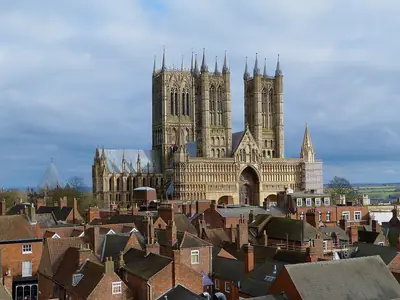
Lincoln Cathedral
Lincoln Cathedral, also known as Lincoln Minster, is formally the Cathedral Church of the Blessed Virgin Mary of Lincoln. Its earliest parts date from 1072, when Bishop Remigius de Fécamp moved his seat from Dorchester on Thames to Lincoln. The building was completed in 1092, but an earthquake in 1185 caused severe damage, leading to reconstruction over the following centuries.
The cathedral consequently brings together several phases of Gothic architecture, including Early English, Decorated and Perpendicular work. From 1311 to 1549, its central spire made it the highest structure in the world, reaching about 160 metres. The Victorian writer John Ruskin considered it the most precious piece of architecture in the British Isles.
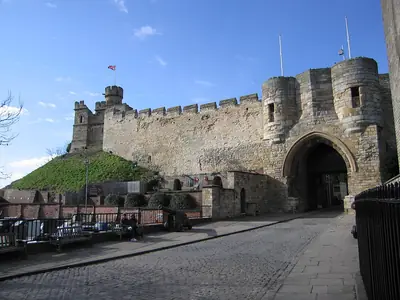
Lincoln Castle
Lincoln Castle is a major medieval stronghold built in the late eleventh century by William the Conqueror on the site of an existing Roman fortress. Its unusual plan includes two mottes, or raised earthworks—an arrangement shared by only one other castle in England, at Lewes in East Sussex.
A walk around the castle walls offers views across the castle complex, Lincoln Cathedral, the city and the surrounding countryside. The site was restored between 2005 and 2015, but its story extends beyond medieval defence. It continued to serve as a prison and court into modern times, and the Crown Courts still operate there today.
Inside, the Magna Carta Vault displays one of only four surviving examples of the 1215 issue of Magna Carta.
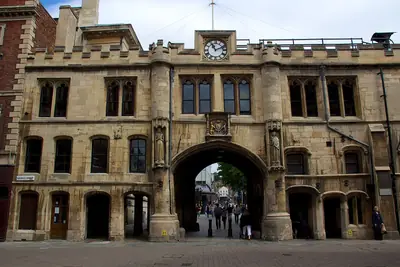
Stonebow and Guildhall
Stonebow and Guildhall is one of Lincoln’s most distinctive buildings. Its stone archway once marked the southern entrance to the city along the High Street, while the building above and around it has served as the meeting place of Lincoln City Council from medieval times to the present.
The name Stonebow comes from the Danish word stennibogi, meaning a stone archway. The present limestone structure was completed in 1520 in the Tudor style, with a Victorian extension added in the 1840s. It is a Grade I listed building. Historic objects displayed inside include the sword of Richard the Second of England and the mayoral chain.
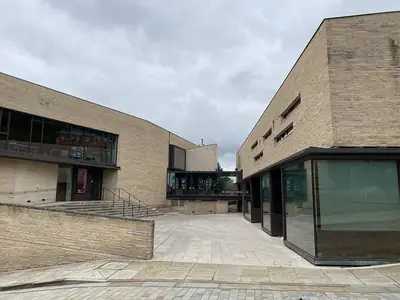
Lincoln Museum
Lincoln Museum is the county museum and gallery for Lincolnshire. It was formed in 2005 through the merger of the Usher Gallery and the City and County Museum, and for a time was known as The Collection. In 2023, it became Lincoln Museum and Usher Gallery.
The museum occupies a modern, purpose-built building close to the Usher Gallery. Its archaeological displays cover Lincolnshire’s history from the Stone Age and Roman period through the Angles and Saxons, the Vikings and the Middle Ages.
The Usher Gallery
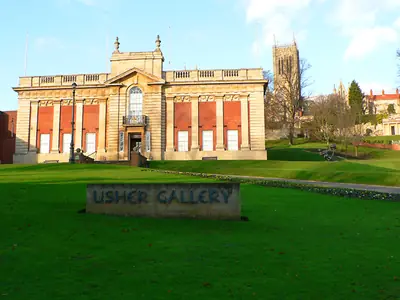
Part of Lincoln Museum, The Usher Gallery brings together modern and contemporary visual art, portraits, landscapes and sculpture. It was established in 1927 by philanthropist and businessman James Ward Usher.
The collection includes works by J. M. W. Turner, L. S. Lowry, Benjamin West, John Piper and Edward Allington. Its range of landscape painting, portraiture, modern visual art and sculpture makes it a useful complement to Lincoln’s historic sites.
Museum of Lincolnshire Life
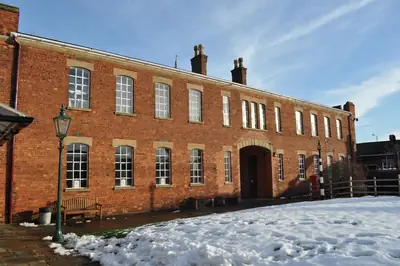
The Museum of Lincolnshire Life explores the county through everyday objects and experiences. Its collections cover commercial, domestic, agricultural, industrial and community history from 1750 to the present day.
The museum also tells the story of the Royal Lincolnshire Regiment and the Lincolnshire Yeomanry. Its building, known as the Old Barracks, was formerly a military installation on Burton Road and is a Grade II listed building.
Exchequergate and St Mary Magdalene
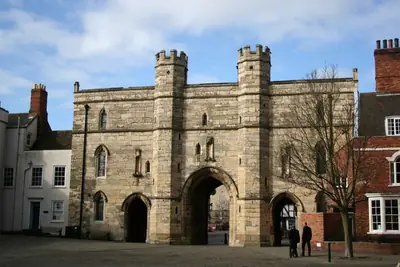
Exchequergate is a Grade I listed building in Lincoln. The stop also includes St Mary Magdalene on Bailgate, a separate Grade II listed parish church dedicated to Mary Magdalene, described as a companion of Jesus.
Together, these two landmarks add architectural and religious history to the Bail area.
St. Swithin’s Church
St. Swithin’s Church stands in St. Swithin’s Square. This parish church is recognised as a Grade II* listed building, making it a notable part of the square and of Lincoln’s historic centre.
St Hugh’s Church
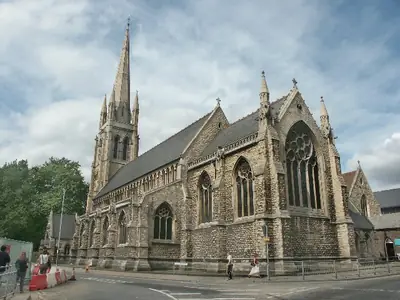
Also known as St Hugh of Lincoln Church, St Hugh’s Church is a Roman Catholic parish church at the corner of Monks Road and Friars Lane. It is a Grade II listed building, designed by Albert Vicars and built between 1892 and 1893.
Priory Gate, Monk’s Abbey and Stamp End Bridge
Several smaller landmarks reveal further layers of Lincoln beyond its major monuments. Priory Gate, also known as Priorygate, is a historic gate in the city. Monk’s Abbey offers a quieter point of interest, while Stamp End Bridge is a simple landmark along the eastern route through Lincoln.
The Statue of Alfred, Lord Tennyson
The Statue of Alfred, Lord Tennyson is a tribute to the figure whose name it bears. It provides a literary landmark among the city’s historic streets and buildings.
Empowerment
In Lincoln’s City Square, Empowerment spans the River Witham with two human figures reaching towards one another across the water. Designed by Stephen Broadbent, the sculpture was completed in 2002 and unveiled on 2 February.
At 16 metres tall, it is the largest sculpture in Lincolnshire. Its aluminium and steel figures echo the shape of turbine blades, connecting the work with Lincoln’s industrial heritage.
Explore Lincoln with a Self-Guided Walking Tour
A Lincoln self-guided walking tour is a simple way to connect the city’s landmarks without joining a group or following a fixed schedule. Neywo’s free Lincoln audio guide includes three walking tours:
- Uphill Lincoln: Roman Gate, Castle, Cathedral and Bishop’s Palace — 2.82 km, 118 minutes and 12 narrated stops.
- Downhill Lincoln: Medieval Churches, the Stonebow and High Bridge — 3.02 km, 106 minutes and 12 narrated stops.
- East Lincoln: Monks Abbey, Stamp End and Parish Churches — 4.27 km, 86 minutes and 5 narrated stops.
The tours cover places including Lincoln Castle, Lincoln Cathedral, Exchequergate, Stonebow and Guildhall, The Usher Gallery, Lincoln Museum, Monk’s Abbey, Stamp End Bridge and Empowerment. The app tells the story of each place as you reach it, at your own pace, with no group and no schedule.
Download Neywo and Explore Lincoln
Download Neywo to explore Lincoln with a free audio guide covering 52 narrated places and three walking tours. Choose a route, start walking and listen to each story when you arrive at the next landmark. With narration in 11 languages and no fixed schedule, Neywo lets you discover Lincoln independently.
Lincoln is part of England in the United Kingdom. If you are continuing through the region, you can also explore Leicester, Leeds or London.
Places with an audio guide in Lincoln
8 places in Lincoln with a Neywo audio guide. Each one starts telling its story as you reach it.
Self-guided tours in Lincoln
3 tours in Lincoln, free in the Neywo app. Each stop tells its story as you reach it.
- Walk
Uphill Lincoln: Roman Gate, Castle, Cathedral and Bishop's Palace
Climb from Newport Arch, a Roman gate that still carries traffic, via the Old Barracks of the Museum of Lincolnshire Life to the Norman castle with its two mottes and a 1215 Magna Carta. Continue to the Gothic cathedral that was once the tallest building in the world, then drop to the ruined Bishop's Palace and the galleries below.
Newport Arch · Museum of Lincolnshire Life · Lincoln Castle · Exchequergate · Lincoln Cathedral · Statue of Alfred, Lord Tennyson …
Open this tour: Uphill Lincoln: Roman Gate, Castle, Cathedral and Bishop's Palace - Walk
Downhill Lincoln: Medieval Churches, the Stonebow and High Bridge
Walk down from the hill into the lower city. See the Stonebow and Guildhall, the City Square sculpture spanning the Witham, the Roman-era High Bridge with houses on top and a string of medieval churches, from St Peter at Arches to the Anglo-Saxon tower of St Mary le Wigford and St Peter at Gowts.
St Martin's Church · New Theatre Royal, Lincoln · St Hugh's Church, Lincoln · St. Swithin's Church, Lincoln · St Peter at Arches Church, Lincoln · Stonebow and Guildhall …
Open this tour: Downhill Lincoln: Medieval Churches, the Stonebow and High Bridge - Walk
East Lincoln: Monks Abbey, Stamp End and Parish Churches
Leave the cathedral crowd for the eastern side of the city. Follow a chain of parish churches to the remains of Monks Abbey and end at Stamp End, where the River Witham leaves the city.
Church of St John · Church of St Giles · All Saints · Monk's Abbey · Stamp End Bridge
Open this tour: East Lincoln: Monks Abbey, Stamp End and Parish Churches
Walk Lincoln with Neywo
Neywo turns Lincoln into a self-guided audio tour. Stories arrive as you reach the place they belong to, and the route reshapes when you wander off it.

