What to See in Melton Mowbray, United Kingdom: Free Audio Guide
Things to Do in Melton Mowbray: Discover Leicestershire’s Historic Market Town
Melton Mowbray is a market town in Leicestershire, in England’s East Midlands, known especially for its traditional pork pies and food heritage. It is a rewarding base for exploring the region’s historic castles, museums and industrial landmarks. Neywo has a free audio guide for Melton Mowbray with 352 narrated places, available in 11 languages.
What to See in Melton Mowbray and the Surrounding Area
The most interesting things to do in Melton Mowbray extend beyond the town itself. The wider Leicestershire area is filled with places connected to medieval history, country estates, local industry and community heritage.
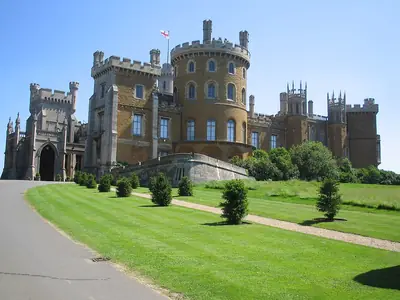
Belvoir Castle
Belvoir Castle is a historic house museum and the long-standing home of the Dukes of Rutland. Set among farmland on elevated ground near Grantham, the site already had a castle in Norman times and later became an important Royalist stronghold during the English Civil War.
The Manners family has owned the castle and surrounding estate since 1508. After a fire, the castle was rebuilt in the early nineteenth century to designs by James Wyatt, producing the imposing Gothic Revival complex visible today. Belvoir Castle remains both a museum open to the public and a family home, as the Duke of Rutland and his family still live in part of the building.
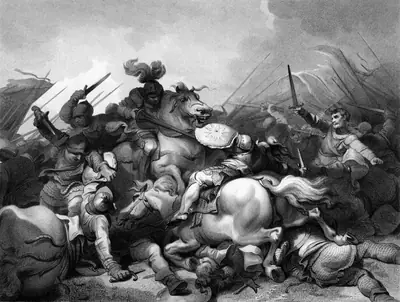
Battle of Bosworth Field
Battle of Bosworth Field marks one of the defining moments in English history. Fought on 22 August 1485, it was the last significant battle of the Wars of the Roses, the civil war between the houses of Lancaster and York.
Richard III, the last king of the House of York, faced Henry Tudor, Earl of Richmond. Henry’s victory, followed by his marriage to Elizabeth of York, established the Tudor dynasty and is regarded as the end of the Plantagenet dynasty.
The battle was shaped by the movement of the armies and the decisions of their commanders. Richard’s forces were divided into three groups, while Henry kept most of his army together under the Earl of Oxford. Richard was eventually killed during a final charge towards Henry, and Henry was crowned king after the battle.
The nearby Bosworth Field Visitor Centre presents the site as a museum and heritage centre.
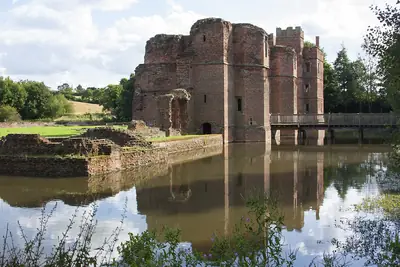
Kirby Muxloe Castle
Kirby Muxloe Castle is the partly surviving remains of an ambitious late medieval fortified manor house. William, Lord Hastings, began building it in 1480 on the site of an earlier manor house. Construction stopped after Hastings was executed in 1483 during Richard, Duke of Gloucester’s seizure of the throne.
The planned castle would have formed a large rectangle around a central courtyard, with corner towers, side towers, a gatehouse and a water-filled moat. Only the gatehouse and west tower survive, and both are incomplete. Their decorative brickwork and stone details are especially notable, including darker bricks arranged into symbols. Twelve gunports were also incorporated for early gunpowder artillery.
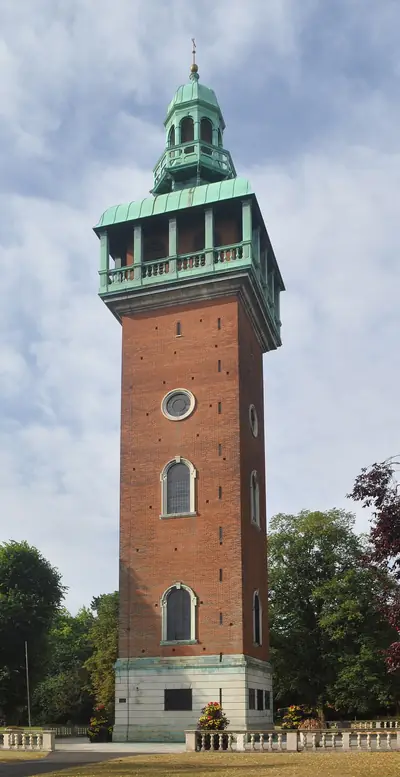
Loughborough Carillon Tower and War Memorial Museum
In Queen’s Park, the Loughborough Carillon rises 152 feet above the park and is visible from several miles away. The tower was conceived as a memorial to the 1914–1918 Great War, with plans finalised in 1919. Its carillon tradition reflects Belgium, where many British servicemen lost their lives.
Dedicated on 22 July 1923, the 46-metre tower is a Grade II listed building designed by Sir Walter Tapper. Its 47 bells were cast at the John Taylor Bell Foundry in Loughborough, and the tower also houses a military museum. The building was the first four-octave carillon in England when completed.
Moira Furnace
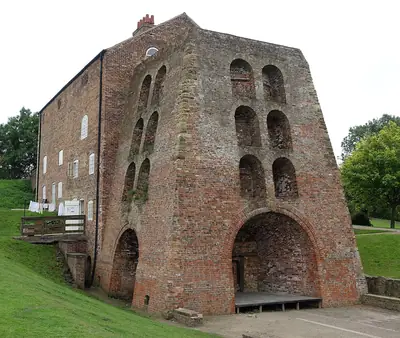
Moira Furnace is a well-preserved industrial monument beside the Ashby-de-la-Zouch Canal. Built in 1804 by the Earl of Moira for iron making, the nineteenth-century blast furnace offers an insight into Leicestershire’s industrial history and the formative period of the Industrial Revolution.
Today, the site is preserved as a museum. Its lime kilns and craft workshops help explain the wider industrial activity associated with the furnace.
King William’s Bridge and Pack Horse Bridge
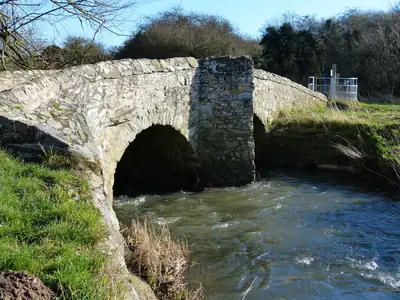
King William’s Bridge is a packhorse bridge in Anstey, in Charnwood, Leicestershire. Its simple structure recalls the historic network of routes used by packhorse travellers.
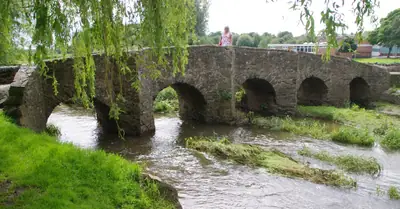
Pack Horse Bridge is another bridge in Anstey. Its interest lies in the way it fits into the local setting and contributes to the area’s surviving historic character.
Ashby de la Zouch Castle
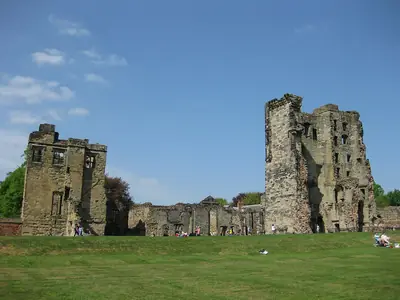
Ashby de la Zouch Castle, also known as Ashby Castle, preserves the ruins of a late medieval fortification in the town of Ashby-de-la-Zouch. The Grade I listed site is known for its surviving towers, castle grounds and historic gardens.
William, Lord Hastings, began building the castle after 1473, replacing an older manor house and developing the site alongside a vast park. By 1483, two large towers and several smaller buildings had been constructed. The Hastings family used the castle as their seat and improved its gardens for royal visitors.
The grounds are considered an important surviving example of an early Tudor garden. The castle also played a role in the English Civil War, when Henry Hastings, a Royalist commander in the Midlands, based himself there. After a long siege, he was forced to surrender, and Parliament later damaged the castle so it could no longer serve as a stronghold.
Local museums and heritage centres
Several smaller museums add local detail to the history of the area. Charnwood Museum is devoted to the local history of Loughborough, while Ashby de la Zouch Museum presents the history of the town and hosts temporary exhibitions. It opened in 1982 and later moved to its present location on North Street.
Castle Donington Museum and the East Midlands Aeropark are both local attractions in Castle Donington. The Aeropark is a museum, while the museum in Castle Donington focuses on the history of the town.
The Diseworth Heritage Centre occupies a former Baptist chapel in the Leicestershire village of Diseworth. The Grade II listed building was restored by the Diseworth Heritage Trust and now houses a community-based heritage centre. Donington-le-Heath Manor House, also known as The 1620s House and Garden at Donington-le-Heath, is a historic house museum near Coalville. The manor house has survived for more than seven hundred years and was once owned by a relative of one of the Gunpowder Plotters.
Explore Melton Mowbray with Neywo
There are currently no tour routes listed for Melton Mowbray. Neywo’s free audio guide nevertheless includes 352 narrated places in the town and its surroundings, with narration in 11 languages. The app tells the story of each place as you reach it, at your own pace, with no group and no schedule.
Download Neywo and explore Melton Mowbray independently, moving between historic houses, castles, museums and other points of interest while each story plays when you arrive. You can also continue discovering destinations across England and the United Kingdom.
Places with an audio guide in Melton Mowbray
8 places in Melton Mowbray with a Neywo audio guide. Each one starts telling its story as you reach it.
Walk Melton Mowbray with Neywo
Neywo turns Melton Mowbray into a self-guided audio tour. Stories arrive as you reach the place they belong to, and the route reshapes when you wander off it.

