Visiting Fresno, United States: Top Sights on Foot
Things to Do in Fresno: Museums, Historic Buildings and Cultural Landmarks
The best things to do in Fresno range from exploring an underground garden to discovering historic theatres, museums, churches and downtown landmarks. The city offers a distinctive view of California’s San Joaquin Valley, shaped by agriculture, immigration, art and civic life. Neywo has a free audio guide for Fresno with 48 narrated places, available in 11 languages.
What to See in Fresno
Forestiere Underground Gardens
The Forestiere Underground Gardens are one of Fresno’s most unusual attractions. Baldassare Forestiere, a Sicilian immigrant, began creating this underground world in 1906 and continued working on it for forty years, until his death in 1946.
The complex extends across ten acres and three underground levels, with 65 rooms connected by courtyards, archways and planted spaces. The rooms include bedrooms, a kitchen, a bath and a parlor with a fireplace. Skylights illuminate the stone walls and helped Forestiere grow trees below ground while protecting them from frost.
Citrus trees, berries, kumquats, loquats and jujubes grow among the underground passages. Some plants are more than a century old, while grafted trees produce different kinds of fruit.
Meux Home Museum
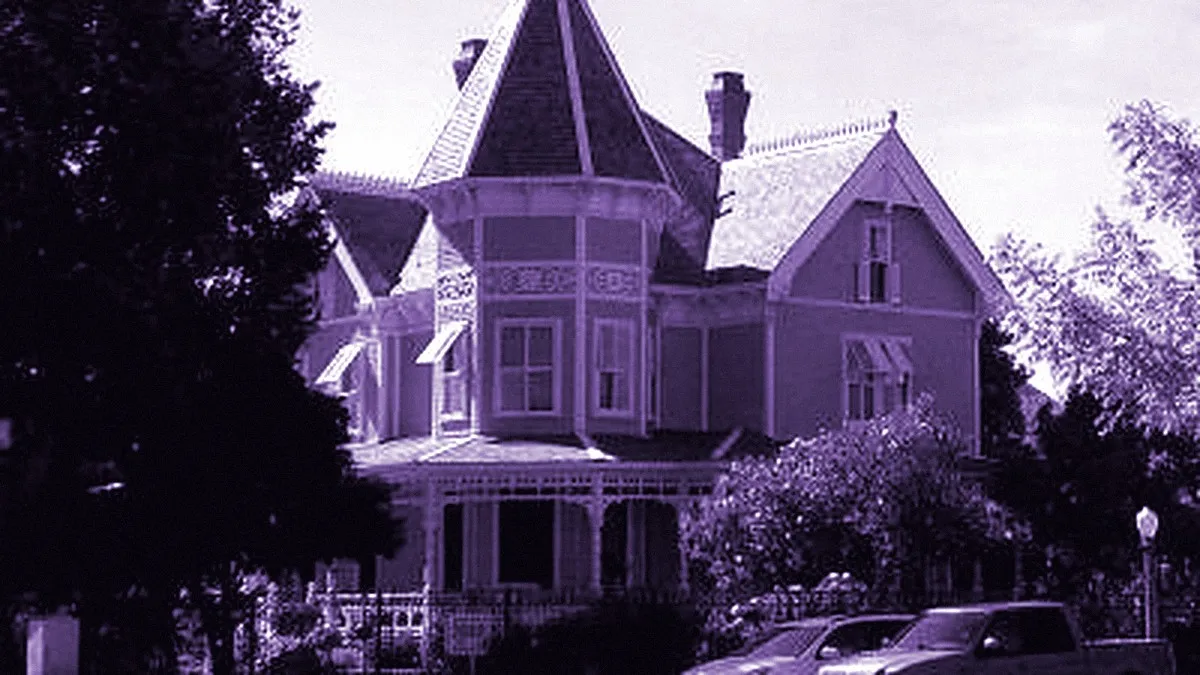
The Meux Home Museum preserves the former residence of Dr. Thomas Richard Meux. Built in 1888, this 16-room Victorian mansion offers a glimpse into domestic life in late-nineteenth-century Fresno.
Its Gothic Victorian design, period artwork and preserved interior features give the house a strong sense of place. The visit also includes a picturesque garden. Tours usually last between 45 minutes and one hour.
Fresno Art Museum
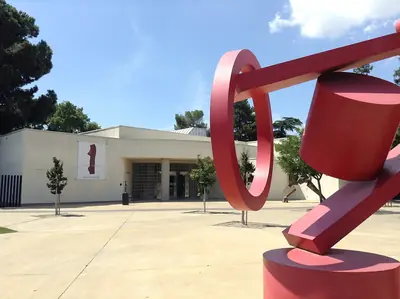
The Fresno Art Museum has been Fresno’s premier publicly accredited art institution since 1949. Its focus includes modern and contemporary art, female artists and the cultural traditions of the San Joaquin Valley.
The collection includes more than 3,600 paintings, sculptures, prints and photographs, with works by Ansel Adams, Salvador Dalí, Pablo Picasso, Diego Rivera, Norman Rockwell and Andy Warhol. The museum also presents Mexican and Mexican American art, as well as ancient Pre-Columbian sculptures from West Mexico, the Yucatán Peninsula and the Andean region.
The museum has occupied its current location since 1960. Rotating exhibitions mean that the galleries change over time, and an outdoor sculpture court adds another place to explore.
Fresno Metropolitan Museum of Art and Science
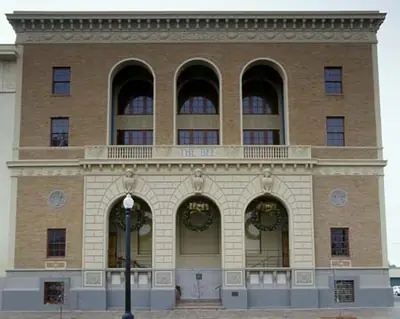
The Fresno Metropolitan Museum of Art and Science, also known as the Fresno Metropolitan Museum or “The Met,” was housed in the historic Fresno Bee Building. Constructed in 1922, the building connected Fresno’s cultural life with its earlier commercial and journalistic history.
The museum underwent an extensive interior renovation beginning in August 2005. It reopened on November 13, 2008, but closed on January 5, 2010, after defaulting on its renovation loans. Its story remains part of the history of the Fresno Bee Building and downtown Fresno’s cultural institutions.
Fig Tree Gallery
Fig Tree Gallery has been part of Fresno’s creative life since 1974, when Joyce Aiken established it as a women-led cooperative connected with Fresno State’s Feminist Art Program. Aiken was a feminist-art advocate and former Fresno State professor.
The gallery later opened membership to artists of all genders and developed into one of the nation’s oldest artist cooperatives. Its history makes it an important stop for visitors interested in contemporary art and voices that have often been underrepresented.
Spectrum Gallery
In Fresno’s historic Tower District, Spectrum Gallery focuses on photography. It began in 1980 as a cooperative formed by photography enthusiasts who gathered at Photo Synthesis.
The gallery presents changing exhibitions, workshops and work by its roughly 100 active members. Their approaches range from traditional wet chemical prints to contemporary mixed-media photography. Major exhibitions usually run for a month and combine local photographers with guest artists.
Spectrum’s annual print auction is another part of its programme, bringing together collectors and enthusiasts around portfolios that include Edward Weston’s iconic works and community-focused prints.
Fresno Discovery Center
The Fresno Discovery Center is a five-acre destination combining science, nature and family activities. It began in 1954 as the Junior Museum of Science and Natural History before becoming the Discovery Center.
Hands-on educational experiences, field trips, science camps and educational expeditions make it a useful stop for families. The grounds include gardens and a peaceful pond, while a dedicated reptile room features a diverse collection of animals.
St. John Cathedral
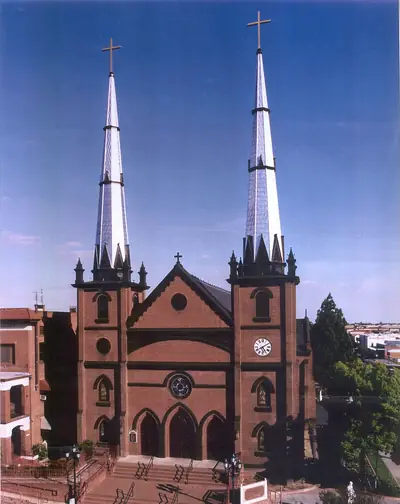
St. John Cathedral is the mother church of the Roman Catholic Diocese of Fresno. St. John Parish has been part of the city since 1882, making it Fresno’s oldest parish.
The present Saint John the Baptist Church was dedicated in 1903. In 1922, it was designated a cathedral and became the cathedral of the Diocese of Fresno.
Holy Trinity Church
Also known as Holy Trinity Armenian Apostolic Church, Holy Trinity Church stands in Fresno’s historic Armenian Town. The parish was founded in 1900, and the church was completed in 1914.
It is one of the earliest Armenian churches in the United States and is described as the oldest Armenian church in the western United States, as well as the oldest surviving church of its kind in the country. The building combines a Beaux-Arts entrance with brick masonry walls and two distinctive domes made from galvanized sheet metal.
Designed by Lawrence Karekin Cone, Fresno’s first Armenian architect, the church was among the first buildings in the United States to use an Armenian architectural style.
Fresno Buddhist Temple
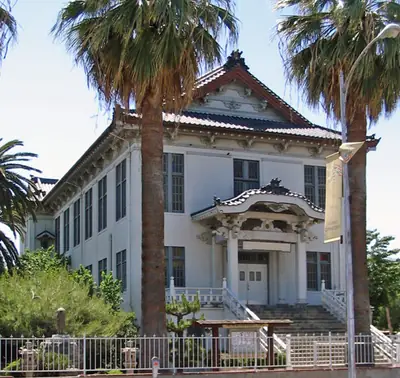
The historic Fresno Buddhist Temple site is now known as the Mrauk Oo Dhamma Center. It preserves the history of a Buddhist congregation whose roots reach back to 1899.
The Fresno Betsuin Buddhist Temple originally held its services in this Kern Street building. In 2010, the congregation moved to a new site in North Fresno, where it continues to operate. The historic building remains a designated landmark.
Azteca Theater
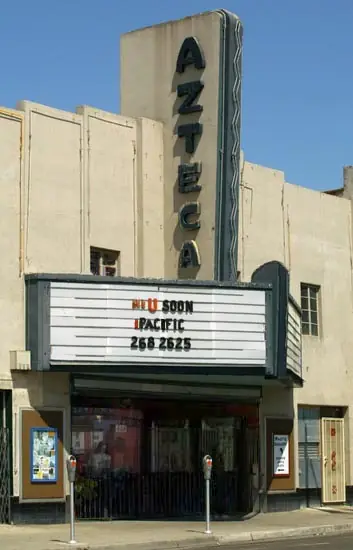
In Fresno’s Chinatown district, the Azteca Theater, also known as Teatro Azteca, reflects the relationship between cinema, community and cultural identity in California’s Central Valley.
Built by Gustavo Acosta in 1948, it became the first Spanish-language cinema in the San Joaquin Valley. The theatre served a growing Mexican-American population and gave Spanish-language films a prominent place in Fresno. Its Art Deco design remains an important part of the character of Chinatown.
Hardy’s
Hardy’s is a former movie theatre whose preserved marquee recalls its years as Hardy’s Theatre. The building first opened as the Liberty Theatre on November 27, 1917, with a programme featuring When a Man Sees Red, starring William Farnham.
It took the name Hardy’s Theatre in 1931 and remained open until at least 1981. Designed by local architects W. D. Coates and H. B. Traver in the Second Empire Revival style, the building is listed on Fresno’s Local Register of Historic Resources.
The Archive on Kern
The Archive on Kern tells part of Fresno’s history through the former Hotel Californian. The nine-story building was designed in an Italian Renaissance and Beaux-Arts style, with a two-story base, a five-floor shaft and an upper section formed by the eighth floor and roof parapet.
Originally an upscale hotel, it also contained retail spaces and commercial offices, making it part of downtown Fresno’s commercial life.
Fresno California Temple
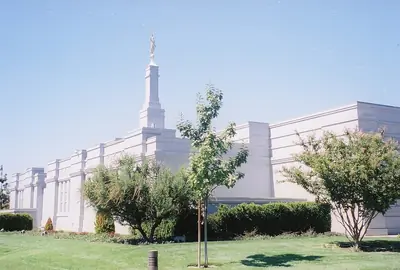
The Fresno California Temple belongs to The Church of Jesus Christ of Latter-day Saints. Its traditional design includes a single attached spire topped by a statue of the angel Moroni.
It was the church’s 78th operating temple, the fourth in California and the first in the central part of the state. The plan was announced on January 8, 1999, and the temple was dedicated on April 9, 2000. Before its dedication, 53,000 people visited when the building was open to the public.
Rotary Sports Center
Rotary Sports Center is a park in Fresno County, in a largely flat and densely settled area. The larger city of Fresno lies about 5.8 kilometres to the north.
Explore Fresno with Neywo’s Free Audio Guide
Neywo turns a visit to Fresno into a self-guided audio experience. The app has 48 narrated places in the city, and each story plays as you reach the place, at your own pace, with no group and no schedule.
There are two walking tours:
- Santa Fe Depot to Courthouse Park: Fresno’s Civic Heart — 2.48 km, 69 minutes and 8 narrated stops
- Chinatown to Theatre Row: Old Downtown Fresno — 2.75 km, 75 minutes and 8 narrated stops
There is also one bus route and one bike route:
- FAX Route 1: Santa Fe Depot to Courthouse Park — 4.7 km, 20 minutes and 4 narrated stops
- Downtown Fresno by Bike Lane: Einstein House to Armenian Town — 2.1 km, 11 minutes and 3 narrated stops
Download Neywo and explore Fresno while the app tells the story of each place as you arrive. You choose the pace, the route and the stops—without a group or a schedule. Fresno is part of California, in the United States.
Places with an audio guide in Fresno
8 places in Fresno with a Neywo audio guide. Each one starts telling its story as you reach it.
Self-guided tours in Fresno
4 tours in Fresno, free in the Neywo app. Each stop tells its story as you reach it.
- Bike ride
Downtown Fresno by Bike Lane: Einstein House to Armenian Town
A short ride on Fresno's downtown bike lanes. Start at the Craftsman Einstein House, pass Courthouse Park with its dome and war memorial, and finish at Holy Trinity, the oldest Armenian church in the western United States.
Einstein House · Courthouse Park · Holy Trinity Church, Fresno
Open this tour: Downtown Fresno by Bike Lane: Einstein House to Armenian Town - Bus ride
FAX Route 1: Santa Fe Depot to Courthouse Park
Fresno Area Express route 1 (the Q line) is the city's main north-south bus. Board at the Mission Revival Santa Fe depot, pass Armenian Town and Holy Trinity Church and the 1919 Republican printery on Kern Street, and get off at Courthouse Park beside the dome and the Old Fresno Water Tower. A cheap local ride through the historic core.
Fresno station · Holy Trinity Church, Fresno · Fresno Republican Printery Building · Courthouse Park
Open this tour: FAX Route 1: Santa Fe Depot to Courthouse Park - Walk
Santa Fe Depot to Courthouse Park: Fresno's Civic Heart
Begin at the Mission Revival depot that made Fresno a railroad town and follow the Mariposa Mall to the dome of the county courthouse. Along the way: a cathedral, Arthur Erickson's steel City Hall, a beehive-shaped water tower and an Armenian church with two metal domes.
Fresno station · St. John Cathedral · Fresno City Hall · Fresno Memorial Auditorium · Old Fresno Water Tower · Courthouse Park …
Open this tour: Santa Fe Depot to Courthouse Park: Fresno's Civic Heart - Walk
Chinatown to Theatre Row: Old Downtown Fresno
Cross the old Chinatown and Mexican cinema district, pass the ballpark, then step through the 1920s skyscrapers and theatres along Fulton Street. Pantages-era glamour, newspaper palaces and the Einstein House show the Fresno that cotton, raisins and rail built.
Fresno Buddhist Temple · Azteca Theater · Chukchansi Park · San Joaquin Light and Power Corporation Building · Warnors Theatre · Fresno Bee Building …
Open this tour: Chinatown to Theatre Row: Old Downtown Fresno
Walk Fresno with Neywo
Neywo turns Fresno into a self-guided audio tour. Stories arrive as you reach the place they belong to, and the route reshapes when you wander off it.

