Visiting Long Beach, United States: Top Sights on Foot
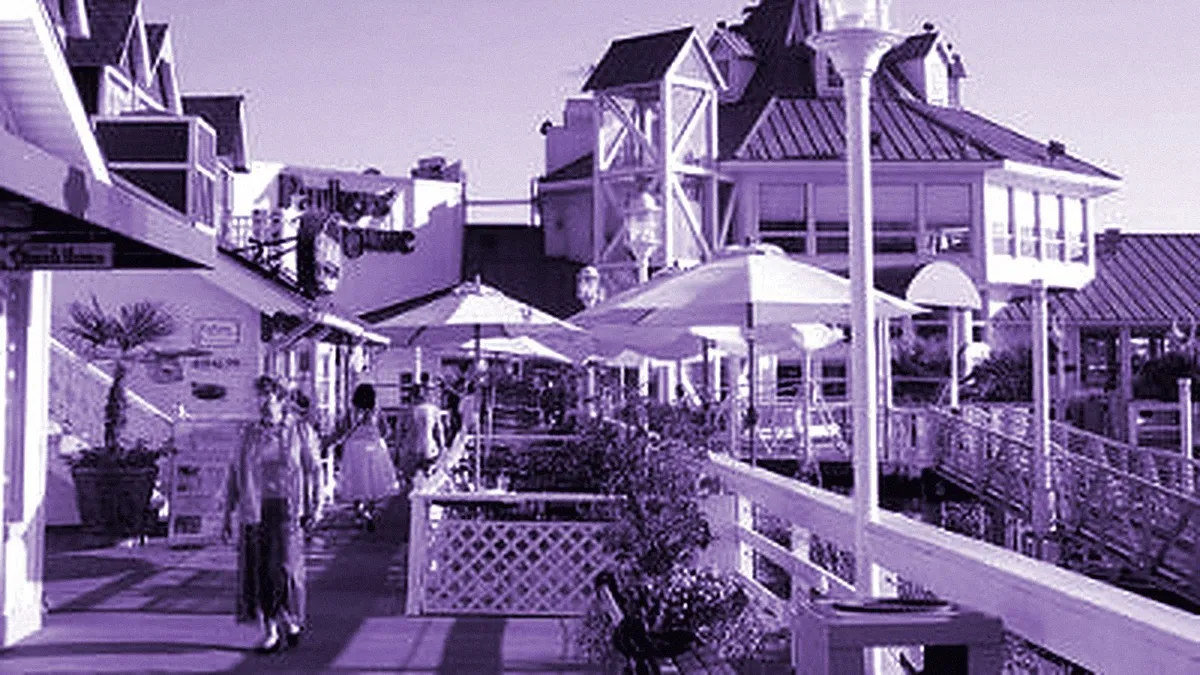
Things to do in Long Beach: museums, landmarks and ocean history
Looking for things to do in Long Beach? This coastal California city brings together maritime history, historic churches, museums, contemporary art and distinctive waterfront landmarks. Neywo offers a free audio guide for Long Beach with 43 narrated places, so you can discover the city while walking at your own pace.
Long Beach is part of California, south of Los Angeles. Its attractions range from a legendary ocean liner and a Soviet submarine to historic adobe buildings, university museums and the meeting point of the Los Angeles River and the Pacific.
What to see in Long Beach
The city’s most interesting places are spread across its waterfront, downtown, historic neighborhoods and university campus. These are some of the highlights included in Neywo’s Long Beach audio guide.
RMS Queen Mary
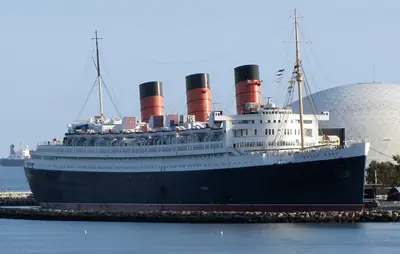
Permanently docked in Long Beach since 1967, the RMS Queen Mary is a floating monument to the golden age of transatlantic travel. The ocean liner was launched in 1936 for the Cunard Line and built in Clydebank, Scotland, as Britain’s answer to the great European superliners.
The Queen Mary completed more than a thousand Atlantic crossings and captured the Blue Riband for the fastest Atlantic crossing on its maiden voyage in May 1936. It reclaimed the record in 1938 and held it until 1952. During the Second World War, the liner was painted grey and converted into a troopship; in 1943, it carried more than 16,600 soldiers on a single voyage.
Its original Art Deco craftsmanship remains part of the experience, making the ship one of the defining places to visit in Long Beach.
Soviet submarine B-427
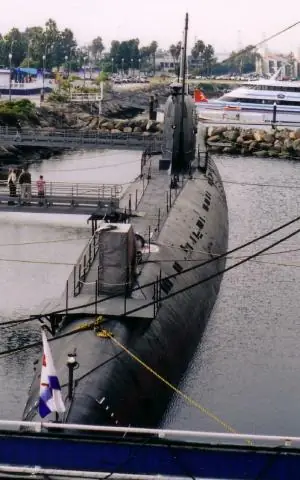
Beside the Queen Mary stands the Soviet submarine B-427, also known as the Scorpion. The vessel is closed to the public, but its long hull and naval profile still provide a striking reminder of Cold War maritime history.
B-427 was a Project 641 diesel-electric attack submarine of the Soviet Navy, also known as a Foxtrot-class submarine. It was commissioned in 1971, served with the Russian Pacific Fleet until 1994 and later became a museum vessel. After being displayed in Australia, it arrived in Long Beach in 1998.
Long Beach Museum of Art
Perched on a bluff overlooking the Pacific, the Long Beach Museum of Art occupies the historic Elizabeth Milbank Anderson House, built in 1912. The museum was established in 1950 and officially designated in 1957.
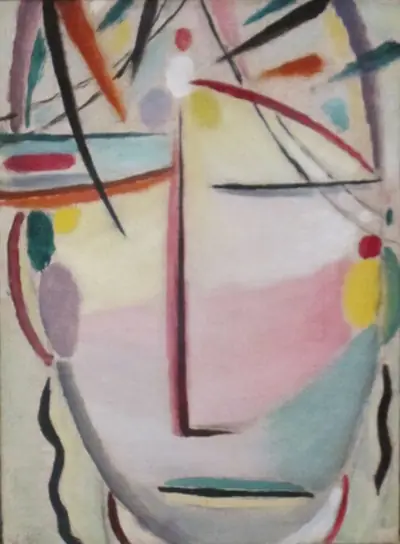
Its permanent collection contains more than 4,000 works spanning three centuries, with strengths in American decorative arts, early twentieth-century European painting, California Modernism and contemporary California art. The house itself is part of the visit, with views toward Long Beach Harbor, Catalina Island on a clear day and the Queen Mary.
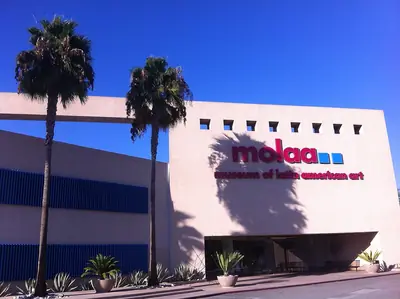
Museum of Latin American Art
The Museum of Latin American Art is the only museum in the United States dedicated exclusively to modern and contemporary Latin American and Latino art. Founded in 1996 by Dr. Robert Gumbiner, it has grown into an important cultural institution for the greater Los Angeles area.
The museum occupies a former silent film studio, and traces of that industrial past remain in its high vaulted ceilings and polished wooden floors. Its permanent collection includes more than 1,500 paintings, sculptures, photographs, mixed-media works and videos. Outside, a 15,000-square-foot sculpture garden provides space for large-scale works among plants and open sky.
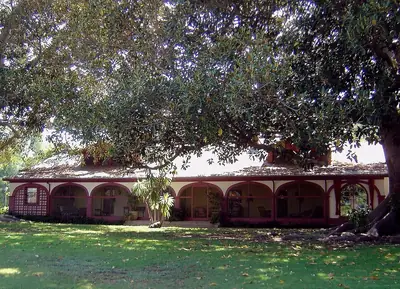
Rancho Los Alamitos
Rancho Los Alamitos reveals several layers of California history. The site once formed the heart of a 28,000-acre Mexican land grant that stretched across what are now seven cities. Its name means “The Little Cottonwoods,” referring to the native Fremont cottonwood trees that once grew around the wetlands.
The Tongva people lived on this land before the Spanish grant of Rancho Los Nietos in 1784. In 1834, the Mexican government divided that larger grant, creating Rancho Los Alamitos. The adobe house dates from the early 1800s, with thick walls made from sun-dried bricks produced on the property. It is one of the oldest surviving structures in the Los Angeles basin.
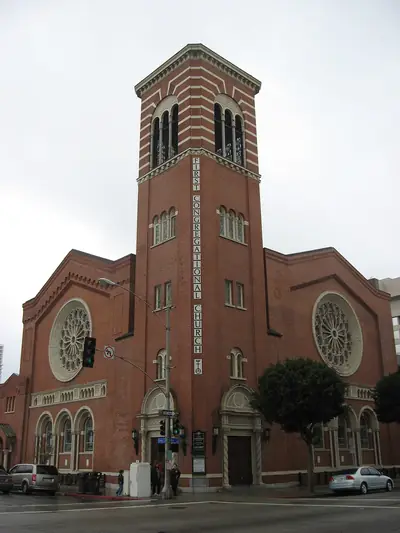
First Congregational Church
The First Congregational Church is one of downtown Long Beach’s most recognizable landmarks. Built in 1914, it was designed by Henry M. Patterson in the Italian Romanesque Revival style.
Its red brick walls, patterned masonry and 110-foot bell tower give the building a fortress-like appearance. Inside, the sanctuary is arranged as a Greek cross and includes three rose windows and six picture panels. The central rose window, “Light of the World,” is especially prominent.
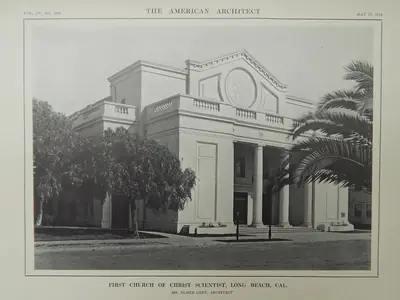
First Church of Christ, Scientist
At 440 Elm Avenue, the First Church of Christ, Scientist is one of Long Beach’s oldest churches. Designed by Los Angeles architect Elmer Grey, it was built in 1913 in the Classical Revival style.
The building was Long Beach’s first Christian Science church and is designated Historic Landmark No. 16.52.580. It also survived the 1933 earthquake relatively undamaged, making it one of the few downtown churches to remain standing after the disaster.
Pacific Island Ethnic Art Museum
The Pacific Island Ethnic Art Museum, or PIEAM, focuses entirely on the heritage and artistic traditions of Pacific Island communities. Since opening in 2010, it has presented paintings, murals, wood carvings, sculptures, textiles and traditional jewelry.
The permanent collection includes rare examples such as Yap stone money: large stone discs that once served as currency across the islands. Interactive exhibits and educational programs make the museum a place for active engagement rather than simply viewing objects.
California State University and its arts venues
California State University represents California’s public university system, commonly known as Cal State or CSU. The system was established in 1960 under California’s Master Plan for Higher Education, with roots reaching back to the California State Normal Schools.
On the Long Beach campus, the Carolyn Campagna Kleefeld Contemporary Art Museum presents contemporary art in a university setting. The museum began in 1973, received accreditation in 1984, underwent a major renovation in 2020 and reopened in 2022.
Nearby, the Carpenter Performing Arts Center hosts films, forums and musical and theatrical performances. It opened in 1994 and seats 1,054 people. Its stage was modeled on the New York State Theater of the Arts at Lincoln Center.
Los Angeles River
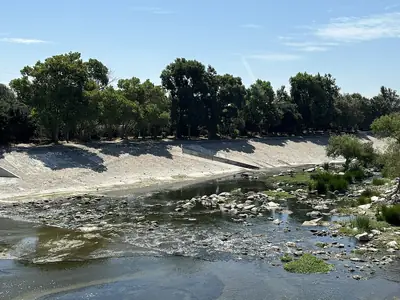
The Los Angeles River reaches the Pacific in Long Beach after a 51-mile journey from the mountains through the city. The Tongva knew the waterway as Paayme Paxaayt, or the West River. In 1769, Spanish explorer Gaspar de Portolá gave it the name that eventually became the Los Angeles River.
After devastating floods in the early twentieth century, engineers confined the river to a concrete channel. The channel changed the river’s natural character, but the current can still move quickly even when the flow appears low.
St Luke’s Episcopal Church and Second Church of Christ, Scientist
St Luke’s Episcopal Church stands at the corner of 7th Street and Atlantic Avenue. The registered historic structure is associated with a long-standing commitment to progressive social ideals and service to the surrounding community.
The former Second Church of Christ, Scientist at 655 Cedar Avenue is now known as the Second Samoan Church. It was added to the National Register of Historic Places in April 2005, but a fire on December 11, 2023 caused extensive damage and the property was closed to the public afterward.
Explore Long Beach with a self-guided audio tour
Neywo gives you a Long Beach audio guide without a group or fixed timetable. The app tells the story of each place as you reach it, at your own pace, and its narration is available in 11 languages.
Long Beach currently has two walking tours and one bus route:
- Queen Mary to Ocean Boulevard: Liners, Racers and Towers by the Sea — a 3.99 km walk lasting 103 minutes, with 9 narrated stops.
- Downtown Long Beach: Brick, Terra Cotta and Mosaic — a 3.27 km walk lasting 88 minutes, with 9 narrated stops.
- Route 121: Ocean Boulevard from the Terrace to the Bluff — a 5.8 km bus route lasting 25 minutes, with 7 narrated stops.
Together, these routes cover maritime landmarks, downtown architecture, historic churches, museums and Ocean Boulevard. Download Neywo and explore Long Beach with the story of each place playing as you arrive—alone, at your own pace, with no group and no schedule.
Places with an audio guide in Long Beach
8 places in Long Beach with a Neywo audio guide. Each one starts telling its story as you reach it.
Self-guided tours in Long Beach
3 tours in Long Beach, free in the Neywo app. Each stop tells its story as you reach it.
- Bus ride
Route 121: Ocean Boulevard from the Terrace to the Bluff
Long Beach Transit route 121 follows Ocean Boulevard through downtown and east along the bluff. Ride it past the Terrace Theater, the Cooper Arms arcade, the First National Bank, the old Grand Prix start line, Villa Riviera and the St. Regis Building to the Long Beach Museum of Art above the Pacific.
Terrace Theater · Cooper Arms Apartments · First National Bank of Long Beach · United States Grand Prix West · Villa Riviera · St. Regis Building …
Open this tour: Route 121: Ocean Boulevard from the Terrace to the Bluff - Walk
Queen Mary to Ocean Boulevard: Liners, Racers and Towers by the Sea
Start under the funnels of the Queen Mary and a Soviet Cold War submarine, then follow Long Beach's waterfront into town: an aquarium on Rainbow Harbor, the old Breakers resort, the street circuit once called the Monaco of North America, and the 1920s apartment towers of Ocean Boulevard. The walk finishes at the St. Regis, one of the first apartment buildings on the coastal bluff.
RMS Queen Mary · Soviet submarine B-427 · Aquarium of the Pacific · Breakers Hotel · Terrace Theater · United States Grand Prix West …
Open this tour: Queen Mary to Ocean Boulevard: Liners, Racers and Towers by the Sea - Walk
Downtown Long Beach: Brick, Terra Cotta and Mosaic
Start at the fire-scarred Second Church of Christ, Scientist, then walk through the downtown that survived the 1933 earthquake: a red-brick Italian Romanesque church, a French Renaissance bank with a clock tower, a Masonic temple, a Beaux Arts office block with griffins, and a 38-foot WPA mosaic that outlived its auditorium. It ends at the Museum of Latin American Art, once a silent-film studio.
Second Church of Christ, Scientist · First Congregational Church · First National Bank of Long Beach · Masonic Temple · Insurance Exchange Building · Long Beach Municipal Auditorium Mural …
Open this tour: Downtown Long Beach: Brick, Terra Cotta and Mosaic
Walk Long Beach with Neywo
Neywo turns Long Beach into a self-guided audio tour. Stories arrive as you reach the place they belong to, and the route reshapes when you wander off it.

