What to See in Bloomington, United States: Free Audio Guide
Things to Do in Bloomington, Indiana: Museums, Campus Landmarks, and Historic Buildings
The best things to do in Bloomington include exploring Indiana University Bloomington, visiting unusual museums and historic homes, and following the city’s limestone and railway heritage through downtown. Bloomington is a university city with a strong cultural identity, from rare books and world-class art to historic theaters and hands-on science exhibits. Neywo offers a free audio guide for Bloomington with 46 narrated places.
What to See in Bloomington
Indiana University Bloomington
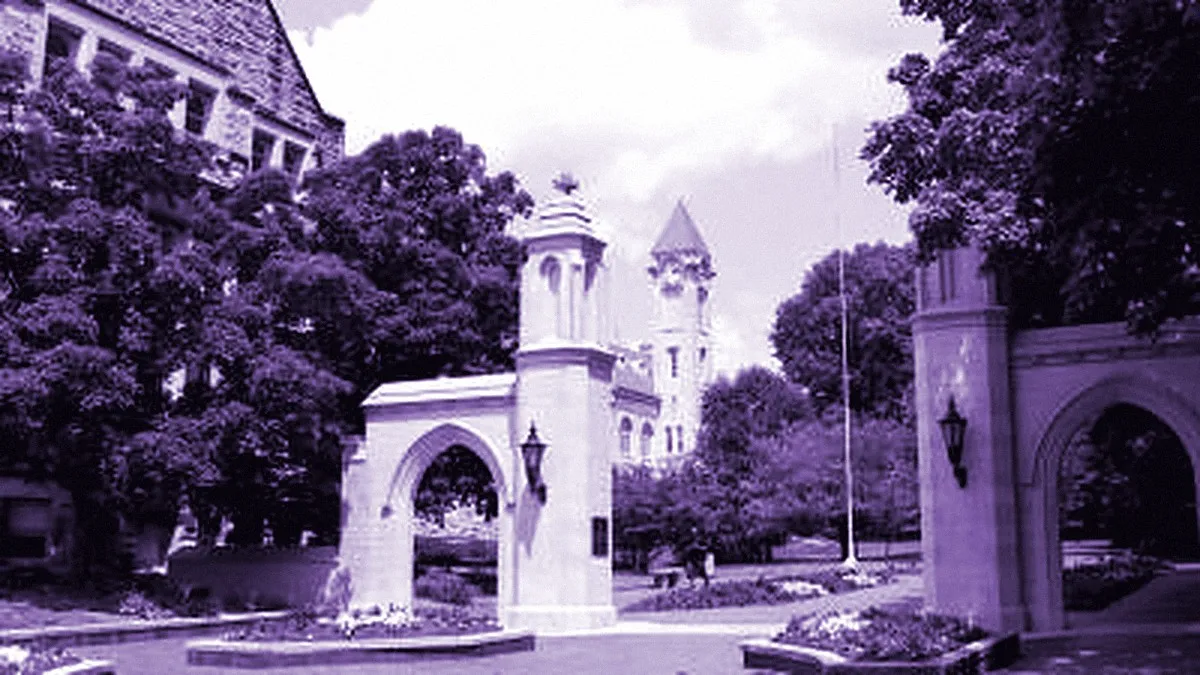
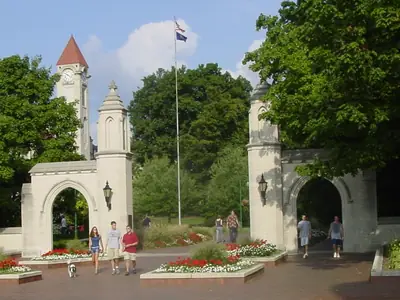
Indiana University Bloomington is the original and largest campus in the Indiana University system. It began in 1820 as the state seminary, became Indiana College in 1829, and took its current name in 1838. Today, it is a major research university and a central part of Bloomington’s character.
The campus brings together academic buildings, performing-arts venues, museums, gardens, and historic landmarks. Among its most distinctive stops are the Lilly Library, Indiana University Auditorium, and Eskenazi Museum of Art.
Eskenazi Museum of Art
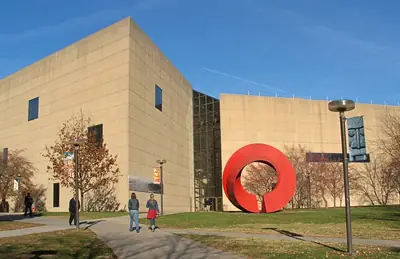
The Eskenazi Museum of Art stands on the Indiana University Bloomington campus in a building designed by I.M. Pei, the architect also associated with the Louvre Pyramid in Paris and the Rock & Roll Hall of Fame in Cleveland. Its geometric design avoids virtually all 90-degree angles, creating an interior with a distinctly dynamic feel.
The museum opened in 1941 as the Indiana University Museum of Art. Its collection contains about 45,000 objects, although only around 1,400 are displayed at one time. The range includes ancient jewelry and Greek pottery alongside works from later periods.
Lilly Library
The Lilly Library is one of the most important rare book and manuscript libraries in the United States. Its collections include a first printed edition of The Canterbury Tales, a Gutenberg Bible, and a First Folio of Shakespeare’s works.
The library also houses the Jerry Slocum Mechanical Puzzle Collection, the world’s largest assemblage of its kind, with more than 30,000 handheld puzzles. The wider collection has grown to 8.5 million manuscripts and 450,000 books, as well as comic books, miniature books, and sheet music.
Indiana University Auditorium
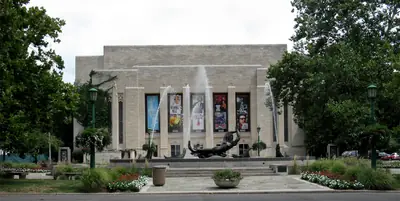
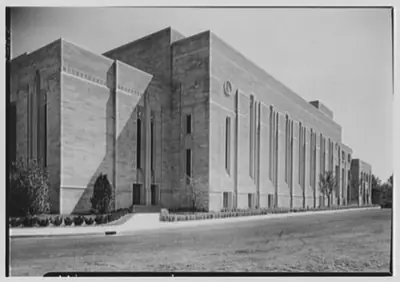
Indiana University Auditorium has been part of the Fine Arts Plaza since opening in March 1941. The 3,200-seat venue was built through Federal Works Agency projects connected with the New Deal.
Its Hall of Murals contains sixteen panels from Thomas Hart Benton’s Indiana Murals, originally created for the 1933 Chicago World’s Fair. The auditorium has hosted performers and speakers including Ella Fitzgerald, Bob Dylan, and Bill Gates, and its programme includes Broadway productions, musical acts, comedy, and classical concerts.
Wylie House Museum
Wylie House Museum occupies a brick home built in 1835, making it one of Bloomington’s oldest buildings. Andrew Wylie, the first president of Indiana University, lived there with his family and died in the house in 1851.
The interior has been restored using a detailed 1859 inventory listing furniture, textiles, and household objects room by room. The result is a carefully recreated picture of the domestic life of a nineteenth-century academic family.
WonderLab
WonderLab is a hands-on science museum in the Bloomington Entertainment and Arts District, beside the B-Line Trail. It opened in 1995 as a private non-profit focused on making science, health, and technology accessible through interactive learning.
Its WonderGarden is an outdoor nature space between the museum and the trail. It includes an amphitheatre and exhibits designed to be touched and explored, with nature packs available from the welcome desk for investigating the garden through the seasons.
Monroe County History Center
The Monroe County History Center occupies Bloomington’s historic Carnegie Library building. The non-profit museum preserves and presents the stories of the communities, people, events, and natural environment of Monroe County.
Permanent and rotating exhibits connect the county’s past with life today. The centre also has genealogy and research resources, making it a useful stop for anyone tracing family history or investigating a local connection.
The Farmer House Museum
The Farmer House Museum is set inside a preserved 1869 residence. Its displays focus on the early and mid-twentieth century, when the Farmer family lived in the house.
Much of what visitors see belonged to the family, including furniture, clothing, and household objects. Because the rooms retain their original domestic character, the museum offers an intimate view of everyday life rather than a traditional collection of cases and labels.
Mathers Museum of World Cultures
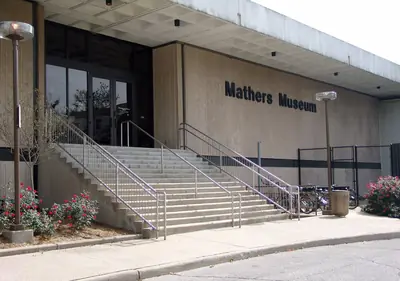
The Mathers Museum of World Cultures was Indiana University’s museum of ethnography and cultural history. It opened its first exhibition in December 1965 and later moved into its purpose-built facility, where the collections continued to expand.
At its peak, the museum held more than 40,000 ethnographic objects and images from cultures around the world, with particular strengths in African, Latin American, and Native American materials, musical instruments, and Indiana history. The museum closed in 2020 for a major transformation, so its current status is important to check before planning a visit.
Buskirk-Chumley Theater
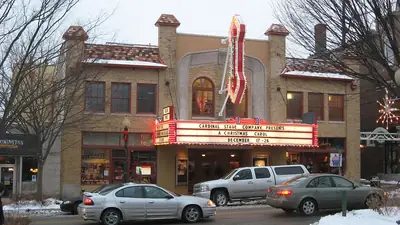
The Buskirk-Chumley Theater opened in 1922 as the Indiana Theater. After surviving fires, foreclosures, and changes in the entertainment industry, it was renamed in 2001 in honour of the Buskirk and Chumley families, whose support helped restore it.
The historic venue hosts a varied calendar that can include jazz, comedy, talks, cult-film screenings, galas, and performances by local and touring artists. Its restored interior preserves the character of the original theatre while accommodating different types of events.
Princess Theatre
The Princess Theatre began as a building from 1892 and was converted and enlarged into a theatre in 1913. It was refurbished in 1923.
Its two-storey brick facade is faced with glazed terra cotta. Full-height pilasters frame the front, while an arched opening and decorative brackets give the building a distinctive presence on the street.
Johnson’s Creamery
Johnson’s Creamery is a red-brick landmark connected with Bloomington’s dairy industry. The original two-storey building dates from around 1914, while matching additions were made as the business expanded through 1951.
A brick smokestack erected in 1949 became a familiar feature of the city skyline. The creamery operated until 1987, and the building was listed on the National Register of Historic Places in 1996 as part of the Bloomington West Side Historic District.
The Garret
The limestone building now known as The Garret was originally the headquarters of BG Hoadley Quarries, linking it directly to Bloomington’s limestone industry. In 1974, the Garrett family transformed it into a cabinet of curiosities filled with geological specimens, antique furniture, and objects collected across generations and continents.
It later became an outdoor equipment store and is now curated as an antique shop by Dennis Garrett’s wife. The building’s contents and limestone walls preserve several layers of Bloomington’s past.
Explore Bloomington with a Self-Guided Audio Tour
A Bloomington self-guided walking tour is an easy way to connect the city’s museums, historic buildings, campus landmarks, and neighbourhoods. Neywo has three walking tours, one bus route, and one bike route in Bloomington, with 46 narrated places in total:
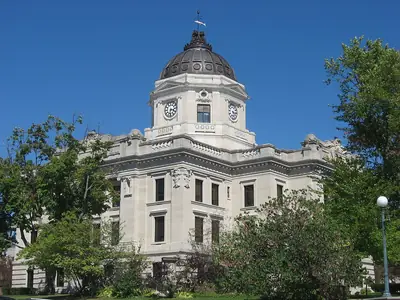
- Downtown walk: 2.57 km, 80 minutes, and 10 stops, from Johnson’s Creamery to Courthouse Square. It includes WonderLab, Buskirk-Chumley Theater, Bloomington City Hall, Monroe County Courthouse, Seminary Square Park, and Princess Theatre.
- Indiana University walk: 1.91 km, 58 minutes, and 7 stops. It connects the Mathers Museum of World Cultures, Kirkwood Observatory, Theodore Rose Well House, Indiana Memorial Union, Lilly Library, Indiana University Auditorium, and Eskenazi Museum of Art.
- Historic homes walk: 2.41 km, 62 minutes, and 7 stops, covering Washington Street and the West Side, including the North Washington Street Historic District and several historic houses.
- Bus route: 3.8 km, 16 minutes, and 4 stops, linking Courthouse Square with Buskirk-Chumley Theater, Johnson’s Creamery, Cochran–Helton–Lindley House, and John L. Nichols House.
- Bike route: 1.2 km, 6 minutes, and 5 stops along the B-Line Trail, passing historic homes, the Wicks Building, Johnson’s Creamery, and WonderLab.
Neywo works as a free audio guide and a flexible alternative to a traditional free walking tour in Bloomington. The app tells the story of each place as you reach it, at your own pace, with no group and no schedule. Narration is available in 11 languages.
Download Neywo and Explore Bloomington
Download Neywo to explore Bloomington with three walking tours, one bus route, and one bike route. Choose a route, move at your own pace, and listen as each story plays when you reach the place. With 46 narrated places and no group or schedule to follow, you can discover Bloomington independently—from the Indiana University campus to downtown, historic homes, and the B-Line Trail.
Bloomington is part of Indiana, in the United States. For another city in the state, continue to Indianapolis, or compare Bloomington with Madison, Indiana.
Places with an audio guide in Bloomington
8 places in Bloomington with a Neywo audio guide. Each one starts telling its story as you reach it.
Self-guided tours in Bloomington
5 tours in Bloomington, free in the Neywo app. Each stop tells its story as you reach it.
- Bike ride
B-Line Trail: a rail corridor past Victorian homes and the creamery
A flat ride on the car-free B-Line rail trail. Start at the elliptical house of Bloomington's first architect, pass a yellow Queen Anne home and the Wicks Building, then roll by the red-brick Johnson's Creamery to the WonderLab science museum and its garden.
John L. Nichols House · Morgan House · Wicks Building · Johnson's Creamery · WonderLab
Open this tour: B-Line Trail: a rail corridor past Victorian homes and the creamery - Bus ride
Route 2W: Courthouse Square to the historic houses
Bloomington Transit's 2 West runs about every 30 minutes through the week, from 3rd and Walnut out along the west side. Ride it past the Buskirk-Chumley Theater and Johnson's Creamery to the Cochran-Helton-Lindley House, then on towards the John L. Nichols House, an architect's own elliptical home.
Buskirk-Chumley Theater · Johnson's Creamery · Cochran–Helton–Lindley House · John L. Nichols House
Open this tour: Route 2W: Courthouse Square to the historic houses - Walk
Bloomington's downtown: from the creamery to Courthouse Square
A walk through the Midwestern college town's historic core. Start at a red-brick creamery and a freight depot beside the B-Line rail trail, pass the hands-on science museum and the 1922 Indiana theater, then reach Courthouse Square, where limestone Beaux Arts and Italianate fronts line the streets. It ends at Seminary Square, the spot where Indiana University began.
Johnson's Creamery · Illinois Central Railroad Freight Depot · WonderLab · Buskirk-Chumley Theater · Bloomington City Hall · Wicks Building …
Open this tour: Bloomington's downtown: from the creamery to Courthouse Square - Walk
Indiana University: stars, murals and rare books
The leafy Old Crescent of the university. See the 1901 observatory with its historic telescope, the romantic Rose Well House in Dunn's Woods, and the huge Memorial Union. Then reach the Fine Arts Plaza, with the Lilly Library's treasures, Thomas Hart Benton's murals in the Auditorium and an I. M. Pei museum of art.
Mathers Museum of World Cultures · Kirkwood Observatory · Theodore Rose Well House · Indiana Memorial Union · Lilly Library · Indiana University Auditorium …
Open this tour: Indiana University: stars, murals and rare books - Walk
Historic homes of Washington Street and the West Side
Bloomington's architects and governors at home. See an elliptical house the town's first full-time architect designed as his own showcase, a yellow Queen Anne mail-order design, then walk west to a Greek Revival house where an Indiana governor lived, an African-American architect's stone church and the oldest I-house in town.
John L. Nichols House · Morgan House · North Washington Street Historic District · Cochran–Helton–Lindley House · Second Baptist Church · Elias Abel House …
Open this tour: Historic homes of Washington Street and the West Side
Walk Bloomington with Neywo
Neywo turns Bloomington into a self-guided audio tour. Stories arrive as you reach the place they belong to, and the route reshapes when you wander off it.

