What to See in Covington, United States: Free Audio Guide
Things to do in Covington, Louisiana
Looking for things to do in Covington, Louisiana? This city offers a chance to explore historic streets, religious landmarks, memorials, and places connected with local history. Neywo has a free audio guide for Covington with 19 narrated places, so you can discover the city while its stories play as you reach each stop.
Covington is in Louisiana, in the United States. The places described in Neywo’s Covington guide are in Covington, Kentucky, so check the destination carefully before setting out.
What to see in Covington
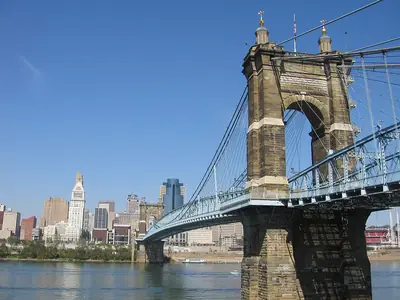
John A. Roebling Suspension Bridge
The John A. Roebling Suspension Bridge crosses the Ohio River between Cincinnati, Ohio, and Covington, Kentucky. When it opened to traffic on January 1, 1867, its 1,057-foot main span was the longest suspension span in the world. Today, it also serves as a pedestrian connection between Cincinnati and Northern Kentucky.
Riverside Drive Historic District
At the meeting point of the Licking and Ohio Rivers, Riverside Drive Historic District looks across toward Cincinnati. More than thirty buildings here are recognized as notable examples of their architectural styles.
The district includes the Thomas Carneal House, built in 1815 and described as the first brick house in Covington. Its Georgian design recalls the work of Italian architect Andrea Palladio. The riverside is also marked by seven bronze statues depicting figures from the area’s history.
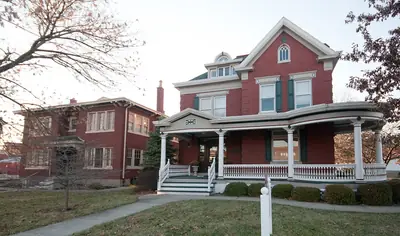
Daniel Carter Beard Boyhood Home
The Daniel Carter Beard Boyhood Home stands in the Riverside Drive Historic District, overlooking the Licking River. Built in 1821, the two-and-a-half-story brick house is one of the two oldest buildings in Kenton County. It is connected with the early history of the Boy Scouts of America.
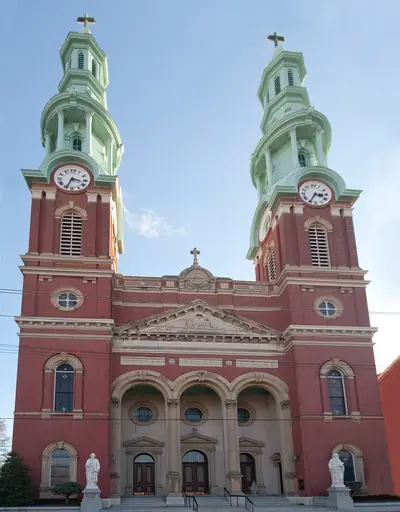
Mother of God Roman Catholic Church
Mother of God Roman Catholic Church is a landmark on West Sixth Street, known for its twin Renaissance towers and richly decorated interior. Murals by Johann Schmitt, described as a famous Vatican artist, are among its most distinctive features.
The church was added to the National Register of Historic Places in 1973 and included in the Mutter Gottes Historic District in 1980.
Seminary Square Historic District
The Seminary Square Historic District is one of Covington’s historic areas. Its name reflects the city’s connection with the Western Baptist Theological Institute, whose trustees founded nearby Linden Grove Cemetery.
Cathedral Basilica of the Assumption
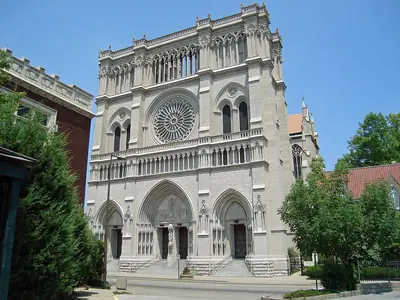
The Cathedral Basilica of the Assumption serves as the cathedral of the Diocese of Covington and as a minor basilica of the Roman Catholic Church. Its story began with St. Mary’s Church, built in 1834. A larger church replaced it in 1851, becoming St. Mary’s Cathedral two years later.
Construction of the present building began in the mid-1890s under Bishop Camillus Paul Maes, and the cathedral was dedicated in 1901. Its exterior was inspired by Notre Dame de Paris, while the interior followed the model of the Basilica of Saint-Denis in France. Pope Pius the Twelfth elevated it to the rank of minor basilica in 1953.
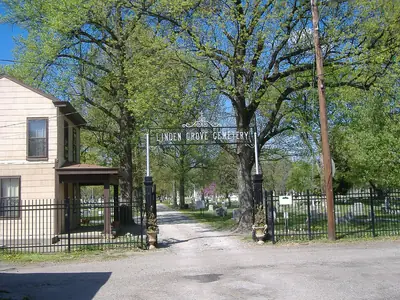
Linden Grove Cemetery
Linden Grove Cemetery, also known as Linden Grove Cemetery and Arboretum, has been part of Covington since 1842. It was the city’s second public cemetery, and burials were permitted from the beginning without regard to race or religion.
The cemetery contains the stories of Covington’s founders, public figures, and veterans. Bodies from Craig Street Cemetery, the city’s first public burial ground, were later moved here. By 1858, more than two thousand people had been buried at Linden Grove, including many victims of the cholera outbreaks of 1850 and 1851.
Two notable memorials stand within the cemetery.
GAR Monument in Covington
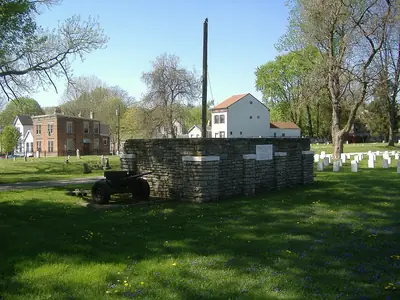
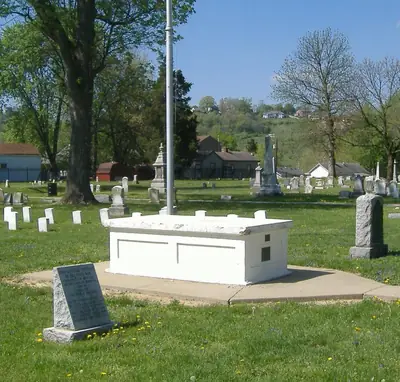
The GAR Monument commemorates the Grand Army of the Republic, an organization representing surviving veterans of the Union Army. Built in 1929 by Oliver Perry Sine, it has an unusual sarcophagus shape and is made of concrete painted white.
The monument began as a pedestal for a World War One cannon. When the cannon was later stolen or scrapped during World War Two, the pedestal became the monument that remains today. It was placed on the National Register of Historic Places.
Veteran’s Monument
The Veteran’s Monument, also known as the War Between the States Veteran’s Memorial, commemorates both Union and Confederate veterans of the American Civil War. Its platform-like design includes space on top for presentations, while the hollow center was intended for presenters.
The structure is made of concrete and limestone, with engaged columns at the corners, steps on the south face, and an inscription on the north face. A brass American Legion seal appears on the east face, and cannons stand on its east and west sides. The American Legion dedicated the monument on May 30, 1933.
Railway Museum of Greater Cincinnati
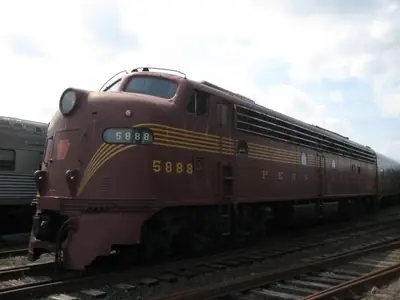
The Railway Museum of Greater Cincinnati focuses on the history and world of rail travel. It offers another perspective on the region’s transportation history while exploring Covington.
Peaselburg Neighborhood Historic District
The Peaselburg Neighborhood Historic District is a preserved residential area with its own historic character. It is one of several districts that show how Covington developed beyond its main landmarks.
Ritte’s Corner Historic District
Ritte’s Corner Historic District is another part of Covington recognized for its historic character. Walking through the area adds a neighborhood-scale perspective to the city’s heritage.
Wallace Woods Area Residential Historic District
The Wallace Woods Area Residential Historic District offers another opportunity to notice Covington’s preserved residential settings and architectural character.
West Fifteenth Street Historic District
The West Fifteenth Street Historic District is one of Covington’s historic neighborhoods. It contributes to the broader picture of the city’s preserved streets and residential areas.
Ninth Street Baptist Church
Ninth Street Baptist Church is a local church included among Covington’s places of interest. It adds a community and religious landmark to a route otherwise marked by historic districts, cemeteries, and major buildings.
Explore Covington with a self-guided walking tour
Neywo offers one walking tour in Covington: “Covington’s River Bluff: Bridge, Boy Scouts and Civil War Graves.” The route covers 4.41 km, takes about 119 minutes, and includes 10 narrated stops:
- John A. Roebling Suspension Bridge
- Riverside Drive Historic District
- Daniel Carter Beard Boyhood Home
- Trinity Episcopal Church
- Mother of God Roman Catholic Church
- Seminary Square Historic District
- Cathedral Basilica of the Assumption
- Linden Grove Cemetery
- GAR Monument in Covington
- Veteran’s Monument
With a Covington audio guide, each story plays as you reach the place, at your own pace. There is no group and no schedule. Narration is available in 11 languages, making the tour a flexible way to explore independently.
Download Neywo and explore Covington at your own pace
Download Neywo to follow Covington’s riverfront, historic districts, churches, cathedral, cemetery, and Civil War memorials with a narrated walking route. The free audio guide brings each place to life as you arrive, so you can pause, look around, and continue when you are ready—without joining a group or following a fixed schedule.
Places with an audio guide in Covington
8 places in Covington with a Neywo audio guide. Each one starts telling its story as you reach it.
Self-guided tours in Covington
1 tour in Covington, free in the Neywo app. Each stop tells its story as you reach it.
- Walk
Covington's River Bluff: Bridge, Boy Scouts and Civil War Graves
Start at John A. Roebling's suspension bridge, once the longest in the world, and stroll the Riverside Drive district where the Boy Scouts' founder grew up. Continue through Gothic Revival and Renaissance churches and Seminary Square to a Notre Dame lookalike cathedral, then end in Linden Grove Cemetery, where Union and Confederate soldiers lie facing each other.
John A. Roebling Suspension Bridge · Riverside Drive Historic District · Daniel Carter Beard Boyhood Home · Trinity Episcopal Church · Mother of God Roman Catholic Church · Seminary Square Historic District …
Open this tour: Covington's River Bluff: Bridge, Boy Scouts and Civil War Graves
Walk Covington with Neywo
Neywo turns Covington into a self-guided audio tour. Stories arrive as you reach the place they belong to, and the route reshapes when you wander off it.

