Visiting Ann Arbor, United States: Top Sights on Foot
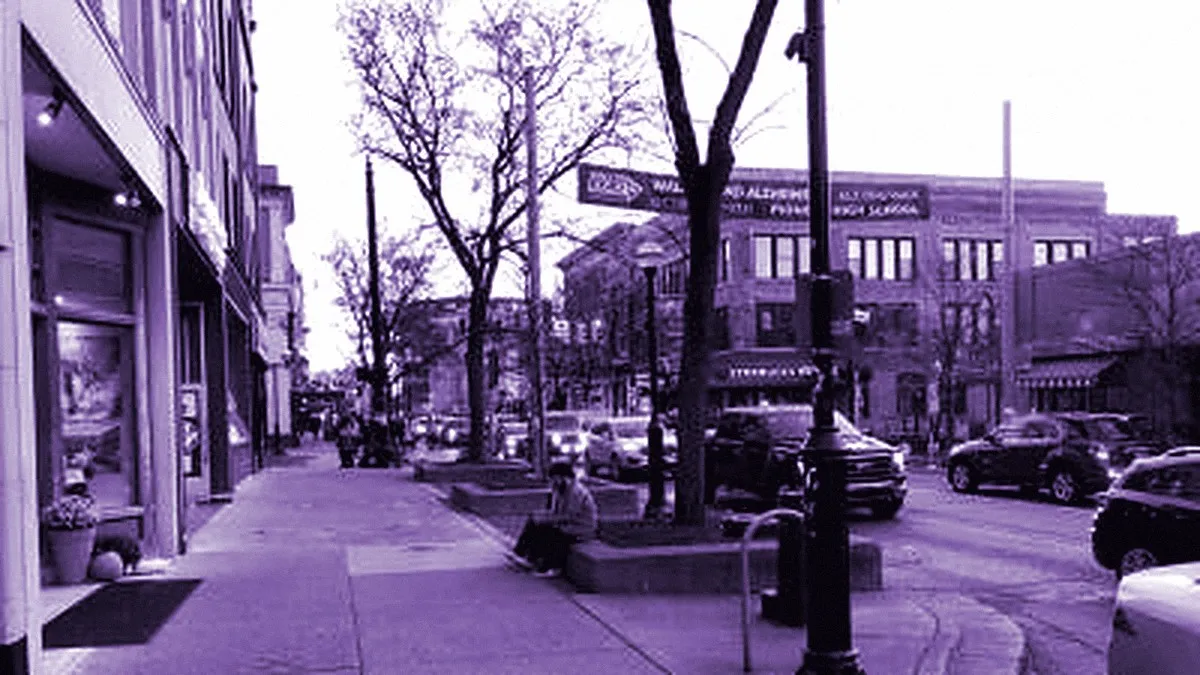
Things to Do in Ann Arbor, Michigan
Looking for things to do in Ann Arbor? This university city combines museums, historic houses, performing arts, public sculpture, and the energy of the University of Michigan. Its attractions range from a 19th-century cobblestone farmhouse to a monumental rotating cube, making Ann Arbor rewarding to explore on foot. Neywo offers a free audio guide for Ann Arbor with 63 narrated places.
Ann Arbor is in Michigan, in the United States, and the University of Michigan shapes much of the city’s cultural identity. Here are the places worth adding to your itinerary.
What to see in Ann Arbor
University of Michigan
The University of Michigan was founded in 1817 and moved from Detroit to Ann Arbor in 1837. Its campus covers more than 3,000 acres and includes 19 schools and colleges, more than 280 degree programs, and over 53,000 students.
The university’s landmarks make the campus one of the best places to begin exploring Ann Arbor. The Law Quadrangle, Michigan Union, Angell Hall, the Diag, Hatcher Graduate Library, Hill Auditorium, and the President’s House all contribute to its distinctive atmosphere.
Michigan Stadium
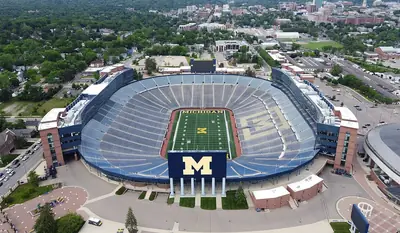
Michigan Stadium, known as “The Big House,” is home to the University of Michigan Wolverines. It opened in 1927 with an original capacity of 75,000 seats and expanded several times, including renovations in 2010. Its official capacity is 107,601, and the stadium also hosts the university’s main graduation ceremonies.
University of Michigan Museum of Art
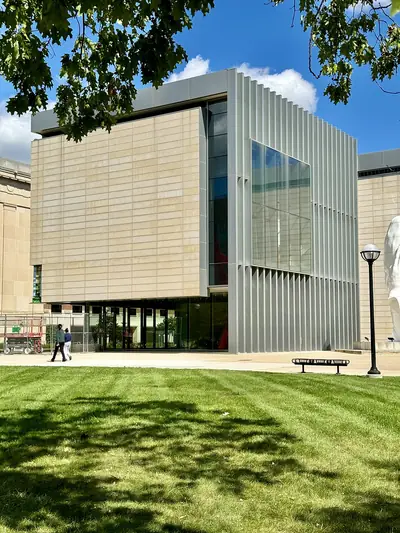
The University of Michigan Museum of Art holds more than 20,000 works representing different cultures, eras, and media. Its collection includes works by Pablo Picasso, Claude Monet, Franz Kline, and James McNeill Whistler, along with glasswork from Tiffany & Company.
The museum occupies Alumni Memorial Hall, a Neoclassical building completed in 1909 as a memorial to university alumni who fought and died in the Civil War. The original bronze doors and columns give the entrance a strong architectural presence.
Kelsey Museum of Archaeology
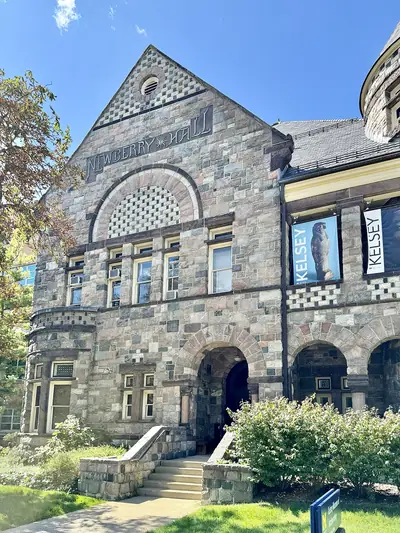
The Kelsey Museum of Archaeology houses more than 100,000 objects from ancient and medieval civilizations, including Egypt, Greece, Rome, and the Near East. It is also an active research center, supporting excavations, fieldwork, and educational programs.
The museum’s original home, Newberry Hall, was completed in 1891 in the Richardsonian Romanesque style. Its heavy stone arches and rugged masonry remain part of the museum’s character, alongside the later William E. Upjohn Exhibit Wing.
University of Michigan Museum of Natural History
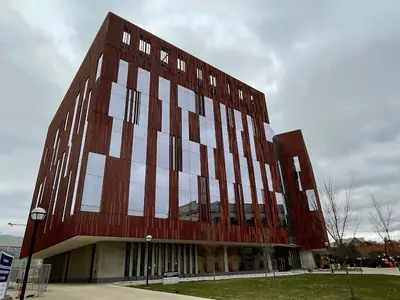
The University of Michigan Museum of Natural History is located in the Biological Sciences Building on Central Campus. Its collections date back to 1837, and its first public exhibitions opened in 1881.
The museum reopened in its current location in 2019 after moving from the Alexander G. Ruthven Museums Building, which had housed anthropology, paleontology, zoology, and botany collections for nearly ninety years. Today, the museum spans more than 45,000 square feet, and admission is free.
Endover, or The Cube
On the University of Michigan campus, Endover is a monumental cube made of CorTen steel. Its weathered, rust-colored surface is part of the sculpture’s appearance, but its most unusual feature is its movement: the cube balances on a single point and can rotate when pushed gently.
It is an artwork that encourages interaction rather than passive viewing.
Power Center for the Performing Arts
The Power Center for the Performing Arts is the University of Michigan’s main performing arts venue. The proscenium-stage theater opened in 1971 and was designed by Kevin Roche John Dinkeloo and Associates.
Its location in the heart of Central Campus makes it a natural stop when exploring the university’s architecture, museums, and cultural venues.
The Ark
The Ark has been part of Ann Arbor’s folk and acoustic music scene since 1965. It began as a coffeehouse in a campus ministry house on Hill Street before becoming a nationally renowned nonprofit venue.
The intimate space seats about 400 people and is known for its warm listening environment and acoustics designed for unamplified sound. More than 300 live performances take place there each year.
Ann Arbor Hands-On Museum
The Ann Arbor Hands-On Museum occupies the historic Ann Arbor Central Fire Station, an Italianate firehouse built in 1882. The building served as the city’s main fire station for almost a century, until the fire department moved to a new building on the same block in 1978.
That same year, Cynthia Yao and a group of volunteers founded the museum. A modern wing was later added, creating a combination of historic brickwork and four floors of exhibition space. The museum offers more than 250 hands-on experiences focused on science, technology, engineering, art, and mathematics.
Argus Museum
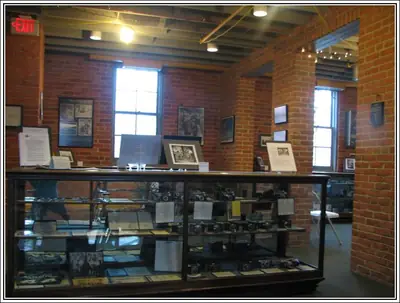
The Argus Museum is located on the second floor of the Argus I Building, one of the original factories where Argus cameras were manufactured. Its exhibits trace the history of the Argus Camera Company through cameras, optical equipment, and products made under the company’s earlier names.
The museum also tells the story of the people who designed and built the equipment, offering a detailed look at a company that helped make photography accessible to everyday Americans.
Cobblestone Farm and Museum
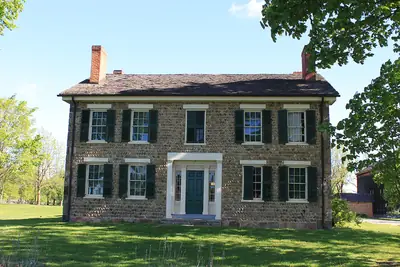
Cobblestone Farm and Museum preserves a quiet piece of 19th-century rural life beside Buhr Park. The farmhouse was built in 1844 for Dr. Benajah Ticknor using local fieldstones arranged in a distinctive herringbone pattern. It is one of the few cobblestone buildings in Michigan.
The house has a Classical Revival façade with Doric pilasters and stone quoins. Inside, original wood-grained finishes, a working hearth, a bake oven, a water heater, and period furnishings illustrate how a pioneer family lived through a Michigan winter.
Kellogg-Warden House
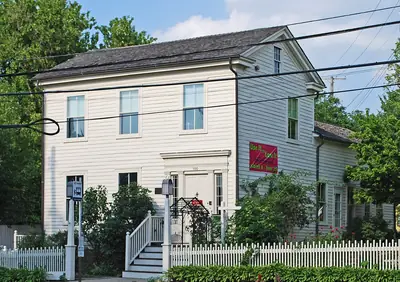
The Kellogg-Warden House is a Greek Revival home built around 1835, when Michigan was still a territory. It originally stood on Wall Street before being moved to North Main Street in 1990.
The house was donated to the Washtenaw County Historical Society after the University of Michigan acquired the property in 1988. It was then restored and opened as a museum, preserving one of Ann Arbor’s oldest surviving homes.
Kempf House Museum
Kempf House Museum is a Greek Revival house on South Division Street with a strong connection to music. Built in 1853 for Henry Bennett, Ann Arbor’s postmaster and later a University of Michigan steward, it became the home of musicians Reuben and Pauline Kempf in 1890.
The Kempfs turned the house into a center for musical arts, hosting performers including Ignacy Jan Paderewski, Victor Herbert, and Ernestine Schumann-Heink. The city acquired the property in 1969 and restored the music studio to its historic appearance.
Ann Arbor Art Center
The Ann Arbor Art Center, known locally as A2AC, is a nonprofit gallery with a focus on experimental, thought-provoking exhibitions and diverse perspectives. Its main gallery presents changing displays of painting, sculpture, installation, and mixed media.
The center also organizes opening receptions, children’s programs, youth sculpture workshops, and public art projects such as alley murals and planter installations.
Earhart Manor
Earhart Manor is a historic house in Ann Arbor. Its architecture and setting make it a worthwhile stop for visitors interested in the city’s historic buildings and residential character.
Explore Ann Arbor with a self-guided audio tour
An Ann Arbor self-guided walking tour lets you explore the city without joining a group or following a fixed schedule. Neywo has three walking tours, one bus route, and one bike route in Ann Arbor:
- Maize and Blue: The Heart of the University — a 1.95 km walk lasting 81 minutes, with 12 narrated stops.
- Stage Lights and Star Gazing — a 2.02 km walk lasting 65 minutes, with 8 narrated stops.
- Old Ann Arbor: Kerrytown to Main Street — a 2.18 km walk lasting 70 minutes, with 9 narrated stops.
- Route 65: Downtown, Campus and the Observatory Hill Side — a 4.1 km bus route lasting 18 minutes, with 8 narrated stops.
- From Old Town to the Ford Library — a 3.7 km bike route lasting 18 minutes, with 3 narrated stops.
Download Neywo and explore Ann Arbor at your own pace. The app tells the story of each place as you reach it, so you can walk, ride, or take the bus with no group and no schedule. Narration is available in 11 languages, and the free audio guide includes 63 narrated places.
Places with an audio guide in Ann Arbor
8 places in Ann Arbor with a Neywo audio guide. Each one starts telling its story as you reach it.

Self-guided tours in Ann Arbor
5 tours in Ann Arbor, free in the Neywo app. Each stop tells its story as you reach it.
- Bike ride
From Old Town to the Ford Library
Ride north-east from the Greek Revival houses near downtown along Ann Arbor's cycle lanes to the Gerald R. Ford Presidential Library on North Campus.
Kempf House Museum · Judge Robert S. Wilson House · Gerald R. Ford Presidential Library
Open this tour: From Old Town to the Ford Library - Bus ride
Route 65: Downtown, Campus and the Observatory Hill Side
TheRide's weekday route 65 loops from the Central Campus Transit Center through downtown past the old firehouse museum, Victorian houses, State Theatre and the campus performing arts venues, then north to a Greek Revival temple and a stone Catholic church.
Ann Arbor Hands-On Museum · Jacob Hoffstetter House · State Theatre · Power Center for the Performing Arts · Horace H. Rackham School of Graduate Studies · Unitarian Universalist Church …
Open this tour: Route 65: Downtown, Campus and the Observatory Hill Side - Walk
Maize and Blue: The Heart of the University
Start in a Tudor-Gothic quad modelled on Oxford, pass the oldest building on campus, and cross the Diag past the brass M that students refuse to step on. Along the way you meet a spinning steel cube, JFK's Peace Corps steps and a carillon tower.
University of Michigan Law Quadrangle · President's House, University of Michigan · University of Michigan Museum of Art · Michigan Union · Endover · Kelsey Museum of Archaeology …
Open this tour: Maize and Blue: The Heart of the University - Walk
Stage Lights and Star Gazing
From a 1920s movie palace and a neon marquee to a Romanesque church, an Art Deco graduate school and a 1850s observatory still holding its original telescope. A walk from State Street to the hill above the Huron River.
Michigan Theater · State Theatre · Unitarian Universalist Church · Horace H. Rackham School of Graduate Studies · Power Center for the Performing Arts · University of Michigan Museum of Natural History …
Open this tour: Stage Lights and Star Gazing - Walk
Old Ann Arbor: Kerrytown to Main Street
A relocated 1835 farmhouse, the farmers market, Greek Revival temples and Victorian survivors, ending at the skyscraper that once ruled the skyline and the basement club where Nirvana loved to play.
Kellogg-Warden House · Ann Arbor Farmers Market · Ann Arbor Hands-On Museum · Judge Robert S. Wilson House · Kempf House Museum · Jacob Hoffstetter House …
Open this tour: Old Ann Arbor: Kerrytown to Main Street
Walk Ann Arbor with Neywo
Neywo turns Ann Arbor into a self-guided audio tour. Stories arrive as you reach the place they belong to, and the route reshapes when you wander off it.

