What to See in Traverse City, United States: Free Audio Guide
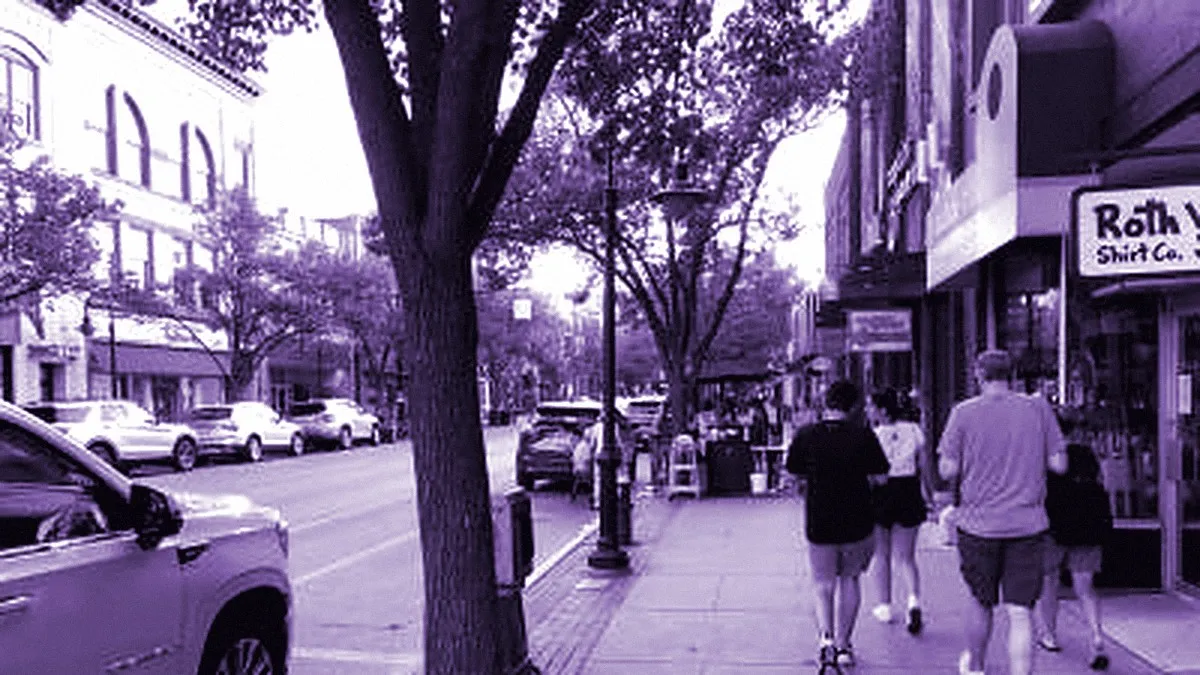
Things to Do in Traverse City: Historic Streets, Film, Art and Grand Traverse Bay
Looking for things to do in Traverse City? This city on Grand Traverse Bay combines waterfront scenery with historic neighborhoods, independent cultural venues, public art and the agricultural heritage of Michigan’s Cherry Capital. Neywo has a free audio guide for Traverse City with 16 narrated places, so you can explore while the story of each stop plays as you arrive.
What to See in Traverse City
The city’s most interesting sights range from nineteenth-century homes and civic buildings to cinemas, museums and lakeside parks. A self-guided route can connect many of them on foot.
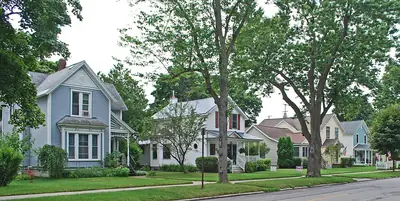
Central Neighborhood Historic District
The Central Neighborhood Historic District covers the area between Fifth, Union, Ninth and Division Streets. Listed on the National Register of Historic Places in 1979, it includes 459 structures and preserves a broad residential picture of Traverse City’s past. The Perry Hannah House is separately listed within the district.
Perry Hannah House
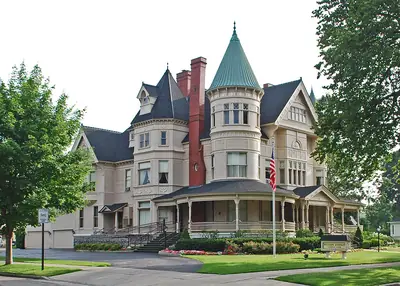
The Perry Hannah House, also known as the Reynolds-Jonkhoff Funeral Home, is one of Traverse City’s most distinctive historic residences. Built in 1893 as Perry Hannah’s retirement home, it is a Queen Anne building with rounded corner turrets, a broad veranda and an asymmetrical design.
The house contains 40 rooms across four floors. Its interior features woodwork in cherry, oak, walnut and Brazilian mahogany, along with ten fireplaces decorated with handmade Venetian tiles. It was designed by Grand Rapids architect William G. Robinson and later saved from demolition by being adapted for use as a funeral home.
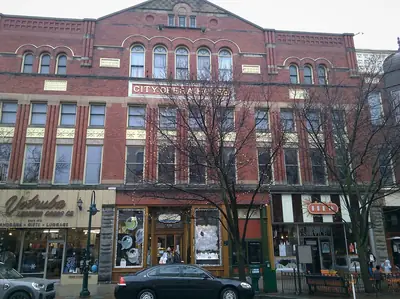
City Opera House Historical Marker
The City Opera House became the city’s first building illuminated by electric lights when it opened in 1891. It hosted balls, concerts, plays and important meetings, and could seat around 1,200 people.
Its Victorian character remains part of the building’s appeal. Inside, the main ballroom has wood floors and high ceilings, and the restored venue continues to host dances, meetings and opera performances.
State Theatre
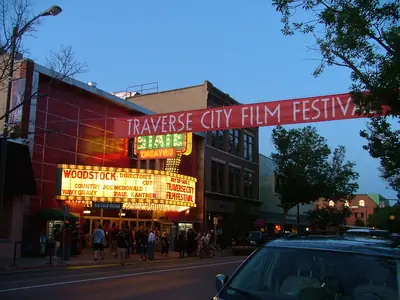
The State Theatre on East Front Street is a downtown venue for both film and live performance. The present theatre opened in 1949 and operated as a first-run cinema until 1996. It is the fourth theatre to occupy the site, following Steinberg’s Grand Opera House and two versions of the Lyric Theatre.
The Traverse City Film Festival gave the building a new role in 2005. After major renovations, it reopened on November 17, 2007, as an atmospheric theatre with modern amenities and a design inspired by classic movie palaces.
Bijou by the Bay
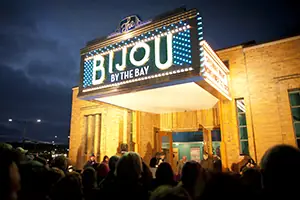
Bijou by the Bay is a small nonprofit cinema in a city park beside Grand Traverse Bay. Its 150 seats and location next to the multi-use TART Trail give it an intimate setting, while its program connects it with the Traverse City Film Festival.
The building dates from the 1930s, when it was constructed through President Roosevelt’s Civil Works Administration as the Con Foster Museum. In 2013, it was renovated into an accessible cinema. Inside, murals by local artists Rufus Snoddy and Glen Wolff depict Lake Michigan scenery and include details celebrating classic films and Michigan’s cultural heritage.
Grand Traverse County Courthouse Historical Marker
The courthouse stands out with its Richardsonian Romanesque design, red brick and sandstone façade, intricate details and prominent clock tower. Its story began in the mid-nineteenth century, after land was donated by Hannah, Lay, and Company for the first county buildings.
Those buildings were destroyed by fire in 1862. The courthouse that followed was later renovated and adapted for district and circuit courts in 1979 and 1981, after a new city-county governmental center was built nearby. The historical marker helps explain the building’s place in the development of Grand Traverse County’s legal and civic life.
Boardman Neighborhood Historic District
The Boardman Neighborhood Historic District reflects Traverse City’s early lumber boom. Roughly bounded by State Street, Webster Street, Railroad Avenue and Boardman Avenue, it was listed on the National Register of Historic Places in 1978.
About 174 preserved structures remain in the district, including grand Victorian homes and more modest clapboard houses. The neighborhood later declined during the 1920s before a resurgence in the 1970s restored its single-family character. Walking through the district offers a close look at the different levels of prosperity that shaped the city’s late-nineteenth-century residential architecture.
Grand Traverse Bay and Larry Cole Hardy
Grand Traverse Bay is an arm of Lake Michigan stretching 32 miles along the northwest coast of Michigan’s Lower Peninsula. The bay is separated from the larger lake by the Leelanau Peninsula and divides into East and West Arms around the Old Mission Peninsula.
Traverse City sits where the two arms meet. The bay’s shoreline includes sandy beaches, clear water and forested slopes, while the surrounding inland landscape is associated with cherry orchards and vineyards. Activities mentioned around the bay include sailing, paddleboarding, kayaking and kiteboarding in warmer months, as well as snowshoeing and ice fishing in winter.
Sunset Park
Sunset Park offers a quieter waterfront setting close to downtown. Its broad lawn opens toward a sandy beach, with shaded tables, built-in grills and a play area for casual visits and picnics.
The park is especially suited to slowing down at the end of the day. Across the water, the sunset changes the bay’s surface to shades of orange and rose as the horizon fades into twilight.
Dennos Museum Center
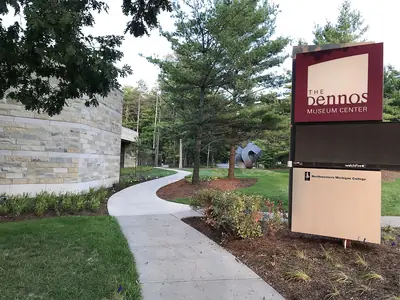
The Dennos Museum Center is a fine art museum and cultural center on the Northwestern Michigan College campus. Open since 1991, it is particularly known for its permanent collection of Inuit art, while its changing exhibitions focus on modern and contemporary art.
The museum’s collection contains more than 3,100 works, including nearly 2,000 Inuit art prints and sculptures. Three changing exhibition galleries sit alongside semi-permanent galleries, a sculpture court and an Interactive Discovery Gallery for children and adults. Outdoors, 14 sculptures by international and Michigan artists form another part of the museum experience.
Greetings from Traverse City
Traverse City’s cherry heritage appears throughout its shops and public spaces. The region produces 40 percent of the annual tart cherry crop in the United States, and the Cherry Republic Store downtown celebrates that identity with cherry jams, preserves, chocolates, pies and the Original Cherry Boomchunka cookie.
The store was founded in 1989 by Bob Sutherland and opened its flagship downtown location in 2007. Nearby, the J. Smith Walkway and Fustini’s Oils and Vinegars add more local flavor to this part of the city.
Laughing Fish Gallery and Art Café
Laughing Fish Gallery and Art Café is another stop for visitors interested in Traverse City’s creative side. It offers a chance to look around a gallery and enjoy its café atmosphere during a city walk.
Bridges, Grace Episcopal Church and Other Stops
North Cass Street Bridge and Park Street Bridge add crossings over the Boardman River to the walking experience. Park Street Bridge is associated with the meeting of natural scenery and historic character along the river.
The stop titled “Autumn, 1989” leads to Grace Episcopal Church, whose bright white exterior and tall spire give it a distinctive presence downtown. The present church was completed in 1897 in an Early Gothic Vernacular style. Inside are carved wooden pews, a softly illuminated altar and stained-glass windows.
Explore Traverse City with Neywo
Neywo’s “Lumber Barons, Marquees and Sunsets on Grand Traverse Bay” is a 5.41-kilometre walking tour lasting 114 minutes, with nine narrated stops. It includes the Central Neighborhood Historic District, Perry Hannah House, City Opera House Historical Marker, State Theatre, Bijou by the Bay, Grand Traverse County Courthouse Historical Marker, Boardman Neighborhood Historic District, Sunset Park and Dennos Museum Center.
Download Neywo and explore Traverse City at your own pace. The app tells the story of each place as you reach it, with no group and no schedule. Narration is available in 11 languages.
Traverse City is part of Michigan in the United States, and it can also be a starting point for discovering other destinations such as Grand Rapids, Lansing and Holland.
Places with an audio guide in Traverse City
8 places in Traverse City with a Neywo audio guide. Each one starts telling its story as you reach it.
Self-guided tours in Traverse City
1 tour in Traverse City, free in the Neywo app. Each stop tells its story as you reach it.
- Walk
Lumber Barons, Marquees and Sunsets on Grand Traverse Bay
Follow the money of Traverse City's lumber boom from a Queen Anne mansion and the first electrically lit opera house to the red-brick courthouse and the Victorian streets of the Boardman district. Pass the glowing marquees of the State Theatre and the Bijou by the Bay, then finish on the beach at Sunset Park and the Inuit collection at the Dennos Museum.
Central Neighborhood Historic District · Perry Hannah House · City Opera House Historical Marker · State Theatre · Bijou by the Bay · Grand Traverse County Courthouse Historical Marker …
Open this tour: Lumber Barons, Marquees and Sunsets on Grand Traverse Bay
Walk Traverse City with Neywo
Neywo turns Traverse City into a self-guided audio tour. Stories arrive as you reach the place they belong to, and the route reshapes when you wander off it.

