Things to Do in Lansing, United States: Walking Guide
Things to Do in Lansing, Michigan: Historic Landmarks, Museums and Riverfront Sights
The best things to do in Lansing include exploring Michigan’s state government, discovering the state’s history, and visiting museums and historic buildings around downtown. Michigan’s capital combines important civic landmarks with churches, transportation history, hands-on science and quieter places such as the historic Moores Park Pool. Neywo offers a free audio guide for Lansing with 13 narrated places, available in 11 languages.
What to See in Lansing
Lansing’s main sights are concentrated around the Capitol and the Grand River, making the city well suited to exploring on foot. These are some of the most important places to include in a visit.
Michigan State Capitol
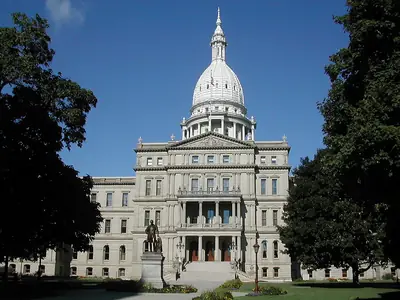
The Michigan State Capitol is a National Historic Landmark at the intersection of Capitol and Michigan Avenues. The building houses the chambers and offices of the Michigan Legislature, as well as the ceremonial offices of the governor and lieutenant governor.
It is the third building to serve as Michigan’s state government headquarters. The state capital moved from Detroit to Lansing in 1847, and the present neoclassical capitol was built between 1872 and 1878. It was dedicated in January 1879.
Michigan History Museum and Library of Michigan
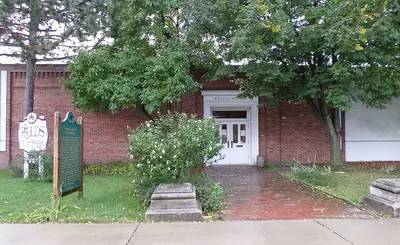
Two blocks west of the Capitol, the Michigan Library and Historical Center brings together the Michigan History Museum and the Library of Michigan. The five-story building offers a natural stop for anyone interested in the state’s past and intellectual life.
The Michigan History Museum traces Michigan’s social and cultural heritage through the stories of its life, land and people. It opened in March 1989 and is administered by the Michigan History Center within the Michigan Department of Natural Resources.
The Library of Michigan is the state library. Established in 1828, it collects and preserves Michigan publications, provides research and reference services, and supports libraries throughout the state. Since 2009, it has been a division of the Michigan Department of Education.
St. Mary Cathedral
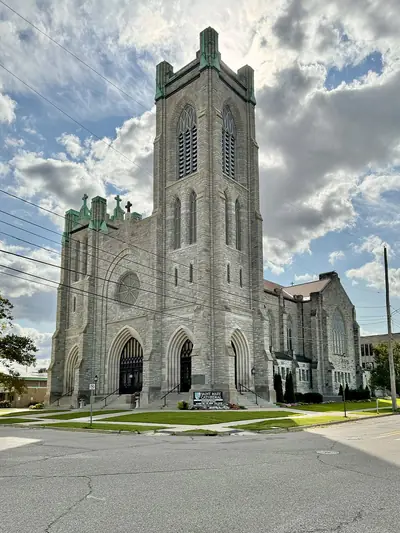
Just one block north of the State Capitol, St. Mary Cathedral is the seat of the bishop of the Diocese of Lansing. Its neo-Gothic design was created by E. A. Bond, and construction took place from 1911 to 1913.
The cathedral’s stained-glass windows were made in Munich and installed in 1923. St. Mary became the cathedral of the newly formed Diocese of Lansing in 1939. Its history also includes a serious rectory fire in January 1938, followed by several major renovations that changed and later restored elements of the building’s interior.
Central Methodist Episcopal Church
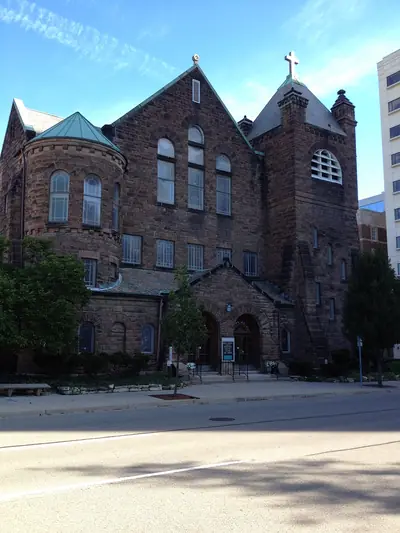
Central Methodist Episcopal Church stands at 215 North Capitol Avenue and is part of Lansing’s architectural heritage. Listed on the National Register of Historic Places in 1980 under its original name, it is also known today as Lansing Central United Methodist Church.
Its location near the Capitol and St. Mary Cathedral makes it a natural stop on a walk through Lansing’s historic civic center.
St. Mary Church
St. Mary Church was Lansing’s first Catholic church. It also introduced the city’s first brick church building, brick parsonage and church bells.
Dedicated in 1866, the church served its parish for nearly four decades. It belonged to the Roman Catholic Archdiocese of Detroit and remained in use until 1904, giving it an important place in the city’s Catholic history.
Franklin Avenue Presbyterian Church
Franklin Avenue Presbyterian Church, also known as North Presbyterian Church, has stood at 108 West Grand River Avenue since 1916. The historic building was added to the National Register of Historic Places in 1988.
It is one of several notable churches that can be visited north of the Capitol, alongside St. Mary Cathedral, St. Mary Church and Central Methodist Episcopal Church.
Dodge Mansion
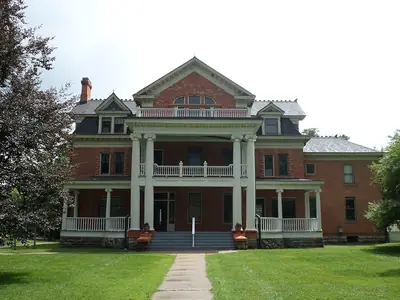
The Dodge Mansion, also known as the Turner-Dodge House, is a historic Lansing house that now operates as a museum and historical center dedicated to the city’s early pioneers.
The house was built in 1855 and was listed on the National Register of Historic Places in 1972 under the name Dodge Mansion. Its Classical Revival style reflects the house built for James and Marion Turner in 1858. Around the turn of the century, their daughter Abigail Turner-Dodge and her husband, Frank Dodge, expanded the mansion.
Impression 5 Science Center
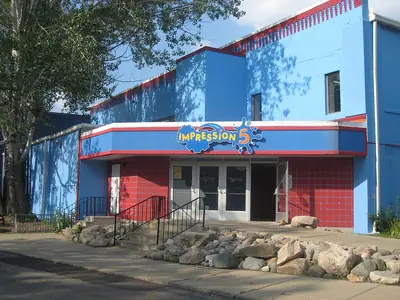
In downtown Lansing, the Impression 5 Science Center offers a hands-on approach to science. Its exhibits encourage visitors to understand the subject through direct experience rather than passive observation.
The nonprofit museum occupies a historic wagon works factory on the Grand River. Formerly known as the Impression 5 Museum, it welcomes about 3,000 visitors each week. In 2025, Newsweek voted it the number one children’s museum in the United States, making it a particularly notable stop for young visitors and anyone curious about how the world works.
R. E. Olds Transportation Museum
The R. E. Olds Transportation Museum is dedicated to the story of transportation and is one of Lansing’s notable museums. It adds a different perspective to a city otherwise strongly associated with government, history and civic institutions.
Strand Theatre and Arcade
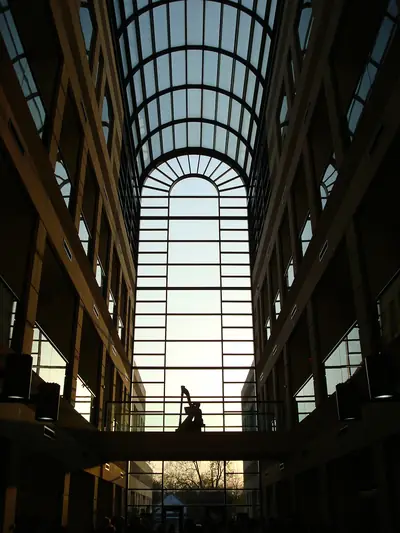
On South Washington Avenue, the Strand Theatre and Arcade—also known as the Michigan Theatre and Arcade—is a former theatre building with a recognized place in Lansing’s architectural heritage.
The building stands at 211 to 219 South Washington Avenue and was added to the National Register of Historic Places in 1980.
J.H. Moores Memorial Natatorium
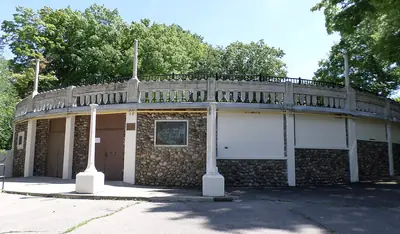
Also known as Moores Park Pool, the J.H. Moores Memorial Natatorium is a historic pool at 2700 Moores River Drive. It was listed on the National Register of Historic Places in 1985.
The pool is especially notable as the prototype for the design later known as the Bintz Pool. Its oval structure was built entirely above ground, a form well suited to urban areas.
Michigan Governor’s Mansion
The Michigan Governor’s Mansion is the official primary residence of Michigan’s governor in Lansing. It stands in a gated, secured area of a private neighborhood, so it is best appreciated as part of the city’s role as the seat of state government.
Capital Region International Airport
Capital Region International Airport serves the Lansing area from a location about five kilometers northwest of downtown. Formerly known as Lansing Capital City Airport, it has the IATA, ICAO and FAA identifiers LAN, KLAN and LAN. The airport has three runways and is operated by the Capital Region Airport Authority.
Explore Lansing with a Self-Guided Audio Tour
For a Michigan capital tour without a group or fixed timetable, download Neywo and explore Lansing at your own pace. The app has two walking tours and one bike route, with 13 narrated places in total:
- Capital Hill: Lansing’s State Capitol, Cathedral and Riverfront — a 4.54 km walk lasting 105 minutes, with 8 stops.
- North of the Capitol: Churches and a Pioneer Mansion — a 2.98 km walk lasting 73 minutes, with 6 stops.
- Lansing River Trail: Science Centre to Moores Park — a 2.6 km bike route lasting 13 minutes, with 2 stops.
Neywo’s stories play as you reach each place, at your own pace. There is no group and no schedule, so you can explore independently while the app tells the story of the landmark in front of you. Download the free Lansing audio guide and discover the city on foot or by bike.
Places with an audio guide in Lansing
8 places in Lansing with a Neywo audio guide. Each one starts telling its story as you reach it.
Self-guided tours in Lansing
3 tours in Lansing, free in the Neywo app. Each stop tells its story as you reach it.
- Bike ride
Lansing River Trail: Science Centre to Moores Park
Ride the River Trail beside the Grand River from the Impression 5 Science Center in the old wagon works south to Moores Park and its oval 1920s swimming pool, a prototype for the Bintz pool design. Flat, traffic-free and easy.
Impression 5 Science Center · J.H. Moores Memorial Natatorium
Open this tour: Lansing River Trail: Science Centre to Moores Park - Walk
Capital Hill: Lansing's State Capitol, Cathedral and Riverfront
Michigan moved its capital to a clearing in the woods in 1847, and this walk follows what grew up around the neoclassical Capitol. Start at the state history museum, visit the Capitol and its neighbouring cathedral and church, then wander down to South Washington Avenue and the Grand River, where a wagon factory is now a science centre and a museum honours the man who built Oldsmobile. Then follow the Grand River south to the oval 1920s pool at Moores Park.
Michigan History Museum · Michigan State Capitol · St. Mary Cathedral · Central Methodist Episcopal Church · Strand Theatre and Arcade · Impression 5 Science Center …
Open this tour: Capital Hill: Lansing's State Capitol, Cathedral and Riverfront - Walk
North of the Capitol: Churches and a Pioneer Mansion
Leave the government district for the older neighbourhoods north along Grand River Avenue. Lansing's first Catholic church site, a 1916 Presbyterian church and the Turner-Dodge House, home of the city's pioneer families, show how the town grew from a frontier outpost into a state capital.
Michigan State Capitol · Central Methodist Episcopal Church · St. Mary Cathedral · St. Mary Church · Franklin Avenue Presbyterian Church · Dodge Mansion
Open this tour: North of the Capitol: Churches and a Pioneer Mansion
Walk Lansing with Neywo
Neywo turns Lansing into a self-guided audio tour. Stories arrive as you reach the place they belong to, and the route reshapes when you wander off it.

