What to See in Toledo, United States: Free Audio Guide
Things to do in Toledo, Ohio: museums, churches and the Glass City waterfront
The best things to do in Toledo include exploring the Maumee River waterfront, discovering one of the United States’ leading glass collections, and admiring historic churches and downtown landmarks. Known as the “Glass City,” Toledo combines industrial and maritime history with an unusually rich collection of architecture and cultural institutions. Neywo offers a free audio guide to Toledo with 48 narrated places.
What to see in Toledo
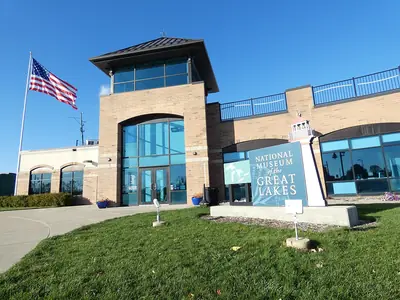
National Museum of the Great Lakes and the Willis B Boyer
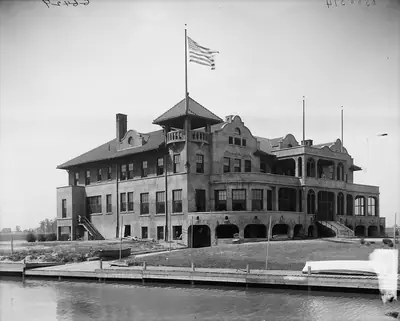
The National Museum of the Great Lakes traces the maritime history of the Great Lakes from a U.S. perspective. Its displays include model ships covering 350 years of navigation history, along with memorabilia from the region’s former fleet.
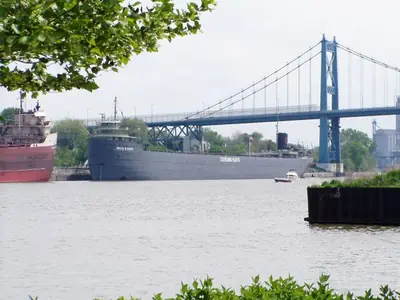
Outside, the Willis B Boyer is a genuine Great Lakes freighter launched in 1911. It once carried iron ore, coal and grain between Great Lakes ports and is now preserved as a museum ship in Toledo. Its riveted plates and pre-radar pilothouse offer a close look at early twentieth-century shipping technology.
Imagination Station
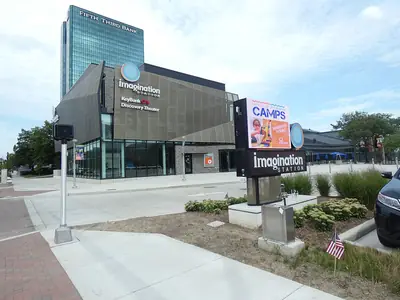
On the Maumee River in downtown Toledo, Imagination Station is a hands-on science museum with more than 300 interactive exhibits. The displays cover physics, chemistry, biology, engineering and technology, inviting visitors to experiment rather than simply observe.
It is particularly suited to families and younger visitors. The building has also had several lives: it opened in 1984 as Portside Marketplace before becoming COSI, the Center of Science and Industry, in 1997.
Pythian Castle
At Jefferson Avenue and North Ontario Street, Pythian Castle is one of downtown Toledo’s most distinctive buildings. Constructed in 1890 for the Knights of Pythias, it has a Romanesque design, grand arches and elaborate stonework.
Its black steeple and spires rise above the surrounding streets, while the turret on Jefferson Avenue reaches 122 feet. The building originally served as a meeting place for the fraternal organization and also contained retail spaces.
Trinity Episcopal Church
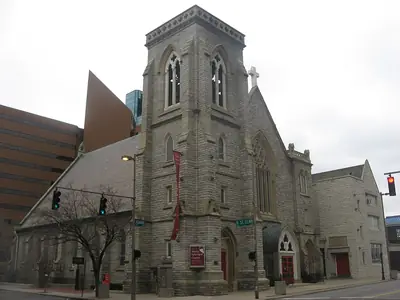
Trinity Episcopal Church is one of Toledo’s oldest continually used buildings. The congregation was founded in 1837, and the current Gothic Revival sanctuary was built between 1863 and 1866.
Inside, wooden arches and stained glass create a richly detailed interior. The church also contains a historic pipe organ installed by the Skinner Organ Company in 1910, which was then the largest organ in Toledo. Trinity Episcopal Church was added to the National Register of Historic Places in 1983.
Toledo Museum of Art
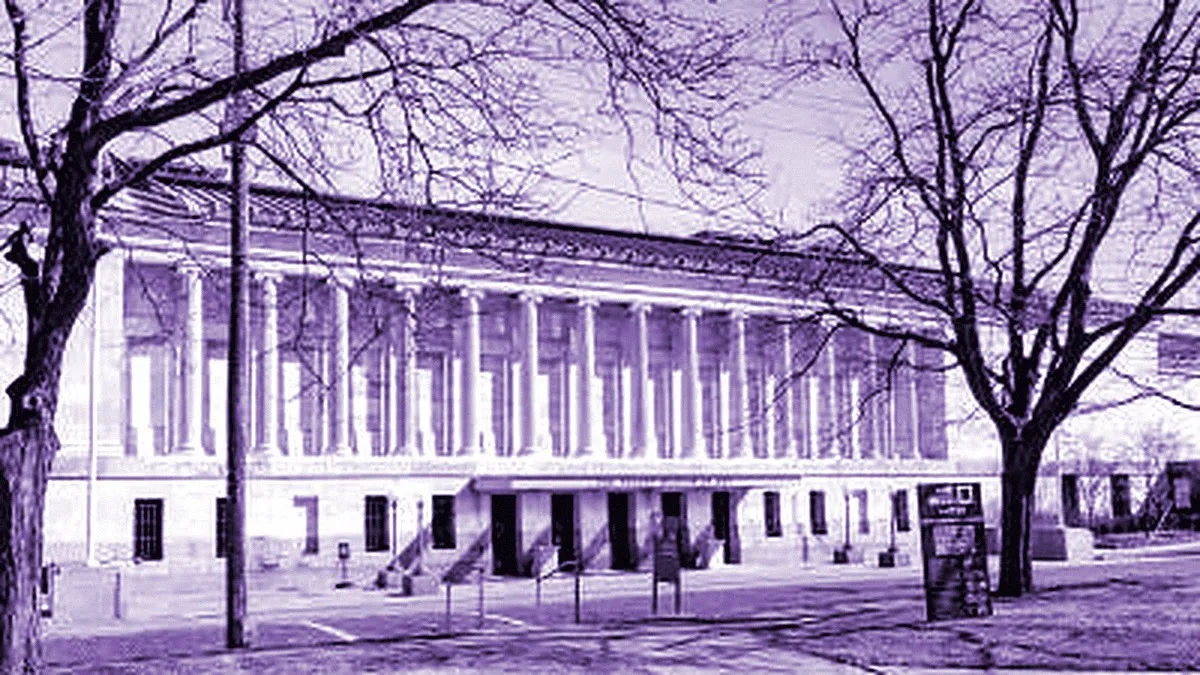
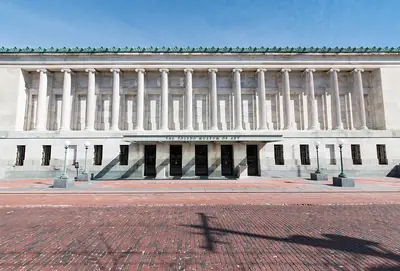
In Toledo’s Old West End, the Toledo Museum of Art is a cultural landmark founded in 1901 by Toledo glassmaker Edward Drummond Libbey. The museum moved into its current Greek Revival building in 1912, designed by Edward B. Green and Harry W. Wachter.
Its campus now covers 280,000 square feet, with 45 galleries, classroom studios, the 1,750-seat Peristyle concert hall and a lecture hall. The collection contains more than 30,000 objects, with particular strength in glass, as well as European and American art and smaller collections of Renaissance, Greek and Roman, and Japanese art.
Toledo Museum of Art Glass Pavilion
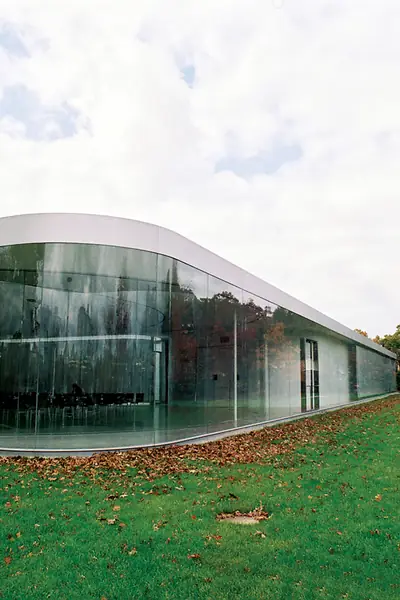
Across the street from the main museum, the Toledo Museum of Art Glass Pavilion focuses on the medium that gave Toledo its nickname. Its collection includes glass art from the nineteenth and twentieth centuries, alongside works from the museum’s broader holdings.
The pavilion also connects directly with Edward Libbey’s role in the museum’s history. The institution’s earliest works came from his own glass collection, making the building and its subject especially important to Toledo’s cultural identity.
Our Lady Queen of the Holy Rosary Cathedral
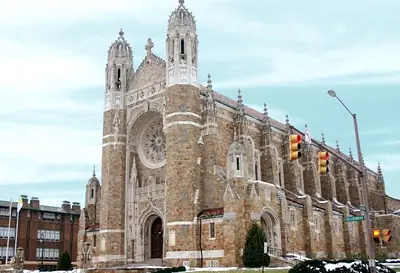
Completed in 1931, Our Lady, Queen of the Most Holy Rosary Cathedral is the mother church of the Roman Catholic Diocese of Toledo. Its Spanish Plateresque design was created with Toledo, Spain, in mind, and it is described as the only American cathedral built in that style.
The limestone façade features a recessed barrel-vault entrance, carved details and a statue of the Virgin Mary. Above it, a 28-foot rose window depicts scenes from Mary’s life. The window was financed by pennies collected by children throughout the diocese, giving the building a striking connection to the local community.
Ashland Avenue Baptist Church
Ashland Avenue Baptist Church is a prominent Romanesque landmark established in 1886 and dedicated in 1896. Designed by David L. Stine, the building is distinguished by robust masonry, rounded arches and carefully preserved stonework.
It was originally constructed as a school before becoming a church. Inside, painted ceilings, marble finishes and stained-glass windows depicting Holy Faces bring color and detail to the sanctuary.
Congregation B’nai Israel
Founded in 1866, Congregation B’nai Israel is Toledo’s oldest synagogue. It remains an important part of the city’s Jewish heritage and is a Conservative congregation.
First Church of Christ, Scientist
The former First Church of Christ, Scientist, on Monroe Street, was built in 1898 and added to the National Register of Historic Places in 1978. By the time of its designation, it was no longer home to the original congregation and had also been known as the Universal Community Church and the United Missionary Baptist Church.
Jermain Carnegie Library
This former Carnegie library recalls the public-learning institutions funded by Andrew Carnegie across the United States in the early twentieth century. Although it is no longer a library, its solid construction and welcoming entrance preserve the character of that tradition.
Stranahan Theater
Built in 1969, Stranahan Theater began as the Masonic Auditorium and later took its current name with support from the Stranahan Foundation. It has the largest proscenium stage in Northwest Ohio and includes a 3,000-square-foot foyer and the adjacent Great Hall.
The venue hosts concerts, Broadway shows and community events, including performances by the Toledo Symphony Orchestra’s Pops concerts, the Toledo Ballet and the Toledo Rep.
Explore Toledo with a free audio guide
A Toledo self-guided walking tour is an easy way to connect the city’s museums, churches, riverfront and downtown architecture. Neywo’s free Toledo audio guide includes 3 walking tours and 1 bus route, with 48 narrated places in total. Narration is available in 11 languages.
The walks include:
- Frogtown to Madison Avenue: Toledo’s Glass City Downtown — 4.29 km, 116 minutes and 12 stops.
- Old West End: Glass, Gothic and a Spanish Cathedral — 5.01 km, 113 minutes and 8 stops.
- Ballpark, Brewery Row and Riverside Towers — 2.55 km, 57 minutes and 5 stops.
There is also TARTA Line 22: From Bancroft Street to Downtown Toledo, a 10.4 km bus route lasting 45 minutes with 7 narrated stops.
Download Neywo and explore Toledo at your own pace: the app tells the story of each place as you reach it, with no group and no schedule. Toledo is part of Ohio, in the United States. You can also continue exploring nearby cities such as Cleveland, Columbus or Dayton.
Places with an audio guide in Toledo
8 places in Toledo with a Neywo audio guide. Each one starts telling its story as you reach it.
Self-guided tours in Toledo
4 tours in Toledo, free in the Neywo app. Each stop tells its story as you reach it.
- Bus ride
TARTA Line 22: From Bancroft Street to Downtown Toledo
Toledo's local bus line 22 runs along Bancroft Street and into downtown. Ride it from the Saint Martin de Porres church past the old YMCA and the Pythian Castle to the Madison Avenue towers, Riverfront Apartments, the Valentine Theatre and the Main Library, an inexpensive way to cross the city centre.
Saint Martin de Porres Catholic Church · YMCA Building · Pythian Castle · Nasby Building · Riverfront Apartments · Valentine Theatre …
Open this tour: TARTA Line 22: From Bancroft Street to Downtown Toledo - Walk
Frogtown to Madison Avenue: Toledo's Glass City Downtown
Start on the Maumee riverbank beside a century-old lake freighter, then cross into the downtown that glass and grain built. You will pass a restored 1895 theatre, Gilded Age office towers on Madison Avenue, a Beaux-Arts courthouse with a tile frog in its floor, Ohio's first tax-funded public library, the abandoned Pythian Castle and a brick YMCA with red terra cotta roof.
National Museum of the Great Lakes · Willis B Boyer · Imagination Station · Trinity Episcopal Church · Valentine Theatre · Spitzer Building …
Open this tour: Frogtown to Madison Avenue: Toledo's Glass City Downtown - Walk
Old West End: Glass, Gothic and a Spanish Cathedral
Toledo's Old West End is where the glass fortunes built their mansions, and the neighbourhood still carries the art and architecture to prove it. Walk between a Romanesque church by David Stine, the Toledo Museum of Art and its glass pavilion, a Flemish-Gothic convent turned arts centre and the only Plateresque cathedral in the United States.
Ashland Avenue Baptist Church · Toledo Museum of Art Glass Pavilion · Toledo Museum of Art · First Church of Christ, Scientist · Saint Martin de Porres Catholic Church · Collingwood Arts Center …
Open this tour: Old West End: Glass, Gothic and a Spanish Cathedral - Walk
Ballpark, Brewery Row and Riverside Towers
South of the centre Toledo turns from boardrooms to baseball. Walk from the 21-story Riverfront Apartments to the Mud Hens ballpark, through the Saint Clair Street historic district and past the old river hotel Oliver House, and finish at a parish church that has served the neighbourhood for generations.
Riverfront Apartments · Fifth Third Field · Saint Clair Street Historic District · Oliver House · St. Patrick's Catholic Church
Open this tour: Ballpark, Brewery Row and Riverside Towers
Walk Toledo with Neywo
Neywo turns Toledo into a self-guided audio tour. Stories arrive as you reach the place they belong to, and the route reshapes when you wander off it.