Visiting Tulsa, United States: Top Sights on Foot
Things to do in Tulsa: what to see in Oklahoma’s cultural city
The best things to do in Tulsa include exploring Art Deco landmarks, museums devoted to music and the American West, historic churches, and places connected with Greenwood and the Tulsa Race Massacre. The city’s cultural attractions range from the Arts District to large museum collections and an Italian Renaissance villa surrounded by gardens. Neywo also offers a free audio guide for Tulsa with 63 narrated places.
What to see in Tulsa
Boston Avenue Methodist Church
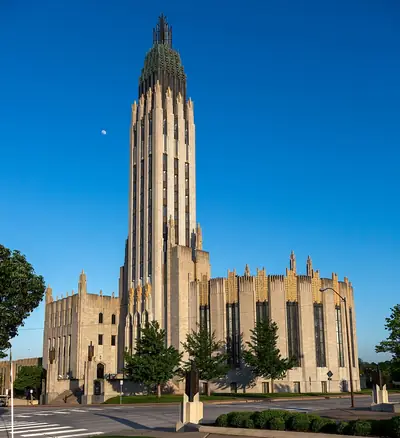
Boston Avenue Methodist Church is one of the finest examples of ecclesiastical Art Deco architecture in the United States. Completed in 1929, the church rises fifteen floors above Tulsa, with a 225-foot tower whose vertical design recalls both Gothic cathedrals and Art Deco skyscrapers.
The National Register of Historic Places added the building in 1978, followed by National Historic Landmark designation in 1999. Stylized praying hands, the signature motif of architect Bruce Goff’s design, appear across the façade in limestone, granite, terra cotta, glass, and metal. Sculptures above the entrances reflect the church’s Methodist identity, while the interior contains a semicircular auditorium and a Möller pipe organ.
Holy Family Cathedral
Holy Family Cathedral has stood on South Boulder Avenue since the early 1900s and serves as the mother church of the Roman Catholic Diocese of Tulsa. Its architecture combines Gothic Revival and Classic Revival styles, with a single spire that once made it the tallest building in Tulsa, before the Mayo Hotel was built in 1923.
The church was dedicated on April 1, 1914, although the interior was not completed until 1927. Original stained-glass windows, based on designs from the Royal Bavarian Art Institute in Munich, can be viewed from inside and outside. The cathedral and associated buildings were added to the National Register of Historic Places in 1982.
The Mayo Hotel
The Mayo Hotel has been part of the downtown skyline since 1925. Financed by brothers John D. and Cass A. Mayo and designed by George Winkler, it opened as the tallest building in Oklahoma, with 600 rooms.
Its façade features Doric columns, decorative terra-cotta balconies, and a prominent corniced crown. The hotel quickly attracted oil barons, celebrities, and dignitaries, and later appeared in William Inge’s Pulitzer Prize-winning play Picnic. Its history also reflects Tulsa’s segregation era: in 1951, President Truman intervened so his daughter’s maid could stay there, although she was still required to use the service elevator.
The Tulsa Arts District
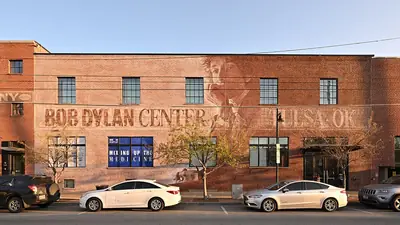
The Arts District is one of the best areas to visit for music, museums, and Tulsa history. The Bob Dylan Center opened to the public on May 10, 2022, after Bob Dylan’s personal archive was acquired by the George Kaiser Family Foundation and the University of Tulsa. Its displays include handwritten lyric drafts, photographs, drawings, recordings, and other material spanning six decades of Dylan’s creative work.
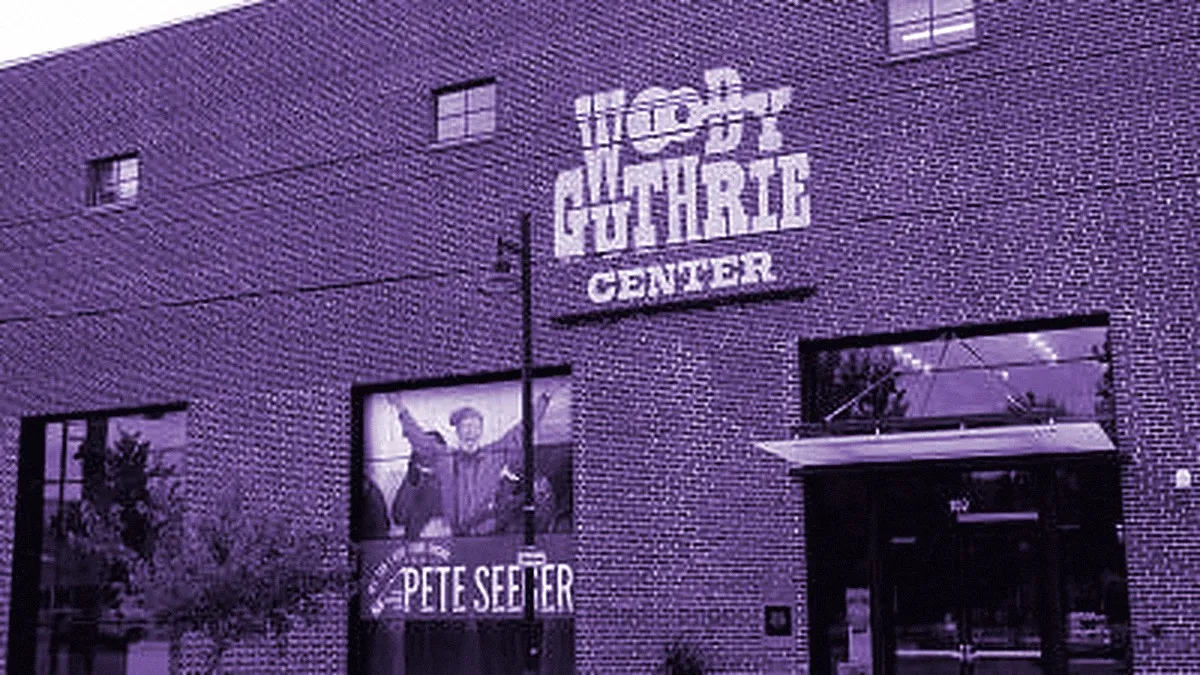
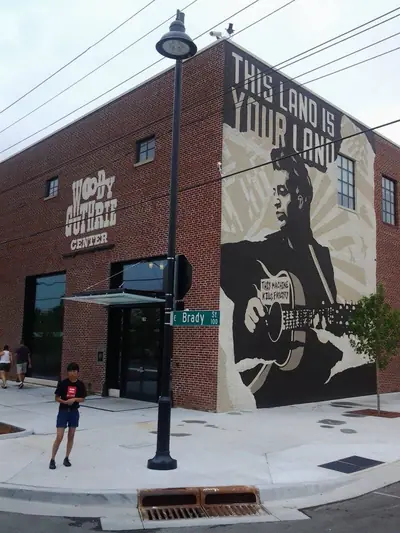
The Woody Guthrie Center, also in the district, holds the world’s largest collection of material connected with the Oklahoma-born folk musician. Handwritten lyrics, original instruments, drawings, photographs, and personal belongings are displayed alongside listening stations and interactive exhibits. A Dust Bowl virtual-reality installation places visitors inside the storms that shaped Guthrie’s music.
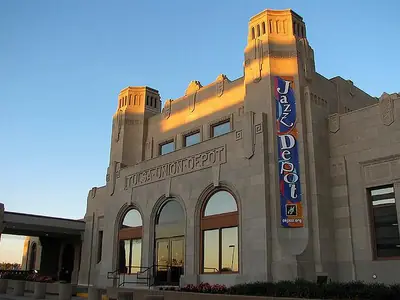
The Oklahoma Jazz Hall of Fame occupies the former Tulsa Union Depot, now known as the Jazz Depot. The restored Art Deco station contains museum galleries, a music resource library, and a performance hall that can hold more than 500 guests. The organization celebrates Oklahoma’s contributions to jazz, blues, and gospel and has inducted more than 100 artists and groups.
Gilcrease Museum
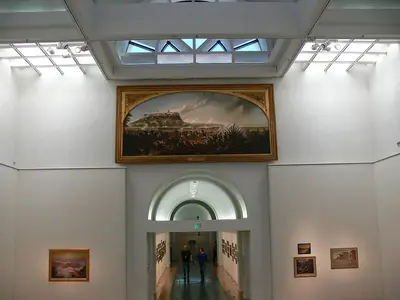
Northwest of downtown, Gilcrease Museum occupies 460 acres of Oklahoma landscape. Its collection contains more than 300,000 items and is described as the world’s largest and most comprehensive collection of art and artifacts of the American West.
The holdings range from prehistoric archaeological finds to contemporary works and include Native American, Hispanic, pre-Columbian, and Anglo-American traditions. Objects connected with the Mississippi Valley, the American Southwest, and ancient Mexico are particularly significant. The museum also holds one of North America’s most important collections of pre-Columbian projectile points.
The collection was assembled by Thomas Gilcrease, a Muscogee Creek citizen who made his fortune in oil. In 1958, he gave the collection, building, and property to the City of Tulsa.
Philbrook Museum of Art
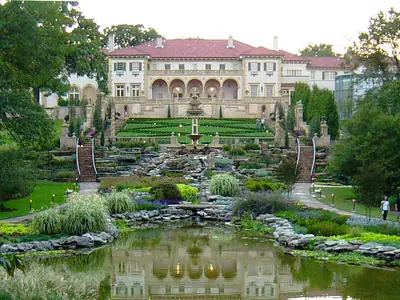
Philbrook Museum of Art occupies the former villa of Oklahoma oil pioneer Waite Phillips and his wife, Genevieve. Completed in 1927, the Italian Renaissance-style house was designed by Edward Buehler Delk and given to the City of Tulsa in 1938. It opened as a museum the following year.
The mansion’s details include white marble and Kasota limestone on the exterior, Renaissance-inspired ceilings, teak, walnut and oak floors, a music room, a library, and a formal dining hall. The surrounding 25 acres of gardens were designed by Hare & Hare and inspired by the sixteenth-century Villa Lante in Italy. Classical fountains and water rills follow diagonal paths through the grounds, where Barry Flanagan’s Thinker on a Rock depicts a bronze hare on a boulder.
Sherwin Miller Museum of Jewish Art
The Sherwin Miller Museum of Jewish Art is the only Jewish museum in the region and holds the largest collection of Judaica in the Southwestern United States. Founded in 1966, it moved to its current home on Tulsa’s Zarrow Campus of the Jewish Federation in 2004.
Its 13,700 square feet of exhibition space extends across two levels. Upper-floor exhibitions trace Jewish history from the pre-Canaanite period of the Middle East through Jewish life in Oklahoma. The lower level focuses on Holocaust education, with documents, photographs, and personal stories from Oklahoma survivors and World War Two veterans who helped liberate the camps.
The Outsiders House Museum
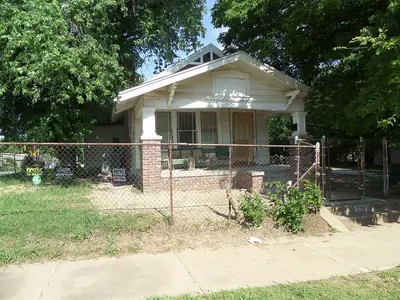
The Outsiders House Museum preserves a modest house with an important place in film history. Built around 1920, it became the Curtis brothers’ home in Francis Ford Coppola’s early-1980s adaptation of S.E. Hinton’s novel The Outsiders.
Hip-hop artist Danny Boy O’Connor discovered the house in 2009, bought it in 2016, and led its restoration. The museum opened on August 9, 2019, with the interior restored to its on-screen appearance. The restoration also extended to the DX gas station featured in the film, although it is no longer operational.
Tulsa Air and Space Museum & Planetarium
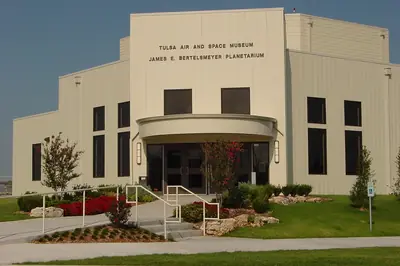
At the edge of Tulsa International Airport, the Tulsa Air and Space Museum & Planetarium presents the city’s aviation history in Hangar One. The chronological exhibits begin with the Early Birds display and aviation pioneer Duncan A. McIntyre.
A detailed replica of Tulsa’s original Art Deco airport terminal includes original architectural elements and historical artefacts. Other exhibits cover the Pearl Harbor experiences of Oklahomans, the wartime work of Spartan Aircraft and Douglas Aircraft, and commercial aviation companies including American Airlines and TWA. The aircraft collection includes a Spartan C-2, a Spartan NP-1, and a Rockwell Ranger 2000.
Greenwood and the Tulsa Race Massacre
Tulsa’s history also includes the Greenwood District, once known as Black Wall Street. On May 31 and June 1, 1921, a white mob attacked the prosperous Black community, burning and looting more than 35 blocks of homes, businesses, churches, a hospital, and a library.
The violence followed the arrest of Dick Rowland, a 19-year-old Black shoeshiner accused of assaulting a white elevator operator, Sarah Page. After an armed confrontation outside the courthouse, thousands of white rioters invaded Greenwood. The Tulsa Race Massacre remains essential to understanding the city’s past and the significance of the district today.
Explore Tulsa with a self-guided walking tour
A Tulsa self-guided walking tour is a flexible way to connect the city’s landmarks without joining a group. Neywo has three walking tours in Tulsa:
- Western swing, folk heroes and Greenwood: Tulsa’s Arts District — 2.65 km, 76 minutes, and 8 narrated stops, including Cain’s Ballroom, the Tulsa Theater, the Woody Guthrie Center, the Bob Dylan Center, the Oklahoma Jazz Hall of Fame, Oneok Field, Vernon A.M.E. Church, and Mount Zion Baptist Church.
- Oil money and Art Deco: downtown Tulsa’s skyscrapers and spires — 3.79 km, 94 minutes, and 8 narrated stops, including the BOK Center, Tulsa Performing Arts Center, Philtower Building, Mayo Hotel, First Presbyterian Church, Holy Family Cathedral, Ambassador Hotel, and Boston Avenue Methodist Church.
- Villas, lakes and Midtown: Tulsa’s leafy south side — 5.38 km, 105 minutes, and 6 narrated stops, including Harwelden Mansion, Swan Lake, Utica Square, Temple Israel, Philbrook Museum of Art, and All Souls Unitarian Church.
Download Neywo and explore Tulsa at your own pace
Download Neywo to explore Tulsa with three walking tours and 63 narrated places. The app’s stories play as you reach each place, at your own pace, with no group and no schedule. Narration is available in 11 languages, making it an easy way to discover Tulsa’s architecture, music, museums, and history while you walk.
Tulsa is part of Oklahoma, in the United States.
Places with an audio guide in Tulsa
8 places in Tulsa with a Neywo audio guide. Each one starts telling its story as you reach it.
Self-guided tours in Tulsa
3 tours in Tulsa, free in the Neywo app. Each stop tells its story as you reach it.
- Walk
Western swing, folk heroes and Greenwood: Tulsa's Arts District
Start on the spring-loaded maple floor of Cain's Ballroom, home of Bob Wills and Western swing, then visit the archives of Woody Guthrie and Bob Dylan and the jazz hall in the old Union Depot. The walk ends in Greenwood, where Mount Zion Baptist Church was rebuilt after the 1921 Tulsa race massacre.
Cain's Ballroom · Tulsa Theater · Woody Guthrie Center · Bob Dylan Center · Oklahoma Jazz Hall of Fame · Oneok Field …
Open this tour: Western swing, folk heroes and Greenwood: Tulsa's Arts District - Walk
Oil money and Art Deco: downtown Tulsa's skyscrapers and spires
In the 1920s oil made Tulsa one of the richest cities in America, and it built accordingly. Start at the steel-clad BOK Center, then pass the Performing Arts Center, the tiled roof of the Philtower, the Mayo Hotel where presidents slept, a Gothic church and a cathedral spire, and finish at Boston Avenue Methodist, a national landmark of Art Deco church design.
BOK Center · Tulsa Performing Arts Center · Philtower Building · Mayo Hotel · First Presbyterian Church · Holy Family Cathedral …
Open this tour: Oil money and Art Deco: downtown Tulsa's skyscrapers and spires - Walk
Villas, lakes and Midtown: Tulsa's leafy south side
Leave downtown for the neighbourhoods oil money built. Start at the Tudor mansion of Harwelden, stroll around the spring-fed lake of Swan Lake, browse Utica Square, Tulsa's first suburban shopping centre, and finish in the Italian villa gardens of the Philbrook Museum.
Harwelden Mansion · Swan Lake · Utica Square · Temple Israel · Philbrook Museum of Art · All Souls Unitarian Church
Open this tour: Villas, lakes and Midtown: Tulsa's leafy south side
Walk Tulsa with Neywo
Neywo turns Tulsa into a self-guided audio tour. Stories arrive as you reach the place they belong to, and the route reshapes when you wander off it.

